
 Akshay Dinesh
A burger can look ready before it is safe. Chicken can turn golden on the outside while a cooler pocket remains near the bone. A steak can carry dark grill marks that say more about surface heat than about what happened in the center. That gap between appearance and internal temperature is why a food thermometer is more than a kitchen gadget. It turns a guess into a measurement.
Summer grilling makes the problem easier to notice because food cooks in uneven conditions. A grill has hot spots, cooler edges, lid-open interruptions, wind, flare-ups, thick cuts, thin cuts, and hungry people waiting nearby. Color, firmness, and juices give clues about cooking, but they do not reliably show whether the coldest part of the food reached a temperature high enough to reduce harmful germs. The science is straightforward: heat has to move inward, and the outside always gets there first.
Why cooked color can fool you
Most people learn informal signs of doneness long before they learn safe internal temperatures. Pink means undercooked, brown means done, clear juices mean safe, and charred grill marks mean the heat did its job. Those rules feel practical because they are visible, but they are shortcuts. Meat color changes because proteins and pigments react to heat, oxygen, acidity, and storage conditions. Those changes do not always happen at the same pace as bacterial reduction.
Ground beef is a good example because it can brown before the center reaches a safe temperature. The pigment myoglobin changes as it is heated, but that visible change can happen early depending on the meat’s chemistry and the grill environment. The opposite can also happen: some safely cooked meat may keep a pink tint, especially when smoke, curing ingredients, or certain gases are involved. Judging safety by color asks the eye to do work that belongs to a thermometer.
Texture is not much better. A firm piece of chicken may still have unevenly heated spots, especially near bone or in a thick breast. A burger pressed with a spatula may feel sturdy while the middle is still cooler than the outside. The problem is not that visual clues are useless for cooking quality. They can help a cook notice browning, moisture, and texture. They just cannot answer the food-safety question by themselves.
What internal temperature actually measures
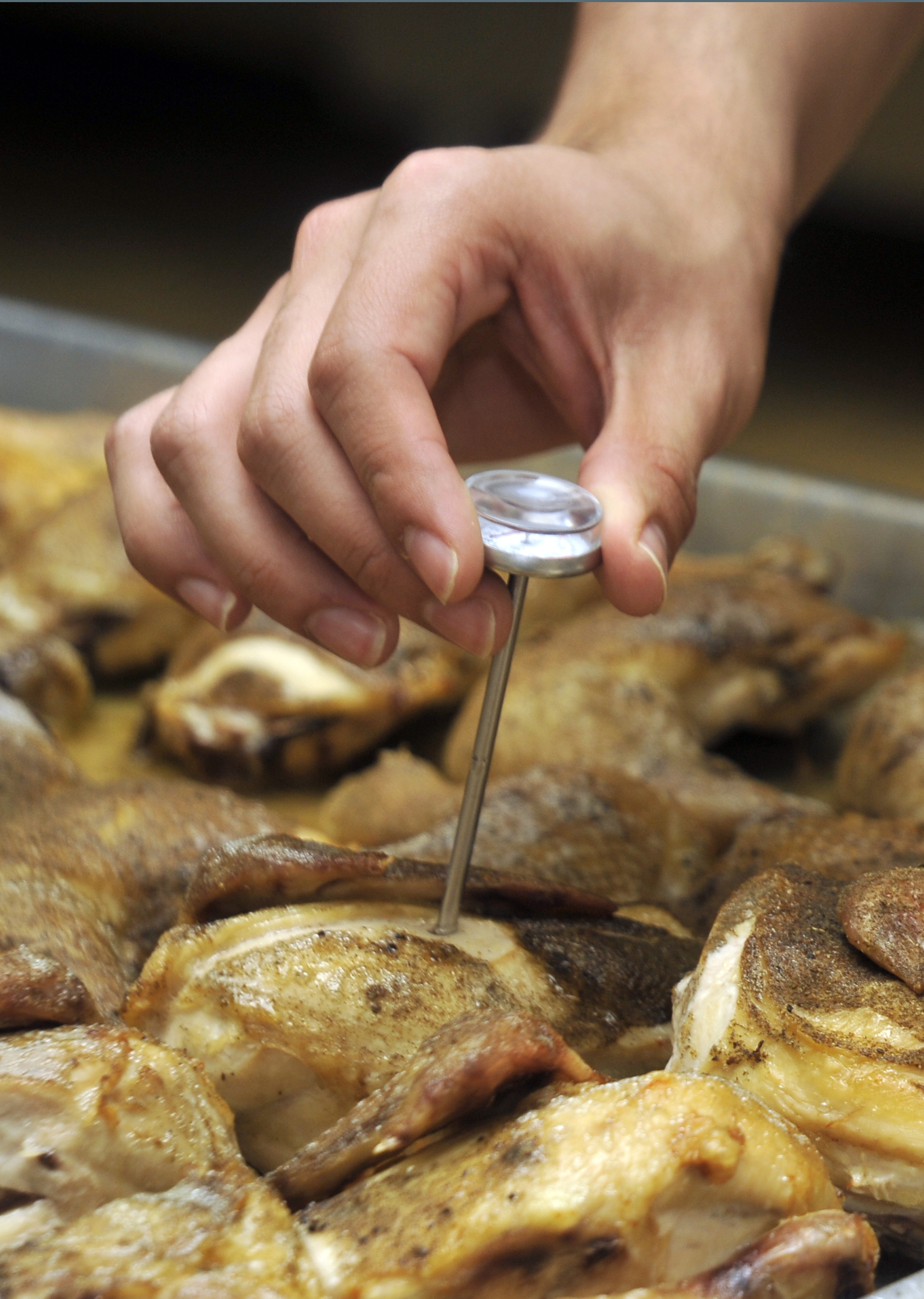
A food thermometer measures the temperature inside the food, not the heat of the grill or the color of the surface. That distinction matters because heat travels from the outside toward the center. The outside of a chicken thigh may be far hotter than the middle, while a thick burger may have a warm ring around a cooler core. The safest reading comes from the thickest part, away from bone, fat, or gristle, because that is often where heat arrives last.
FoodSafety.gov and the U.S. Department of Agriculture list safe minimum internal temperatures for different foods. Whole cuts of beef, pork, lamb, and veal are listed at 145°F with a three-minute rest time. Ground meats such as ground beef and pork are listed at 160°F. Poultry, including chicken, turkey, and ground poultry, is listed at 165°F. Leftovers and casseroles are also listed at 165°F. The exact number depends on the food because structure, contamination risk, and how the food is handled are not the same for every item.
Ground meat gets special treatment because grinding changes the risk. Bacteria that might have been on the surface of a whole cut can be mixed throughout the meat during grinding. That means the center of a burger matters in a way the center of an intact steak does not. Poultry has its own higher target because pathogens associated with raw poultry require thorough cooking throughout. These numbers are not about making every food dry or overcooked; they are about matching the cooking target to the biology of the food.
How heat reduces harmful germs
Cooking does not make food safe because it looks different. It makes food safer because heat damages living cells and viruses in ways they cannot recover from. Proteins unfold, membranes lose structure, and essential cell processes fail. The hotter the food gets, the faster many germs are reduced, but time still matters. That is why some foods include a rest time: heat continues moving and evening out after the food leaves the grill.
The Centers for Disease Control and Prevention groups cooking with the larger food-safety steps of clean, separate, cook, and chill. Those steps work together. A thermometer cannot fix cross-contamination from raw chicken juices on a ready-to-eat salad, and good handwashing cannot make an undercooked burger safe. But when the question is whether the inside of a food has reached the needed heat, a thermometer gives the most reliable answer.
Temperature also explains why the center is the key reading. A grill can be extremely hot while the inside of the food is still climbing slowly. Thick foods, cold-from-the-refrigerator foods, stuffed foods, and foods with bones can heat unevenly. Microwaved foods can have cold spots for a similar reason, even though the heat source is different. In all of these cases, the important question is not how intense the heat source was. It is whether the food’s least-heated area reached the needed internal temperature.
Why grilling makes measurement more important
Grilling feels direct because the heat is visible and dramatic. Flames flare, fat sizzles, smoke rises, and the surface browns quickly. That drama can hide unevenness. A lid-open grill loses heat, a charcoal grill changes as coals shift, and a gas grill may have zones that behave differently from one side to the other. Two burgers placed inches apart can cook at different speeds.
Outdoor cooking also adds timing pressure. Food may sit outside before it goes on the grill, and cooked food may sit on a table afterward. CDC guidance warns that perishable food should not stay out more than two hours, or more than one hour when exposed to temperatures above 90°F. That rule is about storage time, not internal doneness, but it shows why warm-weather meals benefit from measuring instead of guessing. Heat can be helpful when it is controlled during cooking and risky when food lingers in the temperature range where bacteria multiply.
A thermometer is especially useful for foods that look similar on the outside but differ inside. Bone-in chicken, thick pork chops, sausages, stuffed patties, and mixed-size pieces on skewers can all challenge visual judgment. Checking one thin piece does not prove a thicker piece is done. Checking one edge of a chicken breast does not prove the thick center is ready. A few seconds of measurement can prevent a confident mistake.
How to use the reading wisely
The best thermometer reading comes from placement. Insert the probe into the thickest part of the food and aim for the center. For thin foods, the probe may need to go in from the side so more of the sensing area sits inside the food. Avoid touching bone, the grill grate, or a pocket of fat because those can give misleading readings. If the food is irregular, check more than one spot.
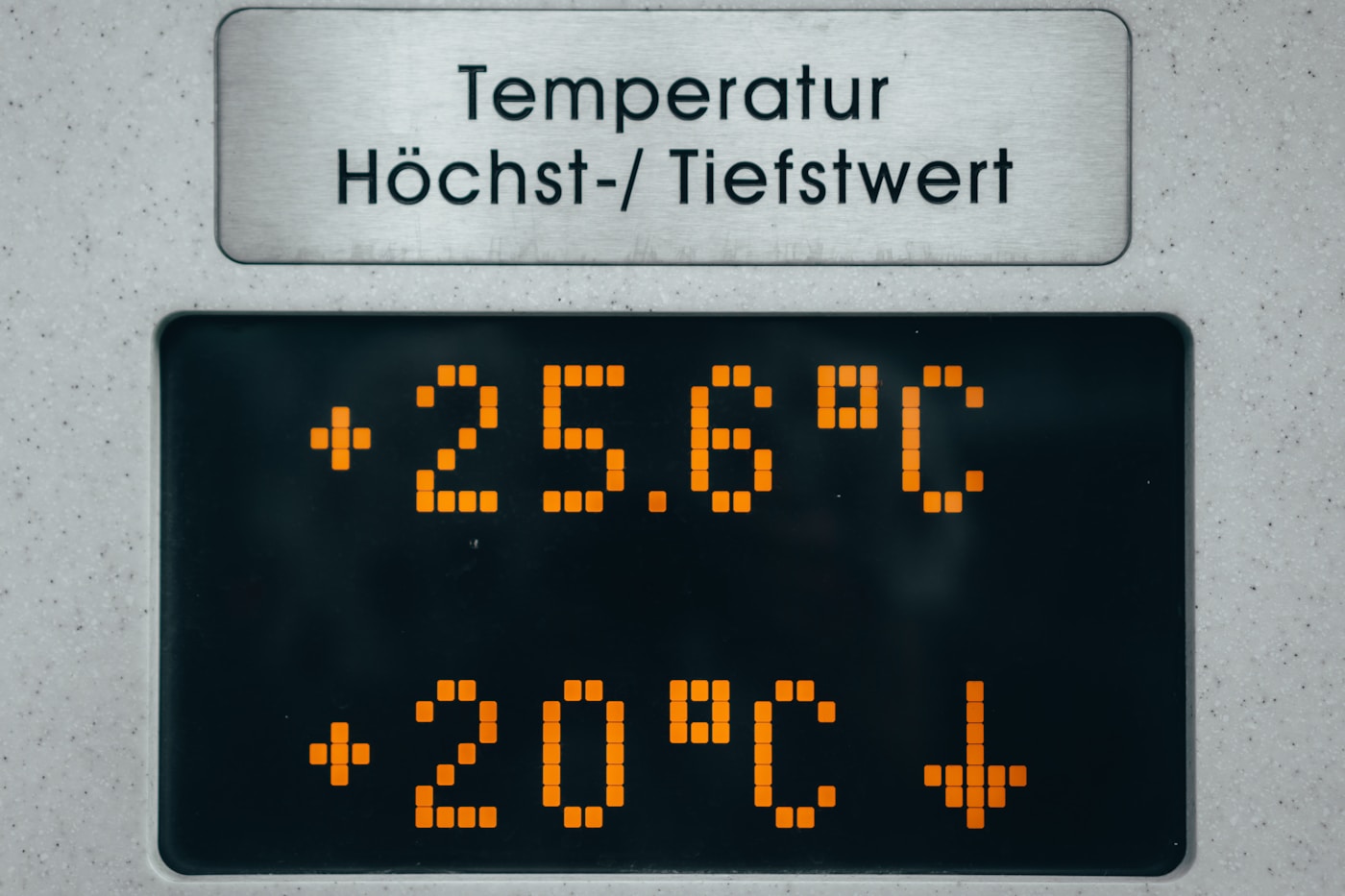
It also helps to know what kind of thermometer is being used. Instant-read thermometers are designed for quick checks near the end of cooking. Leave-in probe thermometers can track temperature while a larger cut cooks, as long as they are used according to the manufacturer’s directions. Appliance thermometers measure a refrigerator, freezer, or oven environment, not the center of a burger. Infrared thermometers measure surface temperature, which can be useful for a pan or grill zone but does not tell whether the inside of meat is safe.
Once the target temperature is reached, rest time can matter for some foods. A whole pork chop or steak at 145°F is paired with a three-minute rest in federal guidance because heat continues to distribute through the meat. Ground meats and poultry have different targets and do not use that same rest-time rule as a substitute for reaching their listed temperature. The practical habit is simple: measure the food, match it to the right target, and let the target guide the decision instead of the color.
The larger lesson: food safety is measured, not guessed
A food thermometer changes the cook’s question from “Does it look done?” to “What is happening inside?” That shift is useful beyond grilling. It applies to reheated leftovers, casseroles, microwaved meals, holiday roasts, and any food where the surface can mislead. It also teaches a larger scientific habit: when the stakes depend on an invisible process, measurement beats appearance.
Good cooking still uses the senses. Smell, sound, browning, and texture all help people make food appetizing. The thermometer does not replace judgment; it corrects the one part of judgment the eye cannot see. A safely cooked burger can still be juicy, and a carefully grilled chicken thigh can still have crisp skin. The point is not to make outdoor meals anxious. It is to make the final call more certain.
That certainty matters because foodborne illness is often invisible until after the meal. Harmful germs do not announce themselves with a strange color or smell, and undercooked food can look normal. A thermometer gives a small, clear moment of evidence before food reaches the plate. For a tool that fits in a drawer, that is a powerful bit of science.





Add comment