
 Akshay Dinesh
Enzymes are biological catalysts: they speed up chemical reactions without being used up overall. For example, digestive enzymes help break food into smaller molecules that the body can absorb. Most enzymes are proteins, although some RNA molecules, called ribozymes, also catalyse reactions. Their activity depends on conditions such as temperature, pH, and the availability of their substrates.
What are Enzymes?
Most enzymes are proteins folded into a specific three-dimensional shape. A region called the active site binds one or more reactants, known as substrates, and helps convert them into products. Enzymes speed reactions by lowering activation energy, the energy barrier that must be overcome for a reaction to proceed. The enzyme is regenerated during the catalytic cycle and can generally be used again.
An enzyme’s turnover number describes how many substrate molecules one active site converts to product per unit of time under specified conditions, typically when substrate is abundant. Turnover rates differ greatly between enzymes. Many enzymes work inside cells, while others, such as digestive enzymes, act outside them.
Protein enzymes are made by ribosomes. Some function in the cytosol; others enter the endoplasmic reticulum during synthesis and may be secreted or delivered to other compartments. Certain enzymes also need a non-protein helper, such as a metal ion or a coenzyme, to function.
Enzymatic Mode of Action
Activation Energy
Activation energy is the energy barrier separating reactants from a transition state. Enzymes provide a reaction pathway with a lower barrier, allowing more reactions to occur in a given time without raising the temperature. They do not change the overall energy difference between reactants and products or the position of equilibrium.
When enzyme-substrate complexes are formed, the substrate fits into the active site of the enzyme. R groups of catalytic residues at the active site can change the substrate’s charge and alter the bonds’ electron distribution. This makes the substrate more reactive. At the same time, substrate molecules are forced into the correct orientation, facilitating the formation of bonds. On top of that, some bonds within the substrate molecules experience physical stress, increasing the chances of the bonds breaking.
After the reaction, the enzyme-substrate complex splits to release the enzyme and the products. The enzyme can then undergo another reaction.
Active Site
An active site is a particular region of an enzyme where substrates bind and catalysis occurs. Its shape and chemical properties help determine which substrates it can recognise. Amino acid residues within and around the site can help position substrates or participate in the reaction; the number and arrangement of those residues vary between enzymes.
The remaining amino acid residues on other parts of the enzyme play a role in maintaining the globular structure of the enzyme. They may also form other binding sites.
Specificity
Enzymes are highly specific in terms of the substrate that they can bind to and the reactions that they can catalyse. Enzymes and their substrates bind when effective collisions occur between enzyme and substrate molecules. The substrate molecules will fit into the active site with a complementary charge and shape. This allows the enzymes to bind to their substrates via hydrogen and ionic bonds, forming enzyme-substrate complexes.
Lock-and-Key Hypothesis
In this model, the substrate is proposed to be completely complementary to the shape of the active site. The active site does not undergo a change in its shape.
Induced-Fit Hypothesis
In this model, the substrate is not completely complementary to the active site of the enzyme. When the substrate binds to the active site, the conformation of the active site changes slightly to allow the substrate to fit in more snugly.
Enzyme Kinetics
Factors
As with other proteins, the effectiveness of enzymes are dependent on several factors.
Concentration of Enzyme
An enzyme can catalyse many reaction cycles, although it may undergo temporary chemical changes during a cycle.
When substrate is sufficiently abundant and other conditions remain fixed, adding enzyme generally increases the initial reaction rate: more active sites are available to catalyse reactions at the same time.
If substrate becomes scarce or another condition limits the reaction, adding more enzyme may produce a smaller increase. The outcome depends on substrate supply and how the rate is measured.
Concentration of Substrate
At low substrate concentrations, the substrate concentration is the limiting factor. However, as we increase the concentration of substrates, the rate of reaction increases proportionally as more substrate molecules can occupy the free active sites. More enzyme-substrate complexes are formed since there are more effective collisions between enzyme and substrate molecules.
However, at high substrate concentrations, enzyme concentration becomes the limiting factor as the enzymes are fully saturated. As such, the rate of reaction remains unchanged even as the substrate concentration increases.
pH
Each enzyme has a pH range in which it works most effectively. For example, pepsin acts in the acidic stomach, while trypsin works best under more alkaline conditions in the small intestine. Activity can decline outside the optimum without the enzyme necessarily being denatured.
A change in pH can alter the charges of groups on the enzyme or substrate, affecting binding and catalysis. More extreme pH can disrupt the interactions that maintain a protein enzyme’s shape, causing denaturation and loss of activity.
Temperature
The temperature affects the kinetic energy of the reactant molecules.
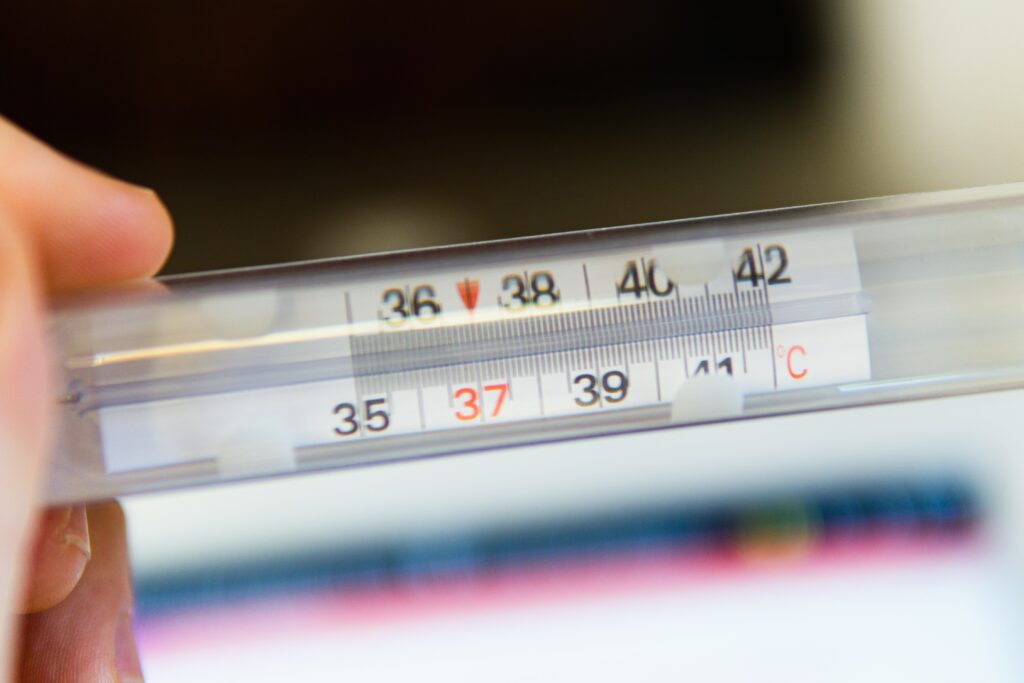
Below its optimum, an enzyme is usually still active, but its reactions generally proceed more slowly. Warming often increases reaction rates over this range, provided the enzyme remains stable.
At higher temperatures, many enzymes lose activity as their three-dimensional structure is disrupted. Denaturation does not normally require the polypeptide backbone to break. The temperature at which activity peaks depends on the enzyme, its environment, and how long it is exposed to heat.
Measuring the Rate of Reaction
A reaction rate can be estimated by measuring how quickly substrate disappears or product forms. Depending on the reaction, a measurable signal might be a change in colour, pH, turbidity, or gas volume. For a meaningful comparison, the signal must be related to the reaction being studied and other conditions should be controlled.
Enzymatic Inhibition
Inhibitors reduce enzyme activity. Some bind reversibly, while others bind so strongly or permanently that activity does not readily return. Competitive and noncompetitive inhibition describe different kinetic effects; allosteric and feedback inhibition describe regulatory mechanisms that can overlap with these categories.
Competitive Inhibition
A competitive inhibitor reduces substrate binding by competing with it for the enzyme, often at the active site. For a reversible competitive inhibitor, increasing substrate concentration can lessen the inhibitor’s effect on the initial rate.
Non-competitive Inhibition
In pure noncompetitive inhibition, the inhibitor can bind both the free enzyme and the enzyme-substrate complex and reduces the maximum reaction rate. Adding more substrate does not restore that maximum. Inhibitors that bind away from the active site can affect binding, catalysis, or both; not all are purely noncompetitive.
Allosteric Inhibition
An allosteric inhibitor binds at a regulatory site distinct from the active site and reduces enzyme activity, often by changing the balance between different enzyme shapes. Allosteric regulation is not limited to enzymes with multiple polypeptide chains.
End-product Inhibition
In feedback inhibition, a product of a metabolic pathway inhibits an enzyme earlier in the pathway, often at a regulatory site. This can slow further production when the product is abundant and help the cell allocate resources. As conditions change, the inhibition can ease and production can resume.
For a further explanation of enzyme activity and regulation, see OpenStax Biology 2e: Enzymes.




Add comment