Akshay Dinesh
A satellite cannot slam on the brakes when a dead rocket fragment appears ahead. Objects in low Earth orbit travel at roughly 7 to 8 kilometers per second, and two objects approaching from different directions can meet at far higher relative speeds. Even a small fragment can strike with enough energy to disable a spacecraft. The practical defense is to see the encounter coming days in advance, estimate the risk, and make a small orbit change before the two paths cross.
That sounds simple until the uncertainties appear. Trackers must follow tens of thousands of objects, predict how their orbits will change, and decide which warnings deserve action. A maneuver uses fuel and can interrupt a mission, yet ignoring the wrong alert could destroy a satellite and scatter thousands of new fragments. Collision avoidance is therefore less like swerving around an obstacle and more like managing a moving forecast.
Tracking Space Debris Starts With an Incomplete Map
Orbital debris includes dead satellites, abandoned rocket stages, fragments from explosions and collisions, and small pieces released during missions. Some objects are as large as a bus; others are no bigger than a paint chip. Speed makes the difference. NASA describes average impact speeds near 10 kilometers per second, fast enough for a tiny object to damage windows, solar panels, radiators, or electronics.
Ground-based radar and optical telescopes repeatedly observe objects large enough to detect. Those observations allow analysts to estimate an object’s orbit: where it is now, how fast it is moving, and where it should travel next. The result is not a perfectly drawn line. Every orbit estimate carries uncertainty because observations have limits and because atmospheric drag, solar activity, and an object’s shape can gradually alter its motion.
The European Space Agency’s Space Environment Statistics page listed about 47,080 objects regularly tracked by surveillance networks as of July 31, 2026. It also estimated that roughly 18,840 satellites remained in space, about 15,900 of them functioning. Many smaller fragments cannot be followed individually. NASA’s Orbital Debris Program Office estimates that hundreds of thousands of pieces between 1 and 10 centimeters and more than 100 million pieces larger than 1 millimeter may be in orbit. The catalog is essential, but it is not the whole environment.
A Close Approach Is a Probability, Not Just a Distance
When predicted paths bring two cataloged objects near each other, analysts call the event a conjunction. Automated screening systems compare future trajectories and issue conjunction data messages to spacecraft operators. The message includes the expected time of closest approach, the estimated separation, the relative speed, and information about uncertainty.
A miss distance alone can be misleading. Imagine two forecasts that both place debris 300 meters from a satellite. In the first, the positions are known precisely, so the objects are likely to pass safely apart. In the second, the uncertainty region stretches for kilometers and overlaps the satellite’s path. The same predicted distance can therefore represent very different collision risks. Operators use probability calculations that combine the forecast paths with the uncertainty around them.
Those calculations change as new observations arrive. An early warning may look alarming because the uncertainty region is broad. Later radar measurements can shrink that region and show a safe pass, or they can reveal that the danger is greater than first thought. Waiting for better data reduces false alarms, but waiting too long can remove the best maneuver options. Mission teams set decision deadlines based on how quickly their spacecraft can plan and execute a safe change.
The International Space Station uses a well-established risk process. NASA says the station normally maneuvers when the estimated collision probability exceeds 1 in 10,000, provided there is enough warning and the maneuver itself is safe. That threshold does not mean lower risks are ignored. Teams monitor the encounter, assess the quality of the tracking data, and consider whether a maneuver could create a different close approach later.
Small Changes Made Early Create Large Misses Later
Collision avoidance usually does not require a dramatic turn. A spacecraft changes its velocity slightly, often by firing thrusters for seconds or minutes. The change may raise or lower its orbit, or alter its position along the same general path. Because orbital motion continues for hours or days after the burn, a modest change made early can shift the spacecraft by kilometers when the conjunction time arrives.
The timing is the clever part. Speeding up in orbit does not simply move a satellite forward forever. A burn can change the size and period of its orbit, which changes when it reaches a particular point. Engineers model candidate maneuvers, check fuel and mission constraints, and screen the new trajectory for other objects. A safe plan must solve the original problem without creating another one.
NASA documented a clear example on April 30, 2025. The International Space Station fired the thrusters of a docked Progress spacecraft for 3 minutes and 33 seconds to gain extra separation from a fragment of a Chinese Long March rocket launched in 2005. Without the maneuver, NASA estimated that the fragment could have passed within about 0.4 miles of the station. The burn raised the station’s orbit slightly and did not disrupt the next day’s planned spacewalk.
Uncrewed satellites face the same basic choice, though their thresholds and options differ. An Earth-observing mission may protect a carefully timed imaging schedule, while a communications constellation may coordinate many spacecraft at once. Some satellites have electric propulsion that is efficient but slow; others have chemical thrusters that act quickly but carry limited fuel. Spacecraft with no propulsion cannot dodge at all, so operators of nearby active satellites may have to carry the burden.
The Most Dangerous Fragment May Be Too Small to Track
Avoidance works only when the threat can be detected, cataloged, and forecast in time. Smaller debris is far more numerous and often invisible to routine tracking. A spacecraft cannot maneuver around an object it never sees. Designers therefore add a second defense: shielding and careful placement of vulnerable equipment.
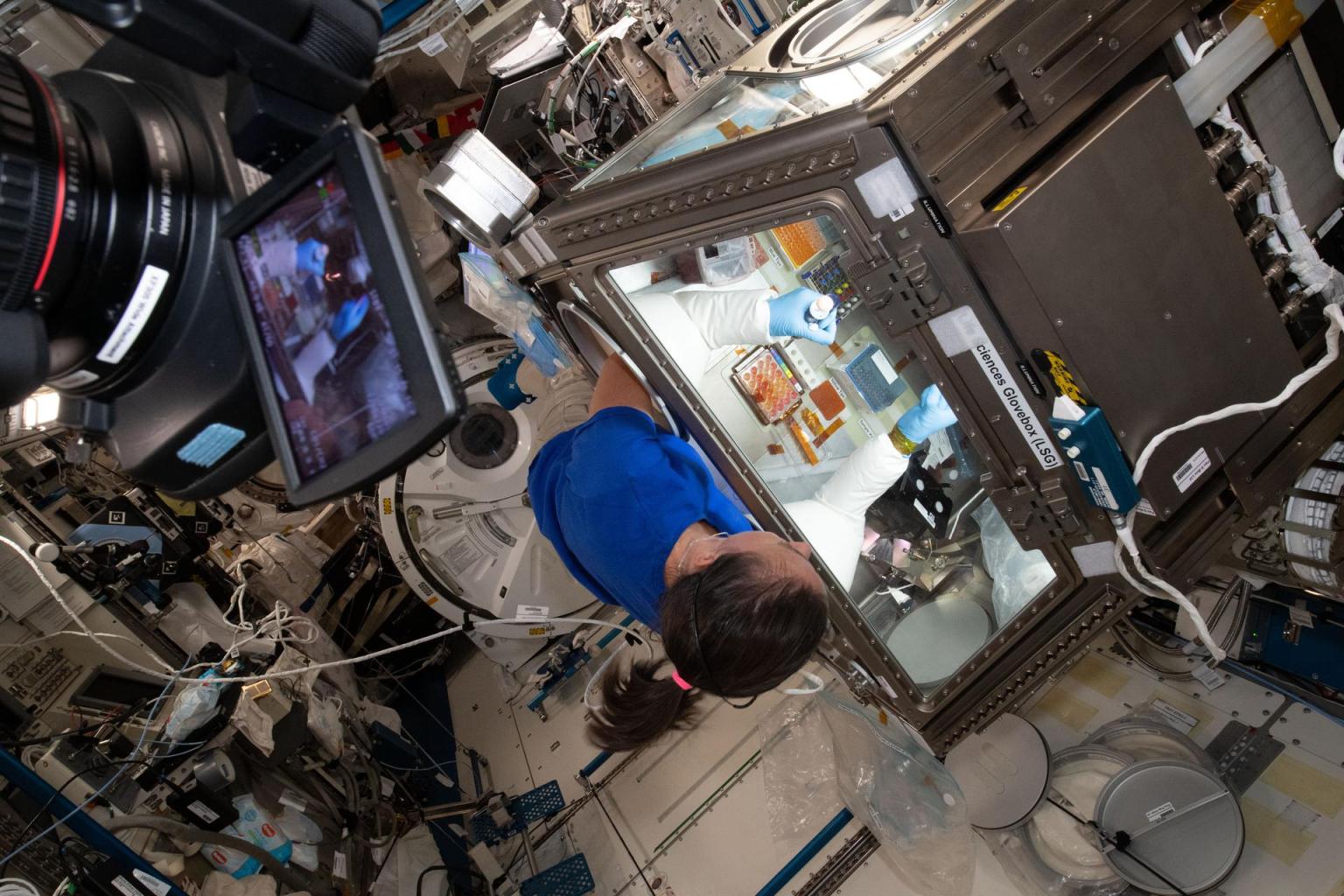
The International Space Station uses layered structures often described as Whipple shields. A thin outer layer causes a small, fast particle to break apart or vaporize on impact. The resulting cloud spreads its energy across a wider area before reaching the pressure wall behind it. Different station modules use different shield designs because their shapes, materials, and exposure vary. Windows also use multiple panes and are inspected for impact damage.
Shielding has limits. It adds mass, which makes launch more expensive, and it cannot stop every object. Large debris carries too much energy, while impacts in exposed components such as solar arrays may be tolerated rather than completely prevented. Engineers combine shielding, redundancy, orientation, and avoidance because no single protection method covers the full range of fragment sizes.
That gap explains a frustrating feature of orbital safety. Trackers are best at seeing the large objects that a spacecraft can dodge. Shields are most effective against very small particles. Debris in the middle can be too small for reliable tracking but large enough to cause severe damage. Better sensors can narrow that gap, but preventing fragments from being created remains more effective than trying to defend against all of them later.
Keeping Orbit Usable Requires More Than Better Dodging
Every major collision can create another cloud of debris and increase the chance of future collisions. This feedback is called the Kessler syndrome, after NASA scientist Donald Kessler, who described how collisions could become an important source of new fragments. It does not mean that every orbit suddenly becomes impassable. The concern is a gradual cycle in which certain crowded altitude bands grow harder and more expensive to use.
ESA’s September 2026 Space Environment Report found that more than 4,000 payloads were placed into orbit during 2025, while too few satellites left congested regions at the end of their missions. The report also noted progress: controlled rocket-body reentries outnumbered uncontrolled ones for the second year, and the field is moving from a 25-year disposal target toward five years in low Earth orbit. Yet ESA’s long-term projections still showed the debris population growing, even under improved mitigation.
Prevention includes releasing fewer mission-related objects, emptying leftover fuel and batteries so dead spacecraft are less likely to explode, designing satellites for reliable disposal, and sharing accurate orbit and maneuver data. Some missions can lower themselves into the atmosphere, where drag eventually causes a destructive reentry. Spacecraft in geostationary orbit may move to a designated graveyard orbit instead. Active removal could target large dead objects that pose the greatest long-term collision risk, but capturing an uncontrolled object is technically and legally difficult.
Collision avoidance remains indispensable. It protects working spacecraft and the services they provide, from weather forecasts and navigation to communications and research. But each successful dodge addresses one encounter, not the crowded environment that produced it. The durable solution pairs accurate tracking and well-timed maneuvers with spacecraft that leave orbit cleanly. In that sense, the safest collision is not merely the one a satellite escapes. It is the one responsible design prevents from ever being scheduled by the laws of orbital motion.