
Matrix multiplication shows how one linear algebra move follows another, turning separate transformations into a single rule.
Matrix multiplication shows how one linear algebra move follows another, turning separate transformations into a single rule.
Inverse matrices undo certain matrix moves, helping students solve systems and understand when a transformation can be reversed.
A basis gives vectors coordinates by choosing the fewest directions needed to describe a space clearly and without repetition.
Vectors describe quantities with both size and direction, making motion, forces, graphics, and coordinates easier to reason about.

Matrices help computer graphics rotate, scale, move, and combine shapes by turning geometry into fast, repeatable calculations.
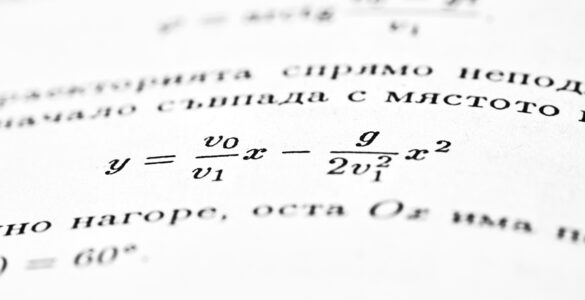
Linear independence shows whether vectors add new directions or repeat what a set can already make.
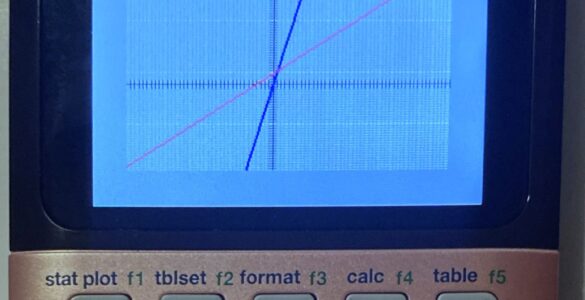
Row reduction turns systems of equations into a clear sequence of legal moves, making solutions easier to find and check.

Determinants measure how a matrix changes area, orientation, and invertibility, turning abstract calculations into geometry.
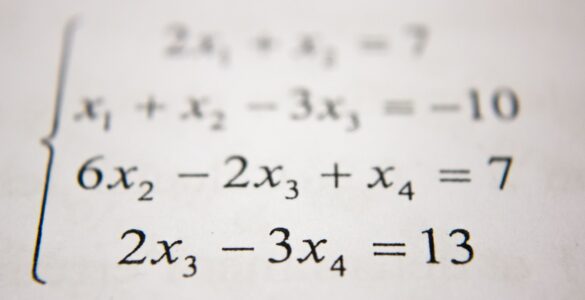
Eigenvalues and eigenvectors reveal the special directions a matrix stretches, shrinks, flips, or leaves unchanged.
Dot products turn two vectors into one number, revealing direction, projection, angle, and similarity in a surprisingly useful way.
Vectors describe quantities with both size and direction, making motion, force, maps, and data easier to model clearly.

Matrices are a fundamental concept in mathematics, with applications in algebra, computer science, physics, engineering, economics, and many other fields. Matrices provide a way to organize and manipulate data, solve...


Copyright © 2026 Novo Learner
 Akshay Dinesh