
Set notation uses symbols for membership, union, intersection, and complements so groups and overlaps can be read without confusion.
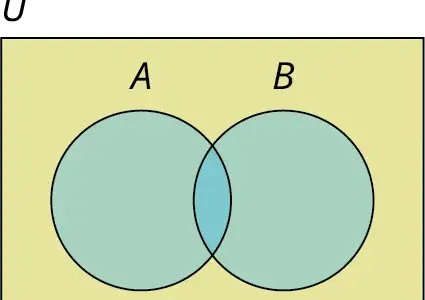
Math lessons about counting, arrangements, combinations, discrete structures, and proof strategies based on finite sets.
Set notation uses symbols for membership, union, intersection, and complements so groups and overlaps can be read without confusion.

Euler paths explain when a route can cross every bridge or connection exactly once by looking at vertices, edges, and odd degrees.

The binomial theorem turns powers like (a + b)^n into organized terms using combinations, coefficients, and predictable patterns.
Pascal's triangle connects combinations, binomial coefficients, and counting shortcuts through one simple pattern.

Permutations count ordered arrangements; combinations count groups. Learn how to spot the difference before choosing a formula.

Inclusion-exclusion fixes double counting by adding groups, subtracting overlaps, and correcting what was removed too many times.
The pigeonhole principle shows why repetition is guaranteed when too many objects must fit into too few categories.


Copyright © 2026 Novo Learner
 Akshay Dinesh