
 Akshay Dinesh
Some equations describe a curve without putting one variable neatly on one side. A circle, for example, can be written as \(x^2 + y^2 = 25\). That equation clearly connects \(x\) and \(y\), but it does not say \(y=\) one simple expression unless you split the circle into upper and lower halves. Implicit differentiation gives calculus a way to find the slope of the curve anyway. Instead of solving first and differentiating later, it treats \(y\) as something that changes with \(x\), then carefully tracks that relationship through the derivative.
That small shift is powerful. Many real equations are easier to write as relationships than as solved formulas: circles, ellipses, curves with several terms mixed together, and models where two changing quantities are tied by a rule. Implicit differentiation is the method that lets those equations stay in their natural form while still answering a central calculus question: how fast is \(y\) changing when \(x\) changes?
Why some equations are easier to leave implicit
An explicit equation tells you directly how to calculate one variable from another. The line \(y = 2x + 3\) is explicit because \(y\) is already isolated. The equation \(x^2 + y^2 = 25\), on the other hand, is implicit because the relationship is stated as a whole. The equation describes all points that are 5 units from the origin, but it does not choose the top half or the bottom half of the circle for you.
You could solve the circle equation for \(y\), but the result is not as clean as the original: \(y=\sqrt{25-x^2}\) for the upper half and \(y=-\sqrt{25-x^2}\) for the lower half. Differentiating those square-root formulas works, but it takes extra steps and separates one beautiful curve into two pieces. Implicit differentiation keeps the original equation intact.
This matters even more for equations that are awkward or impossible to solve neatly for \(y\). A curve such as \(x^3 + y^3 = 6xy\) mixes the variables on both sides. Trying to isolate \(y\) before finding a slope would turn the problem into an algebra struggle. The implicit method avoids that detour and focuses directly on the slope.
The key idea: y changes when x changes
The heart of implicit differentiation is simple: even when the equation does not say so out loud, \(y\) is being treated as a function of \(x\). When \(x\) moves along the curve, \(y\) usually has to move too in order to keep the equation true. That is why the derivative of a term involving \(y\) needs an extra factor, \(\frac{dy}{dx}\).
For example, the derivative of \(x^2\) with respect to \(x\) is \(2x\). But the derivative of \(y^2\) with respect to \(x\) is not just \(2y\). Because \(y\) depends on \(x\), the chain rule gives \(2y\frac{dy}{dx}\). That extra piece is the slope you are trying to find.
A useful way to say it is this: every time you differentiate a term with \(y\), multiply by \(\frac{dy}{dx}\). The chain rule is the reason. It is not a trick or a symbol added at the end; it is calculus keeping track of the fact that \(y\) is changing behind the scenes.
A circle example from start to slope
Take the circle \(x^2 + y^2 = 25\). To find its slope at any point, differentiate both sides with respect to \(x\). The derivative of \(x^2\) is \(2x\). The derivative of \(y^2\) is \(2y\frac{dy}{dx}\). The derivative of 25 is 0. That gives:
\(2x + 2y\frac{dy}{dx} = 0\)
Now solve for \(\frac{dy}{dx}\), because that symbol represents the slope of the tangent line:
\(2y\frac{dy}{dx} = -2x\)
\(\frac{dy}{dx} = -\frac{x}{y}\)
This result says the slope at a point on the circle depends on both coordinates of that point. At \((3,4)\), the slope is \(-\frac{3}{4}\). At \((0,5)\), the slope is 0, which makes sense because the top of the circle has a horizontal tangent. At \((5,0)\), the formula would require division by zero, which matches the geometry: the right edge of the circle has a vertical tangent, so its slope is undefined.
Where the chain rule usually gets missed
The most common mistake is treating \(y\) as if it were just another version of \(x\). If a student writes the derivative of \(y^2\) as \(2y\), the calculation has quietly assumed that \(y\) changes at the same rate as an independent variable. But the entire point of the problem is to find how \(y\) changes relative to \(x\). The missing \(\frac{dy}{dx}\) is exactly the missing information.
Another mistake is trying to plug in the point too early. In many problems, it is cleaner to differentiate first, solve for \(\frac{dy}{dx}\), and then substitute the point. If you plug in numbers before the derivative is fully organized, it becomes easier to lose terms or hide the slope inside the equation.
Product rule problems need extra care too. In an equation such as \(x^2 + y^2 = xy + 7\), the derivative of \(xy\) is not simply \(y\). Since \(x\) and \(y\) are both involved, the product rule gives \(x\frac{dy}{dx} + y\). That term often reveals whether the method is really being followed or only partly remembered.
How implicit differentiation connects to tangent lines and related rates
Once you have \(\frac{dy}{dx}\), you have the slope of the tangent line at a point. From there, the rest of the tangent-line process is familiar. If the curve passes through \((3,4)\) and the slope there is \(-\frac{3}{4}\), the tangent line can be written with point-slope form as \(y-4=-\frac{3}{4}(x-3)\). The implicit step finds the slope; algebra finishes the line.
The same logic also prepares students for related rates. In related-rates problems, several quantities change with time, and an equation connects them. A ladder sliding down a wall, a balloon expanding, or a shadow changing length can all be modeled by relationships that are differentiated without solving everything first. Implicit differentiation is the bridge between a static equation and a changing situation.
That is why the method is more than a homework procedure. It teaches a flexible habit: when variables are linked, you can differentiate the relationship itself. You do not always need to force the equation into a perfect solved form before calculus can begin.
A practical checklist for using the method
Implicit differentiation becomes much less mysterious when the steps are kept steady. First, differentiate both sides of the equation with respect to \(x\). Next, attach \(\frac{dy}{dx}\) whenever a differentiated term contains \(y\). Then collect the terms with \(\frac{dy}{dx}\), factor it out if needed, and solve for it.
A short checklist can help during practice:
- Differentiate every term on both sides of the equation.
- Use the chain rule for every term involving \(y\).
- Use the product rule when \(x\) and \(y\) are multiplied together.
- Wait to substitute a point until the derivative equation is organized.
- Check whether the final slope matches the shape of the graph.
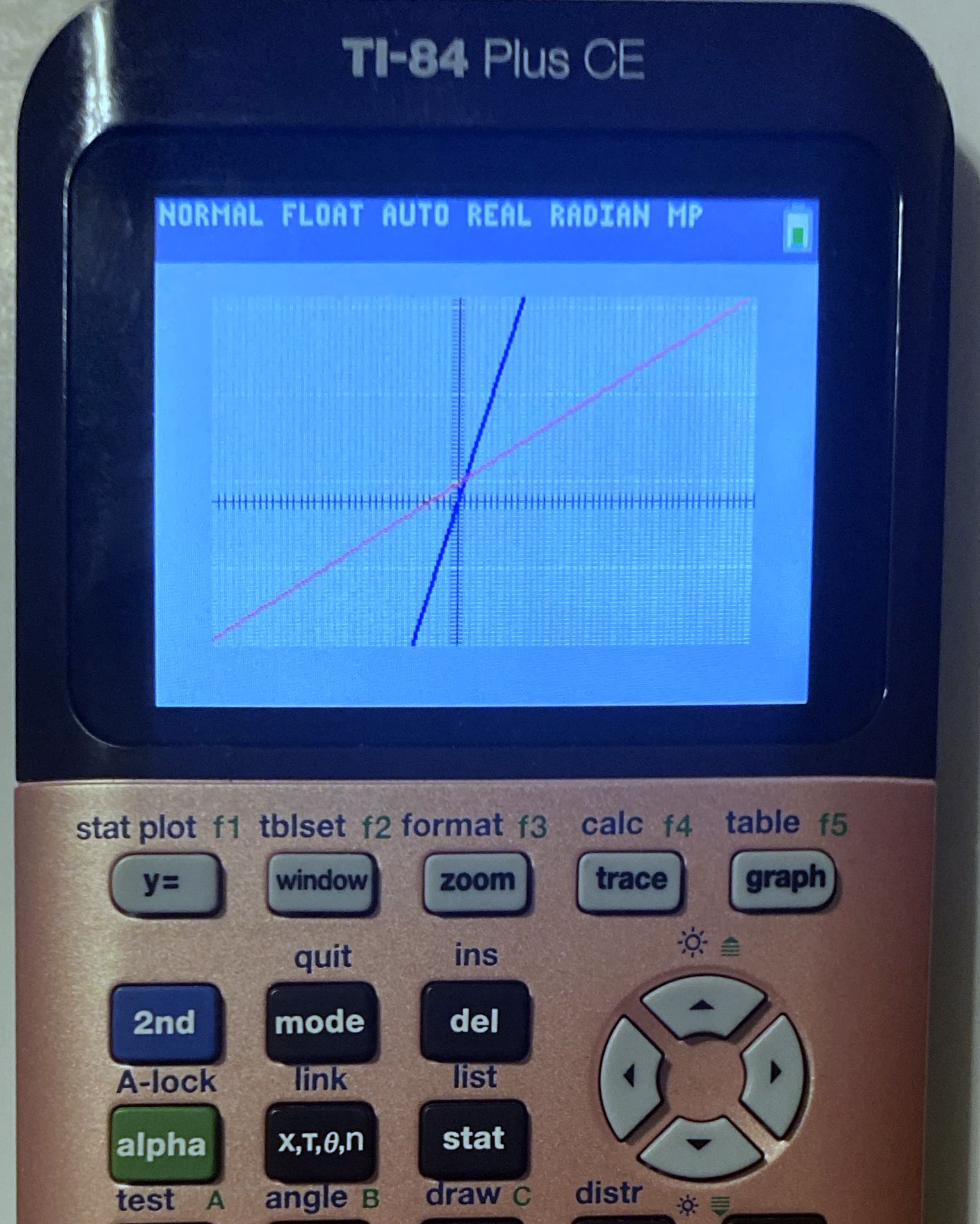
The last step is easy to skip, but it is one of the best ways to catch mistakes. A circle’s top should have a horizontal tangent. Its left and right edges should have vertical tangents. If a derivative gives a slope that clashes with the picture, the algebra deserves another look.
Implicit differentiation can feel strange at first because it asks you to accept that \(y\) is moving even when the equation does not isolate it. Once that idea settles, the method becomes a clean way to work with curves in their natural form. It lets calculus follow the relationship directly, which is often the most honest way to understand the shape of a graph.






Add comment