 Akshay Dinesh
Valley Forge is often remembered as a place of snow, hunger, and soldiers wrapped in rags. That memory is not wrong, but it is incomplete. The winter encampment from December 1777 to June 1778 was not a battle, and it did not end with a dramatic charge across an open field. Its importance came from something quieter: an army that had been battered, poorly supplied, and politically fragile found a way to survive long enough to become more disciplined, more organized, and more capable.
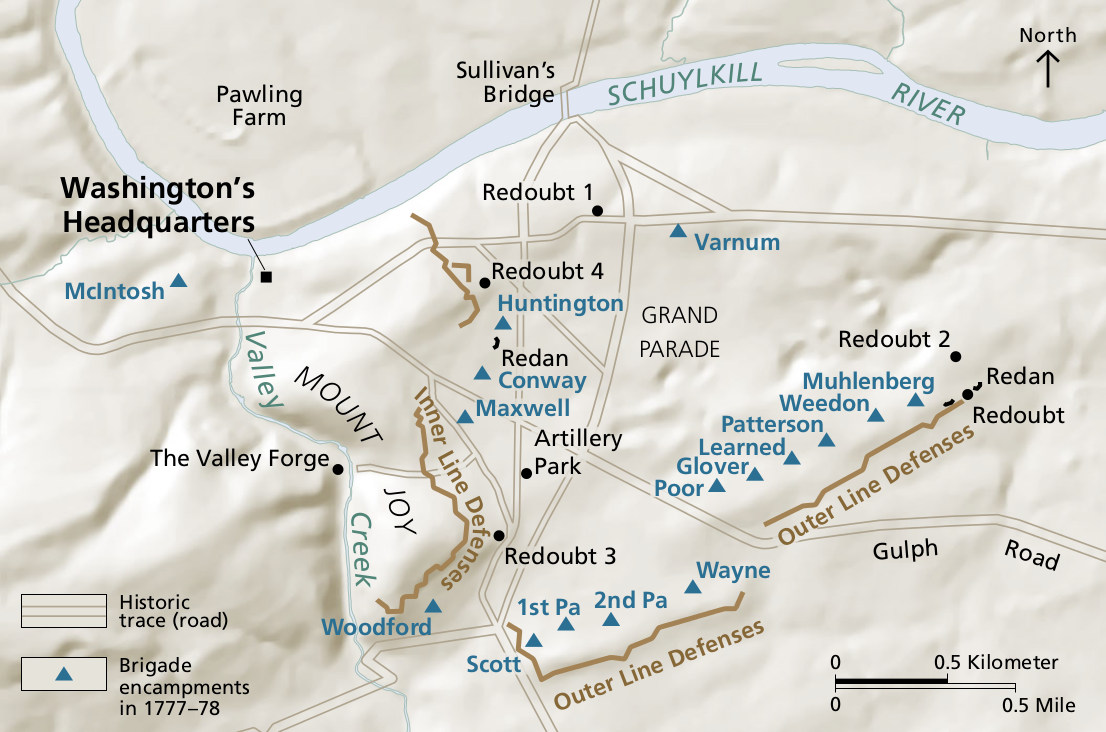
The Continental Army arrived after a difficult campaign around Philadelphia. British forces had captured the colonial capital, and George Washington’s army needed a place close enough to watch the enemy but far enough away to avoid an easy surprise attack. Valley Forge, northwest of Philadelphia, offered defensible high ground, access to roads, and a position between the British and the Continental Congress at York. It became a test of military endurance, but also of leadership, supply, training, and public commitment to the Revolution.
A Winter Camp Chosen for Strategy
Valley Forge was not chosen because it was comfortable. Washington needed a winter position after the defeats at Brandywine and Germantown, and the army could not simply disappear until spring. The camp had to keep pressure on the British occupation of Philadelphia while protecting supply routes and the political center of the American cause. The rolling terrain around Valley Forge helped the army build defensive lines and watch nearby movement.
The National Park Service identifies the encampment as the Continental Army’s 1777-1778 winter camp under Washington’s command. That detail matters because winter camps were part of eighteenth-century warfare. Armies often slowed major operations in cold weather, but they still had to feed, house, guard, and discipline thousands of people. A winter camp could strengthen an army or expose every weakness inside it.
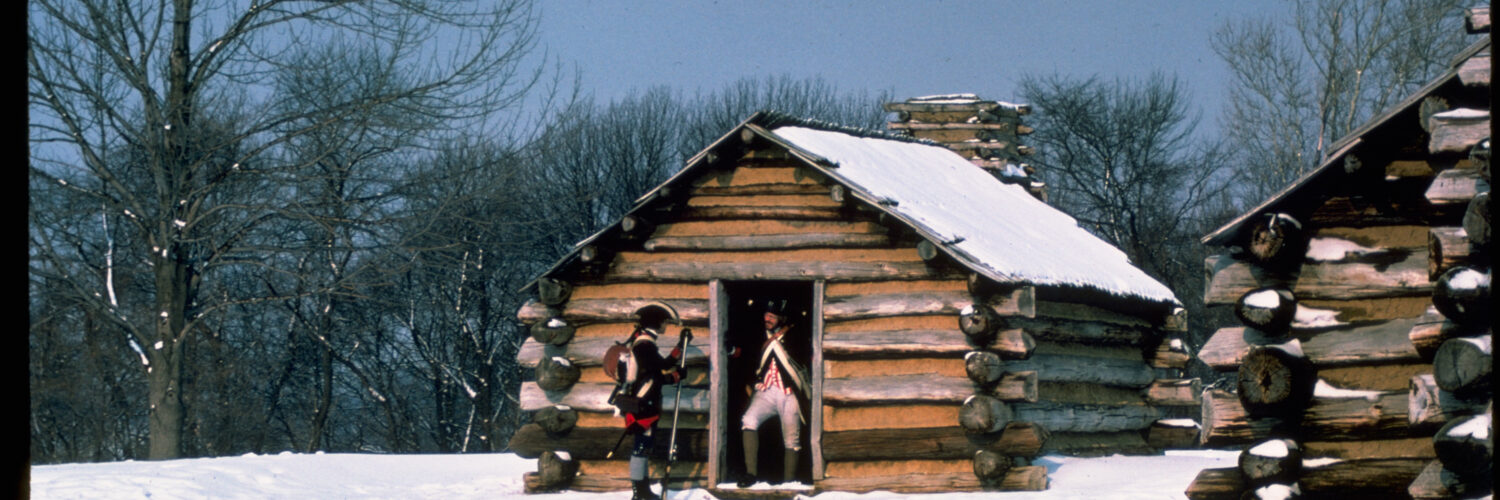
At Valley Forge, those weaknesses were painfully visible. The army included soldiers from different states, units with uneven training, officers with varying experience, and many people attached to camp life, including laborers, servants, family members, and other support workers. The Revolution depended not only on battlefield courage but on whether this mix of people could function as a lasting military force.
Hardship Was Real, But Not the Whole Story
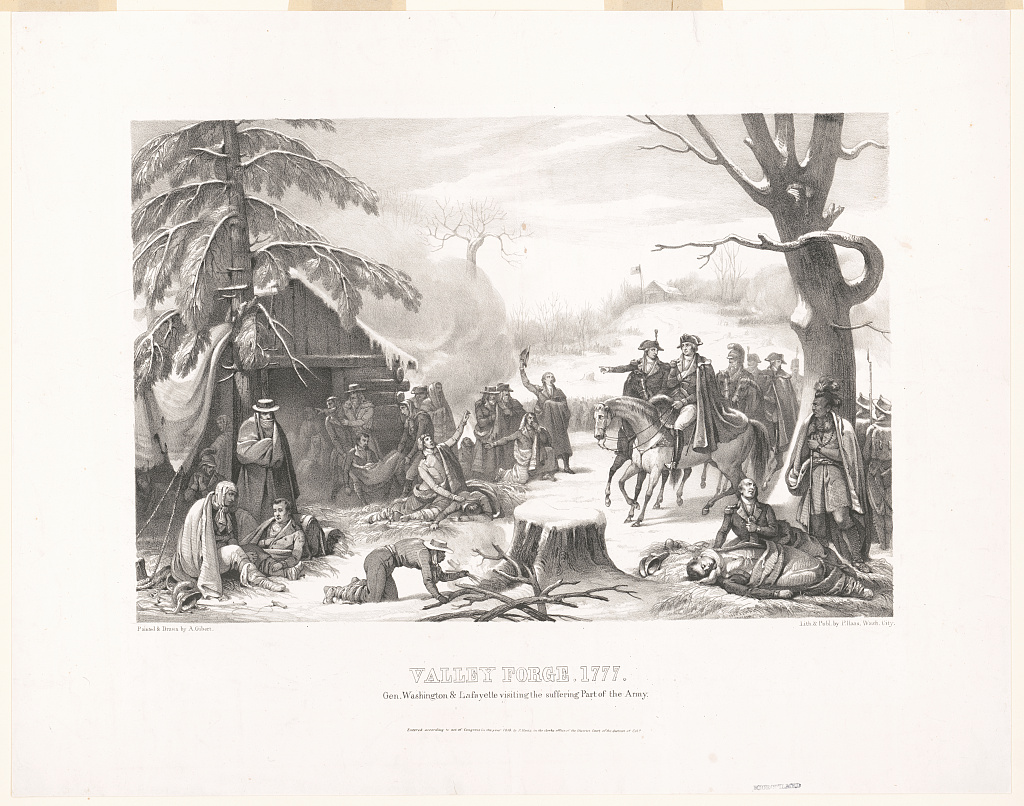
The suffering at Valley Forge became famous for good reason. Soldiers lacked adequate clothing, shoes, food, blankets, and shelter. Disease spread through crowded conditions. Supply failures left people hungry even when food existed elsewhere in the region. Washington and other officers repeatedly complained that the army’s survival was being endangered by weak systems of transportation, purchasing, and political support.
Still, the familiar image of Valley Forge as only a frozen disaster can mislead readers. The winter of 1777-1778 was difficult, but the larger problem was not cold alone. Shortages, disease, poor sanitation, weak administration, and the young nation’s limited resources all pressed on the army at once. The camp showed that independence required more than bold declarations. It required wagons, flour, shoes, hospitals, records, officers, and people willing to keep working when victory was far from certain.
That is why Valley Forge is more useful as a lesson in systems than as a simple story of misery. An army can lose strength without losing a battle if supply lines fail. It can lose morale if soldiers believe their sacrifices are being ignored. It can lose discipline if training and command structures are too uneven. Valley Forge brought these problems together in one place where they had to be faced.
Training Turned Survival Into Improvement
The most important change at Valley Forge was not that the army endured hardship. It was that the army improved while enduring it. Friedrich Wilhelm von Steuben, a Prussian-trained officer, arrived during the encampment and helped introduce a more consistent system of drill, movement, camp organization, and battlefield discipline. His work did not magically transform the army overnight, but it gave officers and soldiers a shared method.
Before this kind of training, units from different states could follow different habits and commands. That made it harder to maneuver under pressure. Von Steuben’s drill helped soldiers respond more predictably, load and fire more efficiently, and move as parts of a larger force. Just as important, he trained officers and noncommissioned officers so the system could spread beyond a single parade ground.
Training also changed confidence. A soldier who understands the pattern of movement is less dependent on panic or guesswork. An officer who can rely on a unit to hold formation has more choices in a fight. After Valley Forge, the Continental Army still faced shortages and danger, but it was less like a loose collection of state forces and more like a national army learning how to act together.
Leadership Had to Hold the Army Together
Washington’s role at Valley Forge was not only to command. He had to hold together soldiers, officers, Congress, state governments, foreign allies, and public opinion. The winter exposed frustrations inside the army and doubts outside it. Soldiers wanted pay, food, and clothing. Officers wanted recognition and authority. Civilian leaders wanted results but often struggled to provide the support required to get them.
This made leadership a practical skill, not just a matter of reputation. Washington sent reports, requested supplies, managed disputes, supported reforms, and kept the army from scattering. He also had to preserve legitimacy. If the army became a starving, undisciplined crowd, it could damage the cause it was supposed to defend. If it dissolved, independence might become impossible to protect.
Other figures mattered as well. The Marquis de Lafayette stayed with the army and strengthened the connection between the American cause and French support. Nathanael Greene became quartermaster general in 1778 and helped improve supply administration. Camp followers and workers performed labor that kept daily life functioning. Valley Forge was not the work of one heroic figure standing alone. It was a strained community trying to keep an army alive.
The Turning Point Was What Came After
Calling Valley Forge a turning point does not mean the war was suddenly won there. The army left in June 1778, and the conflict continued for years. The better question is what changed after the encampment. The Continental Army emerged with improved discipline, stronger training habits, and a clearer sense of itself as a shared military force rather than a temporary emergency.
The timing also mattered. France formally allied with the United States in 1778, bringing money, supplies, troops, and naval power into the war. Valley Forge and the French alliance were connected in the wider story of the Revolution: one showed that the American army could survive; the other expanded the war beyond Britain’s easier control. Together, they changed what seemed possible.
When the army marched out of Valley Forge, it had not become perfect. It still faced supply problems, political tension, and hard fighting. But it had crossed a dangerous threshold. The Revolution now had an army that had endured a crisis, absorbed training, and remained in the field. That kind of survival carried strategic meaning.
Why Valley Forge Still Matters
Valley Forge remains powerful because it turns the Revolution from a story of famous documents and battlefield victories into a story of persistence under pressure. It shows that political ideals do not defend themselves. People had to build institutions, solve logistical problems, accept discipline, and keep faith with a cause that was still uncertain.
It also complicates the myth. Valley Forge was not simply a scene of noble suffering, and it was not a neat story where hardship automatically produces victory. Suffering can break an army. At Valley Forge, hardship mattered because it was paired with organization, training, leadership, and outside support. The camp became meaningful because people used the crisis to strengthen what had almost failed.
That is why the place still belongs in the study of the American Revolution. Valley Forge teaches that turning points are not always loud. Sometimes they happen in huts, muddy roads, supply offices, drill fields, and letters asking for shoes and flour. The Revolution survived at Valley Forge not because survival was guaranteed, but because enough people kept doing the difficult work that made survival possible.