 Akshay Dinesh
A ballot can be much longer than the part that receives the most news coverage. Alongside races for Congress or governor, a voter may find judges, school-board members, county officials, city charter questions, tax proposals, bond measures, and offices whose names are unfamiliar. Meeting that list for the first time in a voting booth turns a civic decision into a race against the clock.
An official sample ballot solves that problem. It is an advance copy showing the contests and questions a particular voter should expect, though it is not a ballot that can be cast. Because districts can change from one side of a street to the other, the useful version is tied to the voter’s address and precinct. Reading it early creates time to understand the jobs, compare the choices, check claims, and arrive with a plan.
Find the ballot that matches your address
Start with a state or local election office, not a campaign advertisement or an image shared on social media. The U.S. Election Assistance Commission directs voters to state election offices and local election-office directories because rules, deadlines, and ballot formats vary across the country. A county clerk, board of elections, registrar, or similar local agency usually publishes the most specific information.
Many official lookup tools ask for a home address before displaying a sample ballot. That detail matters. A city may be divided among congressional, legislative, school, utility, judicial, and special-purpose districts, and those boundaries do not always line up. Two nearby households can therefore receive different ballots even when they use the same polling place. Enter the address exactly as the election office requests, then check that the name, precinct, and election date make sense.
Official sample ballots may appear as a PDF, an interactive web page, or part of a voter-information booklet. The Election Assistance Commission notes that printed samples are often marked by their color, paper, or an unofficial label so no one mistakes them for castable ballots. That label does not mean the information is untrustworthy. It means the document is a preview rather than a legal voting instrument.
Check again shortly before voting, especially in a special election or a contest affected by a court ruling. Candidates can withdraw, write-in lists may be finalized later, and polling details can change. If a ballot circulating online conflicts with the election office’s current version, treat the official source as the authority and contact that office with questions.
Read the instructions before the names
The smallest words on a ballot can change the meaning of a choice. Look first for directions such as vote for one, vote for no more than two, or rank candidates in order. A school board contest may fill three seats at once, while another race allows only one selection. A ranked-choice contest asks for preferences rather than several equally weighted votes.
Notice how offices are grouped. Party labels may appear beside candidates in partisan races, while judicial, municipal, and school contests may be nonpartisan. Nonpartisan does not mean the office lacks important policy choices; it means party nomination is not printed in the same way. Some ballots also include uncontested races. Reading every page prevents a voter from overlooking questions placed after the most prominent offices.
Ballot measures require a slower pass. The printed question may describe a constitutional amendment, bond, levy, referendum, or citizen initiative in compact legal language. Identify what a yes vote would change, what a no vote would preserve, when the change would take effect, and whether it affects taxes or public spending. Official voter guides often include a plain-language summary, a fiscal analysis, and arguments submitted by supporters and opponents. The Election Assistance Commission reports that every state with a citizen-initiative process has a legal requirement for voter information, although the contents and distribution methods differ.
Marking rules also deserve attention. Paper ballots commonly require a filled oval or connected arrow, and write-in procedures vary. If the sample says to use a particular kind of pen, follow the instructions on the real ballot at the polling place or in the mail packet. An official sample is useful for notes, but never assume it can replace the ballot issued by election officials.
Research offices before comparing candidates
A candidate’s promises make more sense after the office’s powers are clear. A county commissioner, sheriff, prosecutor, school-board member, and state legislator control different budgets and answer to different laws. Search the relevant government website for a description of the office, its term, and its responsibilities. This prevents a common mistake: rewarding or blaming a candidate for something the position cannot actually do.
Next, choose a short list of issues connected to that job. For a school-board race, that might include district budgets, curriculum policy, facilities, and the superintendent’s evaluation. For a county office, it might include public records, elections, courts, roads, or emergency services. The goal is not to research every public question ever raised. It is to compare candidates on decisions they could realistically face.
Read each candidate’s own website or statement, but treat it as a primary source about what that candidate wants voters to believe. Then look for independent reporting, public debate recordings, government meeting records, and endorsements with their sponsors clearly identified. A useful voter guide separates candidate answers from the guide’s own conclusions. VOTE411, run by the League of Women Voters Education Fund, publishes unedited responses submitted by candidates and states that the organization neither supports nor opposes candidates or parties.
Absence is information, but it needs careful interpretation. A blank questionnaire can mean a candidate declined, missed a deadline, or was never reached. It does not prove a position. When a claim rests on a clip or screenshot, find the full speech, document, vote, or interview. Compare the date and context, and check whether a correction has been issued.

Separate official facts from persuasive material
Election information falls into different categories. An election office is the best source for registration status, polling locations, identification rules, mail-ballot procedures, deadlines, and the official list of contests. A campaign is the best source for its own platform. Journalists and civic groups can provide comparison and context. Political parties, advocacy organizations, and endorsing groups provide arguments shaped by their goals.
Those sources are not interchangeable. A polished mailer labeled as a voter guide may recommend a slate of candidates while resembling an official publication. Look for the publisher, funding disclosure, web domain, and contact information. Official U.S. government sites often use .gov, but many county election offices use a county or state domain with a different ending. The Election Assistance Commission recommends state and local election officials as trusted sources for the mechanics of voting.
Be especially skeptical of urgent posts claiming that an election date, polling place, or eligibility rule has suddenly changed. Verify the claim on the election office’s current page or by calling the office. Search results and social posts can preserve old instructions after a deadline has passed. A screenshot without a link or date is a clue to pause, not a reason to hurry.
For ballot questions, distinguish a neutral summary from an argument. Fiscal notes and legal analyses explain anticipated effects, but they can still contain assumptions. Support and opposition statements are designed to persuade. Read both, then trace important claims back to the proposed text, budget estimate, or named evidence. If a campaign says a measure costs a precise amount, ask whether the figure is annual, total, per household, or based on a particular scenario.
Turn the sample into a simple voting plan
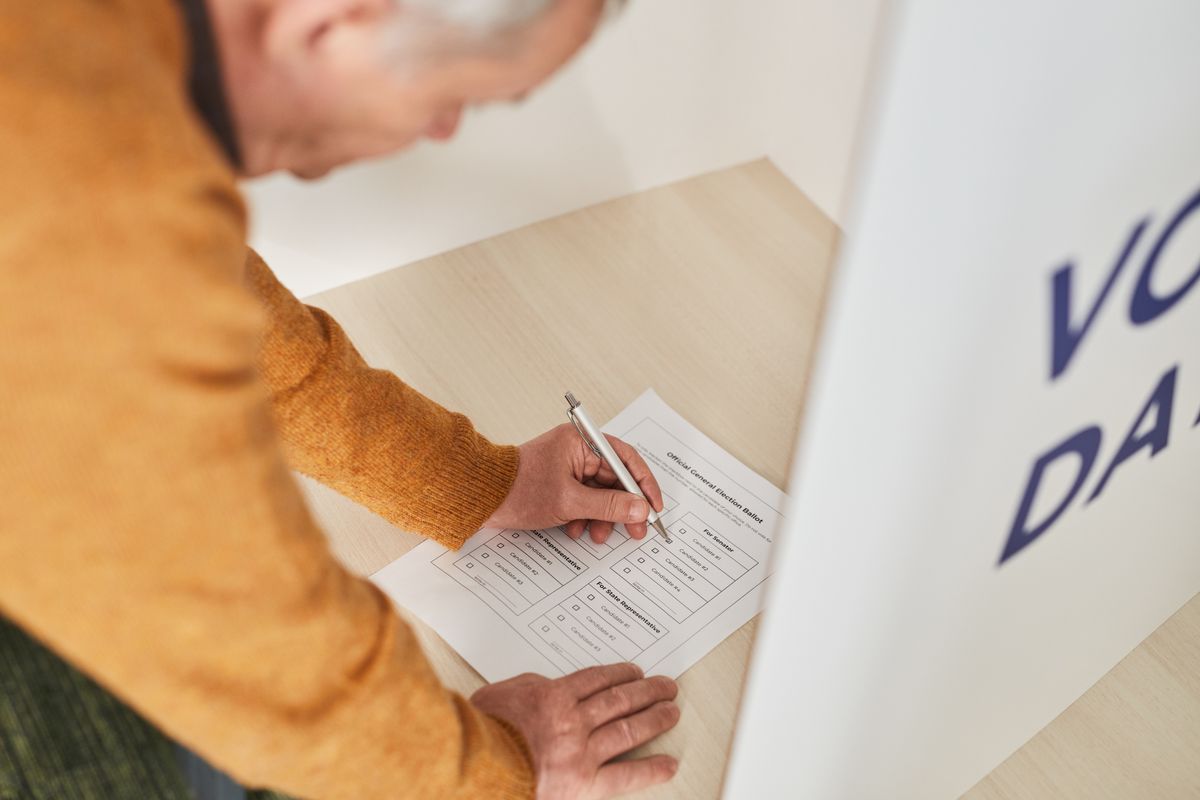
After researching, record choices in a way allowed by local rules. Some jurisdictions permit voters to bring a marked sample ballot or paper notes into the booth, while rules about phones and photography can differ. Check the local election office before relying on a phone. A printed list is easy to use without searching or scrolling, and it can include reminders about contests that appear on a second page.
Do not feel required to make a choice in every contest. In general, leaving one race blank does not cancel votes in the races that were completed; election officials call this an undervote. Still, review every page before submitting because an accidental omission cannot always be corrected after the ballot is cast. On a paper ballot at a polling place, ask a poll worker what to do if a mark is wrong or the ballot is damaged rather than trying to improvise a repair.
Finish the plan with the practical details: confirm registration, choose when and where to vote, check identification requirements, and note any mail-ballot return deadline. The Election Assistance Commission’s voter materials emphasize that procedures differ by state and that local officials are the right source for exact instructions. Preparation is most useful when it covers both the decisions and the process.
A sample ballot turns a broad instruction to “be informed” into a manageable sequence. Find the official address-specific version, read its directions, learn what each office can do, compare evidence from clearly identified sources, and record a lawful plan. The payoff is not speed for its own sake. It is the ability to give small local contests and complicated measures the same deliberate attention as the races at the top of the page.