

 Akshay Dinesh
Some bills in Congress move slowly because they need broad agreement, especially in the Senate. Budget reconciliation is different. It is a special process for certain tax, spending, and debt-limit changes, and it can let a bill move through the Senate without the usual 60-vote hurdle that often shapes major legislation. That makes reconciliation one of the most powerful procedural tools in modern American government. It also makes it easy to misunderstand, because the word sounds technical while the consequences can affect taxes, health programs, student aid, energy policy, and the federal deficit.
Why reconciliation exists
Budget reconciliation grew out of the Congressional Budget Act of 1974, the law that also created the modern congressional budget process and the Congressional Budget Office. The basic idea was practical: if Congress adopted a budget plan, it needed a way to bring existing tax and spending laws into line with that plan. The word reconciliation means making those laws match the budget targets Congress has set for itself.
At first, reconciliation was mainly thought of as a way to reduce deficits by changing mandatory spending or raising revenue. Over time, both parties learned that the process could also be used for large tax cuts, health policy changes, and other fiscal packages. That history matters because reconciliation is not a separate kind of law. It is a special path for passing a law, and the path changes the political math.
The biggest difference is in the Senate. Most major Senate bills can be delayed or blocked by extended debate unless supporters can assemble 60 votes to move forward. Reconciliation bills receive expedited consideration, meaning debate is limited and final passage can usually happen by a simple majority. In a closely divided Senate, that can be the difference between a bill that is impossible and a bill that has a real chance.
How the process begins
Reconciliation does not begin with a normal bill. It begins with a budget resolution, a congressional blueprint that sets broad targets for spending, revenue, deficits, and debt. A budget resolution is not signed by the president and does not become law. Its power comes from the instructions it gives to House and Senate committees.
Those instructions tell specific committees to produce legislation that changes spending, revenue, or the debt limit by a certain amount over a certain period. For example, a committee might be directed to reduce spending by a set amount, increase revenue, or report legislation that affects programs within its jurisdiction. The committee decides the policy details, but the budget instruction defines the fiscal target.
After committees write their portions, the Budget Committees assemble the pieces into a reconciliation bill. The House and Senate may pass different versions, and those versions still have to be brought into agreement before a final bill can go to the president. Reconciliation speeds up parts of the process, but it does not erase the need for both chambers to pass the same legislative text.

Why Senate rules make it powerful
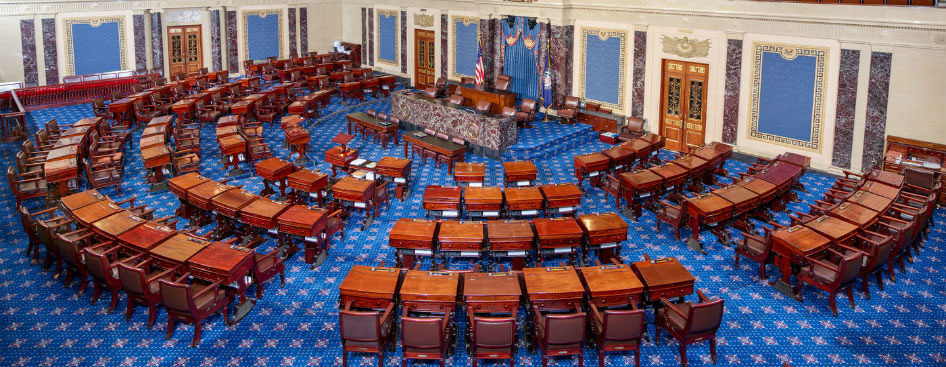
The Senate is where reconciliation becomes especially important. Under ordinary Senate practice, a determined minority can often use the filibuster to prevent a final vote unless 60 senators agree to end debate. Reconciliation bills are protected from that kind of open-ended delay because debate time is limited by statute.
That does not make reconciliation easy. Senators can still offer many amendments during a long floor session often called a vote-a-rama. The bill can change, provisions can be challenged, and leaders still need enough votes for final passage. A narrow majority can use reconciliation only if its own members stay together, which is often difficult when a bill contains many tax and spending decisions at once.
The faster path also explains why reconciliation attracts so much attention. A policy that might fail under normal Senate rules can sometimes pass if it is written in budgetary terms and fits the process. That creates a strong incentive to place major priorities inside a reconciliation bill. It also creates pressure to stretch the process beyond what it was originally designed to do.
What the Byrd Rule keeps out
The main limit on reconciliation in the Senate is the Byrd Rule, named for Senator Robert C. Byrd of West Virginia. The rule is meant to keep reconciliation focused on budget matters instead of turning it into a shortcut for any policy a majority wants to pass. If a provision is considered extraneous, a senator may raise a point of order against it.
A provision can run into Byrd Rule trouble for several reasons. It may have no real budget effect. Its budget effect may be only incidental compared with its policy impact. It may fall outside the committee’s instructions, change Social Security, or increase deficits beyond the budget window in ways the rule does not allow. If a point of order succeeds, the provision can be removed unless 60 senators vote to waive the rule.
This is why news about reconciliation often includes references to the Senate parliamentarian, the nonpartisan official who advises on Senate rules. The parliamentarian does not decide whether a policy is good or bad. The question is narrower: whether the provision fits the rules that allow it to travel on the reconciliation path. A proposal can be popular, controversial, expensive, or cheap and still fail if it does not fit the process.
How budget scores shape the debate
Because reconciliation is tied to spending and revenue, estimates matter. The Congressional Budget Office, often called CBO, provides cost estimates for legislation considered by Congress. Those estimates project how a bill would affect federal spending, revenue, deficits, and sometimes the number of people affected by a program change.
A CBO score is not a prediction that every detail will unfold perfectly. It is an estimate based on current law, economic assumptions, program data, and the specific wording of the proposal. Still, it becomes a common reference point because everyone in the debate needs some shared measure of budget impact. Supporters may argue that a policy is worth the cost, while critics may argue that the score shows too much borrowing or too little savings.
Budget scores also interact with Senate rules. If a bill is supposed to meet a savings target, CBO’s estimate helps show whether it does. If a provision appears to raise deficits outside the allowed period, that can matter under reconciliation limits. The numbers do not settle every political argument, but they shape what can plausibly fit inside the bill.
How to read reconciliation news carefully
When reconciliation appears in the news, the first question is not simply whether a bill is large or controversial. The better question is what kind of budget changes it makes. Reconciliation can affect direct spending programs, tax law, and the debt limit, but it generally cannot carry unrelated policy changes just because lawmakers attach them to the same bill.
It also helps to separate the procedure from the policy. Saying that a bill uses reconciliation explains how Congress is trying to pass it, not whether the bill is wise. Two very different bills can use the same process. A tax-cut package, a deficit-reduction package, and a health-program package may all move through reconciliation if they meet the required budget conditions.
Readers should also watch for temporary provisions. Lawmakers sometimes set tax or spending changes to expire before the end of the budget window so the bill fits reconciliation rules or appears less costly on paper. That does not mean the policy will truly disappear when the expiration date arrives. Future Congresses may face pressure to extend it, which is why temporary provisions can make a bill’s long-term cost harder to judge.

Budget reconciliation is powerful because it changes the route a bill can take through Congress. It can turn a narrow Senate majority into a working path for major fiscal legislation, but only within rules built around the federal budget. The process rewards careful drafting, clear budget effects, and party unity, while the Byrd Rule and CBO estimates keep reminding lawmakers that reconciliation is not a free pass. Understanding that balance makes the headlines easier to read: the fight is not only over what Congress wants to do, but also over whether the rules allow it to be done this way.





Add comment