 Akshay Dinesh
NASA is accepting applications for its next astronaut candidate class through 11:59 p.m. EST on Thursday, December 3, 2026. The opening is rare, highly competitive, and more varied than the old image of an astronaut as only a military test pilot. Scientists, engineers, physicians, advanced-practice clinicians, and experienced pilots can all qualify through different routes. The first task is not deciding whether a résumé looks spectacular enough. It is reading the current federal job announcement closely and determining whether every minimum requirement can be documented.
NASA says it expects to make final selections in late 2027, with the new candidates then beginning intensive training at Johnson Space Center in Houston. The agency selected 10 people from more than 8,000 applicants in its previous round, announced in 2025. Those numbers show how selective the process is, but they should not be used to talk a qualified person out of applying. They show why a complete, precise application matters.
Who meets NASA’s basic astronaut requirements?
Every applicant must be a United States citizen and must be able to pass NASA’s long-duration astronaut flight physical. NASA also looks for leadership, teamwork, and communication skills because spaceflight is an operational job performed in small crews under pressure. Technical knowledge is essential, but it is only one part of the work.
Most applicants meet the education requirement with a master’s degree from an accredited institution in engineering, biological science, physical science, computer science, or mathematics. NASA’s current announcement also recognizes several alternative routes:
- At least two completed years in a doctoral program in an appropriate technical field.
- A completed qualifying medical or advanced clinical degree, such as an MD, DO, physician assistant degree, Doctor of Nursing Practice, or family nurse practitioner degree.
- Completion of, or current enrollment in, a nationally recognized test pilot school program that will be finished by July 2027. An applicant using this route must also hold a qualifying STEM bachelor’s degree when test pilot school is the only advanced technical credential.
Education alone is not enough. Candidates generally need at least three years of related professional experience gained after completing the qualifying degree. Medical residency may count for physicians if it is completed by July 2027. The pilot route uses flight-hour thresholds instead: 750 pilot-in-command hours in high-performance jets; or 1,500 total hours in other fixed-wing aircraft, including 750 as pilot in command; or 1,000 rotary-wing hours, including 300 as pilot in command. Because the exact wording controls eligibility, applicants should compare their records with the official USAJOBS announcement rather than relying on a summary.
Meeting the minimum is only the starting point
A checklist can establish eligibility, but it cannot show how someone will behave when plans change, information is incomplete, or a crew must solve a problem together. NASA’s own description emphasizes sound judgment, technical excellence, teamwork, communication, and courage. Those qualities can appear in many careers: managing a difficult research campaign, treating patients during emergencies, leading flight-test work, operating complex machinery, or coordinating a team in a remote environment.
The strongest evidence usually comes from specific responsibility rather than impressive-sounding labels. “Led a team” says little on its own. A clearer account identifies the mission, the applicant’s decisions, the technical or human constraints, and the measurable result. Federal application reviewers need enough detail to understand the scope of the work and determine whether it counts as qualifying experience.
Variety can help when it reflects real depth. An engineer who has also worked in field science, a physician who has led emergency teams, or a researcher who has managed hazardous operations may bring useful combinations of skills. Randomly collecting credentials is less persuasive than showing sustained growth, increasing responsibility, and the ability to learn across disciplines. Astronaut candidates eventually have to move between spacecraft systems, robotics, geology, aviation, medicine, and survival training, so adaptability must rest on a strong professional foundation.
How to prepare an accurate federal application
The official posting on USAJOBS is the controlling document. Applicants should begin there, note every required file and questionnaire, and work backward from the December 3 deadline. Waiting until the final evening creates unnecessary risk: transcripts can be incomplete, employment dates can be unclear, and an upload can fail at exactly the wrong moment.
A practical review should cover these points:
- Education: Confirm that the institution, degree, field, completion date, and required transcript evidence are shown clearly.
- Experience: Give month-and-year dates, hours where requested, duties, level of responsibility, and enough technical context for a reviewer to evaluate the work.
- Flight records: Separate total time from pilot-in-command time and identify the aircraft categories that match the announcement.
- Medical or test-pilot milestones: Check the July 2027 completion rules that apply to these pathways.
- Questionnaire responses: Make sure every answer agrees with the résumé and supporting documents.
Accuracy matters more than dramatic language. Applicants should never inflate a role, estimate a credential carelessly, or assume a reviewer will infer missing details. A concise statement with concrete facts is easier to evaluate than a paragraph filled with adjectives. It is also worth asking a trusted colleague to check dates, terminology, and unexplained abbreviations, while keeping every claim in the applicant’s own voice and fully verifiable.
What happens after the application closes?
NASA’s Astronaut Selection Board reviews applications and identifies a much smaller group for interviews at Johnson Space Center. NASA says about half of those invited for an initial interview are asked to return for a second round. Finalists also face the medical evaluation required for long-duration spaceflight. The process is deliberately long because the agency is choosing people for years of training, operational assignments, and possible missions rather than filling a short-term vacancy.
NASA expects to announce the selected class in late 2027. The USAJOBS listing describes a 30-month time-limited appointment for selected astronaut candidates, followed by a permanent appointment after successful completion of candidate training. The position is based in Houston, and the listing gives a starting salary of $164,395 under the 2026 pay schedule. Details such as compensation and appointment terms can change, so the live announcement remains the best source.
Selection does not mean an immediate flight assignment. Candidates first spend roughly two years learning core astronaut skills and being evaluated throughout the program. Even after graduation, an astronaut may support other crews, work in mission control, help develop spacecraft, test procedures, or perform technical assignments for years before flying. The career is built around service to missions and teams, not simply the moment of launch.
What astronaut candidates actually train to do
Basic training covers far more than physical fitness. NASA lists spacewalking, space-station operations, T-38 jet flying, and robotic-arm control among the core skills. The new class may also prepare for lunar-surface work, which makes field geology, careful observation, sampling, navigation, and communication with scientists especially relevant. Candidates must learn to follow precise procedures while retaining enough judgment to respond when reality does not match the plan.
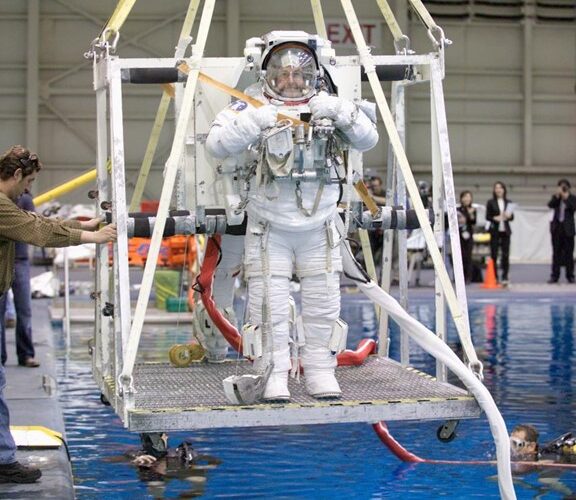
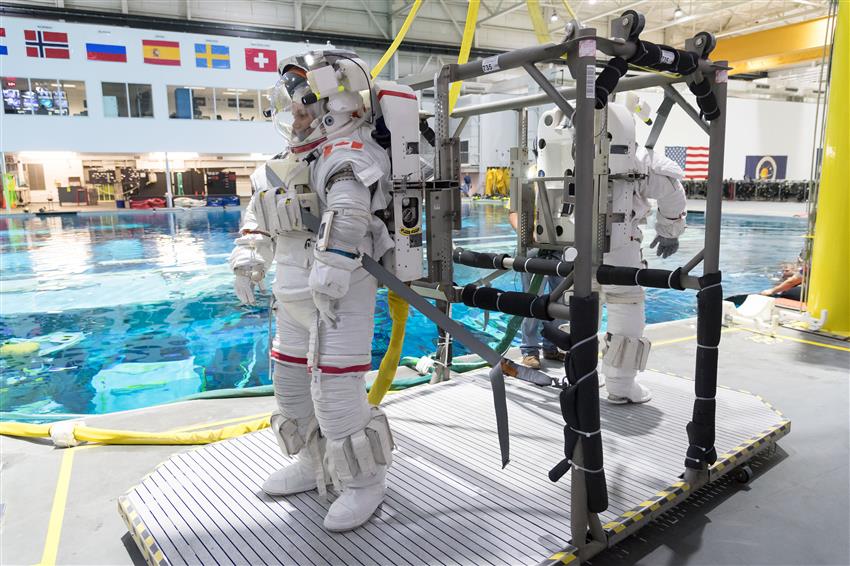
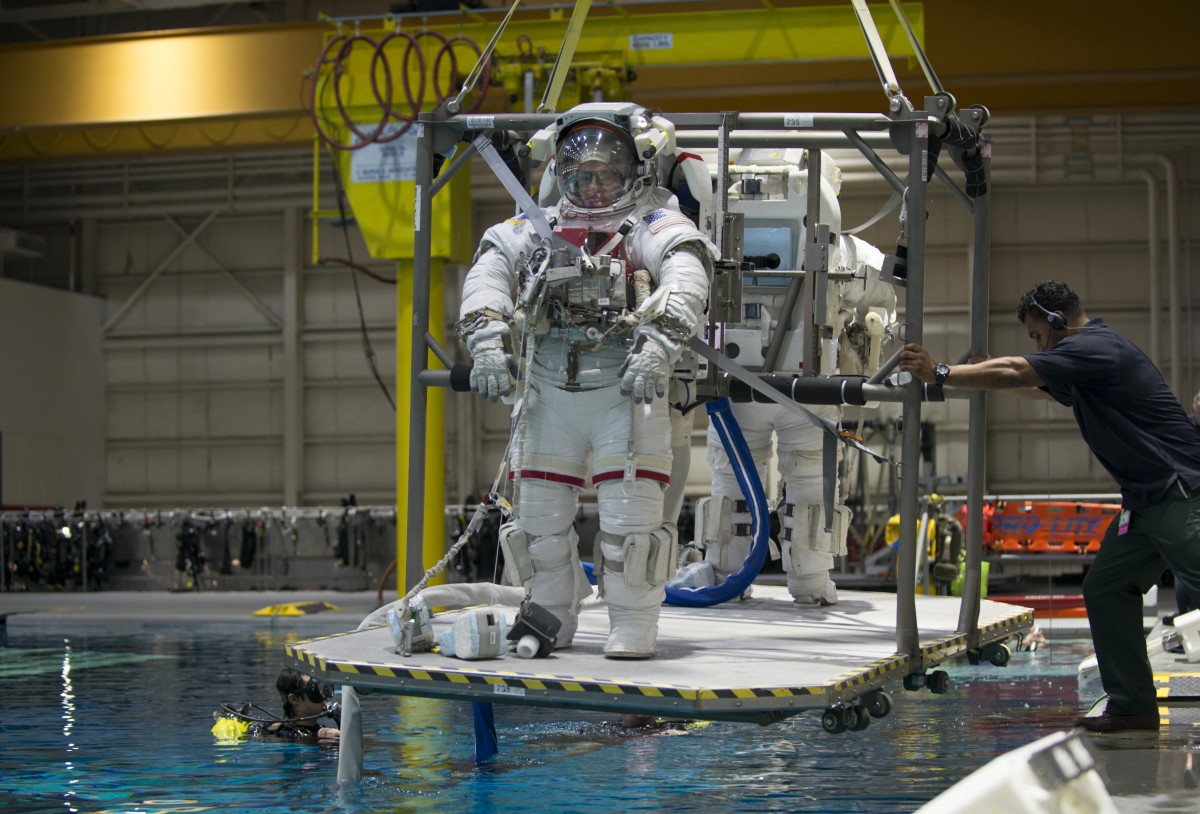
Underwater practice at the Neutral Buoyancy Laboratory helps crews rehearse the movement, tool use, and teamwork required for spacewalks. T-38 flights develop cockpit discipline, rapid communication, and decision-making in a demanding environment. Robotics training teaches operators to think in three dimensions while accounting for delayed motion and limited views. Survival and emergency exercises expose weaknesses before a real mission can turn them into danger.
This breadth explains why NASA does not recruit from one profession. A spacecraft crew needs people who can master unfamiliar systems, accept feedback, remain steady under scrutiny, and contribute without competing for attention. Technical accomplishment may open the door, but dependable performance with other people is what makes a candidate useful once inside.
For qualified professionals, the sensible next step is straightforward: read NASA’s “Become an Astronaut” page, open the linked USAJOBS announcement, and test every requirement against documented facts. For students who are years away from eligibility, the current opening offers a different lesson. There is no single perfect major or résumé trick. Deep competence, responsible work, physical readiness, curiosity, and the ability to help a team solve hard problems are the durable parts of the path.