 Akshay Dinesh
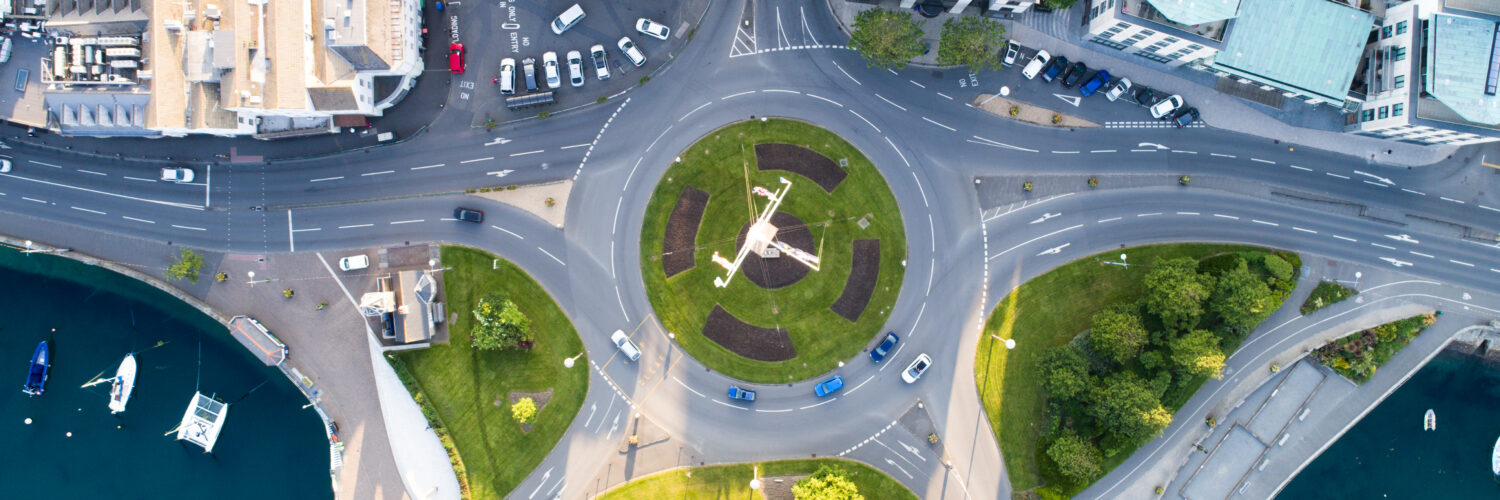
A busy intersection asks drivers, walkers, and cyclists to make several decisions at once. Someone may be turning left across traffic, another driver may be trying to beat a yellow light, and a pedestrian may be judging whether an approaching car is actually going to stop. Modern roundabouts change that problem by redesigning the shape of the intersection itself. Instead of crossing paths at right angles, vehicles slow down, yield, and move in one direction around a central island.
That circular movement can look confusing at first, especially in places where traffic signals and four-way stops are more familiar. Yet the main idea is simple: lower the speed, lower the number of dangerous crossing points, and make every driver choose a gap before entering. The Federal Highway Administration lists roundabouts as a Proven Safety Countermeasure because this design can substantially reduce crashes that cause serious injury or death. The safety benefit comes less from the circle as a symbol and more from the way the road geometry changes human behavior.
The Problem With Traditional Intersections
At a conventional four-leg intersection, traffic can move straight, turn left, turn right, stop, start, and cross from several directions. Engineers often describe these possible meeting places as conflict points. Some conflicts are mild, such as a slow merge. Others are far more dangerous, such as a right-angle crash when one vehicle crosses in front of another at speed.
Left turns are especially risky because they often send one driver across opposing traffic. A driver may misjudge the speed of an oncoming car, feel pressured by traffic behind them, or try to finish the turn during a signal change. Stop-controlled intersections have their own problems: drivers may roll through, misunderstand who arrived first, or fail to see a vehicle approaching from the side. Traffic lights organize the movement, but they cannot remove every high-speed crossing conflict.
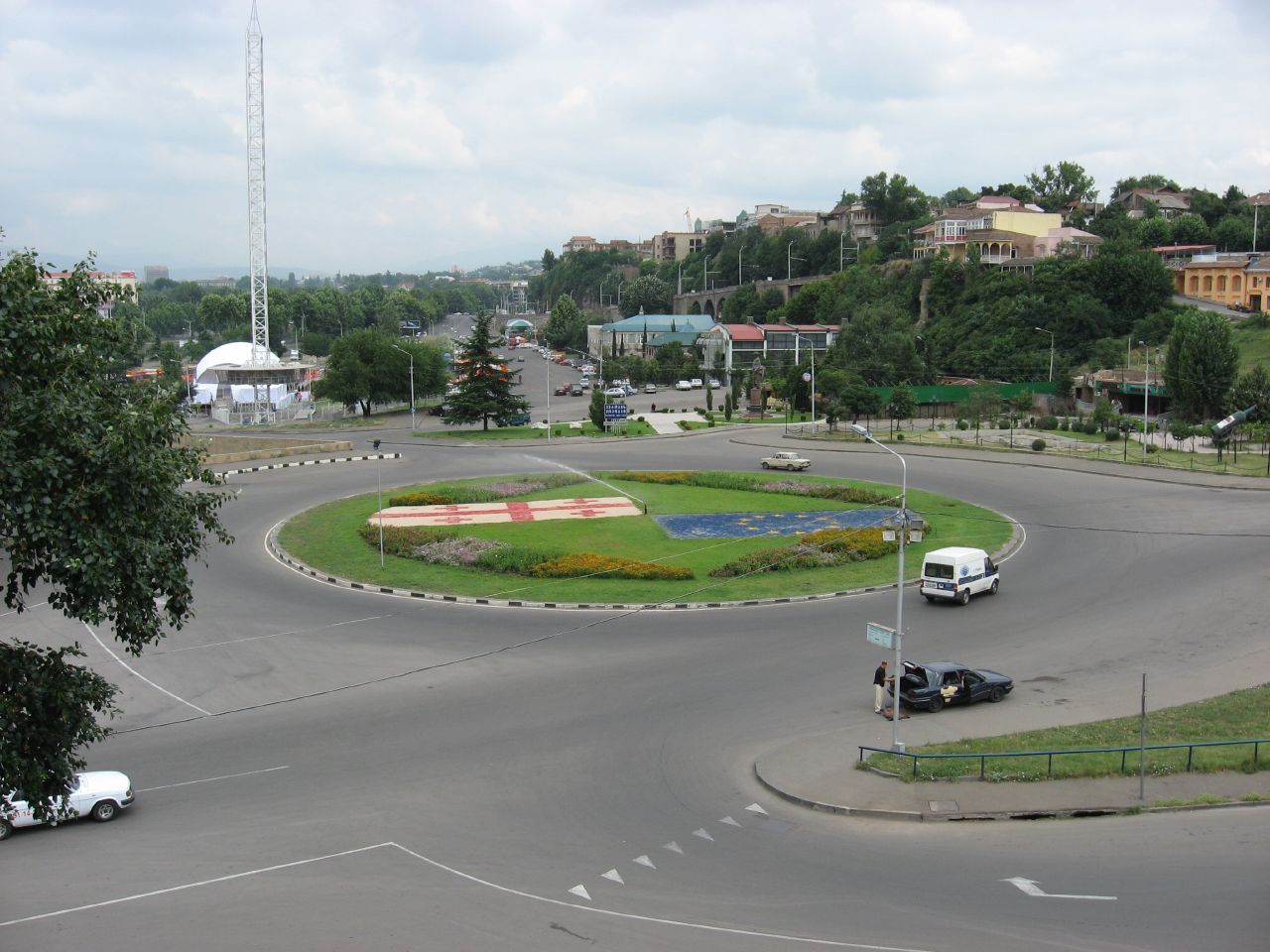
Modern roundabouts attack the problem before the decision happens. The entrance lanes curve, forcing drivers to slow down. Vehicles already inside the roundabout have the right of way, so entering traffic yields instead of racing a light or guessing through a four-way stop. Once inside, vehicles travel in the same general direction, which turns many possible severe crashes into lower-speed merging or sideswipe risks.
How the Circle Changes Speed and Angles
The most important feature of a modern roundabout is not that traffic goes around a circle. It is that the approaches are shaped to make fast straight-line movement difficult. Drivers cannot simply continue through the intersection at full road speed. The curve, the splitter islands, the yield sign, and the central island all send the same physical message: slow down before entering.
Speed matters because crash severity rises sharply when impact speed rises. A right-angle collision at a signalized intersection can involve one vehicle striking the side of another with little time to brake. In a roundabout, the most common conflicts happen at lower speeds and at shallower angles. A mistake may still dent a vehicle, but it is less likely to become the kind of crash that sends people to a hospital.
The Insurance Institute for Highway Safety reports that U.S. intersections converted from stop signs or traffic signals to roundabouts have shown large reductions in injury crashes, often in the range of roughly 72 to 80 percent in the studies it summarizes. Those numbers vary by site and design, but the pattern is consistent enough that transportation agencies treat roundabouts as a serious safety tool rather than a novelty. The design does not make drivers perfect. It makes the most dangerous mistakes harder to make at high speed.
Why Yielding Can Move Traffic Better Than Stopping
Roundabouts can feel slower because every driver must approach with caution. In many situations, though, they reduce delay because traffic does not have to wait through a full signal cycle when safe gaps already exist. A driver entering a roundabout yields to circulating traffic, checks for pedestrians and cyclists, and moves when there is room. That can keep vehicles flowing in small batches instead of forcing all directions to take turns by clock.
This matters most at intersections where traffic is steady but not perfectly balanced. At a traffic light, a lightly used side street may receive green time even when few cars are waiting. At a four-way stop, every vehicle may need to come to a complete halt even when the crossing movement is simple. A roundabout lets the intersection respond more continuously to actual movement.
There are limits. A roundabout is not automatically the right answer for every place. Some intersections have too little space, unusual terrain, heavy pedestrian needs, or traffic flows so unbalanced that a signal may manage them better. Multilane roundabouts can also be harder for unfamiliar drivers than single-lane designs. Good roundabout planning depends on local traffic counts, nearby land use, walking and biking routes, emergency access, trucks, buses, and the way the intersection connects to the rest of the street network.
What Roundabouts Change for Pedestrians and Cyclists
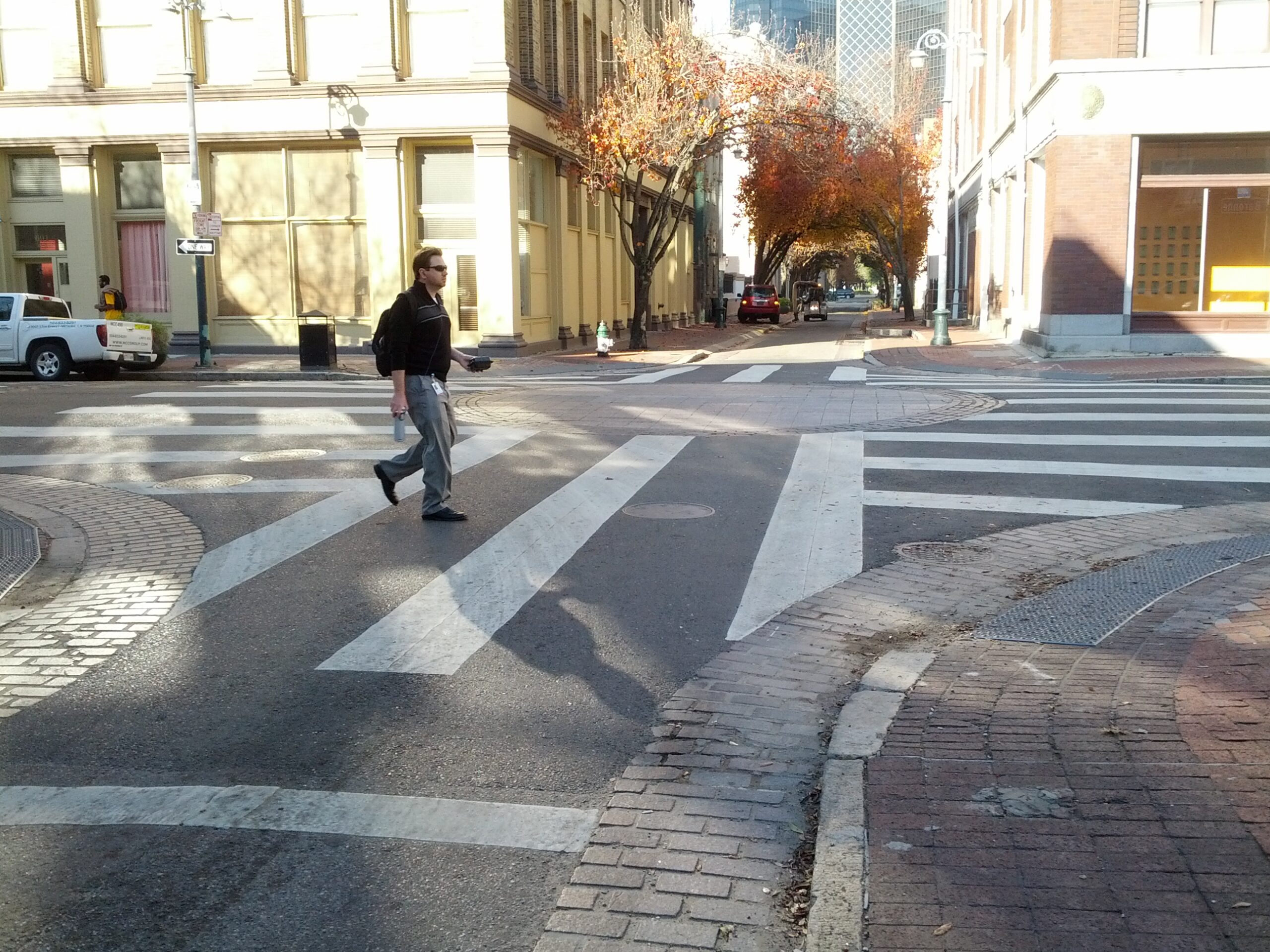
Pedestrians do not cross through the middle of a modern roundabout. They usually cross the entry and exit lanes set back from the circular roadway, often with a splitter island that lets them handle one direction of traffic at a time. That island matters. Instead of watching several streams of traffic at once, a person walking can cross to a refuge, pause, and then cross the next lane.
Lower vehicle speeds also help. A driver approaching a roundabout is already slowing to yield, which can make it easier to notice people near the crossing. The FHWA notes that the lower-speed, reduced-conflict environment can be more suitable for walking and bicycling than some intersection alternatives. For cyclists, the design choice depends on the roundabout. Confident riders may take the lane and circulate with traffic, while many designs provide ramps or shared paths so riders can move as pedestrians around the outside.
The pedestrian story is not perfect, especially at large multilane roundabouts. Drivers may fail to yield at exits, and people with low vision may find unsignalized crossings difficult because traffic gaps can be less predictable by sound. That is why modern designs often add high-visibility crosswalks, accessible curb ramps, splitter islands, lighting, rectangular rapid flashing beacons, or other crossing aids when conditions call for them. The safest roundabouts are designed for real users, not just for vehicle flow diagrams.
Why Public Opinion Often Changes After Construction
Roundabouts can be unpopular before they are built. That reaction is understandable. A signal tells drivers exactly when to go; a roundabout asks them to judge gaps, choose lanes early, and trust that other drivers will yield correctly. People tend to be skeptical of unfamiliar street designs, especially when the first explanation sounds like adding complexity to an already stressful intersection.
Experience often changes that view. IIHS summaries of community studies have found that support tends to rise after drivers use new roundabouts for a while. The shift makes sense: once the yield pattern becomes familiar, many drivers notice that they spend less time waiting at empty red lights and face fewer high-speed crossing movements. What looked like a strange circle begins to feel like a calm negotiation.
Still, clear signs and lane markings are crucial. A roundabout with poor lane guidance can create last-second weaving. A roundabout with fast approaches can invite the very behavior it was supposed to prevent. A roundabout placed without good pedestrian crossings can solve one problem while creating another. Design quality decides whether the idea works in the real world.
The Larger Lesson in Street Design
Roundabouts show how geography and engineering shape behavior. Streets are not neutral channels that merely carry traffic from one point to another. Their curves, widths, islands, signs, signals, and crossings influence what people see, how fast they move, and how many decisions they must make at once. A safer intersection is often one that makes the safer choice feel natural.
That is why modern roundabouts are more than a traffic preference. They are a lesson in designing places around predictable human limits. People misjudge speed. People get impatient. People miss signals, hesitate, and look in the wrong direction. Good street design accepts those facts and reduces the chance that an ordinary mistake becomes a severe crash.
The best roundabout is not simply the prettiest circle or the newest construction project. It is the one that fits the road, slows vehicles before the conflict, gives walkers and cyclists clear paths, and helps drivers understand what to do without panic. When those pieces work together, the intersection becomes less of a contest and more of a careful, continuous movement through shared space.