 Akshay Dinesh
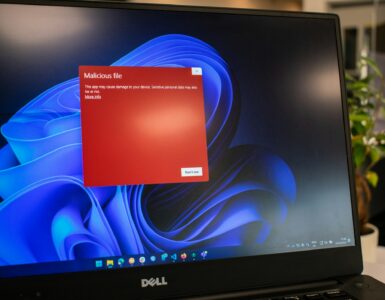
A message can cross the world in less than a second, but that speed would not matter much if the letters arrived as question marks, empty boxes, or strange symbols. Digital text looks effortless because phones, laptops, browsers, databases, and apps usually agree on what each character means. When that agreement fails, a word can turn into mojibake, the technical name for garbled text such as é appearing where é was supposed to be.
Unicode is the main reason modern text travels so reliably. It gives computers a shared system for identifying written characters: Latin letters, Arabic letters, Devanagari letters, Chinese characters, math symbols, punctuation, currency signs, and emoji. The Unicode Standard does not make every font beautiful, translate one language into another, or decide how people should write. Its job is more basic and more powerful. It lets digital systems agree that a character is the same character, even when it appears in different apps, languages, or visual styles.
The Old Problem: Computers Needed a Shared Character List
Computers store information as numbers. To store text, a computer needs a rule that connects numbers to characters. Early character sets were much smaller than what the world needed. ASCII, one of the most influential early systems, handled English letters, numbers, punctuation, and control characters in 128 positions. That was useful for many early computing tasks, but it left out most of the world’s writing systems.
Different regions and companies developed their own encodings to fill the gaps. One system might use a certain number for an accented letter, while another system used that same number for a different symbol. Text could look correct on the machine that created it and break when opened somewhere else. A file, email, or web page might not be wrong in its own original setting; the receiving system simply interpreted the bytes through the wrong rulebook.
That confusion became harder to tolerate as the internet connected people using many languages and devices. A school database might need student names with accents. A news article might quote sources in several scripts. A phone might need to send both English words and Japanese kana in the same message. The practical question was not just how to support more characters, but how to support them in a way that different systems could share.

Unicode Identifies Characters With Code Points
Unicode solves the agreement problem by assigning each encoded character a code point, usually written in a form such as U+0041. That example is the code point for the capital Latin letter A. The lowercase letter a has a different code point, U+0061. The acute-accented letter é can be represented as a single precomposed character, U+00E9, or in some contexts as the letter e followed by a combining accent. Those details can get technical, but the central idea is simple: Unicode gives characters stable identities.
A code point is not the same thing as a font. Unicode identifies the character; the font decides how it looks. The same letter A can appear in a serif font, a rounded classroom font, a bold heading font, or a handwritten-looking font while still being the same character underneath. That separation lets a document keep its meaning while designers change its appearance.
The Unicode Consortium’s Version 17.0 summary lists 159,801 encoded characters after adding 4,803 characters in that release. That number includes far more than everyday alphabet letters. It includes scripts used by living communities, historic scripts used by scholars, technical symbols, marks that combine with other letters, and characters needed for compatibility with older systems. The standard grows because written culture is larger than any one language, keyboard, or app.
UTF-8 Turns Code Points Into Bytes
A code point tells a system which character is meant, but computers still need to store and transmit that information as bytes. That is where character encodings come in. UTF-8, UTF-16, and UTF-32 are Unicode encoding forms. They are different ways of turning Unicode code points into stored data.
UTF-8 became especially important because it is efficient and compatible with older ASCII-based text. The ordinary English letters and symbols in the ASCII range use one byte in UTF-8, so older plain-English text can remain compact. Characters outside that range use more bytes. A common accented letter, a Greek letter, a Chinese character, or an emoji may need multiple bytes, but the system still has a clear way to read the sequence.
The World Wide Web Consortium recommends UTF-8 for web content, and modern web pages overwhelmingly depend on it. That matters for ordinary readers more than it may seem. When a page declares and uses the right encoding, a browser can interpret the bytes correctly. When the encoding is wrong or missing, the browser may guess, and guessing is how readable text can become nonsense.
Why Fonts, Keyboards, and Emoji Still Complicate Things
Unicode does not mean every character will appear perfectly everywhere. A device also needs a font that contains a drawing, or glyph, for the character. If the system knows the code point but lacks a usable glyph, it may show a blank square, a box with numbers, or another missing-character mark. That box does not mean Unicode failed to identify the character. It means the display system could not find a visual shape for it.
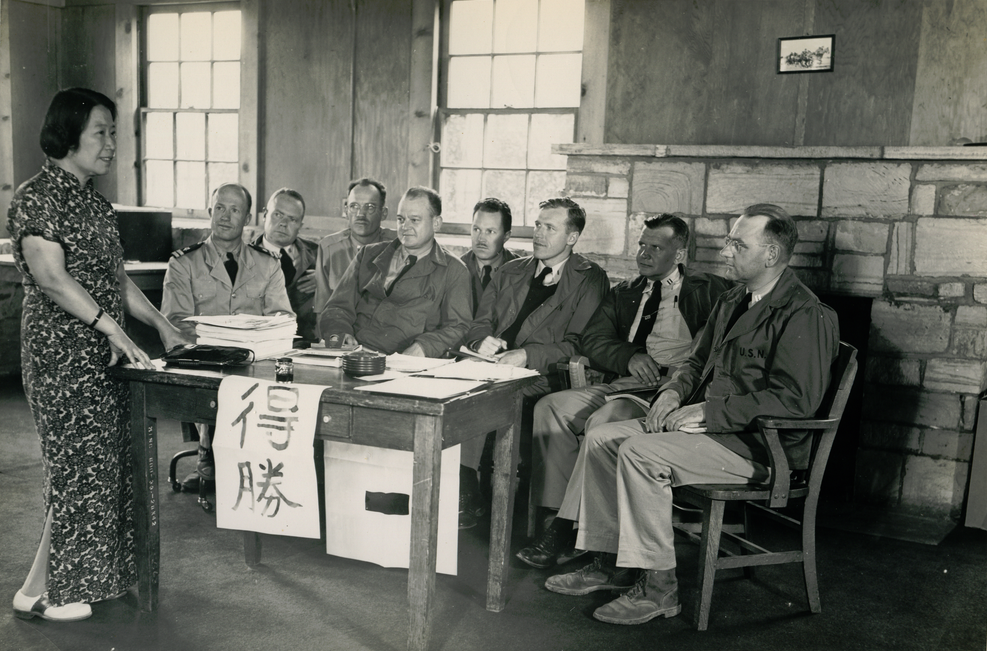
Keyboards add another layer. A keyboard layout is a tool for entering characters, not the full character set itself. Many characters can be typed through alternate keyboard layouts, long-press menus, input methods, copy and paste, or specialized software. For languages such as Chinese or Japanese, an input method may let users type sounds or components and then choose the intended character. Unicode is what lets the chosen character have a stable identity after it enters the document.
Emoji show the same idea in a more familiar way. A smiling face, a flag sequence, or a skin-tone variation may be built from one or more Unicode code points. Different platforms draw emoji in different styles, so the same character can look slightly different on two phones. But when the underlying code points are understood, the receiving device knows which emoji was intended, even if its art style is not identical.
Unicode Protects Names, Search, and Access
The stakes are larger than neat typography. Names are one of the clearest examples. A person named José, Zoë, Nguyễn, Łukasz, or Aisha written in Arabic script should not have to lose part of a name because a system was built only for old English-only assumptions. When forms, school records, bank systems, and travel documents handle Unicode properly, they are better able to store names as people actually write them.
Search and sorting also depend on careful text handling. A search engine, library catalog, or classroom database may need to know when two forms should be treated as related and when they should remain distinct. Accents can change pronunciation, meaning, or identity. Some scripts do not use uppercase and lowercase letters. Some marks combine with nearby characters. Unicode provides the foundation, while search rules and language-aware software decide how to compare, sort, and normalize text.

Accessibility benefits too. Screen readers, caption systems, and translation tools work better when characters are represented as text rather than as pictures of text. A scanned image of a word may look readable to a sighted person, but it is much less useful to software unless it has been recognized accurately. Proper Unicode text can be copied, searched, resized, read aloud, indexed, and converted more reliably.
A Quiet Standard Behind Everyday Communication
Most people notice Unicode only when something goes wrong. A name loses its accent. A message arrives with broken symbols. An emoji appears as an empty box. A file from an older system opens with strange characters scattered through every line. Those moments reveal the hidden agreement that normally keeps digital writing stable.
Unicode works because it separates three questions that are easy to blur together. Which character is meant? How is that character stored as bytes? How should it look on the screen or page? Code points answer the first question. Encodings such as UTF-8 answer the second. Fonts and rendering systems answer the third. When those layers cooperate, text can move between devices without losing its meaning.
That is why Unicode is more than a technical catalog. It is part of the infrastructure of reading and writing in a connected world. It lets a math symbol sit beside a Spanish accent mark, a Hindi word, a Japanese phrase, a currency sign, and an emoji in the same document. It helps software respect the variety of human writing while still giving computers the precise numbers they need. Digital text feels ordinary when it works, but that ordinary reliability is the result of a carefully shared standard.