
 Akshay Dinesh
In 2276, someone opening a time capsule in Philadelphia is supposed to recover digital copies of historic records from something smaller than a pencil eraser. The Library of Congress placed the files inside synthetic DNA, sealed in a tiny metal container. It is not a preserved cell, a seed, or a sample taken from a person. It is a manufactured collection of molecules whose sequence represents pictures, text, maps, and sound.
The project turns a familiar fact about biology into a computing idea. DNA can hold instructions in a chain built from four chemical bases, commonly written as A, C, G, and T. If engineers choose the order of those bases instead of letting a cell produce it, the chain can carry digital information. The result is extraordinarily compact and, under carefully controlled conditions, potentially durable for centuries. Yet DNA storage is not about replacing the drive in a laptop. Its most convincing role is quieter: preserving valuable files that may sit untouched for generations.
Why archives need a different kind of storage
Most digital storage is designed around access. A server can supply a file in milliseconds, and a solid-state drive can rewrite information again and again. Those abilities require hardware, electricity, cooling, maintenance, and periodic replacement. Even a well-managed archive must usually copy its holdings to newer media before drives fail or readers for an old format disappear.
Synthetic DNA trades speed for density and longevity. The Library of Congress reports that its molecular medium can hold about nine terabytes in one cubic millimeter, though practical systems lose some of that capacity to addresses, error correction, protective materials, and repeated copies. A 2021 review in Nature Communications placed DNA’s theoretical density near 455 billion gigabytes per gram. Such estimates describe a physical ceiling, not what an affordable storage product can deliver today, but they show why archivists and computer scientists are interested.
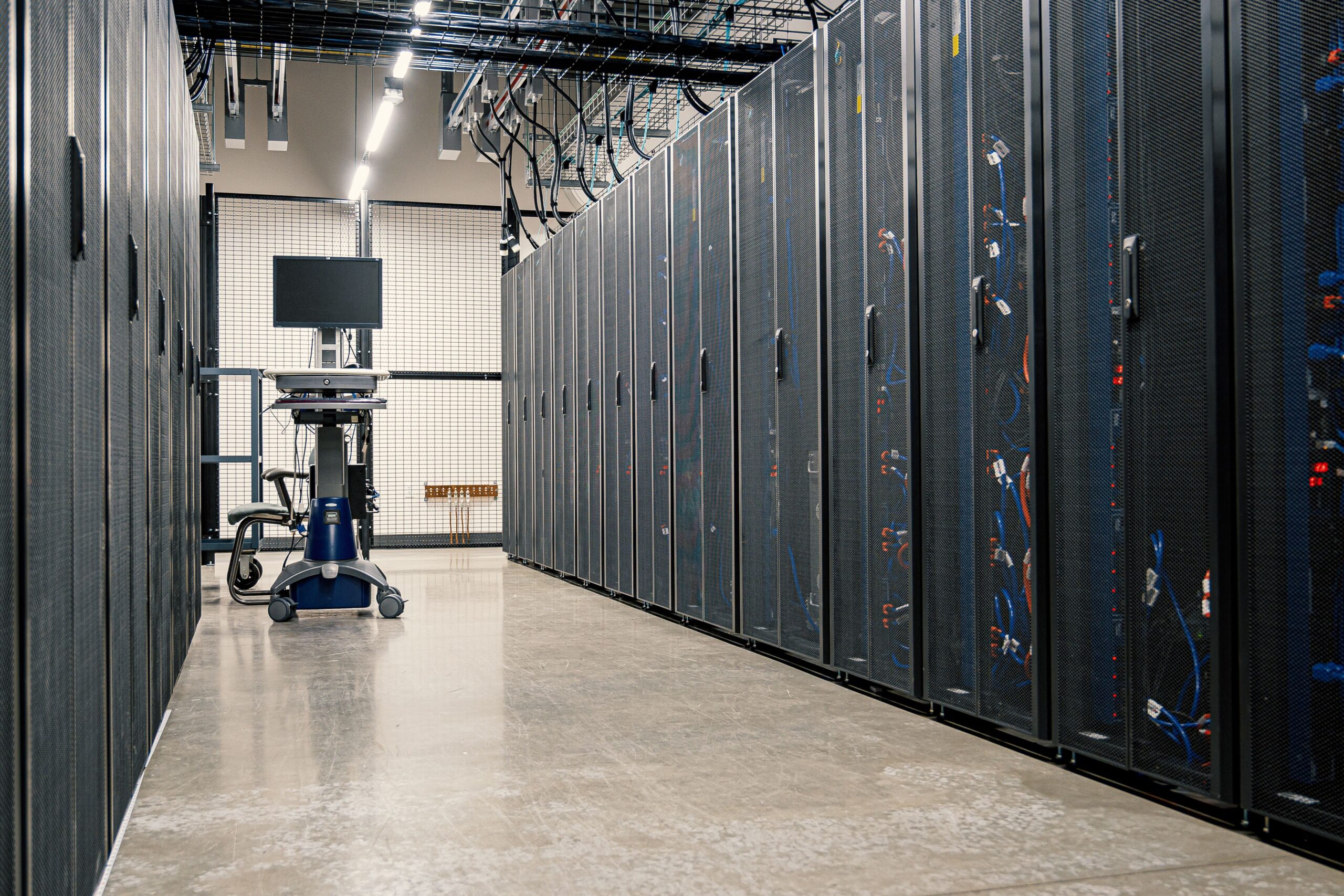
DNA also needs no power while it is sitting on a shelf. The molecule is not indestructible, however. Water, heat, ultraviolet light, oxidation, and rough handling can damage it. Long-lived systems dry the strands and often shield them inside a material such as silica or another sealed enclosure. The promise comes from combining the molecule with good preservation engineering, not from DNA alone.
How a digital file becomes DNA
A photo, recording, or document begins as bits: long strings of 0s and 1s. Because a DNA sequence has four possible letters at each position, a simple explanation pairs two bits with one base. An encoder might assign 00 to A, 01 to C, 10 to G, and 11 to T. Real encoders are more careful. They avoid patterns that are difficult to manufacture or read, such as very long runs of one base, and they control the proportion of G and C because extreme values can cause laboratory problems.
The encoded file is then divided into many short pieces. Most proposed systems use strands roughly 150 to 200 bases long, a range shaped by today’s synthesis chemistry. Each piece needs an address, much like a page number, so software can put an unordered pool of molecules back into the correct sequence. It also carries redundant information that will help repair mistakes later. Some of the apparent storage capacity is therefore spent on reliability rather than on the original file.
A DNA synthesis machine performs the writing step by building the chosen strands. To read the archive, a laboratory extracts the molecules and sends them through a DNA sequencer. The sequencer reports the observed strings of A, C, G, and T. Decoding software sorts the strands by their addresses, compares repeated reads, corrects recoverable errors, reverses the base-to-bit encoding, and reconstructs the file. The familiar computer data has made a round trip through chemistry.
Why errors are expected, not exceptional
Digital DNA does not come back perfectly simply because biological DNA carries genetic information successfully. Synthesis can omit or insert a base. Storage damage can break a strand. Sequencing can report the wrong letter, add a letter, or miss one. Whole strands may be absent from the sample that reaches the sequencer. Researchers call these substitution, insertion, deletion, and dropout errors.
The solution borrows from the same coding theory used in communications, optical discs, and space missions. Encoders add carefully designed redundancy before the file is written. Multiple physical copies give the reader several imperfect views of the same strand. Software can align those views, identify the most likely sequence, and use error-correcting codes to rebuild missing information. Microsoft Research has described this as a trace-reconstruction problem: the decoder sees several damaged versions of a string and must infer the original.
Addresses matter just as much as spelling. Imagine a book whose pages arrive in a bag, with several pages torn and several copied more than once. Correcting words is not enough; every page must also return to its proper place. DNA archives place indexing information within the strands, then protect that index against errors too. Reliable recovery depends on the entire system, from molecular copies to mathematical checks.
Why DNA is suited to cold storage
A cold archive holds information that is valuable but rarely requested: cultural records, scientific observations, legal documents, or backup copies kept against disaster. This is where DNA’s strengths line up with a real need. The files can occupy very little space and consume no electricity while stored. If the enclosure keeps moisture and heat away, the archive may avoid the repeated media migrations required by conventional tape and drives.
The weaknesses are easier to accept when access is rare. DNA writing is still slow and expensive compared with writing to magnetic tape. Reading requires laboratory preparation and sequencing, so retrieval is measured in hours or longer rather than milliseconds. Selecting one file from a large molecular pool also requires a dependable addressing and retrieval method, often based on short primer sequences and a laboratory copying process called PCR.
Frequent access creates further strain. Each round of handling exposes molecules to conditions that can cause damage, and active systems may need the DNA suspended in liquid, where it is generally less stable than a dry, protected sample. A strong near-term design is therefore closer to a vault than a hard drive: write an important collection, seal it, store clear instructions, and open it only when the value of the files justifies the effort.
The Library of Congress time capsule makes the idea concrete
The Library of Congress began studying molecular storage after a 2024 request from Congress. Working with the University of Washington’s Molecular Information Systems Lab, it encoded selected collection materials in synthetic DNA and sealed them in a metal vial. The capsule includes Thomas Jefferson’s rough draft of the Declaration of Independence, Francis Scott Key’s handwritten lyrics for “The Star-Spangled Banner,” the 1791 L’Enfant plan for Washington, D.C., and early Passamaquoddy audio recordings. It also holds the Blackwell’s Kinfolk family tree and congressional proceedings from 1789 to 1824.
The selection links old records with a new preservation experiment, but the cleverest component may be the ordinary chip packed alongside the DNA. It contains decoding instructions for the people who will open the time capsule 250 years after it was sealed. A molecule can survive while knowledge about its format disappears. Future readers need to know which sequences are addresses, which code repairs errors, how the bases map back to bits, and how the resulting bits form recognizable files.
That challenge is known as technological obsolescence, and DNA does not make it vanish. Sequencing equipment in 2276 may look nothing like today’s instruments. File formats may change beyond recognition. A responsible archive needs documentation, checksums that confirm whether a recovered file is intact, and enough contextual information to interpret it. Preservation is always partly a promise from one generation to another.
What must improve before DNA storage can scale
The largest barriers are practical rather than conceptual. DNA synthesis must become cheaper and much faster. Sequencing must remain available and accurate, and automated systems must handle enormous pools of strands without mixing up samples. Researchers also need better evidence about how different enclosures, temperatures, strand lengths, and encoding schemes perform over decades rather than in short accelerated-aging experiments.
Claims about energy use need the same care. DNA draws no power at rest, which is a real advantage for long retention periods. Producing the strands, protecting them, retrieving a file, and running a sequencer still require equipment and energy. A fair comparison must cover the whole life of an archive and ask how often the data will be read. DNA may be wasteful for a file needed tomorrow and sensible for a record meant to wait a century.
The time capsule does not prove that every digital archive should become molecular. It demonstrates something more useful: a complete path from historical files to encoded strands, protected storage, decoding instructions, and an intended reader in the distant future. If the capsule succeeds in 2276, the achievement will belong equally to chemistry, computing, mathematics, and careful librarianship. The DNA is tiny, but the preservation system around it is the real invention.