Akshay Dinesh
Margaret Hamilton helped turn software from an afterthought into an engineering discipline. As leader of the team that built the onboard flight software for NASA’s Apollo missions, she worked on programs that had to guide a spacecraft through maneuvers where a crash, a lost measurement, or a badly timed instruction could end a mission. When MIT announced that Hamilton had died on September 30, 2026, at age 90, it marked the loss of a pioneer whose ideas still shape dependable computing.
Her story is often reduced to one famous photograph: Hamilton standing beside a stack of Apollo code nearly as tall as she was. The picture is memorable, but the deeper achievement was not the volume of the program. Hamilton and hundreds of colleagues learned how to make software anticipate human mistakes, recover from overload, and keep the most urgent work running. Those principles mattered in the final minutes of Apollo 11, and they matter anywhere computers now control machines that cannot simply be switched off and tried again.
From weather forecasts to the Moon
Hamilton did not begin with a formal computer science degree, partly because the field scarcely existed in its modern form. Born in Paoli, Indiana, in 1936, she earned a mathematics degree from Earlham College in 1958 and moved to Boston the following year. At MIT, she wrote programs for meteorologist Edward Lorenz, whose research helped establish chaos theory. Early weather models forced programmers to think about systems in which tiny changes could produce very different outcomes.
She next joined MIT Lincoln Laboratory and worked on SAGE, a vast air-defense network designed to track aircraft using radar and digital computers. SAGE introduced her to software that had to respond to events as they happened. A calculation that arrives too late is not useful in a real-time system, even if the answer is mathematically correct.
In 1965, Hamilton joined MIT’s Instrumentation Laboratory, later known as Draper Laboratory, which was developing Apollo’s guidance and navigation system. She began with software for uncrewed missions and eventually led the onboard flight-software teams for both the command module and the lunar module. By 1968, more than 400 people were working on Apollo software. Hamilton’s task was not to write every line herself; it was to help organize a large technical effort so that many interdependent parts behaved as one reliable system.
What the Apollo computer had to do
The Apollo Guidance Computer was small by modern standards, but the jobs assigned to it were enormous. It helped estimate the spacecraft’s position and velocity, steer engines, control attitude, navigate between Earth and the Moon, and support the lunar landing. Astronauts communicated with it through the DSKY, a display and keyboard that used numbered verbs and nouns rather than the windows and icons familiar today.
Memory and processing power were sharply limited. Much of the flight program was stored in core rope memory, built by threading wires through or around tiny magnetic cores. The arrangement made the code difficult to change late in development, which placed extraordinary pressure on testing and configuration control. Programmers had to decide in advance which tasks deserved computer time and what should happen when several demands arrived together.
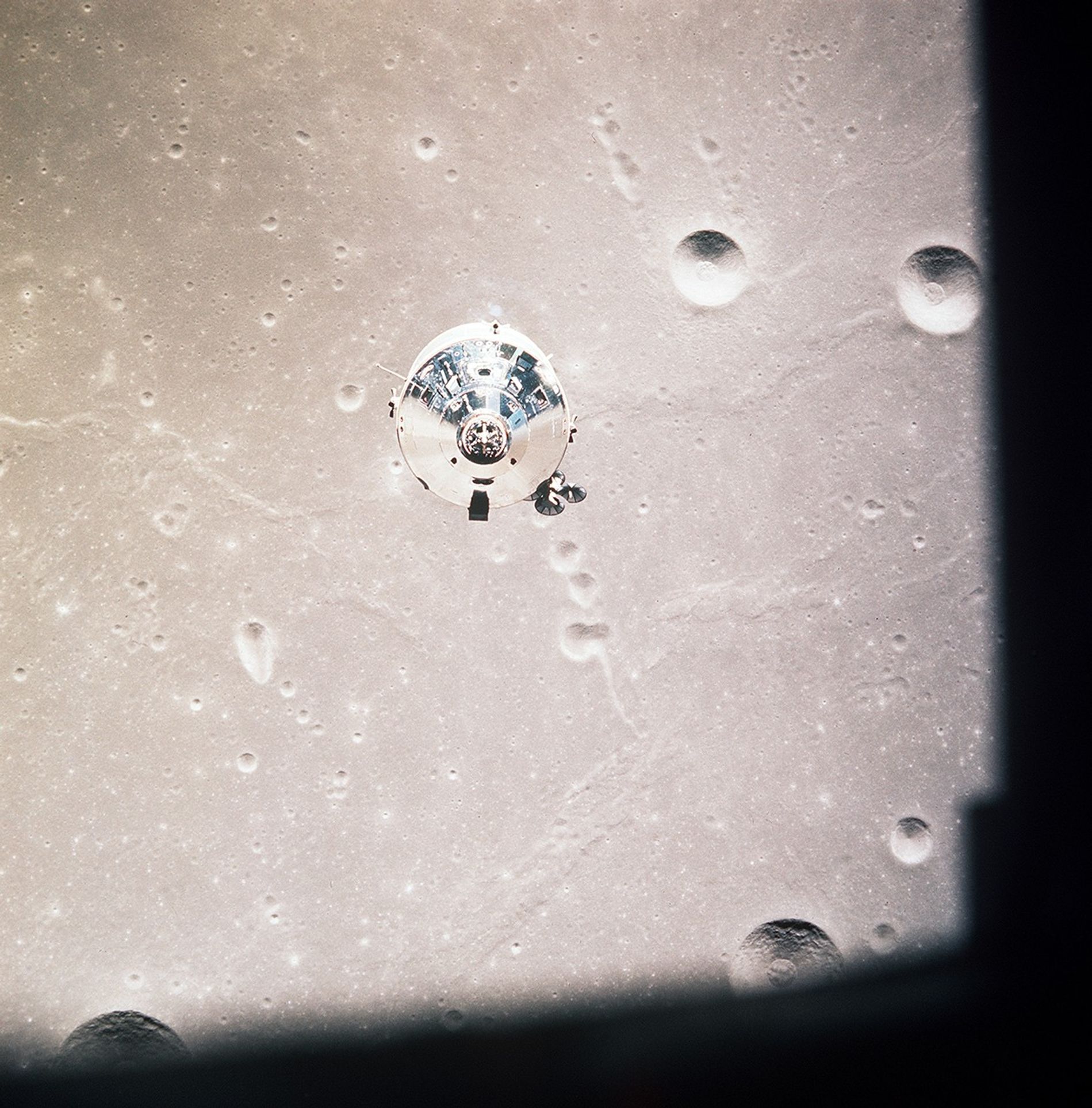
Hamilton’s teams treated the software as part of the whole spacecraft rather than as a separate set of calculations. They tested interactions among code, hardware, procedures, displays, astronauts, and mission controllers. That systems view exposed a basic truth of safety-critical computing: a program can follow its instructions perfectly and still fail if the surrounding design allows an unexpected sequence of events.
The mistake a four-year-old exposed
One revealing episode began in a simulator. Hamilton sometimes brought her young daughter, Lauren, to the laboratory. During one visit, Lauren selected a prelaunch program called P01 while the simulated spacecraft was already in flight, causing the simulation to crash. Hamilton argued that the flight system should prevent or recover from such an invalid command. Managers initially answered that astronauts were too well trained to make that kind of mistake.
Then a closely related error occurred during Apollo 8. Astronaut Jim Lovell accidentally selected P01 in flight, wiping navigation data that had to be reconstructed with help from the ground. The incident vindicated Hamilton’s concern. The team changed the software and documentation so the system could better protect itself against an action that was legal at one stage of a mission but dangerous at another.
This approach became known as defensive programming: designing for the possibility that inputs will be wrong, components will misbehave, or people will act outside the expected sequence. It does not mean assuming users are careless. It means recognizing that even skilled people work under fatigue, pressure, distraction, and incomplete information. Reliable systems make the safest response easier and contain the damage when an error still slips through.
Why the 1202 alarm did not end the landing
The best-known test came on July 20, 1969, as Apollo 11’s lunar module Eagle descended toward the Moon. The guidance computer began showing 1201 and 1202 program alarms. A radar-related hardware configuration was sending the computer extra work, leaving too little time to complete every scheduled task. With fuel falling and the surface approaching, mission controllers had to decide whether the alarms required an abort.
The software was built to recognize overload, discard lower-priority work, preserve essential navigation and control tasks, and restart cleanly. Instead of freezing or treating every task as equally urgent, it concentrated its limited capacity on what the landing required. In Mission Control, guidance specialists including Steve Bales and Jack Garman recognized that the computer was recovering as designed and advised that the descent could continue.
It would be misleading to say one person, or one block of code, saved Apollo 11. The landing depended on the software team, hardware designers, astronauts, controllers, procedures, and testing behind them. Hamilton’s contribution was to lead an organization that expected the unexpected and gave the computer a disciplined way to respond. The alarms were frightening, but they also showed that the system understood its priorities.
How Hamilton changed software engineering
During Apollo, software was often treated as less substantial than hardware. Hamilton pushed back by using the term software engineering for work that demanded its own methods, standards, and professional respect. The phrase sounded exaggerated to some colleagues at first. Yet Apollo demonstrated why code for complex systems had to be designed, reviewed, tested, documented, and managed with the same seriousness as physical machinery.
After Apollo, Hamilton founded Higher Order Software in 1976 and Hamilton Technologies a decade later. She continued developing methods that emphasized error prevention, formal system descriptions, and what she called handling the unknown. NASA honored her with an Exceptional Space Act Award in 2003, and President Barack Obama awarded her the Presidential Medal of Freedom in 2016.
The machines have changed beyond recognition, but the central problem has not. Aircraft, medical devices, power systems, cars, and communication networks all depend on software operating in messy conditions. Fault tolerance, priority scheduling, end-to-end testing, and human-centered safeguards are now standard ideas because pioneers proved they were necessary.
Hamilton’s lasting lesson is not that perfect programmers can eliminate every mistake. It is almost the opposite: serious engineering begins by accepting that errors, surprises, and conflicting demands will occur. The goal is to build a system that notices trouble, protects what matters most, and fails in a controlled way. Apollo carried that philosophy to the Moon, and modern computing still depends on it.