
 Akshay Dinesh
A regular computer can do astonishing things with a very simple language: bits. Every photo, message, game, spreadsheet, and video is ultimately represented by long patterns of 0s and 1s. A bit is powerful because it is reliable. It can be copied, stored, checked, corrected, and moved through circuits billions of times per second.
A qubit, short for quantum bit, sounds as if it should be the same idea made smaller. That easy comparison is useful for about ten seconds, and then it starts to mislead. A qubit is not simply a tiny switch that can choose 0 or 1. It is a carefully controlled quantum system whose state can carry information in a richer, stranger form before it is measured. That difference is the reason quantum computers are exciting, but it is also the reason they are so hard to build.
A Bit Has One Clear Value at a Time
Classical bits are designed to avoid ambiguity. Inside a computer, a bit might be represented by a high or low voltage, a magnetic orientation, or another physical signal. The hardware may be complicated, but the meaning is intentionally crisp: the bit is read as either 0 or 1.
That crispness makes ordinary computing dependable. If a file is saved correctly, the same pattern of bits can be read later. If a bit flips by accident, error-checking systems can often detect and repair the problem. Classical computers gain their strength from turning messy physical reality into clean, repeatable symbols.
Qubits begin in a different world. They are still physical systems, not floating mathematical ideas. A qubit might be built from a superconducting circuit, a trapped ion, a photon, or another object small enough for quantum effects to matter. The goal is not merely to store a 0 or a 1, but to preserve a quantum state long enough to perform useful operations on it.
Superposition Is More Than Being Both at Once
The most famous qubit idea is superposition. It is often described as being 0 and 1 at the same time, which is memorable but incomplete. A better way to think about it is that a qubit can be prepared in a state that has a relationship to both possible measurement outcomes. Before measurement, the qubit is not behaving like a hidden coin that has already landed heads or tails. Its state has a direction in a mathematical space of possibilities.
That direction matters. Quantum operations can rotate and change a qubit’s state before anyone measures it. When many qubits are involved, those operations can shape patterns of probability across many possible outcomes. IBM’s public explanations of quantum computing emphasize this point: superposition gives quantum systems a larger space in which certain problems can be represented and transformed.
Measurement is the catch. When a qubit is measured in the usual way, the result is ordinary: 0 or 1. The rich quantum state does not come out as a readable list of possibilities. A quantum algorithm has to be designed so that the wrong answers tend to cancel out and the useful answers become more likely to appear when the final measurement happens.
Entanglement Lets Qubits Share a State
A single qubit is interesting, but the deeper power of quantum computing comes from how qubits can relate to one another. Entanglement happens when the state of one quantum system cannot be fully described on its own. The qubits have to be described together, even if they are later measured separately.
This does not mean information is being sent faster than light. It means the combined system has correlations that do not behave like ordinary hidden instructions written in advance. NIST’s educational material uses entanglement as one of the central ideas behind quantum information, because it changes what can be known about one part of a system after measuring another.
For computing, entanglement is valuable because it lets quantum algorithms build relationships among possibilities. Instead of checking one path, then another, then another in a simple list, a quantum circuit can create a structured pattern across many qubits. The useful part is not that the machine magically tries every answer at once. The useful part is that quantum states can interfere with one another, strengthening some outcomes and weakening others.
Quantum Computers Are Fast Only for Certain Problems
One common mistake is to imagine quantum computers as faster versions of laptops or data centers. They are not expected to replace ordinary computers for writing documents, streaming video, or running everyday apps. Classical computers are already excellent at those tasks, and quantum hardware is far too delicate for general-purpose convenience.
Quantum advantage is more specific. Some problems have structures that match quantum behavior unusually well. Simulating molecules and materials is one example, because molecules themselves follow quantum rules. Certain optimization, search, and number-theory problems may also benefit from quantum methods, though the details depend heavily on the algorithm and the hardware.
That selectiveness matters for clear thinking. A quantum computer with more qubits is not automatically better in the way a phone with more storage is better. Engineers care about how long qubits keep their state, how accurately gates operate, how much noise enters the system, and whether errors can be corrected. A large number of unreliable qubits may be less useful than a smaller number of better-controlled ones.
Noise Is the Enemy of a Useful Qubit
Qubits are fragile because they must stay isolated enough to preserve quantum behavior while still being controlled and measured by machines. Heat, vibration, stray electromagnetic signals, imperfect materials, and tiny control errors can disturb a qubit’s state. This loss of usable quantum information is often called decoherence.
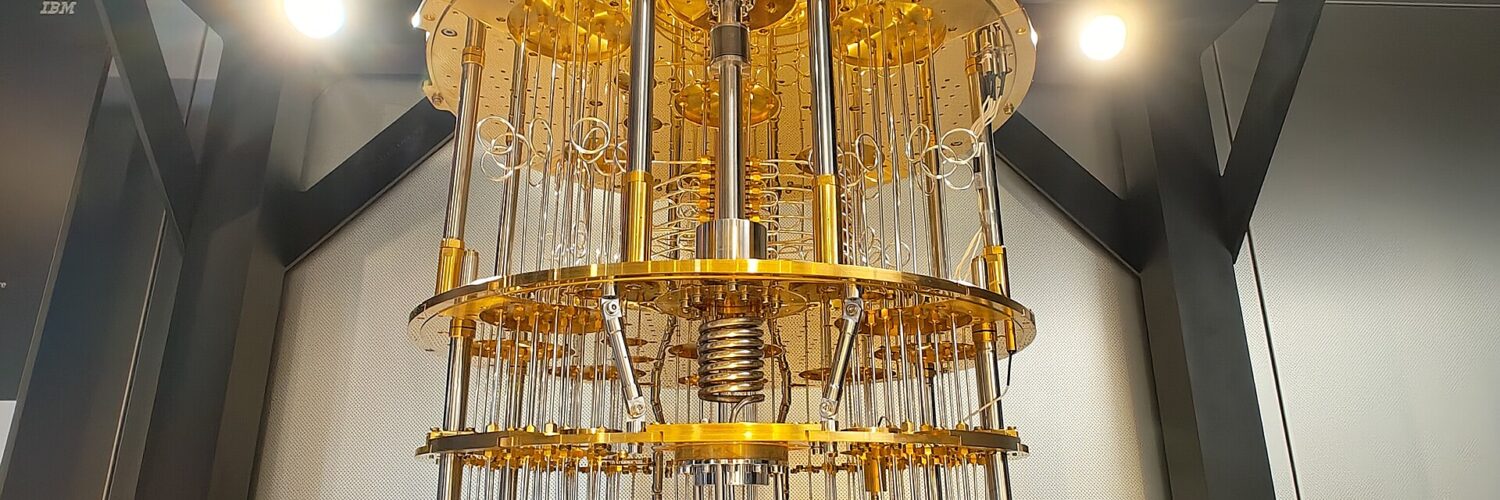
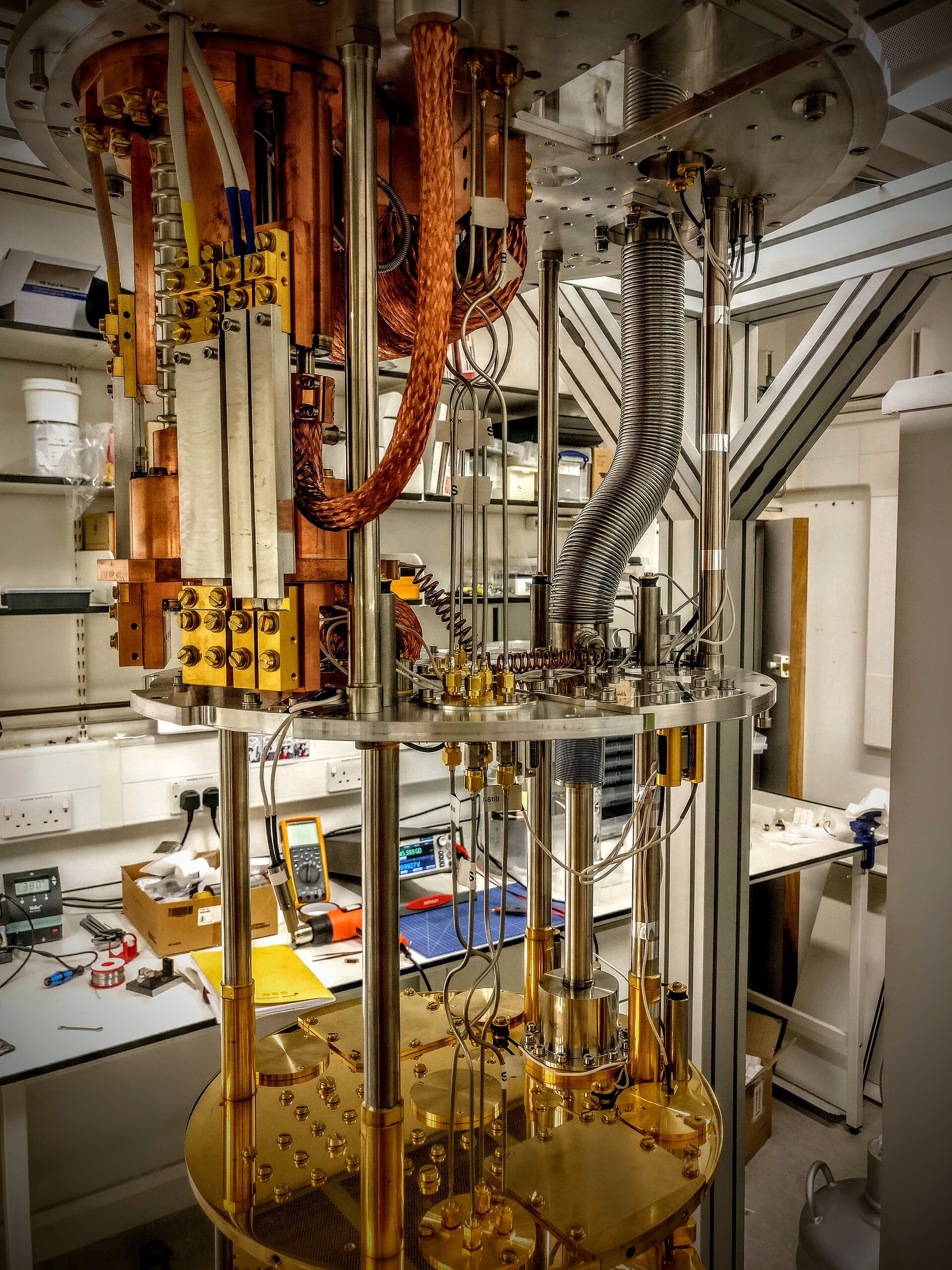
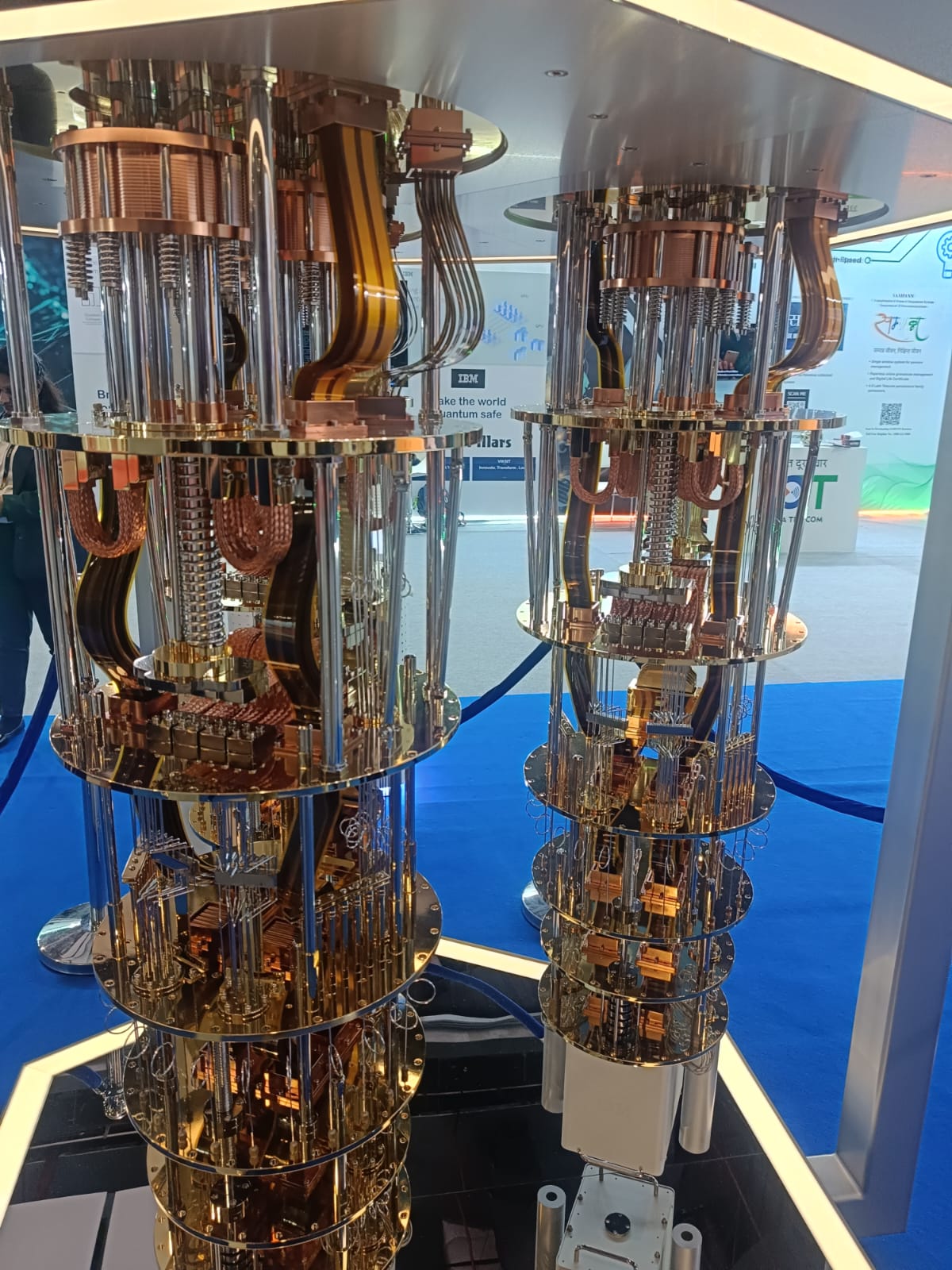
That is why quantum computers can look so unusual. The gleaming cables and layered metal structures in many quantum-computer photos are not decoration. They are part of a control environment built to cool, shield, pulse, and read quantum devices with extreme precision. In superconducting systems, dilution refrigerators can cool hardware to temperatures far colder than outer space.
Error correction is one of the biggest challenges in the field. Classical computers also correct errors, but quantum error correction is harder because unknown quantum states cannot simply be copied and backed up. Researchers instead spread information across groups of physical qubits in ways that allow certain errors to be detected without directly measuring and destroying the protected quantum information.
The Real Meaning of a Qubit
A qubit is best understood as a new kind of information carrier, not as a smaller classical bit. It can be prepared, rotated, entangled, interfered, and measured. It only gives a simple 0 or 1 when read, but the path to that reading can use quantum structure in ways ordinary bits cannot.
That is both the promise and the frustration of quantum computing. The promise is that some problems may become approachable because their structure fits quantum mechanics. The frustration is that the same quantum behavior that makes qubits powerful also makes them delicate. Building a useful quantum computer means learning how to control nature at a level where ordinary intuition does not always help.
The simplest summary is also the most important one: bits store definite answers, while qubits store controllable possibilities. A quantum computer is not powerful because it ignores the rules of computing. It is powerful because it follows a different set of physical rules, then carefully turns those rules back into answers a person can read.





Add comment