
 Akshay Dinesh
Useful data often starts with ordinary people. A city wants to know where commuters are getting stuck. A phone maker wants to know which settings confuse users. A public agency wants to publish population counts without exposing households. In each case, the goal is not to inspect one person. The goal is to learn a pattern from many people at once.
The hard part is that shared data can reveal more than it seems. Removing names, addresses, or account numbers does not always protect privacy, because outside information can sometimes be matched back to a record. Differential privacy approaches the problem from a different direction. Instead of promising that a dataset has been stripped of obvious identifiers, it asks whether the published result would look nearly the same if any one person’s data had been left out.
The privacy problem hidden inside useful statistics
Aggregate statistics can feel harmless. A table might say how many people live in a neighborhood, how many students chose a course, or how often a feature was used. No single row appears on the screen. Still, privacy risks can appear when many tables, maps, or queries are released together. A small group, a rare trait, or repeated slices of the same data can narrow the possibilities until one person becomes easier to infer.
This is why traditional anonymization has limits. If a dataset removes names but keeps age, ZIP Code, school, job, location history, or timing details, those remaining clues may still be distinctive. The risk grows when someone can compare the release with other information. A data table that seems vague by itself may become revealing when paired with voter records, social media posts, property records, or earlier versions of the same dataset.
Differential privacy tries to protect against that kind of background knowledge. It does not assume that an attacker is polite, uninformed, or limited to one table. The mathematical guarantee is built around a stronger idea: the output of an analysis should not depend too much on whether any single person is present. NIST’s 2025 guidance describes differential privacy as a framework for quantifying privacy loss when a person’s data appears in a dataset, which is a more precise promise than simply saying the data was anonymized.
Why adding noise can make data safer
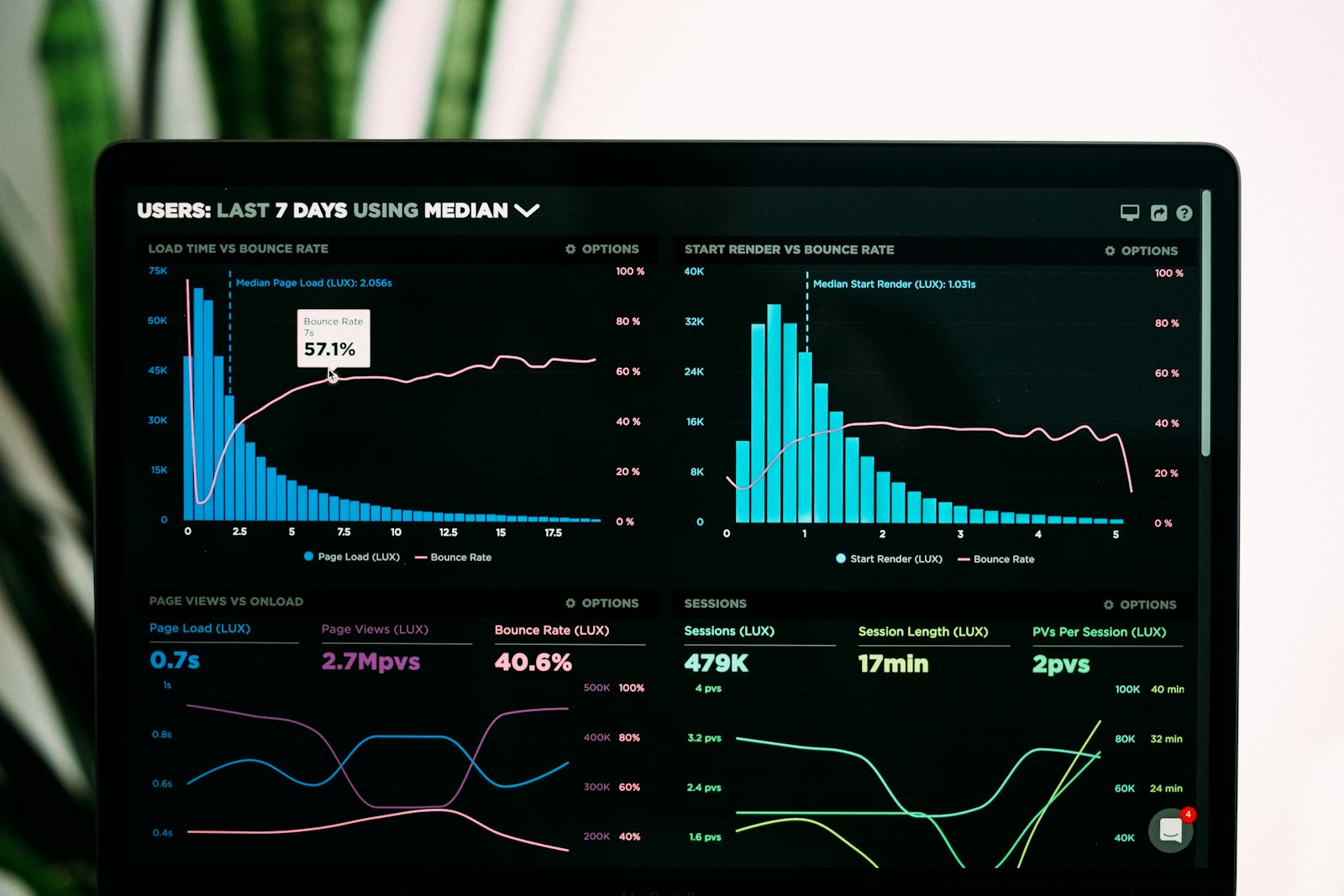
The most familiar way to picture differential privacy is through controlled noise. Suppose a dataset contains the number of people in a city who use a particular transit route. Instead of publishing the exact count, a privacy system might add a small random adjustment. The released number could be a little higher or lower than the true number, but it would still be close enough to show the general pattern.
The word noise can sound like a flaw, but here it is doing work. Randomness makes it harder to tell whether one person’s answer changed the result. If the number could have shifted slightly because of the privacy mechanism, an observer has less confidence that a difference came from one actual person. When the group is large, the pattern can remain useful even after the adjustment. When the group is tiny, the same kind of protection may require more distortion, because one person matters more to the result.
That tradeoff is the center of differential privacy. Stronger privacy usually means more noise, which can make the statistic less exact. Higher accuracy usually means less noise, which can expose more about contributors. NIST describes this as a privacy-utility tradeoff: more noise improves privacy but can reduce the usefulness of the result. A responsible system has to choose that balance honestly, rather than pretending privacy and perfect accuracy can both be maximized at the same time.
Differential privacy also introduces the idea of a privacy budget, often represented by the Greek letter epsilon. Epsilon is not a magic score that solves privacy by itself. It is a way of measuring how much the output is allowed to change because of one person’s data. A lower value generally means a stronger privacy guarantee and more noise. A higher value generally means weaker privacy and more accuracy. The number only makes sense when the surrounding design is clear: what counts as one person’s contribution, what queries are allowed, how often data is released, and who can access the system.
Central and local privacy work differently
There are two common ways differential privacy can be used. In a central model, a trusted organization collects the raw data first, then applies a differentially private method before releasing statistics or answering queries. This can produce useful results because the system sees the full dataset before adding carefully calibrated noise. The challenge is trust. The organization still has to secure the raw data, limit access, and prevent misuse before the privacy mechanism is applied.
In a local model, the data is randomized before it leaves a person’s device. Apple’s machine learning research team has described using local differential privacy so raw data is privatized on the device before records are sent for aggregation. In that design, the server receives altered reports rather than the original behavior. When many reports are combined, useful patterns can emerge, but the organization is not supposed to see the exact original event from any one device.
Local differential privacy can be appealing because it reduces the amount of raw personal data collected in the first place. It can also be less accurate for the same number of participants, because every device adds uncertainty before the data is combined. Central differential privacy can often preserve more utility, but it asks people to trust the data holder more. Neither model is automatically better in every situation. The right choice depends on the sensitivity of the data, the size of the group, the accuracy needed, and the consequences of a mistake.
The Census shows why the tradeoff matters
Public statistics give differential privacy a real-world test. The U.S. Census Bureau has long used disclosure avoidance methods to protect confidentiality, and its current disclosure avoidance page notes that it has added small random changes, or noise, to collected data since the 1990 Census. For the 2020 Census, the bureau moved toward a modernized disclosure avoidance system that brought differential privacy into a major public-data setting. The reason is easy to understand: census data must be detailed enough for redistricting, planning, research, and civil rights work, while still protecting people who are legally promised confidentiality.
The Census example also shows why differential privacy is not just a technical trick. If too little protection is used, rare combinations of traits or small geographic areas can become easier to expose. If too much noise is added, local counts can become less useful for school planning, emergency services, housing analysis, and community research. The public argument is not simply whether privacy matters. It is how to choose a defensible balance between confidentiality and accuracy when both have real consequences.
That tension is why the Census Bureau’s planning for 2030 includes research, testing, and stakeholder feedback on disclosure avoidance methods. Privacy systems affect people downstream. A noisy statistic may be safer for individuals but harder for a small town to interpret. A more exact statistic may help local planning but carry more disclosure risk. Differential privacy gives decision-makers a clearer language for that tradeoff, but it does not remove the need for judgment.
What differential privacy does not promise
Differential privacy is strong, but it is not a spell that turns any data practice into a safe one. A poorly designed system can still leak information through side channels, weak access controls, careless data collection, or repeated releases that spend too much of the privacy budget. NIST’s guidance warns that the mathematical guarantee depends on many surrounding choices, including the threat model, unit of privacy, query model, algorithms, and deployment conditions. The formula is only one part of the whole system.
It also does not mean every published number is correct. Differentially private statistics are intentionally randomized, so users need to understand when a count is precise enough for a decision. Large national or statewide patterns may remain very useful. Tiny groups, rare categories, and narrow geographic slices may be more affected by noise. A careful data user asks not only what the number says, but how much uncertainty the privacy method may have introduced.
Nor does differential privacy eliminate ordinary security duties. Raw data may still need encryption, access control, auditing, retention limits, and careful deletion. People still need honest consent practices and clear explanations of what is being collected. A privacy-preserving algorithm cannot fix a data program that collects more than it needs or shares results without context.

Why the idea is worth understanding
Differential privacy matters because modern life produces data that can help people if it is handled responsibly. Traffic patterns can improve transit. Health trends can guide public response. Product data can reveal confusing designs. Census data can support fair representation and local planning. The question is how to learn from those patterns without making individuals pay the privacy cost alone.
The simplest way to remember the idea is this: a differentially private result should not reveal much more about you because you joined the dataset than it would have revealed if you had stayed out. That is a powerful standard. It shifts attention away from whether a name has been removed and toward whether one person can meaningfully change what others learn.
For learners, differential privacy is also a useful bridge between math, computing, and ethics. It shows that privacy is not only a password setting or a legal notice. It can be shaped by probability, system design, and choices about accuracy. The big picture still matters, but the people inside the picture matter too. Differential privacy is one way of trying to respect both at the same time.