

 Akshay Dinesh
Alexander the Great ruled for less than thirteen years, yet his campaigns changed the political map of the ancient world. By the time he died in Babylon in 323 BCE, his empire stretched from Macedonia and Greece through Egypt, the Persian heartland, and toward the Indus River Valley. He was admired for speed, courage, and tactical brilliance, but his story is not only a tale of victories. It is also a story about ambition, violence, cultural exchange, fragile power, and what happens when one ruler builds an empire faster than it can be held together.
Alexander’s reputation has often been shaped by legend. Ancient writers described him as fearless, almost unstoppable, and sometimes favored by the gods. A clearer view is more interesting: he inherited a strong Macedonian army from his father, Philip II, used it with extraordinary skill, and pushed it beyond the limits that even many of his own soldiers could accept.
From Macedon to a Larger World
Alexander was born in 356 BCE in Pella, the capital of Macedon. His father, Philip II, had transformed Macedon from a northern kingdom often looked down on by southern Greek city-states into a powerful military state. Philip strengthened the army with disciplined infantry, long sarissas, cavalry coordination, siege equipment, and a command structure that could move quickly. Alexander did not create that machine from nothing; he inherited it at precisely the moment it was ready for a larger campaign.
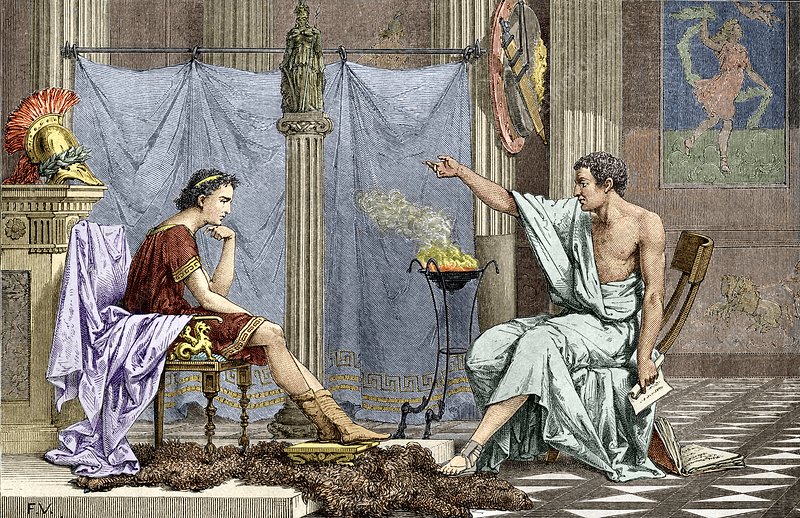
His education also mattered. As a teenager, Alexander studied with Aristotle, whose teaching exposed him to Greek literature, philosophy, medicine, and geography. Later stories may exaggerate exactly how much Aristotle shaped Alexander’s mind, but the connection became part of Alexander’s image as a ruler who combined military command with Greek learning. He carried Greek texts on campaign, founded cities with Greek institutions, and presented himself as more than a battlefield commander.
When Philip was assassinated in 336 BCE, Alexander was only twenty. His first challenge was survival. Rivals at court and rebellious Greek states tested him almost immediately. Alexander responded with speed and severity, securing Macedon, reasserting control over Greece, and taking command of the planned campaign against the Achaemenid Persian Empire.
The Persian Campaign
In 334 BCE, Alexander crossed into Asia Minor and began the campaign that would make his name famous. The Persian Empire was enormous, wealthy, and administratively sophisticated, but it was not invulnerable. Alexander’s army could move fast, force decisive battles, and exploit moments when Persian commanders struggled to coordinate large forces across difficult terrain.
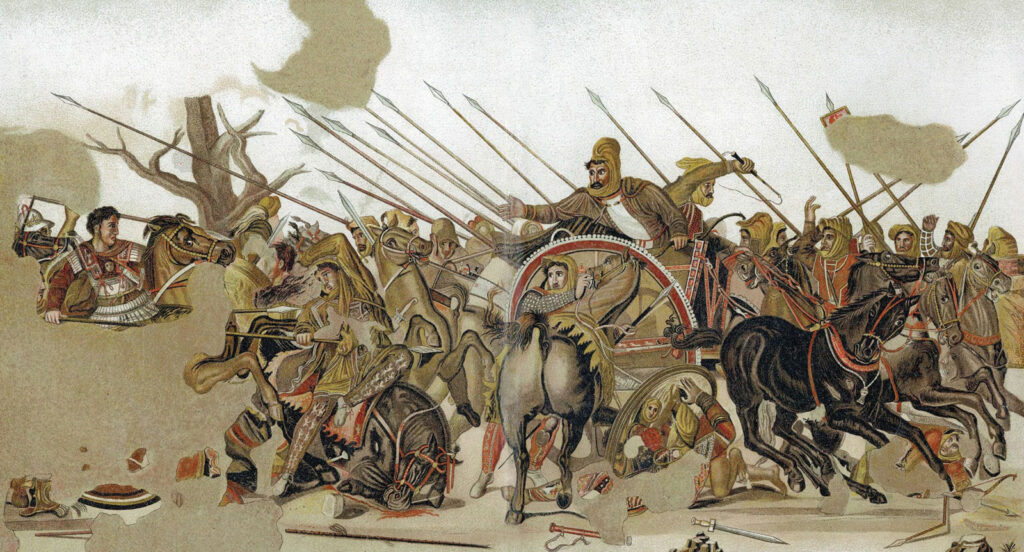
The Battle of Issus in 333 BCE showed the pattern that made Alexander so dangerous. Facing Darius III, the Persian king, Alexander used a narrow battlefield to reduce the advantage of Persian numbers. His cavalry attack helped break the Persian line, and Darius fled. The victory gave Alexander control over much of the eastern Mediterranean coast and turned his campaign from a raid into a direct challenge to Persian rule.
Alexander then captured major coastal cities, including Tyre and Gaza, after difficult sieges. These victories were costly and brutal. They also mattered strategically because they limited Persian naval options and secured Alexander’s path toward Egypt. Ancient conquest was not clean or romantic: cities that resisted could suffer destruction, enslavement, and mass death. That reality is essential to understanding both Alexander’s success and the fear he inspired.
The decisive blow came at Gaugamela in 331 BCE, where Alexander again defeated Darius III. Afterward, he entered Babylon, Susa, and Persepolis, the ceremonial center of Persian kingship. Darius was later killed while fleeing east, and Alexander claimed authority over the Persian Empire. But conquering Persia did not simply mean replacing one king with another. Alexander now had to rule peoples with different languages, customs, elites, and political traditions.
Egypt, Cities, and the Problem of Rule
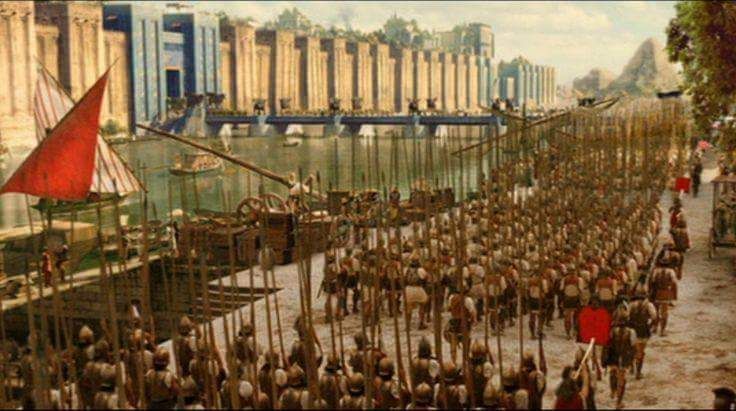
Egypt welcomed Alexander as a liberator from Persian rule, and he was recognized there as pharaoh. In 331 BCE, he founded Alexandria near the Nile Delta, a city that later became one of the great centers of Mediterranean trade, scholarship, and culture. The famous library and museum belonged to the later Ptolemaic period, but Alexander’s foundation helped create the setting in which that intellectual life could grow.
As his empire expanded, Alexander began adopting some Persian court practices and bringing Persian nobles into his administration and army. These choices made practical sense: he could not rule such a large empire with Macedonian officers alone. They also angered many Macedonians, who saw Persian customs as foreign or humiliating. Alexander wanted loyalty to himself above loyalty to any single tradition, but that was difficult to achieve among soldiers who had followed him from Greece into Asia.
His rule therefore mixed vision and strain. He founded or renamed cities, encouraged settlement, and used marriage alliances to connect Macedonian and Persian elites. At the same time, he could be ruthless toward critics and rivals. The killing of Cleitus, an officer who had once saved his life, showed how dangerous Alexander’s court had become under the pressure of victory, exhaustion, and suspicion.
India and the Limits of Conquest
After Persia, Alexander pushed farther east into Central Asia and then toward the Indian subcontinent. In 326 BCE, he fought King Porus at the Battle of the Hydaspes, near the Jhelum River. Porus used war elephants, a sight that tested Macedonian discipline and terrified horses unfamiliar with them. Alexander won the battle, but Porus resisted strongly enough that Alexander restored him as a local ruler under Macedonian authority.
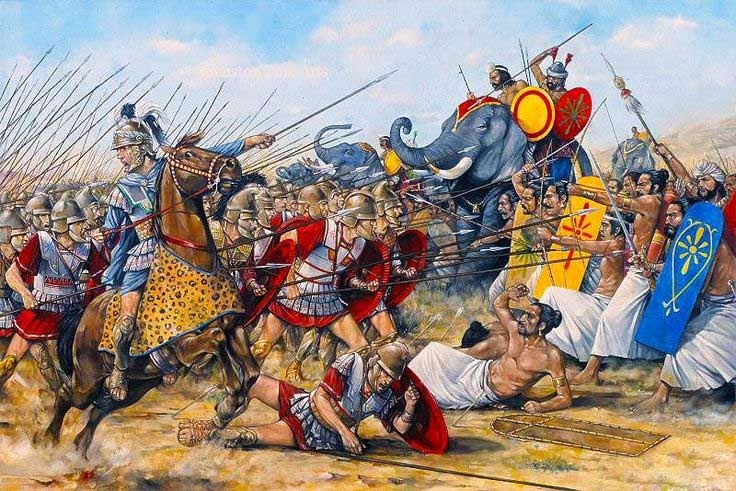
The Hydaspes victory also revealed the limit of Alexander’s power. His soldiers had marched and fought for years across unfamiliar lands. When Alexander wanted to continue east, the army refused at the Hyphasis, or Beas, River. This was not an ordinary complaint; it was a collective refusal by men who had followed him through nearly every danger. Alexander finally turned back.
The return was punishing. Part of the army suffered terribly while crossing the Gedrosian Desert. Alexander reached Babylon with plans for more campaigns, including one toward Arabia, but those plans never happened. In June 323 BCE, he died at age thirty-two after a sudden illness. Ancient writers disagreed about the cause, and modern explanations range from infection to other natural causes. Poison stories existed, but certainty is impossible.
A Legacy Larger Than One Empire
Alexander’s empire did not survive as a united state. He left no strong adult successor, and his generals, known as the Diadochi, fought over the territories he had conquered. Out of those struggles came major Hellenistic kingdoms, including the Ptolemaic kingdom in Egypt and the Seleucid Empire in parts of Asia. The political unity collapsed, but the cultural effects lasted much longer.
The Hellenistic world that followed Alexander was not simply Greek culture spreading unchanged. It was a world of exchange, mixture, and adaptation. Greek became an important language of administration and learning across many regions. Cities connected merchants, soldiers, scholars, artists, and rulers from different backgrounds. In places such as Egypt, Mesopotamia, Central Asia, and parts of South Asia, Greek traditions met older local traditions and produced new forms of art, politics, religion, and scholarship.
That legacy is why Alexander remains difficult to place in a single category. He was a brilliant commander, a king shaped by Macedonian power and Greek education, and a conqueror whose wars caused enormous suffering. He opened routes of contact across a vast region, but he did so through force. The most honest view holds both sides together: Alexander changed history not because he built a stable empire, but because his conquests rearranged the ancient world and left later societies to live with the consequences.





Add comment