

 Akshay Dinesh
A sidewalk that was level in autumn can develop a raised edge by late winter. A road may acquire a bump, or a fence post may seem to have crept upward. One possible cause is frost heave: the lifting of the ground as ice forms and grows within freezing soil. The movement can be uneven, so neighboring parts of a pavement or structure rise by different amounts.
It is tempting to explain the whole process by saying that water expands when it freezes. That expansion plays a part, but substantial frost heave often involves something more surprising: water moves toward the freezing zone from soil that has not yet frozen. It feeds layers of ice that can grow and push the ground above them upward.
How ice lifts the ground
As cold weather removes heat from the surface, the freezing zone advances into the soil. Ice begins to form in the spaces between soil particles. Under suitable conditions, thin layers of segregated ice, called ice lenses, grow roughly parallel to the freezing surface. They can separate the soil above from the soil below and lift the overlying material as they thicken.
The water that feeds these lenses need not all be present at the freezing front when freezing starts. Water can travel through connected pores in the unfrozen soil toward the growing ice. The Federal Highway Administration describes the formation of ice lenses in fine-grained soils as a major cause of pavement frost heave. A continuing water supply means that the volume of ice formed can be much greater than would be explained by the expansion of the water originally in that small portion of soil alone.
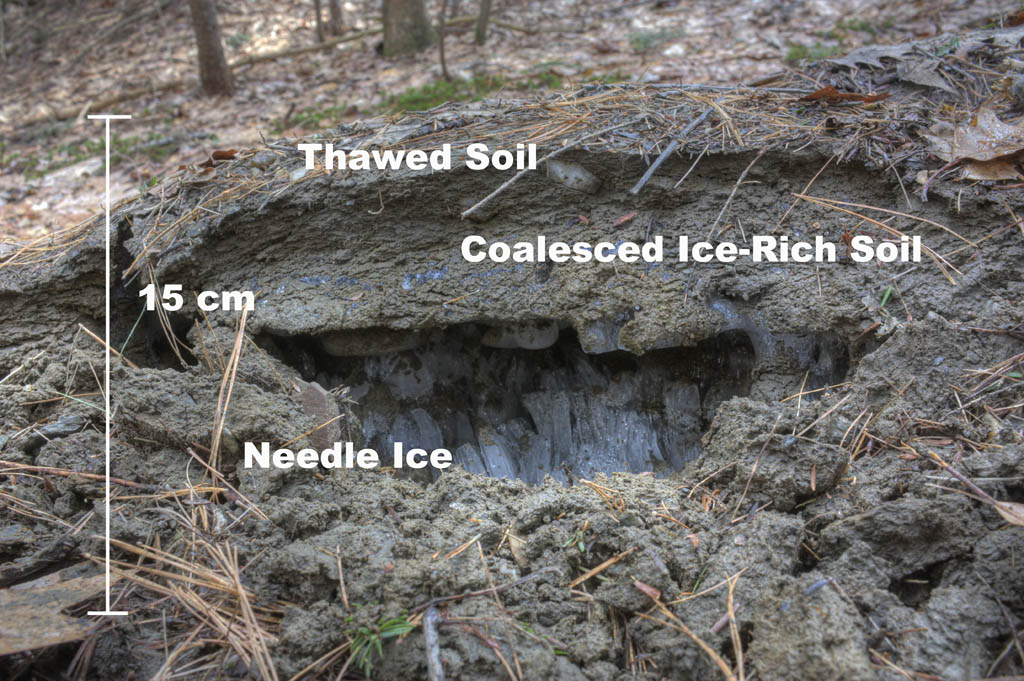
This does not mean every frozen patch of ground develops a dramatic lens. Soil composition, temperature, water supply and the weight above the soil all influence how much ice forms and how much movement results. A shallow freeze followed by a quick thaw may behave quite differently from a long period of penetrating cold.
Three conditions that make heave possible
For damaging frost heave, three ingredients generally come together: freezing temperatures must reach the soil, water must be available, and the soil must be susceptible to frost action. Remove or substantially reduce any one of them, and the amount of heave can be limited. The Federal Highway Administration uses this combination when assessing frost problems in roadbeds.
Soil texture is especially important. Silt and some very fine sands have pore networks that can draw water toward a freezing zone while still allowing it to move at a useful rate. Coarse, freely draining sand and gravel are generally less susceptible. Clay can hold substantial water, but water may move through very fine pores slowly; its behavior depends on the particular soil and conditions. “Wet soil” by itself is therefore not a complete prediction of heave.
Water can come from groundwater or other moisture in the surrounding soil. Drainage, snow cover, vegetation, shade and the duration of cold all affect the local picture. Even along a single sidewalk, different soils and moisture conditions can make one slab rise more than the next.
Why the trouble is often uneven
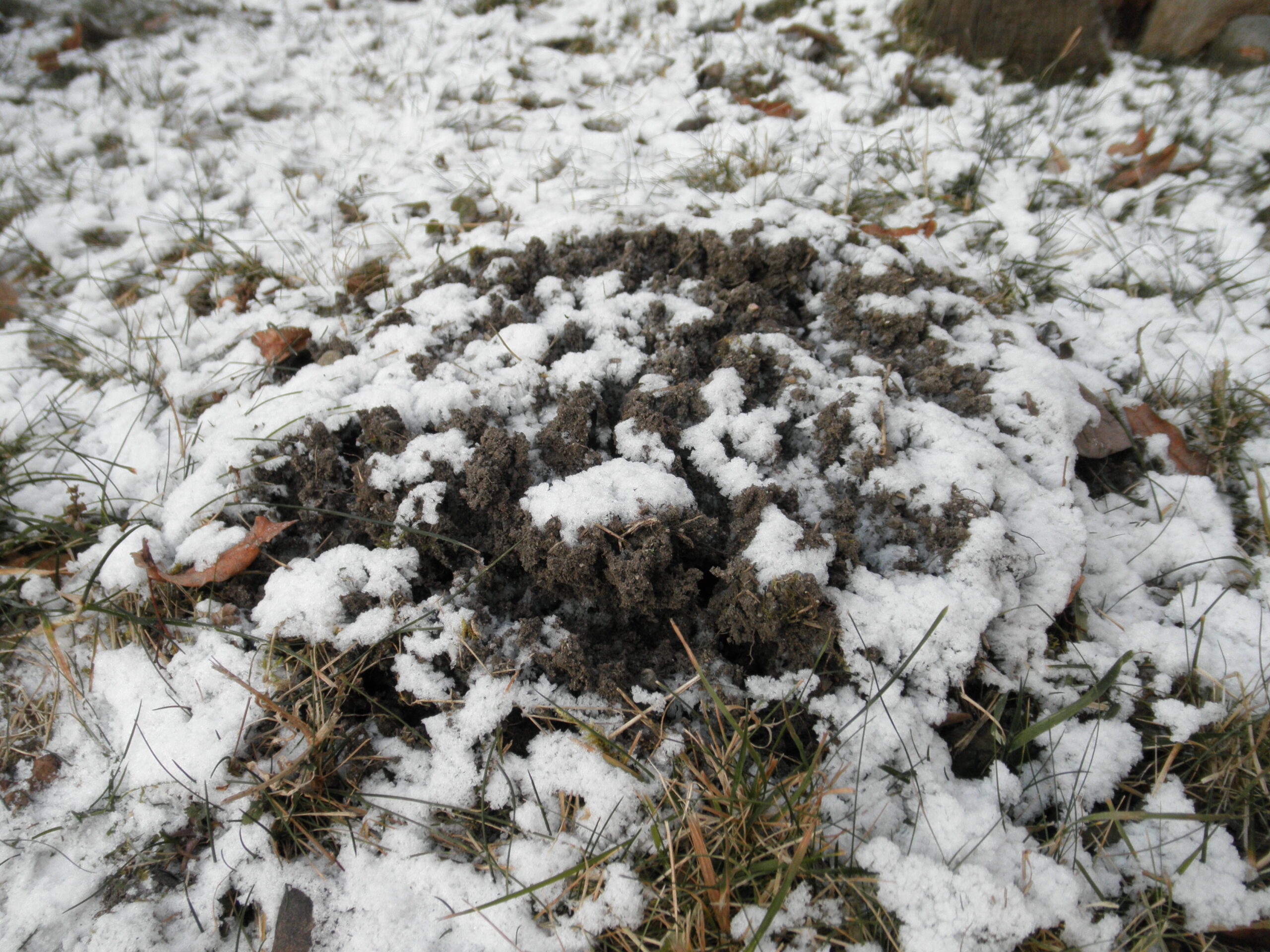
If every part of a surface rose and fell together, the movement might be less conspicuous. In practice, a road crosses changes in soil, drainage and exposure. A culvert, a shaded patch or a transition between different fills can freeze or draw water differently from the ground nearby. The resulting differential heave creates a bump or a change in slope that drivers and pedestrians can feel.
Objects in the ground can move too. A post in frost-susceptible soil may be lifted by the surrounding frozen ground, and repeated seasonal movement can leave it out of position. A raised slab or leaning post is not proof of frost heave, however: roots, erosion, settling, expansive soils and other causes can produce similar signs. Diagnosing a persistent or hazardous problem requires looking at the site, not just the crack.
Engineers try to interrupt the conditions that promote heave. Depending on the project, they may use free-draining, less frost-susceptible material, manage water, insulate the ground or design foundations for local frost conditions. The appropriate depth and construction details depend on climate, soil, drainage and local requirements; a single frost-depth number is not a universal repair prescription.
What happens when the ground thaws?
Melting removes the ice that helped lift the surface, but the ground does not necessarily return neatly to its former shape. Thawing can leave soil wet and temporarily weak. If the surface thaws while deeper ground remains frozen, drainage may be restricted, leaving water near the surface. Traffic on a weakened roadbed can then cause additional deformation or damage.
Winter heave and spring thaw weakening are related but distinct problems: one is movement during freezing, while the other is loss of support as ice melts. Road agencies sometimes impose seasonal load restrictions during vulnerable thaw periods to reduce damage. The timing and need depend on local ground and weather conditions.
A raised edge after a cold spell is therefore a visible clue to a hidden exchange of heat and water. The key is not simply that ice takes up space. In frost-susceptible ground, a growing layer of ice can draw in more water, lifting whatever rests above it; when that ice melts, the soil must support the load again in a changed condition.
Sources: Federal Highway Administration, Soils and Foundations, Chapter 3 and Chapter 7; USDA Natural Resources Conservation Service, Understanding Soil Risks and Hazards.
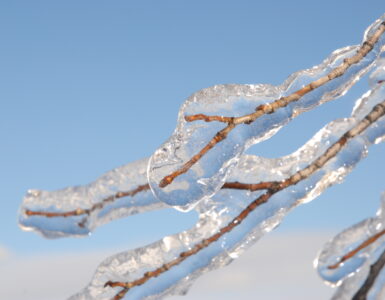
Featured image: Daria Lobacheva / Wikimedia Commons, CC BY 4.0; resized by WordPress.



Add comment