 Akshay Dinesh
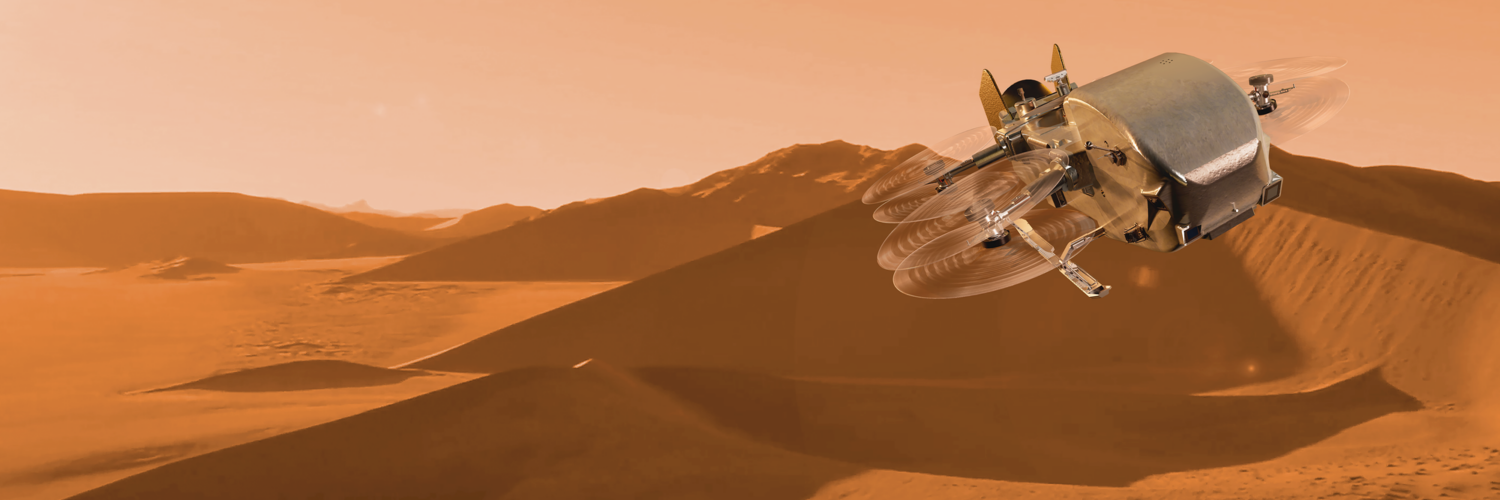
NASA’s Dragonfly will not touch down on Titan in the usual way. After a heat shield and parachutes slow its arrival, the car-sized rotorcraft will separate from its protective backshell while still hundreds of meters above the ground. From that moment on, it must fly, inspect the landscape, choose a safe patch of terrain, and land without anyone on Earth steering it.
That demanding sequence recently ran from beginning to end on flight-like computer hardware at the Johns Hopkins Applied Physics Laboratory. The October 2026 test did not lift a vehicle into the air, but it made Dragonfly’s computers believe they were flying over Titan. Simulated cameras and lidar supplied realistic terrain data in real time, allowing the flight software to find a landing site, circle back, descend, and touch down. The milestone brought together most of the sensing, computing, and maneuvering that Dragonfly will need for its first minutes on Saturn’s largest moon.
The first flight begins before Dragonfly reaches the ground
Most planetary landers finish their descent under parachutes, rockets, or airbags. Dragonfly will use a parachute to shed much of its speed, but the rotorcraft itself handles the final stage. Its heat shield will drop away, and a mechanism inside the backshell will lower the folded vehicle into the correct position. The rotors must start, the suspended craft must stop spinning, and Dragonfly must release into controlled flight.
A 2026 NASA technical description places that release at roughly 900 meters above Titan’s surface. Dragonfly then transitions from falling to flying, descends to a search altitude, maps the ground, and completes its landing. There is no earlier touchdown from which to prepare and no practice flight on Titan. The first powered flight is also the landing.
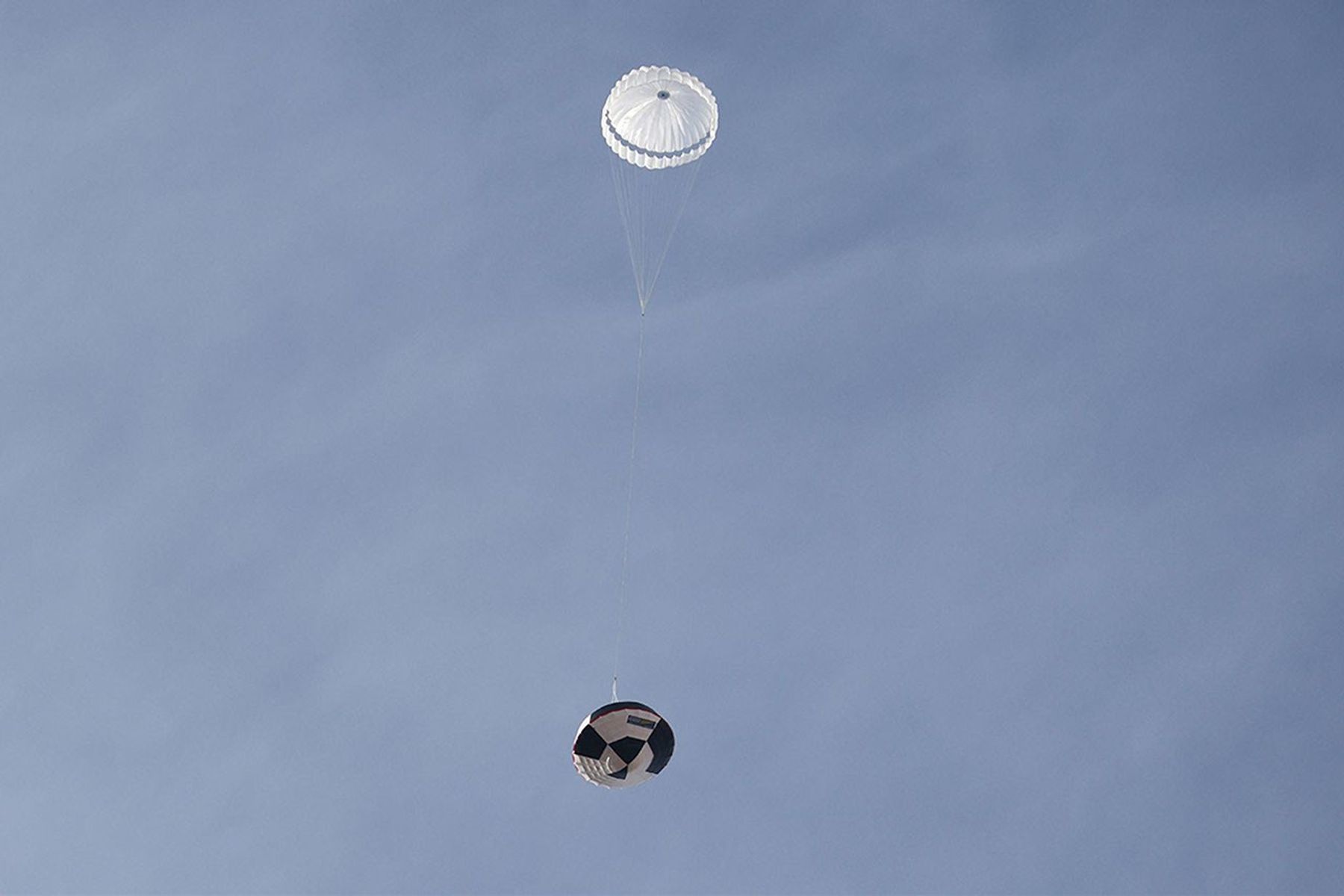
Even the handoff from parachute descent to rotor flight has moving parts that must work together. Engineers have tested the full-scale parachute system and the mechanism that lowers Dragonfly from its stowed position. They repeat deployment tests at different angles because the backshell may swing beneath the parachute. A latch that works only when everything hangs perfectly straight would not be good enough.
Titan is unusually friendly to flight
Sending an eight-rotor aircraft nearly a billion miles from Earth sounds extravagant until Titan’s environment is considered. Its surface gravity is about one-seventh of Earth’s, so Dragonfly weighs far less there than the same mass would weigh here. Titan’s nitrogen-rich atmosphere is also much denser than Earth’s atmosphere at the surface. Rotors generate lift by pushing air downward, and thick air gives them plenty of gas to push against.
That combination makes Titan a far more favorable place for powered flight than Mars, where the atmosphere is extremely thin. NASA expects Dragonfly to travel several miles during a typical flight and to cover more than 100 miles over its planned mission. The vehicle can carry its full science payload from one site to another instead of leaving instruments behind or relying on a separate rover.
The friendly aerodynamics do not make Titan easy. The surface temperature averages about minus 179 degrees Celsius, and the orange haze weakens sunlight. Dragonfly therefore uses a radioisotope power source rather than solar panels. Much of its time will be spent on the ground conducting science and slowly charging batteries; flights are planned roughly once every one or two Titan days, each of which lasts about 16 Earth days.
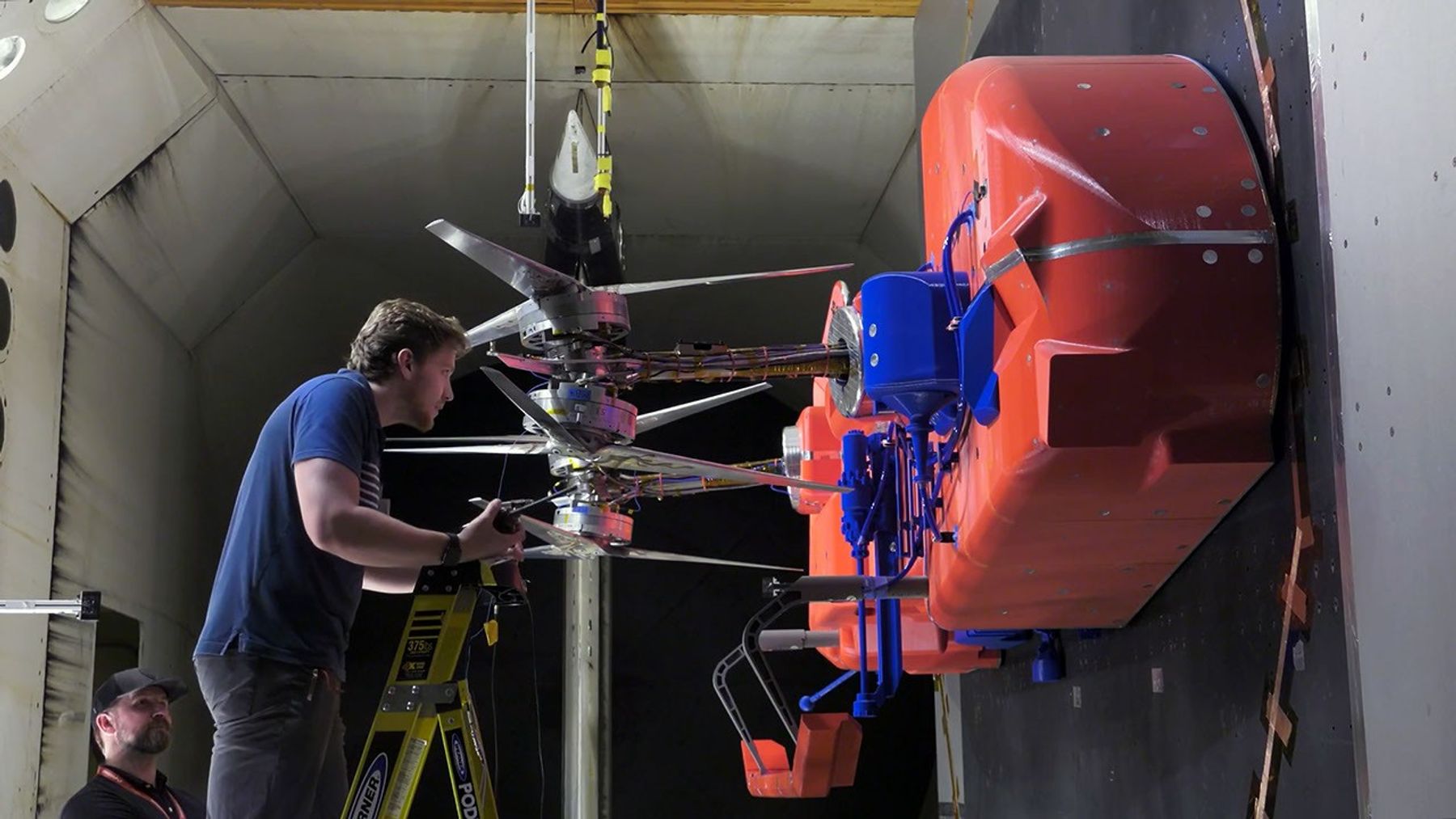
Engineers have tested representative rotors in a wind tunnel configured to reproduce key Titan conditions. They also have to account for cold materials, winds, methane rain, and the vibrations produced by four pairs of coaxial rotors. Favorable lift is only the start of the engineering problem.
Landing safely without a joystick
Radio signals take well over an hour to cross the distance between Earth and Titan. A pilot on Earth could not see a hazard and send a correction in time. Dragonfly must make every rapid flight decision on board, using navigation cameras, inertial measurement units, lidar, and carefully tested software.
The cameras show the flight computer what the terrain looks like. Inertial measurement units track rotation and acceleration, helping the vehicle estimate how it is moving. Lidar sends laser pulses toward the ground and measures how long their reflections take to return. Those measurements reveal altitude, slope, and obstacles even when a flat image alone might be ambiguous.
The sensors do not simply produce a picture for later viewing. Their data feed a chain of decisions: maintain a stable path, identify patches that meet the rules for a safe landing, fly over a candidate, turn back, and descend toward the selected site. During later exploration flights, Dragonfly will use a cautious leapfrog strategy. It can land at a site already scouted on an earlier flight while collecting images of possible sites farther ahead. Teams on Earth can study those images before the next move, but the immediate avoidance of rocks and steep ground remains the rotorcraft’s job.
This is autonomy in a practical sense. Dragonfly is not inventing its scientific goals. Mission controllers choose destinations and upload plans when communication is available. Once a flight begins, however, the vehicle must interpret its sensors and protect itself through events that unfold in seconds.
Why a computer simulation counts as a flight test
The recent test used flight-like avionics rather than a simplified desktop model. Engineers fed those computers simulated signals matching what Dragonfly’s real sensors should produce on Titan. A custom camera emulator used graphics processors to render each scene within roughly the same 20-to-70-millisecond exposure times expected from the navigation cameras. Simulated terrain also gave the lidar changing distances and slopes to measure.
Timing matters because individually correct parts can still fail as a system. A camera image that arrives late, a navigation calculation that takes too long, or two processes that exchange inconsistent information can push the vehicle away from its expected path. Running the entire sequence in real time exposes those interactions while engineers can still diagnose them.
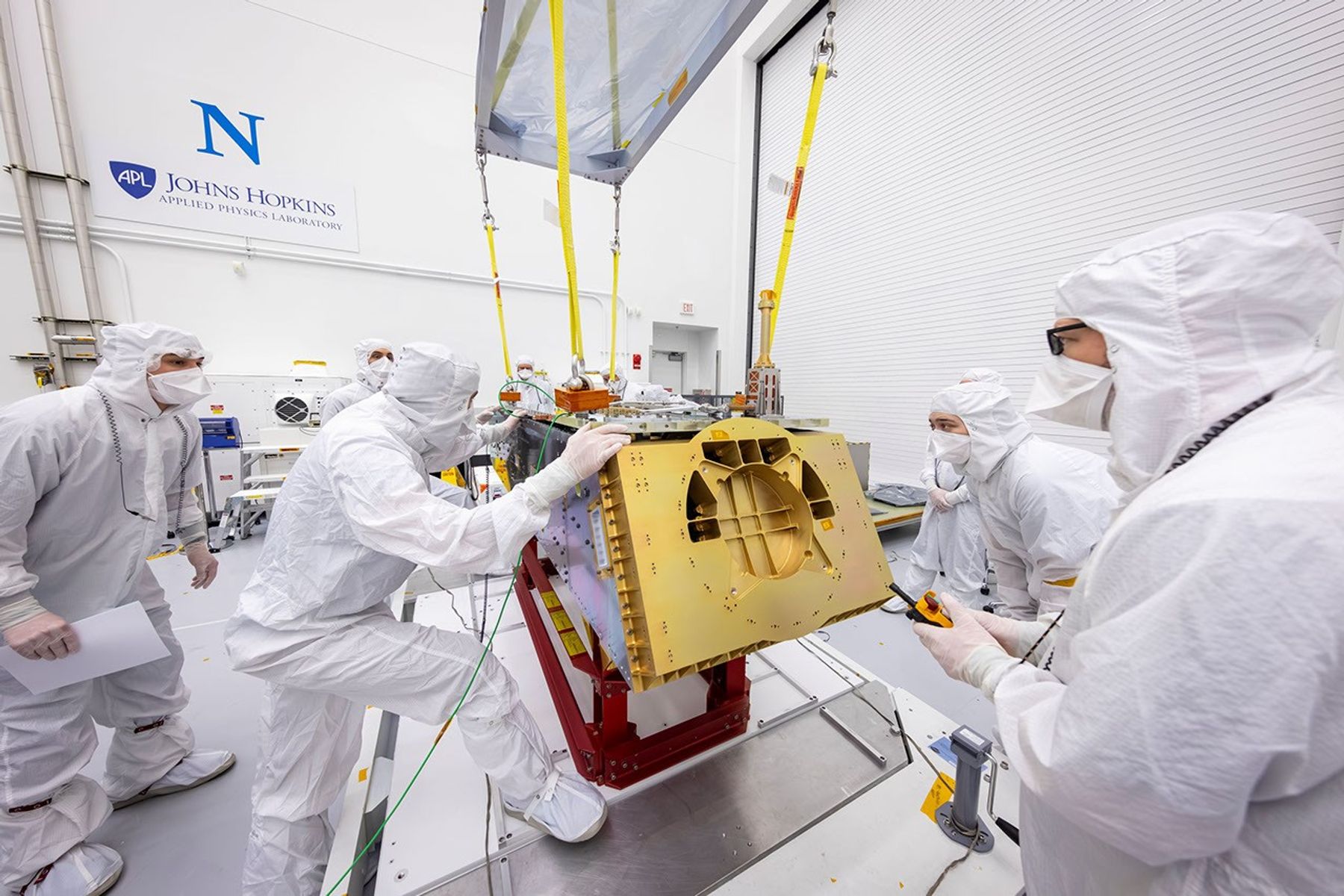
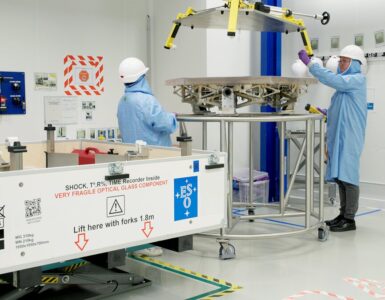
The successful run was built in stages. Earlier tests spun a single rotor, practiced a short repositioning flight, or exercised only part of the scouting sequence. Adding lidar supplied the missing piece for a full simulated first flight. The next steps are harder: repeat the sequence on Dragonfly’s actual flight system, test other flight profiles, and deliberately introduce faults to see whether the vehicle responds safely.
A simulation cannot reproduce every gust, surface texture, or hardware imperfection. It can show that the flight software, sensor interfaces, and avionics behave together under a broad set of designed conditions. That is evidence of readiness, not a guarantee, which is why the test campaign keeps expanding after a successful milestone.
Flight turns one landing site into a regional investigation
Dragonfly’s mobility serves a scientific purpose. Titan has organic dunes, impact deposits, a thick atmosphere, and a surface shaped by methane rain and rivers. The rotorcraft is scheduled to launch no earlier than 2028 and arrive in late 2034. During a planned 3.3-year mission, it will move among different settings instead of asking one small patch of ground to represent an entire world.
At each stop, instruments can study the atmosphere, image the surroundings, measure geophysical conditions, and analyze material drilled from the surface. A major destination is Selk Crater, where an ancient impact may have brought liquid water into contact with complex carbon-rich material. Dragonfly is not designed to announce that it has found life. Its central question is how far the chemistry that precedes biology may have progressed in Titan’s unusual environment.
The first simulated flight matters because every later measurement depends on the vehicle surviving that initial autonomous landing. Cameras, lidar, rotors, flight software, and deployment hardware must behave as one system before a single grain of Titan’s surface can reach an instrument. If they do, flight will give planetary science something rare: the ability to compare distant sites with the same laboratory, carried through the sky from one experiment to the next.