 Akshay Dinesh
The sting from an intensely sour candy is not just a stronger version of sweetness. It is a chemical signal. Food acids release hydrogen ions in saliva, taste cells detect the change, and nearby sensory nerves can join in when the exposure becomes intense. That is why the first bite can produce a pleasant pucker while a long sour-candy session can leave the tongue tender and the teeth unusually sensitive.
The same ingredients create both experiences. Citric acid, malic acid, and related compounds give sour candy its bright flavor, but their concentration, the length of contact, and the way a candy clings to the mouth determine whether the sensation stays playful or becomes painful.
How Acids Create a Sour Taste
Sourness begins when an acid dissolves in saliva and releases hydrogen ions. Taste cells in the mouth respond to those ions, then send electrical signals toward the brain. The brain combines that information with sweetness, smell, texture, and temperature to build the flavor we recognize as sour candy. Sugar does not cancel the acid; it simply adds a competing sweet signal, which can make a very acidic product taste balanced enough to keep eating.
Citric acid is common because it delivers the clean, familiar sharpness associated with lemons and other citrus fruits. Malic acid, found naturally in foods such as apples, tends to produce a sour sensation that develops and lingers differently. Candy makers may also use tartaric, lactic, or fumaric acid to adjust the timing and character of the pucker. The American Chemical Society uses sour candy in a simple acid-base activity because these acids react with baking soda and release bubbles of carbon dioxide.
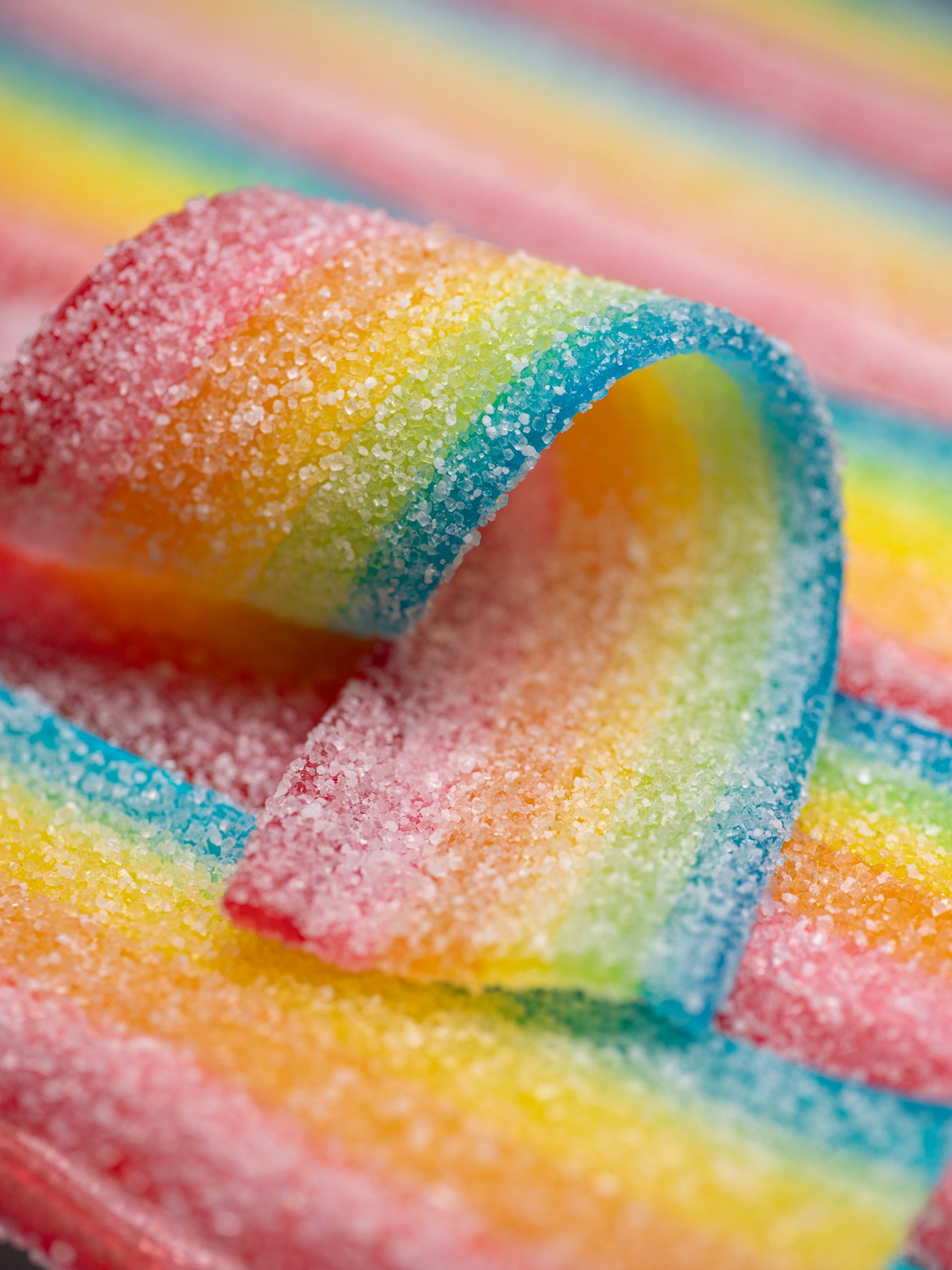
Not every grain on a sour candy is ordinary sugar. The powder coating may contain both sugar and crystalline food acid, putting a concentrated dose directly onto the tongue before the candy has begun to dissolve. An acid mixed through a gummy or hard candy arrives more gradually. This helps explain why two candies with similar flavors can feel very different in the first few seconds.
Why a Pucker Can Turn Into Pain
A mild acid level activates sour-taste pathways. A stronger or more prolonged exposure can also irritate the soft lining of the mouth and activate nerve endings that report touch, temperature, and pain. Those systems are related but not identical. The shift from “tart” to “this hurts” is the point at which the experience is no longer only about taste.
Texture adds another piece. Coarse crystals and a chewy surface can rub the same area repeatedly, while a hard candy may be held against one part of the cheek or tongue for several minutes. Acid can make the surface tissue more vulnerable at the same time that friction works on it. The result may be temporary tenderness, a raw feeling, or peeling of the thin surface layer.
The mouth usually repairs minor surface irritation quickly because its lining renews itself and receives a rich blood supply. Saliva also dilutes and clears acids. Still, the dose matters: several very sour candies eaten back to back create a different exposure from one candy swallowed after a few minutes. A persistent sore, bleeding, marked swelling, or pain that does not improve should not be written off as an ordinary candy reaction.
What Sour Candy Does to Tooth Enamel
Enamel is the highly mineralized outer shell of a tooth. It is extremely hard, but hardness does not make it immune to acid. When the liquid around enamel becomes acidic enough, minerals at its surface begin to dissolve. Saliva can buffer the acid and help return minerals to the surface, but it needs time to do that work.
In a study published in the Journal of the American Dental Association, University of Iowa researchers dissolved commercial candies in artificial saliva or water and measured both their acidity and the enamel lesions produced during laboratory exposure. Sour candies were generally more erosive than their original, non-sour versions. Deeper lesions were associated with lower initial pH and higher titratable acidity, a measure of how much neutralizing base is needed to overcome the acid.
That second measurement is easy to overlook. pH describes the intensity of acidity at a given moment, while titratable acidity reflects the reservoir of acid that saliva must neutralize. Two candies can begin at a similar pH yet make different demands on the mouth if one contains much more total acid. The researchers also found that artificial saliva offered less protection against sour candies than it did against original candies under their laboratory conditions.
Dental erosion is not the same process as a cavity. Erosion is direct chemical wear caused by acids from foods, drinks, or the stomach. Cavities involve acids produced when bacteria in dental plaque metabolize sugars and other fermentable carbohydrates. Sour candy can contribute to both problems: it supplies acid immediately and often supplies sugar that oral bacteria can use later.
Why Time and Frequency Matter as Much as Sourness
A brief acid exposure is followed by a recovery period as saliva washes the mouth, raises the pH, and supplies calcium and phosphate. Repeated snacking interrupts that recovery. Eating one portion with a meal generally creates fewer separate acid episodes than returning to the bag every few minutes through an afternoon, even when the total number of candies is the same.
The candy’s physical form changes the clock too. A sticky gummy can lodge in grooves or adhere to a tooth. A hard candy dissolves slowly, bathing the mouth in sugar and acid. A spray or powder can deliver a concentrated burst and may be applied repeatedly to the same spot. The American Dental Association therefore singles out sour, sticky, and long-lasting candies when discussing Halloween dental health.
Individual conditions also change the effect. Saliva flow tends to rise while chewing and eating, but it varies among people and can fall because of dehydration, certain medicines, or health conditions. Tooth sensitivity, existing enamel wear, braces, and the habit of holding candy in one place can all make an exposure feel more intense. A universal ranking of the “worst” sour candy would miss these differences as well as variations between products.
Giving the Mouth Time to Recover
The chemistry points to a few practical habits. Water can help clear loose sugar and acid after eating. Sugar-free gum can stimulate saliva; the American Dental Association notes that increased saliva helps reduce plaque acid and clear other acids from the mouth. Sour candy is also less likely to produce a long chain of acid exposures when it is treated as an occasional portion instead of an all-day snack.
Brushing immediately after a strongly acidic food is not ideal because the enamel surface may be temporarily softened. ADA patient guidance on dental erosion recommends waiting about 30 minutes to an hour after acid exposure before brushing. Rinsing with water in the meantime is a gentler response. Brushing twice daily with fluoride toothpaste remains part of ordinary dental care, but it works best as routine protection rather than an attempt to scrub away the sourness at once.
Most important, pain is useful information. The dramatic pucker of a sour candy comes from real chemical activity, and a raw or burning mouth is a reason to stop rather than a challenge to continue. Sourness can be enjoyable precisely because it sits near the edge between flavor and irritation. Understanding where that sensation comes from makes it easier to enjoy the chemistry without turning a momentary thrill into hours of discomfort.