Akshay Dinesh
A chocolate bar can look perfectly normal when you buy it, then emerge from a cupboard or refrigerator with pale streaks, cloudy patches, or a dusty white film. The change is alarming because white growth on food often suggests mold. On solid chocolate, though, the usual explanation is a physical change called chocolate bloom. Fat or sugar has moved and recrystallized at the surface, changing the bar’s appearance and sometimes its texture without turning the chocolate into a different substance.
There are two main forms: fat bloom and sugar bloom. They can look similar, but heat drives one while moisture drives the other. Knowing the difference explains why a forgotten chocolate bar turns gray, why homemade candies sometimes lose their shine, and why the refrigerator can create the very problem it seems likely to prevent.
The white layer is chocolate bloom
Chocolate is not a single smooth material. It is a concentrated mixture of cocoa particles, sugar crystals, and fat; milk chocolate also contains milk solids and milk fat. Cocoa butter surrounds many of those solid particles and helps create the melt, gloss, and clean snap associated with a well-made bar. Under a microscope, that apparently uniform square is a carefully arranged structure.
Bloom appears when part of that structure reorganizes. In fat bloom, fat accumulates and crystallizes at the surface. In sugar bloom, water dissolves surface sugar and then leaves crystals behind as it evaporates. Both scatter light, so a dark brown surface begins to look pale, gray, or chalky.
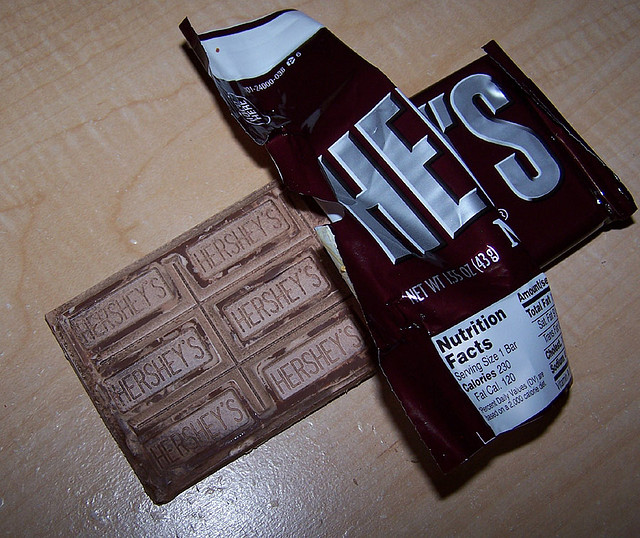
The distinction matters because appearance alone does not reveal the cause. A smooth, greasy-looking haze is more consistent with fat bloom, while a rough or grainy coating points toward sugar bloom. The two can also occur together. A bar exposed first to warmth and later to condensation may carry evidence of both processes.
Fat bloom begins with cocoa-butter crystals
Cocoa butter can solidify in several crystal arrangements, or polymorphs. These arrangements contain the same fat molecules, but the molecules pack differently. Most of the forms are too soft, too crumbly, or too unstable for finished chocolate. Chocolatiers therefore use tempering, a controlled cycle of heating, cooling, and gentle reheating, to encourage a stable crystal structure that produces gloss, firmness, and a satisfying snap.
Temperature abuse can disturb that structure after the chocolate has set. A bar left in a hot car may soften without turning into a visible puddle. When it cools again, some cocoa butter recrystallizes in a less orderly way or migrates toward the surface. Repeated warm-cool cycles make the process more likely because each cycle gives liquid fat another opportunity to move through the chocolate’s network of solid particles.
Fillings add another route. Nut butters, pralines, and other fat-rich centers contain oils that can migrate into the chocolate coating. Those oils soften the cocoa-butter structure and speed the movement of fat toward the exterior. This is why a filled candy may bloom even when a plain bar stored beside it looks fine.
Food scientist Richard Hartel and other researchers have shown that fat bloom is not simply a layer of grease floating upward because it is lighter. Crystal changes, microscopic pores, ingredient interactions, and storage conditions all influence its growth. The result can be a faint haze, branching streaks, or broad pale patches. The chocolate may also feel softer, crumble more easily, or melt less smoothly on the tongue.
Sugar bloom starts with moisture
Sugar bloom follows a different path. Sugar does not travel through dry chocolate in the same way as fat. It needs water. When moisture settles on the surface, it dissolves a small amount of sugar; after the water evaporates, the dissolved sugar forms new crystals that remain on top as a rough, dusty coating.
Condensation is a common trigger. Imagine moving an unwrapped bar directly from a cold refrigerator into a warm, humid kitchen. The chocolate is colder than the surrounding air, so water vapor condenses on it just as it does on the outside of a cold drink. Those droplets are enough to dissolve surface sugar. Once they disappear, the sugar does not return to its original microscopic arrangement.
That sequence explains why refrigeration can backfire. A refrigerator protects chocolate from a hot room, but it also contains moisture and creates a large temperature change when the package comes out. Refrigeration is sometimes necessary in a very warm home; the safer method is to seal the chocolate in an airtight container before chilling it, then let the sealed container reach room temperature before opening. Any condensation is more likely to form on the container than on the chocolate.
Sugar bloom usually feels dry and gritty rather than waxy. It may cover the surface evenly or appear as tiny specks. Unlike fat bloom, rubbing it with a warm finger does not readily make it vanish because the visible material is crystalline sugar, not fat that melts near body temperature.
Bloomed chocolate is usually edible, but check the whole food
Bloom is a quality defect, not usually a safety hazard. Guidance for chocolate manufacturers, including the Food Safety Authority of Ireland’s 2025 cocoa and chocolate guidance, describes bloom as a whitish or gray surface change caused by fat or sugar crystallization. The chocolate may have lost its polished look and ideal texture, but the bloom itself is not mold.
That does not mean every pale or old confection should automatically be eaten. Solid chocolate is relatively dry, which makes microbial growth difficult, but a truffle, cream-filled candy, chocolate-covered fruit, or homemade dessert has other ingredients with different storage needs. Follow the package date and storage directions for the complete product, not just for its chocolate shell. Discard food with an off smell, leaking filling, unusual colored or fuzzy growth, insect damage, or a compromised wrapper.
A practical inspection begins with context. Was the bar exposed to heat or moved in and out of a refrigerator? Is the coating smooth and streaky, or dry and crystalline? Does the chocolate smell like chocolate rather than stale fat or another odor absorbed from storage? Bloom caused by temperature or humidity often covers broad areas in a thin, flat pattern, while mold is more likely to look raised, fuzzy, or irregular. When the cause is genuinely uncertain, throwing the product away is more sensible than conducting a taste test.
Safe bloomed chocolate can still be useful even when its texture is disappointing. Melt it into brownies, ganache, cookies, or hot chocolate, where the original surface no longer matters. For molded candies or a glossy coating, it must be melted and properly tempered again; merely warming the outside may hide fat bloom temporarily without rebuilding the internal crystal structure.
Steady, cool, dry storage protects the finish
The best defense against both forms of bloom is stability. Store chocolate tightly wrapped in a cool, dark, dry place away from ovens, sunny windows, radiators, and strong-smelling foods. A cupboard with a steady temperature is often better than a refrigerator that repeatedly exposes the bar to cold, humidity, and condensation. Avoid moving chocolate back and forth between warm and cold locations.
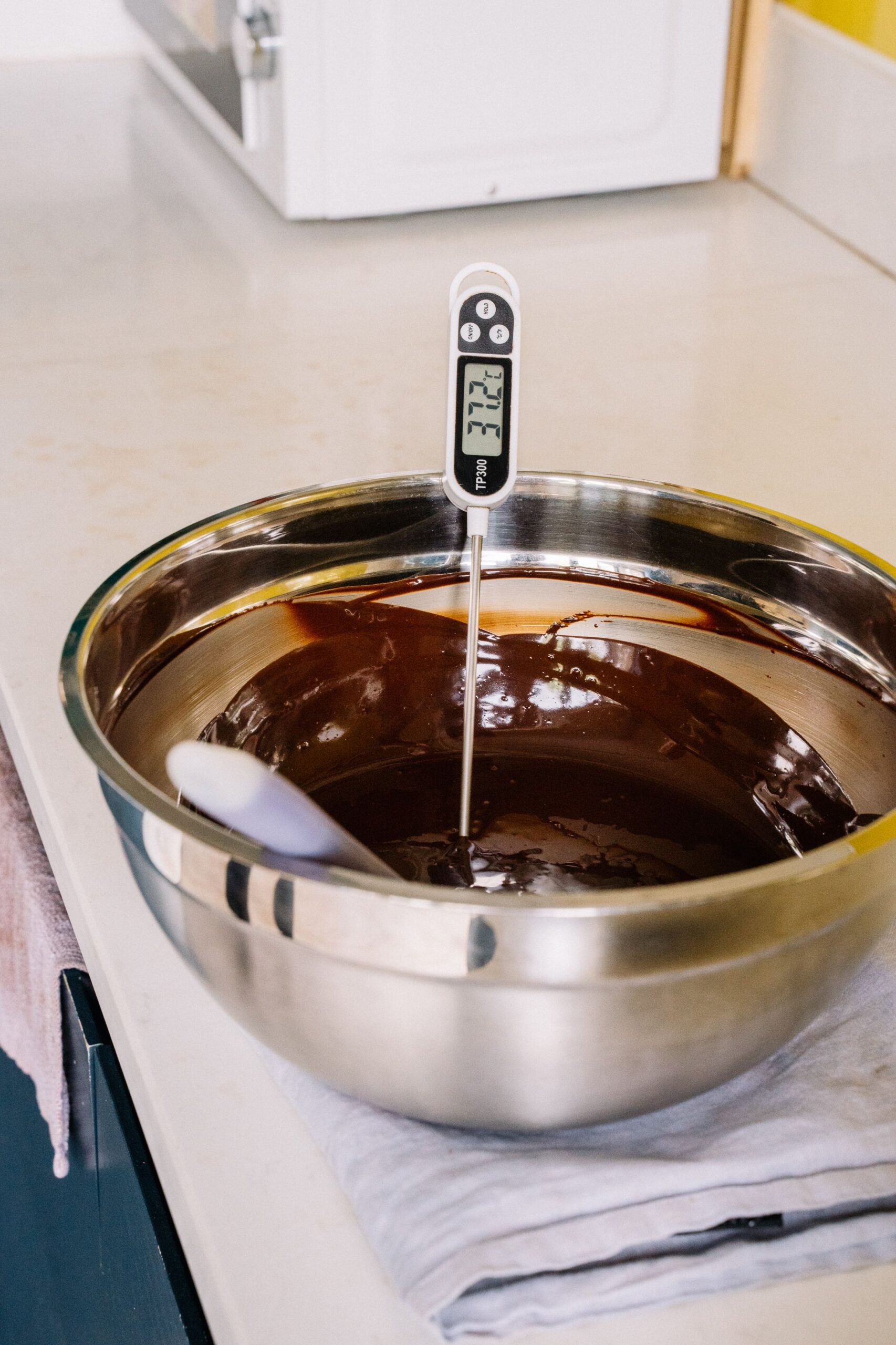
For homemade chocolate, careful tempering matters just as much as storage. A thermometer helps, but temperature is only part of the method: enough stable seed crystals must remain or be introduced while the chocolate is stirred and cooled. Because dark, milk, and white chocolate contain different proportions of cocoa butter and milk fat, they do not share one universal tempering schedule. Following the temperature range supplied for the specific chocolate is more reliable than memorizing a single set of numbers.
Bloom reveals how much hidden order sits inside an ordinary chocolate bar. Gloss, snap, and smooth melting depend on crystals too small to see, while a little heat or moisture can reorganize them into a visible white layer. That pale coating may spoil the appearance, but it also turns a familiar snack into a compact demonstration of crystallization, phase change, and the chemistry of food.