Akshay Dinesh
Road salt can turn hard ice into wet slush even when the air is below freezing. It does not produce heat like a hand warmer, and it does not simply grind the ice away. Its real job is to create salty liquid water, or brine, whose freezing point is lower than that of fresh water. That small shift in the conditions for freezing helps loosen ice from pavement, but only while there is enough liquid water and enough heat in the road for the process to continue.
Salt changes the balance between liquid water and ice
At ordinary atmospheric pressure, pure liquid water and ice can coexist at 0°C, or 32°F. Below that temperature, ice is normally the more stable state. Dissolving sodium chloride in the water changes the balance. The dissolved sodium and chloride ions make it harder for water molecules to join the orderly crystal lattice of ice, so the liquid can remain stable at a lower temperature.
This effect is called freezing point depression. It is a colligative property, which means that the number of dissolved particles matters more than their identity. Sodium chloride separates into two kinds of ions in water, so one dissolved formula unit contributes a sodium ion and a chloride ion. The ions do not permanently alter the water molecules; they change the mixture’s physical conditions for freezing.
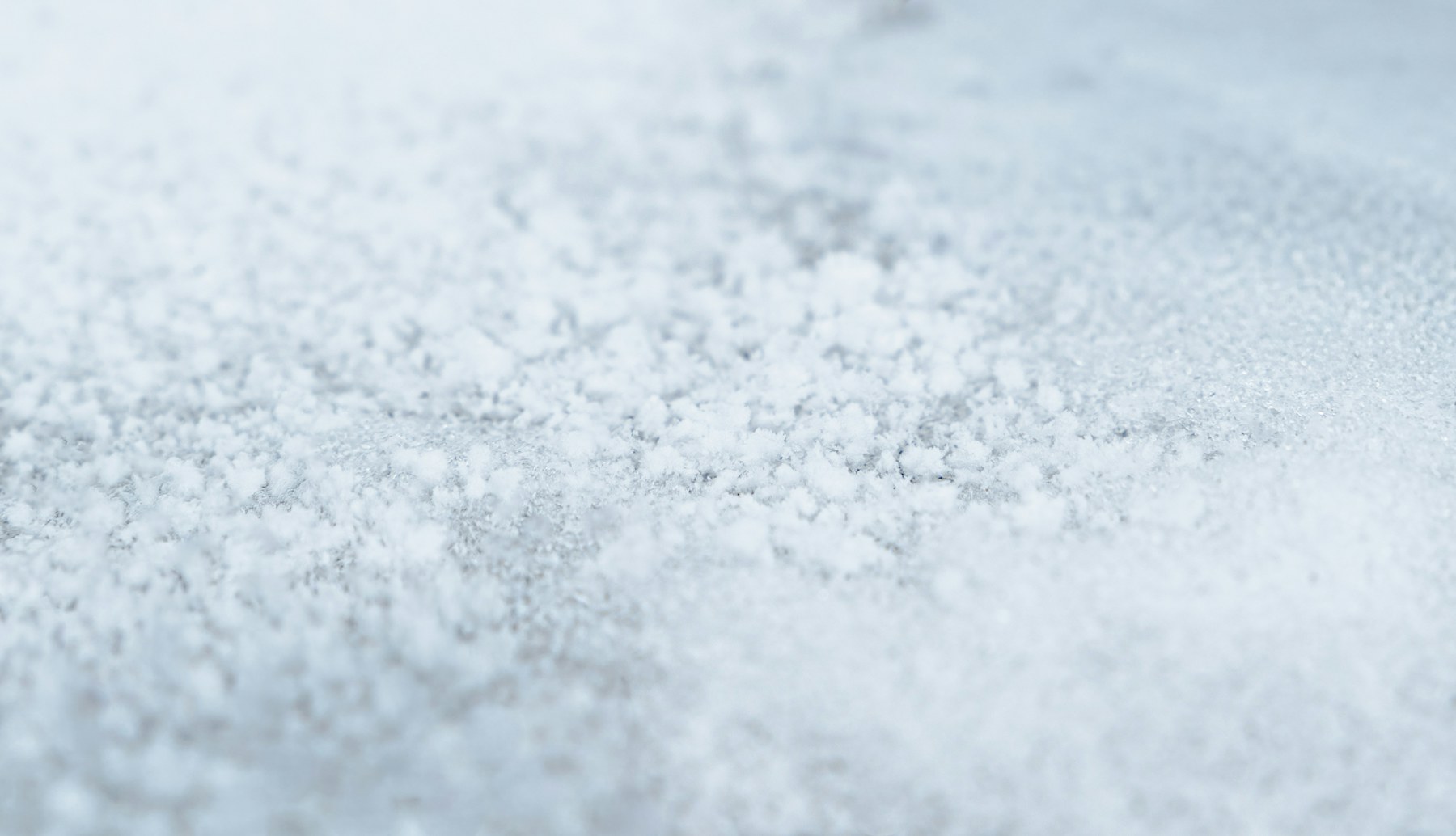
A road is not a laboratory beaker, however. When a grain of rock salt lands on damp ice, it first needs a little liquid water in which to dissolve. Moisture on the surface, traffic, sunlight, or a very thin liquid-like layer at the ice boundary can begin the process. Once brine forms, nearby ice can melt into it until the salt solution becomes too diluted or the temperature becomes too low for that concentration of brine to stay liquid.
That explains a familiar sight after a salt truck passes: the ice does not vanish all at once. Wet channels form around salt grains, the surface becomes porous, and the bond between the frozen layer and the pavement weakens. A plow or passing tires can then move the loosened snow and ice more easily. Salt helps create conditions for removal; it is not a substitute for removal.
Why ordinary road salt slows down in deep cold
Adding more sodium chloride lowers the freezing point only up to a limit. The lowest freezing point possible for a sodium chloride and water mixture occurs near 23 percent salt by mass. This mixture, called the eutectic composition, can remain liquid down to about −21°C, or −6°F. Below that temperature, a sodium chloride brine cannot stay fully liquid, no matter how much extra rock salt is piled onto the road.
The theoretical limit is not the same as the practical working limit. On an actual road, dry salt must dissolve, brine is diluted by new snow, and heat must move into the ice being melted. All of that becomes much slower as pavement temperature falls. The Minnesota Department of Transportation describes straight sodium chloride as most effective above a pavement temperature of about 15°F, or −9°C; below that point, its performance drops sharply.
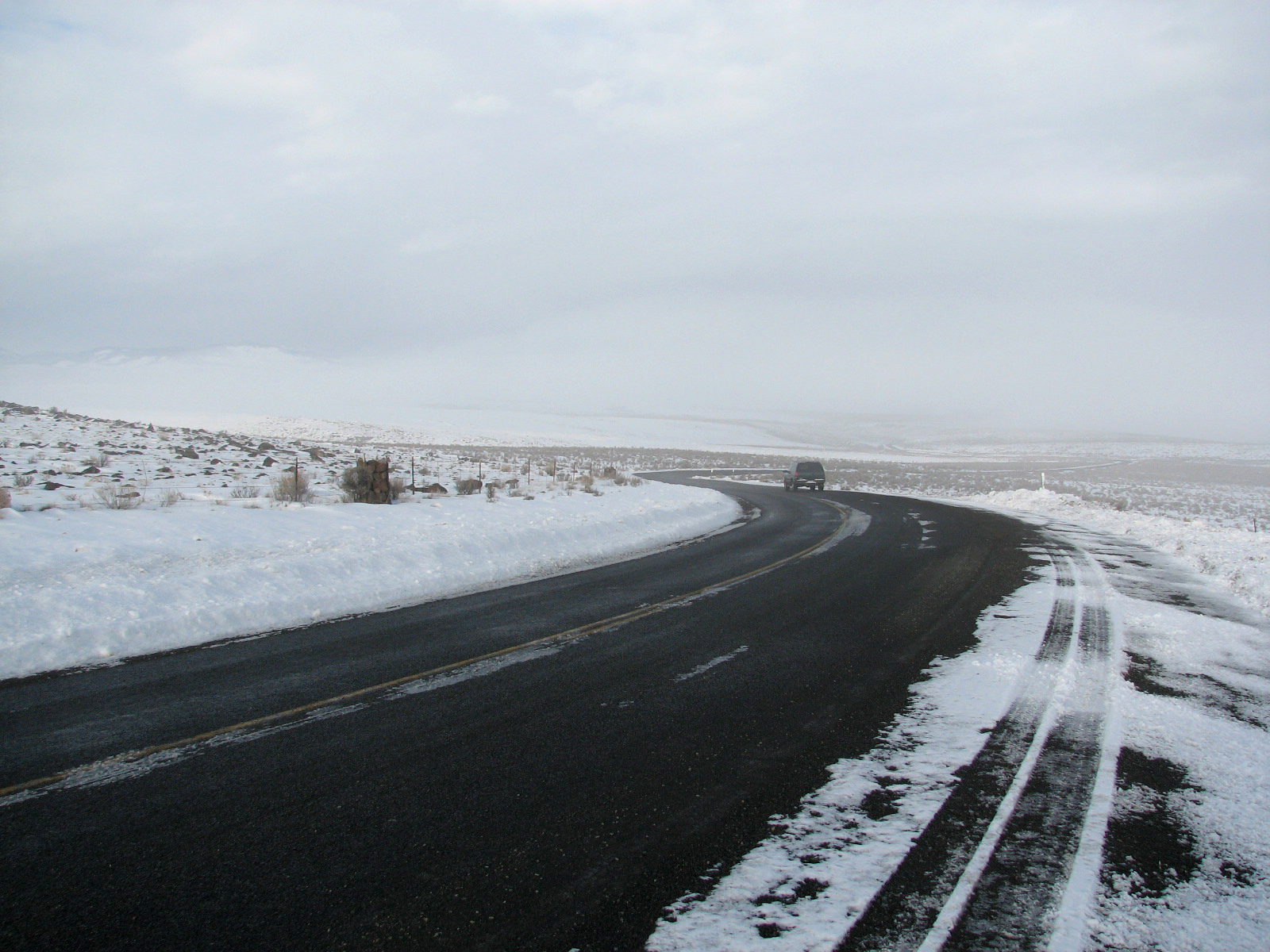
This difference between −6°F and roughly 15°F prevents a common misunderstanding. The first number describes an equilibrium limit for a carefully mixed solution. The second reflects the speed and reliability needed in winter maintenance. A chemical can be capable of melting some ice at a low temperature yet work too slowly to be useful before traffic packs the snow or more precipitation dilutes the brine.
Road crews pay close attention to pavement temperature, not just the temperature reported for the air. A road surface can be warmer in sunshine, colder under a clear night sky, or different from a nearby bridge that loses heat from both its upper and lower surfaces. The same amount of salt may therefore work well on one stretch and poorly on another.
Why brine may be applied before snow starts
Deicing and anti-icing solve different problems. Deicing happens after snow or ice has bonded to the pavement. Anti-icing places a chemical solution on the road before or early in a storm so that a strong ice-to-pavement bond is less likely to form. Federal Highway Administration guidance describes anti-icing as a preventive strategy that can leave a road easier to plow and may reduce the chemical effort needed after accumulation begins.
The pale parallel lines sometimes visible on a dry road before a forecast storm are usually salt brine. Because the salt is already dissolved, it does not have to wait for moisture to begin working. Crews may also pre-wet solid salt as it leaves a spreader. Wet grains tend to stick to the pavement instead of bouncing into the shoulder, and they begin forming brine faster than dry crystals.
Timing still matters. Rain can wash a pretreatment away, heavy snow can dilute it, and blowing snow can cover the surface faster than brine can prevent bonding. Plowing remains the main way to remove large amounts of snow. The chemistry is most useful at the boundary between the pavement and the frozen layer, where breaking or preventing the bond makes mechanical clearing easier.
In colder conditions, agencies may use calcium chloride or magnesium chloride, sometimes blended with sodium chloride. These salts can form brines that remain useful at lower temperatures, and calcium chloride releases heat as it dissolves. They are not consequence-free replacements: they cost more, remain corrosive, and still add chloride to the environment. Sand takes a different approach. It can improve traction temporarily, but it does not lower water’s freezing point.
The useful reaction has an environmental afterlife
Sodium chloride seems ordinary because it is the same basic compound found in table salt, but scale changes its impact. After a storm, melted brine can run into storm drains and streams or seep into soil and groundwater. Chloride ions do not break down into harmless substances over time. Once dissolved, they can travel with water and persist well beyond the winter in which the salt was spread.
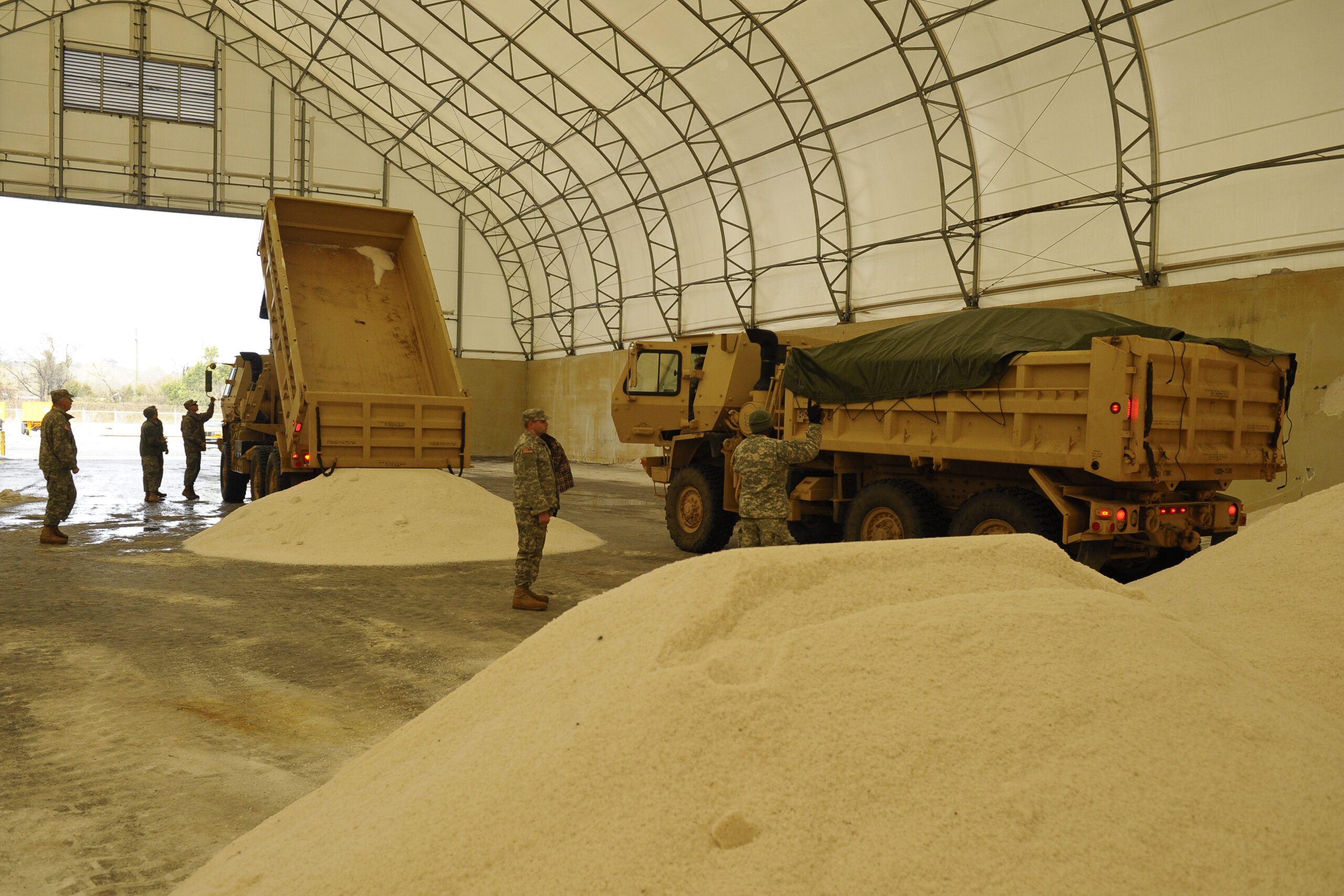
The U.S. Geological Survey has documented rising chloride concentrations in many urban streams and shallow groundwater systems affected by deicing. Some monitored streams showed increases even during summer, evidence that winter chloride had entered groundwater and was returning gradually as baseflow. The Environmental Protection Agency warns that excessive salt can harm freshwater organisms, damage roadside vegetation, corrode vehicles and infrastructure, and complicate drinking-water treatment.
That creates a real tradeoff rather than a simple choice between safety and pollution. Ice control protects people, keeps emergency routes open, and reduces crashes. Wasteful application, though, does not necessarily make a road safer, especially when sodium chloride is already performing poorly because the pavement is too cold. Modern programs combine weather forecasts, pavement sensors, calibrated spreaders, pre-wetting, plowing, and post-storm review to use the right material at the right time and rate.
Home use follows the same chemistry on a smaller scale. Removing as much snow as possible before it is packed down reduces the amount of deicer needed. A thin, even application works differently from a deep pile: only salt that can dissolve and reach the ice-pavement boundary contributes to melting. Product instructions matter because blends have different effective temperatures and may affect concrete, plants, pets, or metal surfaces differently.
Road salt works by creating a lower-freezing liquid
The useful part of road salt is not the crystal sitting on top of the ice. It is the brine that forms when the crystal dissolves. That solution can remain liquid below 32°F, melt ice at its edges, and weaken the bond holding a frozen layer to pavement. As the pavement becomes colder, however, brine formation and melting slow until ordinary sodium chloride is no longer a practical tool.
Seen this way, winter salting is a careful exercise in phase change, heat flow, and timing. The same chemistry explains both its value and its limits: dissolved ions can keep water liquid at lower temperatures, but they cannot eliminate the need for heat, plows, good judgment, or attention to where the chloride goes after the thaw.