Akshay Dinesh
A bright planet can seem fixed beside the Moon, then disappear at the lunar edge as cleanly as a light being switched off. Minutes or more than an hour later, it returns from the opposite side. Nothing has happened to the planet itself. The Moon has simply crossed the same line of sight, creating an event astronomers call a lunar occultation.
The geometry is simple, but the view is surprisingly local. On October 6, 2026, for example, a thin crescent Moon passed in front of Jupiter for observers across much of North America. People outside the visibility zone saw the two objects pass close together without Jupiter vanishing. That difference turns a pretty alignment into a useful demonstration of distance, motion, and perspective.
What makes an occultation different from an eclipse or transit
The U.S. Naval Observatory defines an occultation as one celestial body being hidden by another with a larger apparent diameter. The word comes from a root meaning “to conceal.” During a lunar occultation, the Moon is the foreground object and a star, planet, asteroid, or other distant target lies behind it from the observer’s point of view.
An eclipse is organized around shadow. A lunar eclipse occurs when the Moon enters Earth’s shadow, while a solar eclipse occurs when the Moon blocks the Sun and its shadow falls on Earth. A transit happens when the foreground object looks smaller than the background object and crosses its visible disk, as Mercury sometimes crosses the Sun. The labels describe related alignments, but they emphasize different geometry.
Apparent size matters more than physical size. Jupiter is about 40 times wider than the Moon, yet it is also vastly farther away. In our sky it looks like a small disk, while the nearby Moon spans roughly half a degree. The Moon can therefore cover Jupiter completely even though the planet is enormous by comparison.
Why the Moon can hide stars and planets
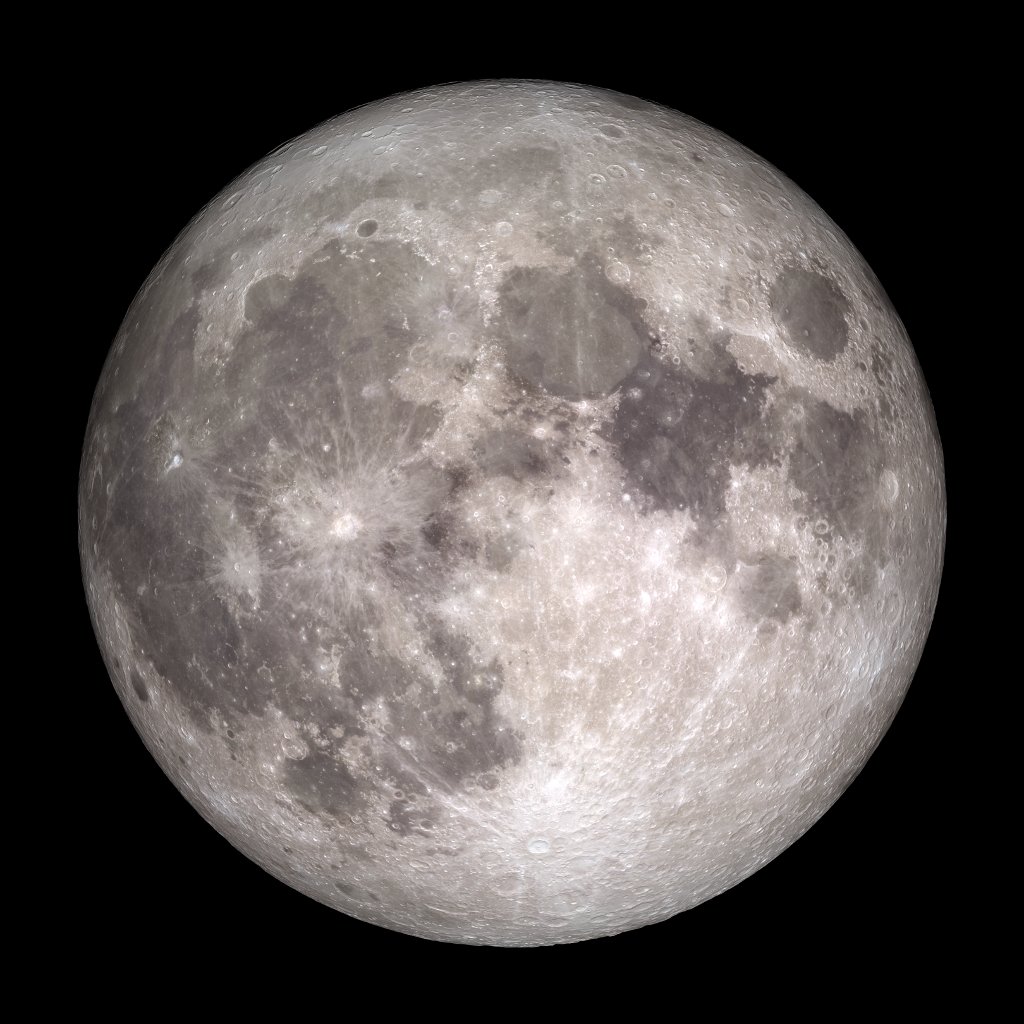
The Moon moves eastward against the background stars as it travels around Earth. Its average shift is about 13 degrees per day, close to one lunar width per hour. Earth’s rotation carries the whole sky westward each day, but careful observation over an hour makes the Moon’s own motion easy to notice: it steadily changes position relative to nearby stars and planets.
The planets remain near the ecliptic, the path the Sun appears to follow through the sky, because the major planets orbit in nearly the same broad plane. The Moon’s orbit is tilted by about five degrees to that plane. As a result, the Moon repeatedly passes through the same band of sky occupied by the Sun, planets, and zodiac constellations. Most close approaches are near misses, but an exact alignment produces an occultation.
Stars look like points even through ordinary telescopes, so a star may vanish almost instantly at the Moon’s edge. A planet presents a small but measurable disk. NASA notes that a planet can take several seconds to disappear as the lunar limb advances across it. Jupiter’s four large Galilean moons may wink out one after another, making the event a visible sequence rather than a single disappearance.
Why one city sees it and another city misses it
The Moon is close enough for viewing location to matter. Observers in different places see it against a slightly different patch of distant sky, an effect called parallax. Hold a finger at arm’s length and alternate which eye is open: the finger seems to jump against the background. The Moon makes a similar apparent shift when viewed from different points on Earth.
This is why an occultation follows a band across Earth rather than appearing everywhere the Moon is above the horizon. Inside the band, the target passes behind the lunar disk. Near an edge, it may skim mountains and valleys along the Moon’s limb in a grazing occultation, disappearing and reappearing several times. Beyond the band, observers see only a close conjunction.
Local timing changes for the same reason. A prediction for a distant city may be wrong by minutes or may describe an event that is not visible at all from your location. Reliable observing guides calculate the geometry for specific coordinates, accounting for the Moon’s position, the target’s position, and the observer’s place on the curved surface of Earth.
What disappearance and reappearance can reveal
Before spacecraft and modern imaging, occultation timings helped astronomers refine the Moon’s orbit and position. They also revealed that the lunar edge is not a perfect circle. An observer who times a grazing event is effectively tracing mountains, crater rims, and valleys silhouetted against a distant light source. The British Astronomical Association still maintains an observing program for timing disappearances and reappearances at the lunar limb.
Occultations can expose detail in the object being hidden as well. A single star should drop out abruptly, but a close double star may disappear in two steps as the Moon covers each component. Recording the exact brightness change can reveal a companion too close for the telescope to separate directly. Radio and infrared observations have extended the method to objects that are difficult to study in visible light.
The event also gives a direct sense of celestial motion. A conjunction may look almost unchanged during a quick glance, while an occultation provides a sharp boundary and a precise moment. The Moon’s dark limb advancing over a planet makes orbital motion visible on a human timescale.
How to watch a lunar occultation
Begin with a prediction made for your location. The target, Moon phase, altitude, and exact disappearance and reappearance times all affect what you can see. Allow extra time to find the Moon and identify the correct point of light. A planet next to a bright lunar crescent can be harder to spot than expected because glare reduces contrast.
- Unaided eyes: Bright planets such as Venus and Jupiter may be visible without equipment, especially in a dark sky.
- Binoculars: A steady pair can make the planet easier to follow and may show Jupiter’s brightest moons.
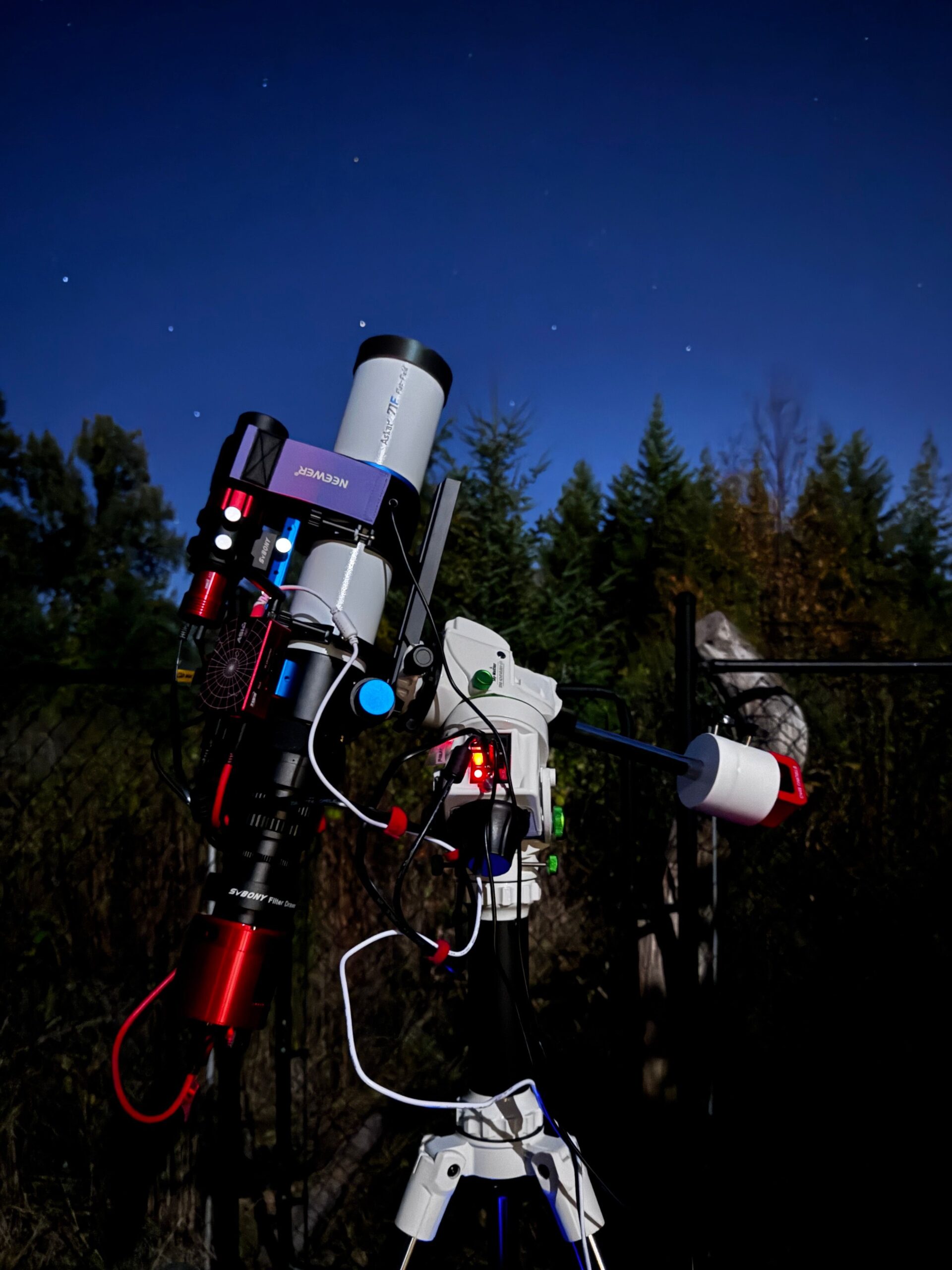
- Small telescope: Moderate magnification can show a planet’s disk and make the lunar edge more dramatic.
- Camera or phone: Video through a securely mounted telescope can preserve the disappearance for later timing.
Focus before the predicted moment and watch continuously. When possible, the Moon’s dark limb gives the clearest view because the target is not competing with a brilliant sunlit edge. Keep the instrument steady and use low enough magnification that the target remains in the field as the sky drifts.
Daytime occultations of bright planets are possible, but solar safety is essential. Never sweep binoculars or a telescope around the sky when the Sun is nearby, and never point an unfiltered optical instrument at the Sun. A well-planned nighttime or twilight event is the easiest starting point for most observers.
A lunar occultation lasts only as long as the foreground Moon covers the chosen line of sight. Its value lasts longer. The event shows that the sky is not a flat dome: nearby and distant objects shift differently, observers in different places receive different views, and steady orbital motion can produce a sudden change. For a moment, the Moon becomes both a curtain and a measuring edge across the sky.