Akshay Dinesh
Putting bread in the refrigerator seems like an obvious way to keep it fresh. Cold slows many kinds of microbial growth, so the loaf may take longer to develop visible mold. Yet the first sandwich made from that refrigerated bread can reveal a different problem: the crumb has become firm, dry-feeling, and less fragrant even though the bag was sealed.
The bread has gone stale, but staling is not simply drying out. Much of the change comes from starch molecules reorganizing after baking, a process called starch retrogradation. Ordinary refrigerator temperatures happen to encourage that reorganization. A freezer is colder still, but it largely pauses the molecular movement instead, which is why freezing is often the better choice for bread that will not be eaten soon.
Fresh bread begins as a warm starch gel
Flour contains starch packed into microscopic granules. When dough heats in the oven, those granules take up water, swell, and lose much of their original ordered structure. This transformation, called gelatinization, helps turn wet dough into a soft, springy crumb. The starch does not melt in quite the way butter does, but heat and water loosen its internal arrangement enough to create a flexible gel.
Two large carbohydrates make up most wheat starch: amylose, which consists mainly of long chains, and amylopectin, which has a heavily branched structure. They behave differently as the loaf cools. Amylose begins reassociating relatively quickly and helps the crumb set after baking. Amylopectin changes more slowly over the next several days, and that longer process is closely tied to the firming people recognize as staling.
Freshness therefore starts declining as soon as a loaf cools. That does not mean day-old bread is spoiled or unsafe. It means a structure created by baking is moving toward a more ordered state. The crisp crust, elastic crumb, and aroma of a warm loaf are all temporary qualities, and storage can only slow or redirect how they change.
Staling is more than water escaping
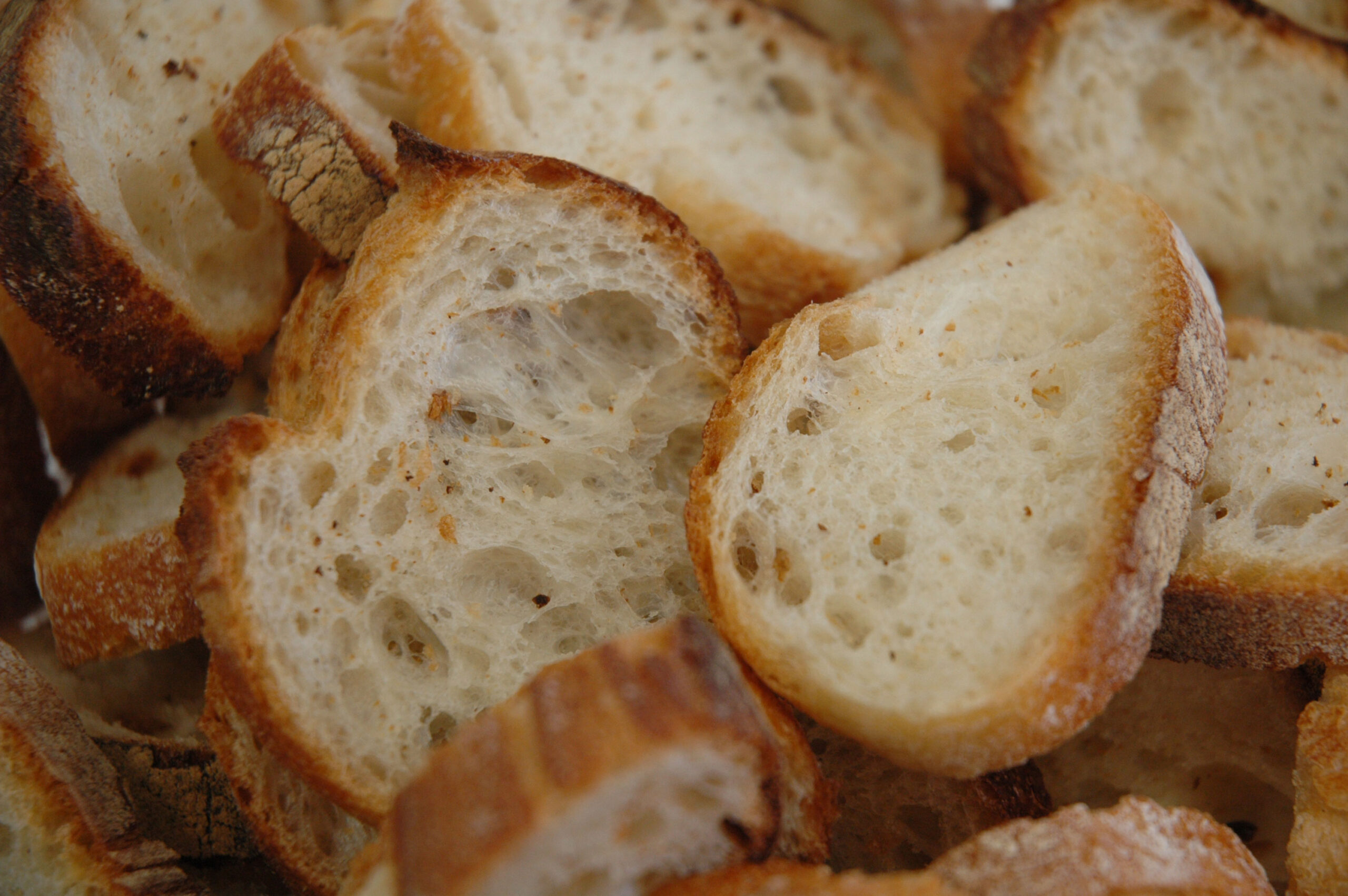
A stale slice often feels dry, so it is natural to assume that all its water has evaporated. Some moisture does leave an unwrapped loaf, but a sealed loaf can still become firm. Inside the crumb, amylopectin branches gradually line up and form new crystalline regions. As this network becomes more ordered, the crumb grows less flexible and more resistant to compression.
Water is moving at the same time. Some of it shifts from the crumb toward the crust, softening a crust that was crisp when it left the oven. Some becomes less available as the starch structure changes. The result is a curious exchange: the crumb seems drier and harder while the crust can become softer. Loss of aromatic compounds also makes old bread taste flatter, so staling changes more than texture alone.
A 2021 study in the journal Foods compared wheat and mixed sourdough breads stored in a bread box, paper packaging, sealed plastic at room temperature, and sealed plastic under refrigeration. The refrigerated samples firmed fastest even though their moisture loss was not the greatest. That finding captures why the “stale means dried out” explanation is incomplete. Moisture control matters, but starch structure can dominate what the mouth perceives.
Why refrigerator temperatures speed the change
Temperature affects both the beginning and the growth of new crystalline regions in starch. At refrigerator temperatures, starch chains still have enough mobility to rearrange, while the cool environment favors the formation of an ordered structure. A 2013 Food Chemistry study comparing bread stored at 4°C and 25°C found faster amylopectin retrogradation and larger changes in crumb firmness at the lower temperature.
This produces the apparent contradiction. Refrigeration slows mold growth and can extend the time before a loaf becomes visibly spoiled, but it often shortens the time before ordinary lean bread tastes stale. The two clocks measure different processes. One is biological growth; the other is a physical reorganization within the baked crumb.
The exact pace varies. Sourdough acidity, fats, sugar, emulsifiers, enzymes, flour type, hydration, and the loaf’s shape can all change how quickly bread firms or molds. Commercial sandwich bread is often formulated to remain soft longer than a crusty bakery loaf. Even so, the refrigerator is usually an awkward middle ground when texture is the priority: cold enough to accelerate staling, but not cold enough to immobilize the water in the loaf.
Why the freezer behaves differently
Once bread freezes, most of its water becomes ice and molecular movement slows dramatically. Starch chains can no longer rearrange at the same rate, so retrogradation is largely suspended during frozen storage. The freezer does not reverse aging that happened before freezing. Bread placed there while fresh, however, can emerge much closer to that state than bread left for the same period in a refrigerator.
Freezing works best when the loaf is wrapped tightly after it has cooled completely. Extra air encourages moisture loss and freezer burn, while warm bread trapped in a package creates condensation. Slicing first makes it possible to remove only what is needed. Individual slices can often go directly into a toaster; a larger portion can thaw while still wrapped so moisture condenses on the packaging instead of leaving the bread exposed.
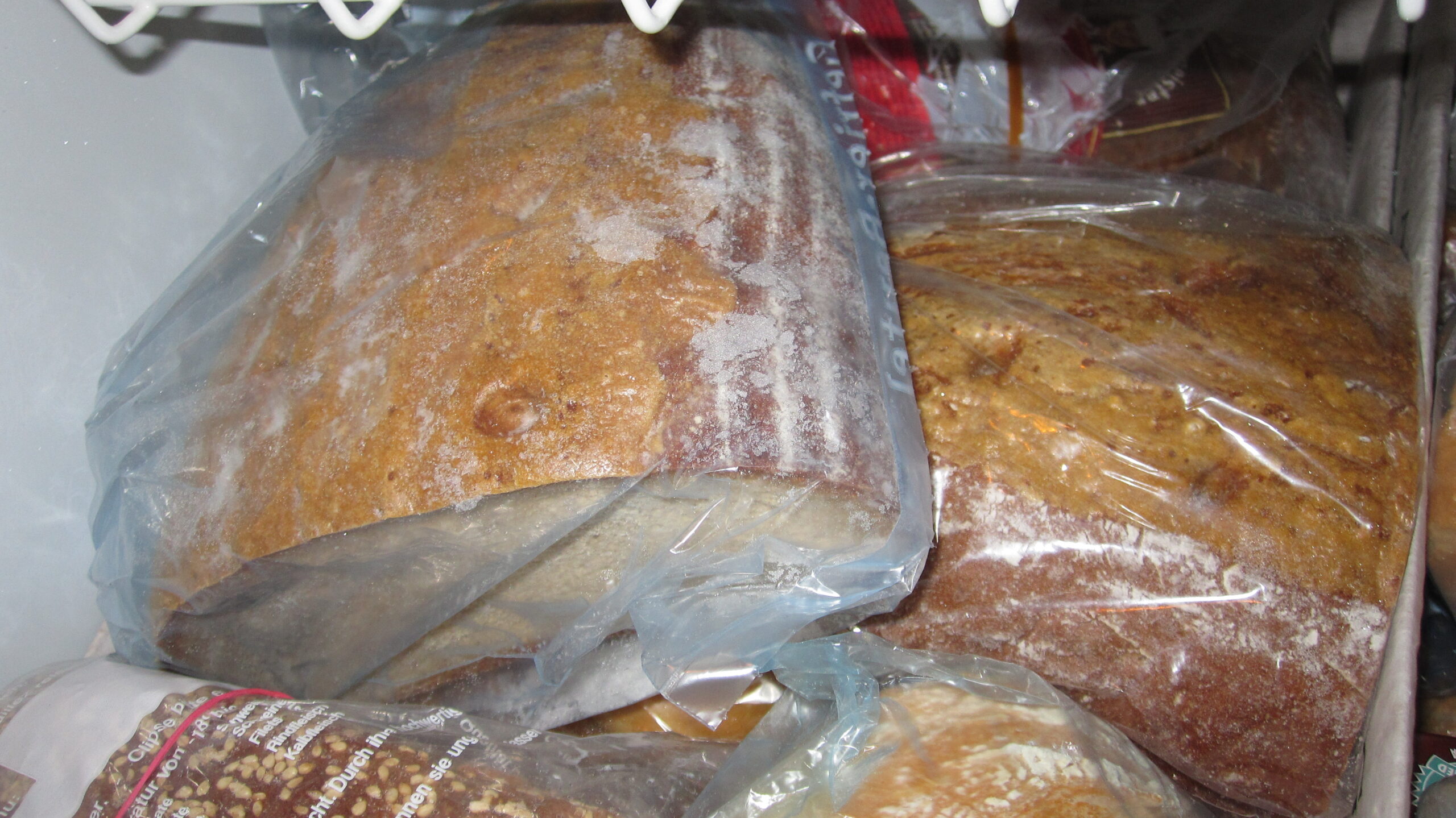
Freezing is not perfectly neutral. Slow freezing can produce larger ice crystals, repeated thawing and refreezing can damage texture, and poorly wrapped bread can lose moisture or pick up freezer odors. The USDA says commercially baked bread generally retains its quality for about three months in the freezer. That is a quality guideline rather than a sudden safety deadline, and delicate crusty loaves may show noticeable changes sooner.
Reheating also explains why toast made from frozen bread can taste remarkably fresh. Heat softens parts of the recrystallized starch structure and drives off some surface moisture, restoring flexibility and crispness for a time. The effect is temporary; as the bread cools again, firming resumes. Toasting does not make an old loaf new, but it can recover qualities that cold storage muted.
Match the storage method to the loaf
For bread that will be eaten within a day or two, room temperature is usually the best compromise between a soft crumb and manageable mold risk. Keep the cut face covered and use packaging that suits the style. A plastic bag holds moisture and favors softness, while paper allows more airflow and can preserve a crisp crust briefly at the cost of faster moisture loss. A bread box moderates airflow without sealing the loaf completely.
Freeze the portion that will not be used soon, preferably while it is still fresh. A sliced sandwich loaf can be divided into small packets, and a crusty loaf can be cut into meal-sized sections. Press out excess air, seal the wrapping well, and add a date. This turns the freezer into a pause button instead of a place where forgotten bread slowly dehydrates.
Refrigeration still has a role. Hot, humid kitchens may make mold the larger problem, and breads containing meat, cooked egg, cream, custard, or other perishable fillings need refrigeration for food safety. Manufacturer instructions also matter. The best choice depends on what must be protected: the texture of a plain loaf or the safety and shelf life of a perishable product.
Stale bread and moldy bread are not the same. Firm bread without signs of spoilage can become toast, croutons, breadcrumbs, stuffing, or bread pudding. Visible mold calls for a different response. The USDA advises discarding moldy bread and baked goods rather than cutting away the spot because their porous structure can allow contamination below the surface.
A refrigerator can keep a loaf free of mold longer while making it pleasant to eat for a shorter time. Once that distinction is clear, the storage choice becomes simpler: keep a near-term loaf well wrapped at room temperature, freeze what must wait, and reserve refrigeration for situations where spoilage or perishable ingredients outweigh the loss of texture. Bread’s changing crumb is not just a matter of air escaping. It is the quiet chemistry of starch settling into a new order.