Akshay Dinesh
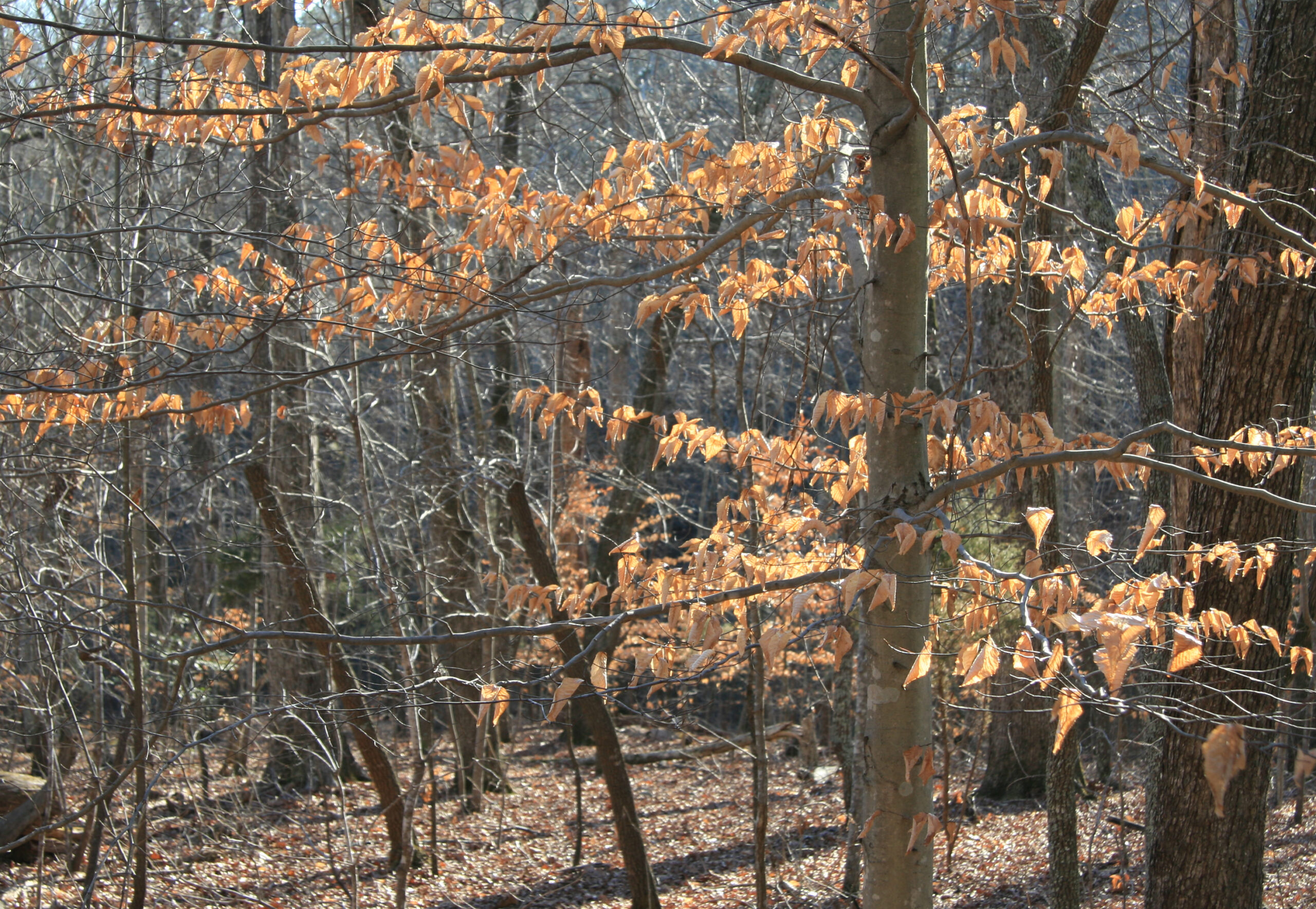
A tree full of dry brown leaves in winter can look confused, damaged, or simply late. Yet on many oaks, beeches, hornbeams, and witch hazels, those leaves are neither a sign that autumn failed nor proof that the tree is sick. The leaves are dead, but the tree has not finished releasing them. This normal pattern is called marcescence, and it reveals that leaf fall is an active biological process rather than a moment when leaves merely dry out and blow away.
Marcescent leaves may last for weeks or remain until swelling buds and new growth dislodge them in spring. They are especially noticeable on young trees and on the lower, more juvenile branches of mature trees. Scientists understand the mechanism that keeps the leaves attached, but the evolutionary reason for the trait is less certain. That combination of a clear physical process and an open ecological question makes winter leaf retention more interesting than it first appears.
Leaf fall begins with a carefully built break
Most deciduous trees do not wait for wind to tear living leaves from their branches. As days shorten and temperatures cool, the tree begins recovering useful materials from each leaf. Chlorophyll breaks down, nutrients move out of the leaf, and a narrow band of specialized cells develops where the leaf stalk, or petiole, meets the twig. This band is called the abscission zone.
Cells in the abscission zone change in a controlled way. Enzymes weaken the materials that hold neighboring cell walls together, creating a planned fracture line. At the same time, the twig seals the exposed side with protective tissue. Once the connection has weakened enough, wind, rain, or the weight of the leaf completes the separation. The leaf falls, while the sealed scar helps limit water loss and blocks insects and disease organisms from entering the twig.
A marcescent tree follows much of the same seasonal program, but the separation layer does not finish developing in autumn. The leaf loses its green color, dries, and stops functioning, yet its stalk remains firmly connected. University extension specialists describe this as delayed or incomplete abscission. The leaf may eventually snap free during a winter storm, or the separation process may resume when growth starts again in spring.
Why young trees and lower branches keep more leaves
Marcescence is common in the beech family, which includes beeches and oaks, though it also appears in hornbeams, hophornbeams, witch hazels, and some other woody plants. The pattern can vary between species, between individual trees, and even within one tree. A mature oak may have bare upper limbs while its lowest branches remain covered with papery leaves. In a beech woodland, the tall canopy may look open while saplings beneath it still glow copper-brown.
That age pattern matters. Botanists often describe marcescence as a juvenile trait because young stems are more likely to retain leaves than older growth. A tree may gradually lose the tendency as it matures, while low branches continue behaving more like juvenile tissue. Pruning can also encourage new juvenile growth, which is one reason clipped beech and hornbeam hedges can remain visually dense in winter even though their leaves are dead.
The timing of each shoot’s growth may influence what stays attached. Research summarized by the University of Missouri found that northern red oaks with several flushes of growth during the growing season tended to retain leaves later than trees with fewer flushes. Leaves produced during the final flush may enter autumn with a different developmental schedule from older leaves. Weather can alter the picture too: a sudden hard freeze may kill leaves before a tree completes the abscission zone, causing unusual retention even in species that normally shed cleanly.
Those details explain why marcescence is not an all-or-nothing label. One tree can hold leaves only on its sheltered side, only on its newest twigs, or only after a particular autumn. The visible pattern reflects species, age, branch development, and weather rather than a single switch marked “drop” or “keep.”
The leading explanations are plausible, not proven
Researchers still do not have one confirmed answer for why marcescence persists. Illinois, Georgia, Clemson, and Missouri extension specialists all emphasize that the adaptive value remains uncertain. Several hypotheses fit observations, but a useful explanation must distinguish evidence from a tidy story.
One idea is that dry leaves protect buds and tender twigs from browsing animals. A deer reaching toward a young oak or beech must push through noisy, low-quality foliage before reaching nutritious buds. The trait’s concentration on saplings and low branches, where browsing pressure is greatest, makes this hypothesis appealing. Yet the pattern alone does not prove that animal deterrence caused the trait to evolve.
A second hypothesis concerns nutrients and moisture. Leaves dropped in spring may decompose closer to the moment when roots and new shoots become active. A fresh layer of litter could also shade the soil and slow moisture loss. For a small tree growing under a larger canopy, delayed litter might reduce the chance that nutrients released during winter are washed deeper into the soil or captured by established neighbors. These effects are possible, but they vary with climate, soil, decomposer activity, and tree species.
Retained leaves might also trap snow near the base of a tree, adding moisture as it melts. The same extra surface area, however, carries a cost: wet snow and ice can load leafy branches more heavily than bare ones. Any advantage therefore has to be considered alongside wind drag, breakage risk, and the resources involved in maintaining the attachment.
There may not be one universal benefit. Marcescence could reflect several pressures, or it could partly persist because the timing of wood and leaf development makes complete autumn abscission less likely on juvenile shoots. In plant biology, a trait can have useful effects without every effect being the reason natural selection preserved it. The most accurate answer is that scientists know how the leaves remain but are still testing why the pattern is common in certain trees.
When retained leaves are normal and when they signal damage
Uniform brown leaves on a healthy oak or beech, especially a young tree or low branches, are usually ordinary marcescence. The twigs should remain flexible and show healthy buds. Over winter, the leaves become faded and torn, then fall gradually in wind or drop as new growth expands. The tree is deciduous even though its schedule overlaps with spring.
A different pattern deserves closer attention. If leaves remain only on one isolated branch while the rest of the tree sheds normally, that branch may have died before it could form an abscission zone. Injury, girdling, insects, or disease can interrupt the flow of water and signals through a stem. An early freeze can produce a similar effect across parts of trees that are not normally marcescent. Retained leaves alone do not diagnose the cause, but their location and the condition of the twig provide important clues.
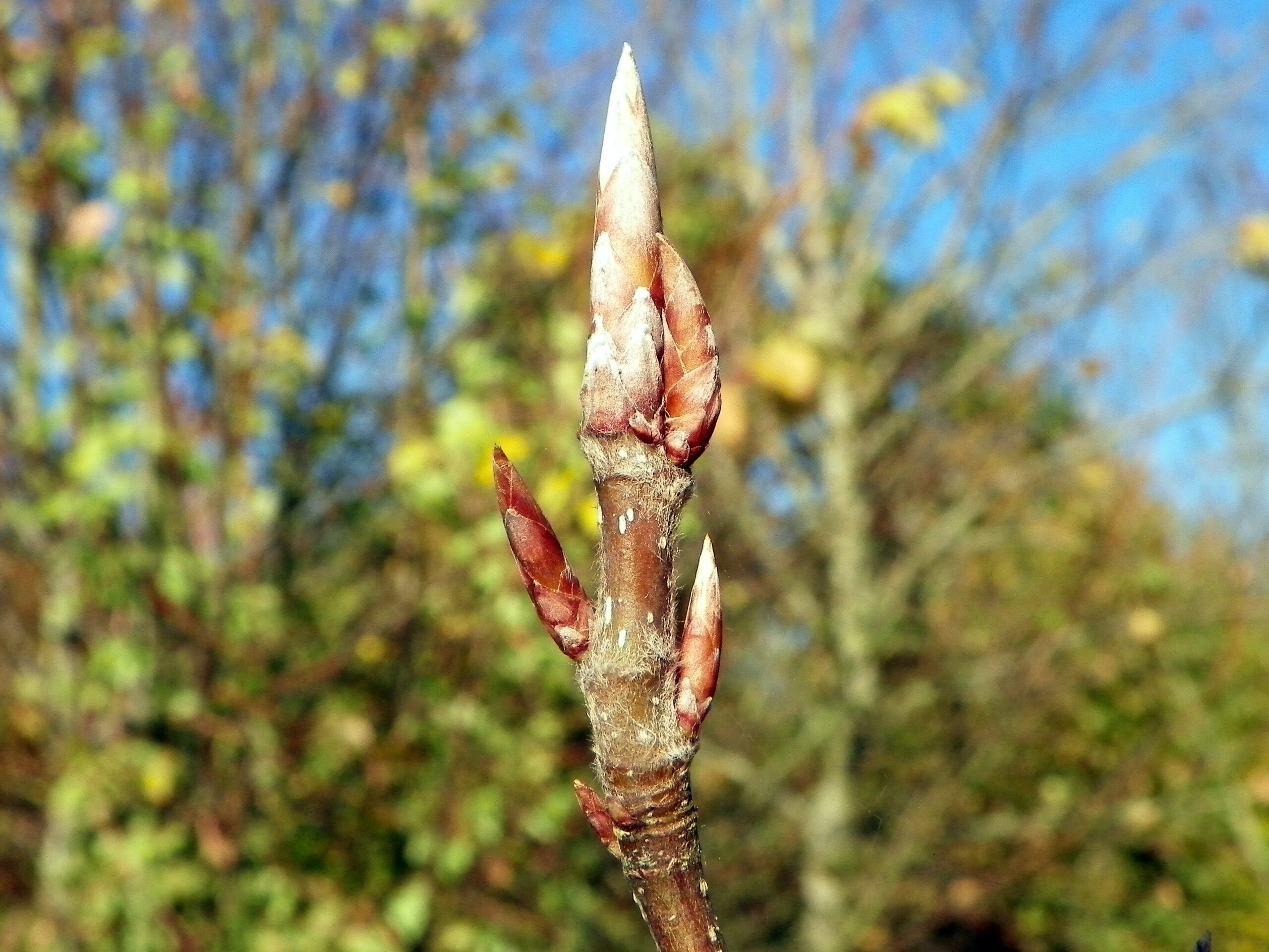
The distinction is easiest to make in spring. Normal marcescent branches produce new buds and shoots, and the old leaves release. A dead branch does not. Homeowners should avoid stripping retained leaves by hand because pulling can damage buds and small twigs. If a branch remains brittle, fails to leaf out, shows damaged bark, or develops other signs of decline, an arborist can assess the larger pattern.
Marcescence turns a bare-season walk into a lesson in tree physiology. The rattling leaves mark places where the final step of abscission has been postponed, often revealing young beeches and oaks long after other identification clues have vanished. What looks like a tree refusing to accept winter is really a different timetable: last year’s leaves stay just long enough for wind, weather, or the next season’s growth to finish the release.