
 Akshay Dinesh
Every ten years, the census does more than count people. It helps decide how political power is divided among the states. When one state grows faster than another, the balance of seats in the U.S. House of Representatives can shift, even though the total number of House seats stays the same. That process is called reapportionment, and it is one of the quiet links between population change and national government.
Reapportionment can sound like a technical word from an election office, but the idea is simple enough: House seats are limited, people move, and representation has to be recalculated. A state that gains population faster than the nation as a whole may gain a seat. A state that grows slowly, or loses population, may lose one. The result affects congressional districts, state political influence, and even the number of electoral votes each state receives in presidential elections.
Why the Census Changes Representation
The Constitution requires an “actual Enumeration” every ten years so representation can be based on population rather than guesswork or political bargaining alone. The first Congresses had a much smaller country to divide, but the basic problem was already visible: people wanted the House to reflect population, while states also wanted fair treatment as states. That tension shaped the Great Compromise, which created a House based on population and a Senate with two senators from every state.
The census keeps that population-based part of the system from freezing in place. If millions of people move from one region to another, the House cannot represent the country fairly by using old numbers forever. The decennial count gives the federal government a common measure for all states at the same time. It is not perfect, and census-taking has always involved hard questions about accuracy, participation, and whom to count where, but it is the official basis for distributing House seats.
After the Census Bureau finishes the state population totals used for apportionment, those numbers are sent to the president and then to Congress. The Clerk of the House notifies each state how many seats it will have for the next Congress. From there, the work shifts from national arithmetic to state mapmaking, because most states must draw districts for the seats they receive.

Why the House Stays at 435 Seats
One surprising part of reapportionment is that the House does not simply grow every time the country grows. The United States population is far larger than it was in the early republic, but the House has been fixed at 435 voting seats for more than a century. Congress set that size in the Reapportionment Act of 1929, after earlier decades of debate over how large the chamber should become.
A fixed House creates a tradeoff. Keeping 435 seats makes the chamber manageable, but it also means seats must be redistributed rather than merely added. If one state gains a seat, another state must lose one. That is why reapportionment can feel like a national reshuffling instead of a simple reward for growth. A state can add people and still lose a seat if other states grew much faster.
The fixed number also changes the size of congressional districts. As the national population rises while the House stays the same size, the average district contains more people. In 1910, when the House was set at 435 after that census cycle, districts were much smaller than they are now. Today, each representative speaks for hundreds of thousands of people. Reapportionment adjusts the distribution among states, but it does not solve the larger question of how many people one representative should represent.
How the Seats Are Assigned
Each state is guaranteed at least one House seat, no matter how small its population is. That accounts for 50 of the 435 seats. The remaining seats are assigned using a formula called the method of equal proportions, which has been used for apportionment since the 1940s. The formula is designed to rank which state should receive the next available seat as fairly as possible when seats must be handed out one at a time.
The method uses priority values. After every state gets its first seat, each possible next seat for a state receives a value based on that state’s population and how many seats it would have if it received another one. In simplified form, the priority value for a possible seat is found with:
priority value = state population / sqrt(n(n – 1))
Here, n is the seat number being considered. A state’s second seat, third seat, fourth seat, and later seats each have their own priority value. The highest priority values receive the remaining House seats until all 435 have been assigned. The formula may look unusual, but its purpose is practical: it tries to keep representation as balanced as possible when people cannot be divided into perfectly equal state-sized portions.
A small example helps. Imagine two states are competing for the next seat. The larger state has more people, but it may already have many seats, so its next seat may represent a smaller adjustment than it first appears. The formula compares the need for the next seat across all states at once. Reapportionment is not based only on raw growth, and it is not based only on who has the biggest population. It is based on where the next seat would best fit in the national distribution.
How Reapportionment Differs From Redistricting
Reapportionment and redistricting are often mentioned together, but they are not the same job. Reapportionment decides how many House seats each state gets. Redistricting decides where the district lines go inside a state. One happens at the national level using state population totals; the other usually happens inside state governments using more detailed population data.
If a state keeps the same number of seats, it may still redraw its districts because population moved within the state. A city may have grown, a rural region may have lost residents, or suburban counties may have expanded. Districts are supposed to have roughly equal populations so one district does not carry far more people than another. That means redistricting can matter even when reapportionment leaves a state’s seat count unchanged.
If a state gains or loses a seat, redistricting becomes even more visible. A gaining state may need to draw a brand-new district or rearrange several old ones. A losing state may need to combine territory that used to be represented separately. These choices can shape communities of interest, party competition, and whether voters feel their area has a clear voice. That is why debates over gerrymandering often begin after reapportionment, when states turn seat totals into actual maps.
Why the Shift Matters Beyond Congress
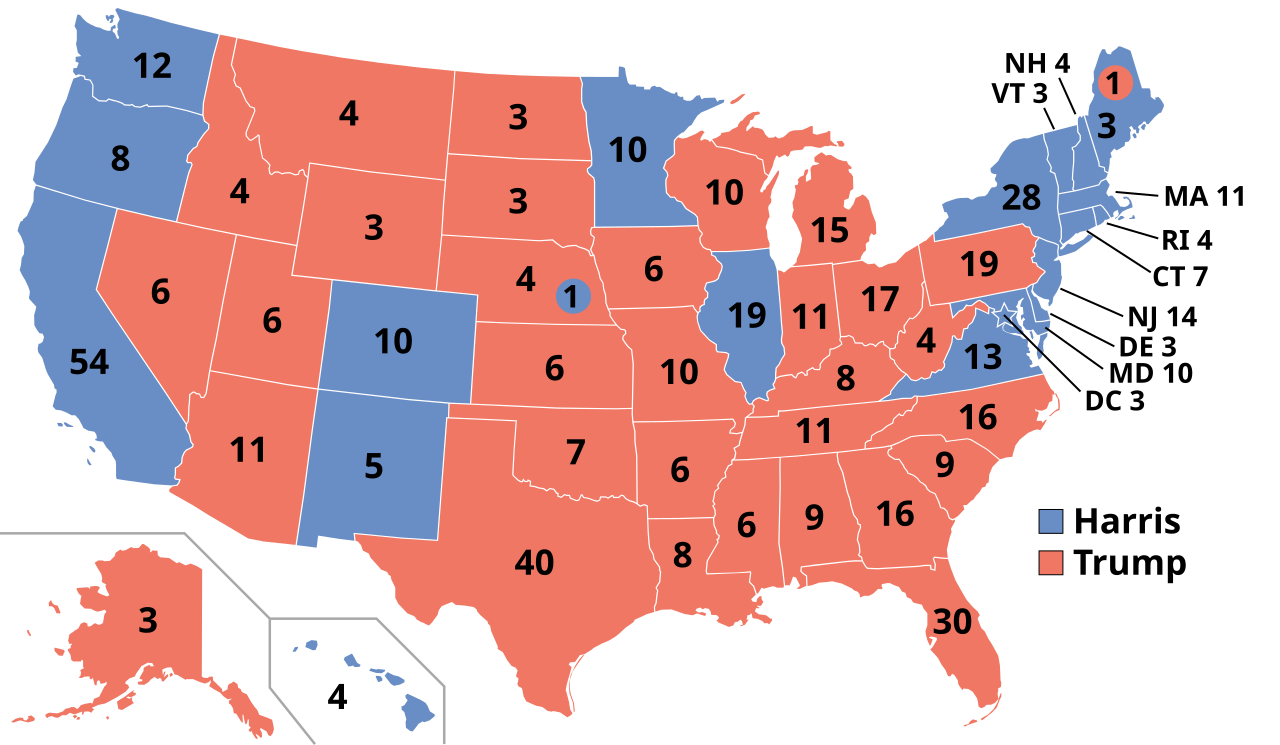
House seats affect more than the House. A state’s electoral vote total equals its number of House members plus its two senators. When reapportionment changes House seats, it also changes presidential election math. A state that gains one House seat gains one electoral vote; a state that loses one House seat loses one electoral vote. The Senate part stays equal, but the House part follows population.
The shift also changes how states think about federal attention. More House seats can mean more voices in committee work, more district offices, and more representatives pressing local concerns. Losing a seat does not erase a state’s influence, but it can make each remaining district larger and more politically crowded. The change is gradual rather than dramatic, yet over several census cycles it can mark a real movement of population and power.
Reapportionment is one reason the census is more than a government form. It turns where people live into a new map of representation. The process does not settle every argument about fairness, district lines, or political influence, but it provides the starting point. Before campaign signs appear and before new districts take shape, the country first has to answer a basic question: how should 435 seats be shared among 50 states after the population has changed?