
 Akshay Dinesh
Election Day in the United States can fall anywhere from November 2 through November 8, but it always lands on a Tuesday after the first Monday. That oddly specific rule is not a constitutional tradition handed down from the founding era. Congress created it in 1845, when a nation of state-by-state election calendars needed one date for choosing presidential electors.
The familiar explanation begins with farmers, harvests, church, and slow travel. Those conditions did influence the calendar, but they are only part of the story. The law also answered a growing problem: faster communication made it easier for results from an early-voting state to affect political behavior in a state that voted later. A single day was meant to make a national election more orderly and harder to manipulate.
One national date replaced a patchwork
The Constitution does not name Election Day. It gives states authority over the times, places, and manner of congressional elections while allowing Congress to make or alter many of those rules. For presidential elections, it also gives Congress power to set the time when states choose electors and the day those electors cast their votes.
Early federal elections therefore did not occur on one nationwide day. Under a 1792 law, states could choose presidential electors at any point during the 34 days before the electors met on the first Wednesday in December. States also chose electors in different ways. Some used a popular vote, while some state legislatures made the choice themselves.
That long window became less workable as transportation and news traveled faster. A result in one state could be known before another state had voted. Campaigns could shift their attention, rumors could spread, and political actors could try to use early returns to influence later contests. When the House debated a uniform date in 1844, lawmakers described the measure as a way to guard against fraud in presidential and vice-presidential elections.
Congress approved the law on January 23, 1845. It required states to appoint presidential electors on the Tuesday after the first Monday in November. The first presidential election conducted on that shared date was held on November 7, 1848, when voters chose between Zachary Taylor, Lewis Cass, and Martin Van Buren.
Why November fit the 1840s calendar
By the early nineteenth century, more than half of the states already held presidential voting in early November. The month sat in a practical gap in an agricultural society. The main autumn harvest was usually complete, yet winter had not made long-distance travel as difficult or dangerous as it soon could become.
That timing mattered because reaching a polling place could take much longer than it does now. Roads were rough, many voters lived far from the county seat or local voting site, and a trip could require an overnight stay. A date that collided with planting or harvest would impose a heavy cost on rural voters. A date deeper into winter could leave roads muddy, frozen, or blocked by snow.

November was not selected because every American was a farmer, and the rule never fit every region equally. It reflected the rhythms and limits that lawmakers considered common enough to shape a national calendar. The month also left roughly four weeks before presidential electors met in December, giving states time to count returns, resolve disputes, and determine which slate of electors had been chosen.
Why Tuesday, and why after the first Monday
The Tuesday rule is usually explained by the weekly schedule of nineteenth-century rural life. Sunday was the Christian Sabbath for much of the population. If voting took place on Monday, some people would have needed to begin a long trip on Sunday. Tuesday allowed Monday for travel without asking those voters to leave home during Sunday worship.
Wednesday was also a common market day in many communities. Market trips were economically important and could already require substantial travel. Placing the election on Tuesday reduced the chance that voting would compete directly with either Sunday observance or Wednesday commerce.
The law does not simply say the first Tuesday in November. It says the Tuesday after the first Monday, which prevents Election Day from falling on November 1. Historical accounts connect that detail to merchants who used the first day of a month to settle accounts and close the previous month’s books. November 1 could also coincide with All Saints’ Day, although the bookkeeping explanation appears more directly in the Congressional Research Service’s historical summary.
These reasons should not be treated as a perfect transcript of a single congressional design meeting. The surviving law states the date, and the congressional debate clearly shows concern about a uniform election and fraud. Explanations for the exact weekday draw on the travel, religious, commercial, and agricultural patterns of the time. Together, they show why an early-November Tuesday was a workable compromise for the 1840s.
How the rule expanded beyond presidential elections
The 1845 law dealt with the appointment of presidential electors, not every federal office. Congress later brought congressional elections onto the same calendar. An 1872 law scheduled elections for the House of Representatives on the Tuesday after the first Monday in November, beginning with the 1876 election and recurring every two years.
Senators followed a different path. Before the Seventeenth Amendment was ratified in 1913, state legislatures generally chose U.S. senators. Once senators were elected by popular vote, Congress aligned their regular elections with the biennial House schedule. That is why modern federal Election Day occurs in every even-numbered year, even though presidential elections happen only once every four years.
State and local elections do not all have to follow the federal date. Many are held then because sharing polling places and election staff is convenient, but some states elect certain officials in odd-numbered years. Cities and school districts may also use off-cycle dates. The November Tuesday is therefore a federal anchor, not the only election date in American government.
A nineteenth-century rule in modern voting
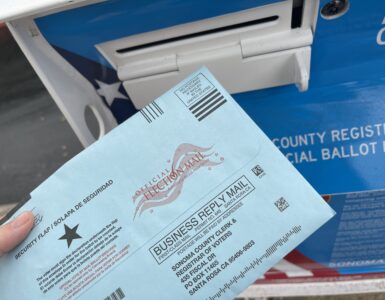
Election Day still has legal force, but voting no longer fits neatly inside one Tuesday. States administer federal elections and set many of the practical rules. Depending on the state, eligible voters may cast ballots during an early in-person period, return a mail ballot, or vote at a polling place on Election Day. The election now has one legal date and, in many places, a much longer voting period.
That change has sharpened debate about whether a weekday chosen for the 1840s still serves modern voters. Tuesday can be difficult for people with inflexible work schedules, caregiving responsibilities, limited transportation, or long polling-place waits. Proposals have included making Election Day a federal holiday, moving it to a weekend, or expanding early and mail voting. Changing the federal date itself would require Congress to pass a new law; a president cannot move it alone.
The calendar also reveals a useful distinction between tradition and law. Tuesday voting feels traditional because generations have experienced it, yet its authority comes from federal statutes that developed in stages. The date reflects the technology, economy, religious customs, and political risks of an earlier America, while today’s voting options reflect later attempts to make that inherited calendar work for a far different society.
Election Day falls on a Tuesday in November because Congress once had to turn many separate state contests into a synchronized national event. Harvest timing and winter travel helped determine the month. Worship, travel, markets, and bookkeeping helped make Tuesday after the first Monday a practical choice. The rule endured, even as the act of voting spread well beyond a single day.