 Akshay Dinesh
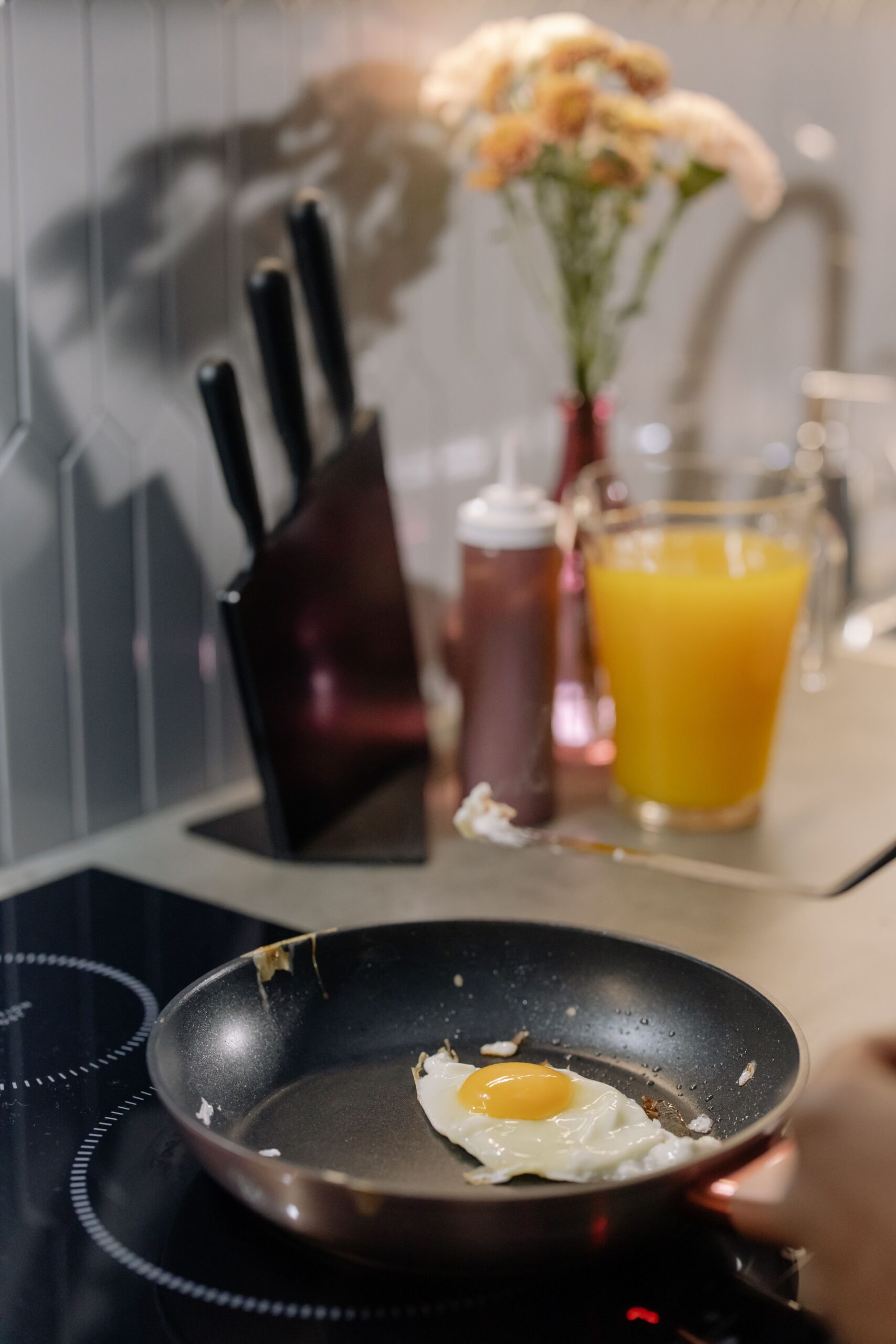
A fried egg seems simple until it refuses to leave the pan. Proteins set, water steams away, sugars brown, and suddenly breakfast has formed a stubborn partnership with metal. A nonstick pan changes that everyday drama by changing the surface where the food meets the cookware. The pan does not make food magically frictionless. It gives food very little chemical encouragement to grab on in the first place.
The most familiar nonstick coatings are based on PTFE, short for polytetrafluoroethylene. It is a fluoropolymer: a long chain of carbon atoms with fluorine atoms attached along the outside. That structure matters because carbon-fluorine bonds are unusually strong, and the fluorine-rich surface interacts weakly with many other substances. Water beads on it. Oil spreads differently across it than it would across bare metal. Egg, batter, fish skin, and melted cheese have a harder time forming the strong contact that makes scraping necessary.
Sticking Starts at the Surface
Food sticks when its molecules and the pan surface make enough contact to hold together. Bare metal may look smooth from across the kitchen, but up close it has tiny pits, scratches, and high spots. As food heats, liquid can flow into those small spaces. Proteins unfold, starches thicken, and sugars or amino acids can brown into new compounds. Once those changes happen in close contact with a reactive surface, the food can grip the pan like glue drying into a rough wall.
Heat makes the problem more interesting. A cold piece of fish placed on a hot stainless steel pan can cling at first because moisture flashes into steam unevenly while proteins begin to set. With enough oil, patience, and temperature control, that same fish may release after browning forms a crust. A nonstick coating shortens the negotiation. It reduces the attraction between the cooked food and the surface, so the food often releases before a crust has to do all the work.
Why PTFE Is So Hard to Grab
PTFE is famous because it has very low surface energy. Surface energy is a way of describing how strongly a material’s surface wants to interact with nearby materials. A high-energy surface, such as clean glass or many bare metals, is easier for liquids or adhesives to wet. A low-energy surface is harder to wet, so droplets and soft foods tend to make less intimate contact. Less contact usually means less sticking.
The chemistry comes from the way PTFE presents itself to the outside world. Its carbon backbone is shielded by fluorine atoms, and those fluorine atoms do not share charge with passing molecules very easily. Many forms of sticking depend on small attractions between positive and negative regions in nearby molecules. PTFE gives those attractions little to work with. That is why the same general material family has been used in seals, gaskets, lab equipment, and other places where chemical resistance and low friction are useful.
This does not mean PTFE is impossible to wet or damage. It means common cooking ingredients do not bond to it easily under normal use. Oil can still coat it, food can still burn on it, and residue can still build up if a pan is overheated or cleaned poorly. The point is more precise: PTFE changes the surface conversation from eager attachment to reluctant contact.
The Coating Has to Stick to the Pan First
There is a small puzzle hidden inside every nonstick pan. If PTFE is so good at preventing things from sticking, how does it stay attached to the cookware? Manufacturers solve this by preparing the metal surface and building the coating in layers. The pan may be roughened microscopically so the coating can grip mechanically. Primer layers and other binders help the fluoropolymer stay connected to the metal beneath it. The finished cooking surface feels smooth to a spatula, but the hidden bond below it is carefully engineered.
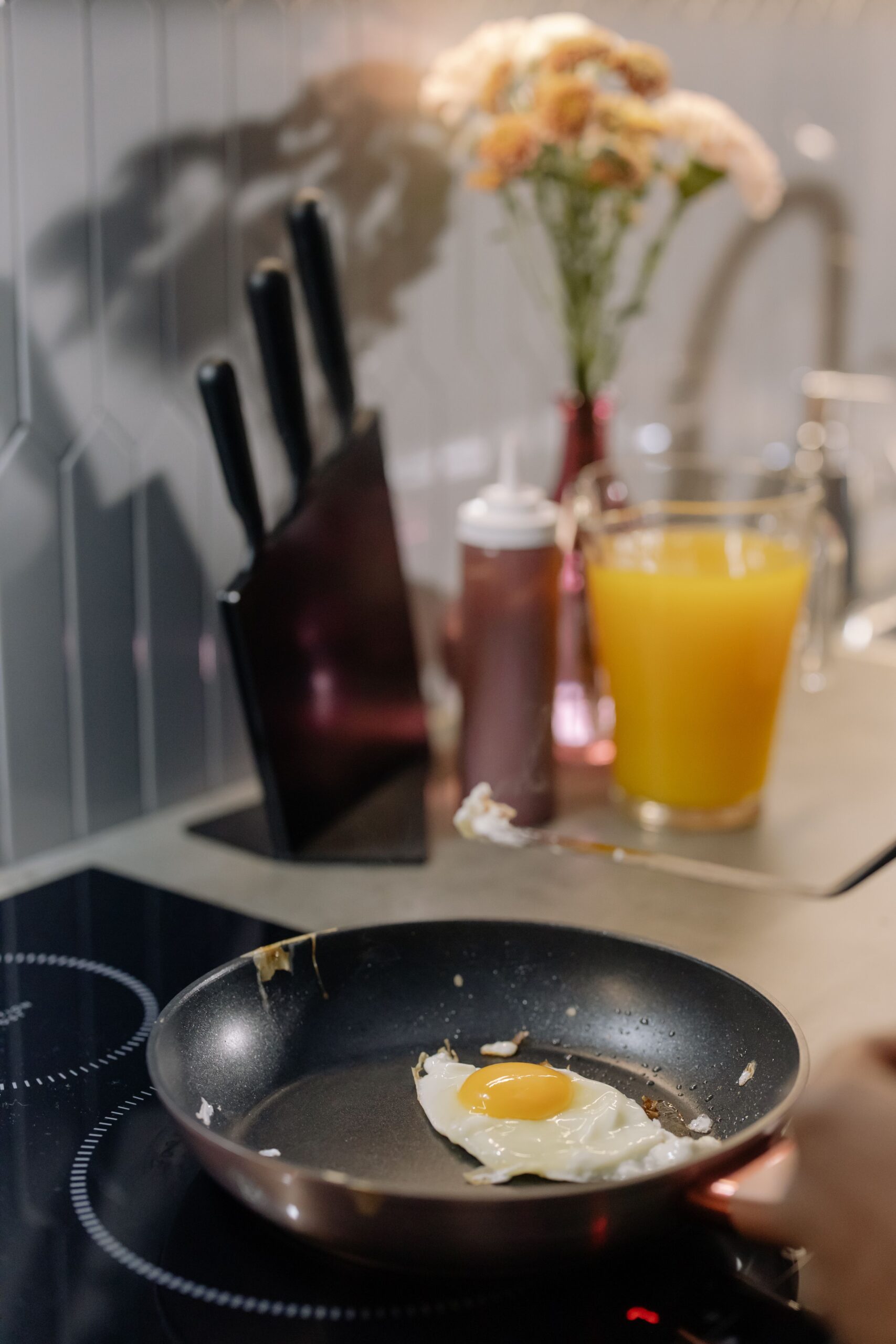
Many nonstick pans also use aluminum under the coating because aluminum is light and conducts heat well. Heat spreading matters because hot spots can burn food even on a low-stick surface. Some pans add textured layers, ceramic-reinforced coatings, or hard anodized bases. These details change durability, heating behavior, and feel, but the basic lesson is the same: the cooking surface is a designed material, not just paint on metal.
That design also explains why scratches matter. A deep scratch can expose a rougher, higher-energy material underneath or create an edge where food residue can catch. A metal utensil dragged hard across the surface may not ruin a pan instantly, but repeated abrasion slowly changes the smooth, low-energy contact that made the pan useful. Nonstick performance is chemistry plus surface geometry; damage changes both.
Oil Still Has a Job
Nonstick pans are often described as letting people cook with less oil, but less oil is not the same as no oil. A thin layer of fat can improve heat transfer between the food and the pan. It fills small gaps, spreads flavor compounds, and helps browning happen more evenly. It also gives delicate foods a buffer while they change texture during cooking.
Oil behaves differently from water because oils are nonpolar molecules, while water is strongly polar. PTFE does not eagerly attract either one, but oils can still form a useful cooking film. That film is one reason a lightly oiled nonstick pan can cook eggs more evenly than a completely dry one. The coating reduces adhesion; the oil helps manage heat and texture.
The same distinction helps explain why a nonstick pan does not replace cooking skill. If the heat is too high, food can scorch. If the pan is crowded, water can pool and slow browning. If sugary sauce burns, it may leave a sticky residue even though the underlying coating is low energy. Nonstick cookware changes the odds, but it does not repeal the chemistry of food.
PTFE, PFAS, and the Current Vocabulary Around Cookware
Modern discussions of nonstick pans often bring up PFAS, a broad family of fluorinated chemicals. PTFE belongs to the wider fluoropolymer world, while some older manufacturing aids, such as PFOA, raised separate environmental and health concerns. That distinction can be confusing because one everyday product may be discussed with several overlapping words: Teflon, PTFE, fluoropolymer, PFAS, and nonstick coating.
For a chemistry reader, the key is to separate the finished material from the manufacturing history and from the huge PFAS category. PTFE is a solid polymer coating prized for its chemical stability and low surface energy. PFOA was historically used in making some fluoropolymers, but major U.S. manufacturers phased it out years ago, and current regulatory attention continues to focus on many PFAS uses and exposures beyond cookware. The U.S. Food and Drug Administration and environmental agencies describe these topics carefully because the words sound similar while the questions are not identical.
This is also why sensational explanations can mislead. A nonstick pan is not slippery simply because it is shiny, black, or smooth. Nor is every discussion of fluorinated chemistry the same discussion. The useful question for understanding how the pan works is narrower: What kind of surface does the food touch, and how strongly can food molecules interact with it?
A Small Kitchen Example of Materials Science
Nonstick cookware turns an abstract chemistry idea into something visible. Surface energy usually sounds like a lab term, but anyone who has watched egg white slide across a pan has seen it at work. Molecules at a surface do not behave exactly like molecules buried inside a solid. They meet the outside world, and their structure decides what they welcome, resist, absorb, repel, or release.
That idea reaches far beyond frying pans. Waterproof fabrics, phone-screen coatings, medical tubing, food packaging, paints, adhesives, and laboratory containers all depend on surface chemistry. Engineers often care less about what a material looks like from a distance than about what happens at the first few molecular layers. A surface can be designed to attract water, repel water, hold paint, release a molded part, reduce drag, or keep a sample from reacting.
The pan on a stove is a familiar version of the same principle. Food sticks when heat, texture, moisture, and chemistry create strong contact. A PTFE-based nonstick coating weakens that contact by presenting a low-energy, fluorine-rich surface. That is why an egg can slide, a pancake can lift, and a cleanup job can stay small. The science is not hidden in a special gadget; it is right where breakfast meets the pan.