
 Akshay Dinesh
A number can look more certain than it really is. A calculator may return 18.4285714286, but that long answer does not mean the lab measurement was precise to ten decimal places. If the original values came from a ruler marked only in centimeters, most of those digits are decoration. Significant figures are the habit scientists use to keep measured numbers from pretending to know more than they do.
The idea sounds like a rounding rule, and in class it often gets taught that way. Count the nonzero digits, decide what to do with zeros, round the final answer. Those rules matter, but they are only the surface. The deeper point is that every measurement comes from an instrument with limits. A graduated cylinder, balance, thermometer, stopwatch, or meter stick can only show a value with a certain amount of detail. Significant figures help the written number carry that detail honestly.
Why Measured Numbers Are Different From Counted Numbers
Some numbers are exact because they come from counting or definition. If a lab group has four beakers, the number 4 is not an estimate. If a conversion says 100 centimeters equals 1 meter, that relationship is exact by definition. Those numbers do not limit the precision of a calculation in the same way a measured length or mass does.
Measured numbers are different because they depend on a tool and a judgment. A student reading a meter stick might record a strip of paper as 12.4 cm because the stick is marked every millimeter. Another tool marked only every centimeter might support 12 cm or perhaps 12.5 cm if the reader estimates carefully between marks. The object did not change. The detail available to the measurer did.
That is why significant figures are not simply about how many digits appear. They are about which digits a measurement can reasonably support. In 12.4 cm, the 1 and 2 are certain from the centimeter marks, while the 4 tenths digit reflects the smaller scale and the reader’s estimate. Writing 12.4000 cm would imply a level of precision the meter stick did not provide.
The National Institute of Standards and Technology has made this same point in professional measurement guidance: a measurement result needs some sense of uncertainty to be complete. Students usually work with a simpler version of that idea. Significant figures are not a full uncertainty analysis, but they are an early warning system. They remind the reader that the last digit of a measured value is already carrying some uncertainty.
What Significant Figures Actually Tell You
Significant figures tell you how much precision is being claimed. In the value 48.2 g, the measurement claims detail down to tenths of a gram. In 48.20 g, the final zero matters because it shows the instrument or procedure supported hundredths of a gram. Those two numbers are close in value, but they are not identical in meaning.
This is where zeros cause the most confusion. A zero between nonzero digits, as in 204 mL, is significant because it is part of the measured value. Zeros before the first nonzero digit, as in 0.0048 L, are placeholders; they help position the decimal point but do not add precision. Zeros at the end of a decimal number, as in 5.60 s, are significant because they show the result was measured or reported to the hundredths place.
Whole numbers with trailing zeros can be ambiguous. The value 1500 m might mean two significant figures if the zeroes are placeholders, or four significant figures if the distance was measured to the nearest meter. Scientific notation removes the fog. Writing 1.5 x 10^3 m claims two significant figures, while 1.500 x 10^3 m claims four. The value is the same size, but the precision claim is different.
That precision claim matters because numbers travel. A measurement may move from a notebook into a spreadsheet, from a lab report into a graph, or from one person in a group to another. If the number is written carelessly, the next person may treat a rough measurement as a highly precise one. Significant figures keep the number’s history visible.
Why Calculators Can Make Answers Look Too Precise
The most common significant-figures mistake happens after the measuring is already done. Students enter values into a calculator, copy the entire display, and assume that more digits make the answer more scientific. A calculator is excellent at arithmetic, but it does not know the quality of the measurements unless the person using it keeps track.
Suppose a student measures a rectangle as 8.4 cm long and 3.2 cm wide. Multiplying gives 26.88 cm². The arithmetic is correct, but the measurements each have only two significant figures. Reporting the area as 26.88 cm² suggests a level of precision that the ruler readings cannot support. A more honest result is 27 cm², which keeps two significant figures.
Addition and subtraction work a little differently because decimal places matter more than total significant figures. If a student adds 12.4 cm and 3.18 cm, the calculator gives 15.58 cm. The first measurement is only precise to tenths, so the sum should be reported to tenths as 15.6 cm. The hundredths digit in the second value cannot make the less precise measurement more precise.
These rules can feel picky until the purpose becomes clear. Significant figures are not punishing small arithmetic differences. They are stopping the final answer from making a stronger claim than the original measurements allow. The final number should be no more detailed than the weakest useful detail in the measured inputs.
Precision, Accuracy, and the Last Digit
Significant figures are closely related to precision, but they are not the same as accuracy. Precision describes how finely or consistently something is measured. Accuracy describes how close the measurement is to the accepted or true value. A scale can be precise but inaccurate if it consistently reads 2 grams too high. A person can also be roughly accurate but not very precise, such as estimating a table length as about 1 meter when the true length is 0.98 meters.
The distinction matters because significant figures mostly communicate precision. If a balance reports 25.36 g, the number suggests detail to hundredths of a gram. It does not automatically prove the balance was calibrated correctly. Good measurement depends on both careful reading and trustworthy tools.
That is why professional labs care about calibration, repeatability, and uncertainty, not only tidy rounding. A student lab uses simpler language, but the same habits appear in miniature. Read the instrument carefully. Record the value with the right level of detail. Repeat measurements when appropriate. Avoid adding digits that came from the calculator rather than the experiment.
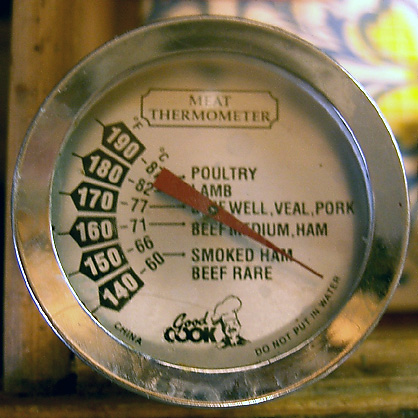
The last digit in a measured value is often the most interesting digit because it carries the estimate. If a thermometer is marked every degree, a reading of 21.5°C may come from judging halfway between 21°C and 22°C. If the thermometer displays tenths digitally, 21.5°C has a different source. The number looks the same, but the instrument behind it changes how much confidence the reader should place in the final digit.
How To Use Significant Figures Without Losing the Meaning
The best way to use significant figures is to connect every rule back to the measurement. Before rounding, ask what the instrument could actually show. Before copying a calculator display, ask which input had the least useful precision. Before deciding whether a zero matters, ask whether it is holding a place or reporting measured detail.
In a lab notebook, it helps to write units every time and keep original measurements unrounded until the final reported result. Rounding too early can push the answer away from the best estimate. A good habit is to carry a few extra digits during calculations, then round the final answer to a sensible level based on the measured values.
Scientific notation is useful when large or small numbers would otherwise make precision unclear. The difference between 0.000560 L and 5.60 x 10^-4 L is not mathematical value; both mean the same quantity. The second form makes the three significant figures easier to see. It separates the size of the number from the precision of the measurement.
Students also need to know when significant figures are not the main issue. A final answer with the right number of digits can still be wrong if the formula is wrong, the units are mismatched, or the measurement was taken poorly. Significant figures do not replace reasoning. They support it by making the reported answer match the quality of the evidence.
A careful measured number is a small act of honesty. It says, in effect, this is what the instrument and method allowed us to know. That humility is part of good science. The goal is not to make numbers look impressive. The goal is to make them trustworthy.