
 Akshay Dinesh
In late summer, a monarch butterfly can look ordinary at first glance: orange wings, black veins, white-spotted edges, a light body resting on a flower. Yet many monarchs emerging at this point in the year are not living the same kind of life as the short-lived butterflies that moved through fields earlier in summer. Their bodies are preparing for a journey that may carry them across states, over rivers and highways, and in some eastern populations all the way to the mountains of central Mexico.
The remarkable part is not only the distance. It is the timing. No monarch receives a map from an older butterfly. The generation that flies south has never visited the wintering groves before. It begins the trip because seasonal cues change the way its body develops, the way it uses energy, and the choices it makes each day. The result is one of the clearest examples of how behavior, weather, plants, and physiology can line up in a living migration system.
The generation that is built differently
Most summer monarch adults live for only a few weeks. Their job is urgent and local: find nectar, mate, lay eggs on milkweed, and allow the next generation to continue the cycle. Those summer generations gradually spread north as milkweed grows and temperatures allow caterpillars to develop. By late summer, however, the calendar begins to matter in a new way.
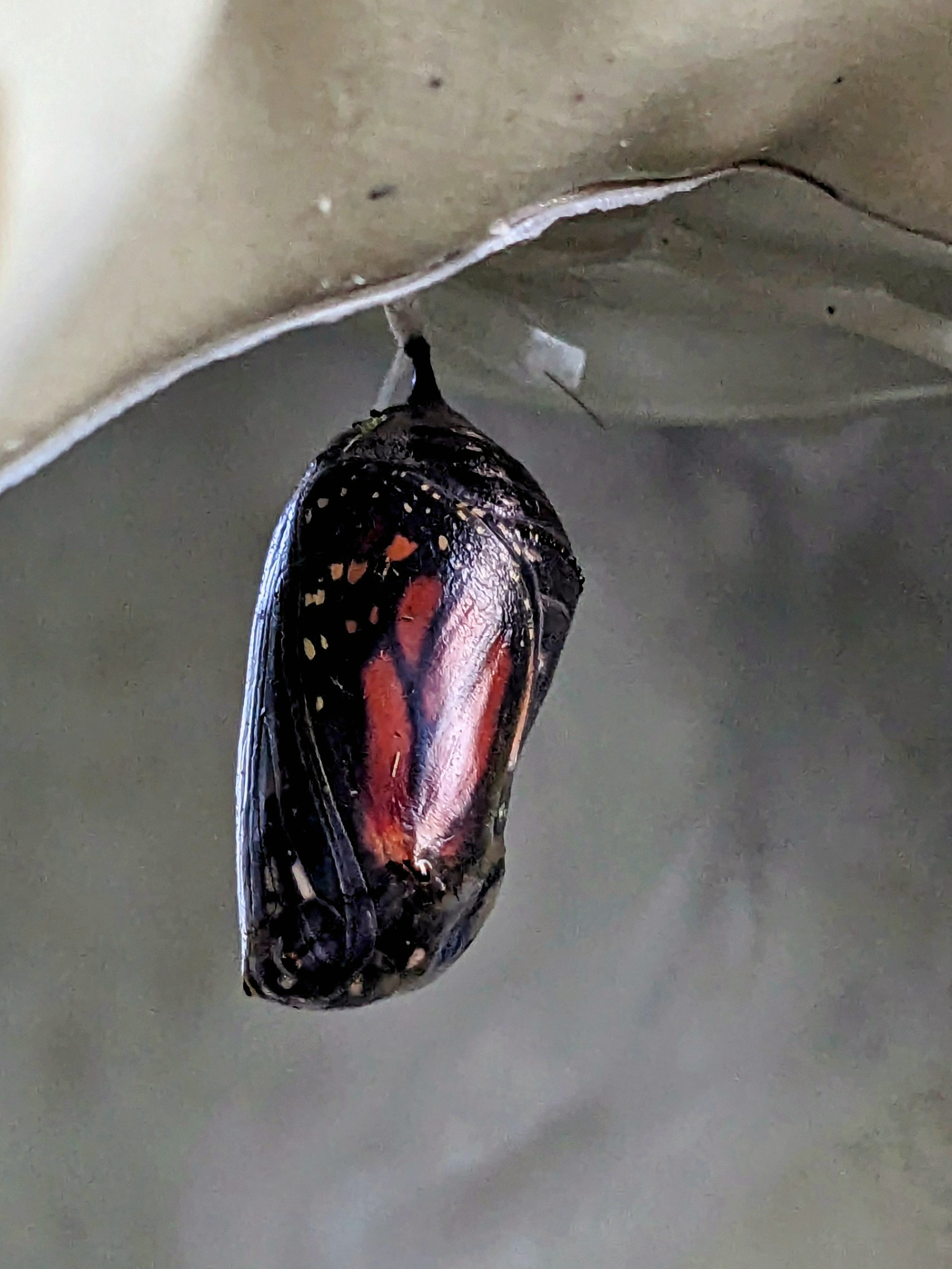
The migratory monarch generation develops under different environmental conditions. Shorter days, cooler nights, and aging milkweed help trigger a body state called reproductive diapause. In simple terms, the butterfly delays reproduction. Instead of using energy immediately to mate and lay eggs, it saves energy for travel and survival. Monarch Joint Venture describes this late-summer and fall generation as living far longer than earlier summer adults, often for many months rather than a few weeks.
That delay changes the whole strategy. A butterfly that is not searching for milkweed to lay eggs can focus on nectar, resting places, and favorable winds. It also needs stronger energy reserves. The U.S. Fish and Wildlife Service notes that the migratory generation stores fat in both the caterpillar and adult stages, helping it endure long flights and winter roosting before reproduction begins again in spring.
Day length and temperature start the signal
A monarch does not check a calendar, but its body can respond to seasonal information. Day length is especially useful because it changes predictably from one week to the next. As the days shorten after midsummer, the amount and timing of light reaching the butterfly’s tissues shifts. Temperature adds another cue. Cool nights and changing weather patterns help signal that the breeding season in northern areas is ending.
Milkweed also changes with the season. Caterpillars depend on milkweed leaves, and adult females normally search for milkweed when they are ready to lay eggs. By late summer and fall, many milkweed plants are older, tougher, or less abundant. Nectar flowers become more important because migrating adults need fuel. The cue is not one single switch. It is a set of signals that point in the same direction: stop building another local generation and prepare to move.
This is why a warm autumn can complicate the story. Monarchs may still appear on flowers when the weather feels summerlike, but the migration depends on more than a pleasant afternoon. A butterfly must balance sunlight, temperature, wind, nectar availability, and its own internal state. Good migration conditions often come in windows, and a monarch may rest for a day, feed heavily, then travel when the weather improves.
The journey depends on fuel, wind, and rest
A monarch in migration is small enough to fit in a child’s hand, but it faces the same basic problem as any long-distance traveler: energy must last. Nectar is the fuel. Flowers along roadsides, prairies, gardens, farms, wetlands, and field edges can become refueling stations. The sugar in nectar is converted into energy for flight and into fat reserves that help the butterfly survive periods when it cannot feed.
Flight itself is not constant wing-beating from sunrise to sunset. Monarchs use favorable air movement when they can. On sunny days, rising warm air can help them gain lift, and tailwinds can make travel easier. The U.S. Fish and Wildlife Service has described monarchs using thermal air currents and traveling many miles in a day under suitable conditions. On cold, rainy, or windy days, movement may slow or stop.
Resting is part of the migration, not a failure of it. Migrating monarchs often gather in trees overnight or during poor weather. These roosts reduce exposure, conserve energy, and may help butterflies wait out conditions that would make flying risky. A tree full of roosting monarchs is not only beautiful; it is a practical survival arrangement for insects that weigh less than a paper clip.

Navigation is partly understood and still mysterious
The most puzzling question is how a butterfly that has never made the trip can head in the right general direction. Scientists have found strong evidence that monarchs use a sun compass. The idea is that the butterfly uses the sun’s position along with an internal clock, allowing it to maintain a southward or southwesterly direction as the sun moves across the sky.
That explanation helps, but it does not solve everything. Monarch Joint Venture notes that scientists have also studied magnetic cues, polarized light, landmarks, and other possible aids. Research has suggested that monarchs may have a magnetic sense that can help orientation under some conditions, while the sun compass remains central to the explanation. The route is probably not controlled by one simple tool. It is more like a layered system: internal timing, light cues, inherited behavior, weather, and landscape features all shaping the path.
The route also differs by population. Monarchs east of the Rocky Mountains generally move toward overwintering areas in central Mexico. Western monarchs usually migrate toward groves along the California coast, with some movement in Baja California and the desert Southwest. Those differences matter because a single phrase such as “the monarch migration” can hide several regional patterns.
Why milkweed matters before and after the flight
Adult monarchs drink nectar from many kinds of flowers, but monarch caterpillars depend on milkweed. Females lay eggs on milkweed because the young caterpillars need it as food. Compounds in milkweed also help explain the monarch’s bright warning colors: monarchs can carry chemicals that make them unpleasant or toxic to many predators.
During the southbound journey, the migratory adult is not mainly looking for milkweed to reproduce. It is looking for nectar. But milkweed still matters because the whole migration begins with successful summer breeding. If there is not enough suitable milkweed earlier in the year, fewer caterpillars survive to become the adults that might migrate later. In spring, when the overwintering generation moves north and reproduction begins again, milkweed becomes essential once more.
That is one reason conservation discussions often mention both milkweed and nectar plants. A patch of habitat that helps monarchs in June may not serve the same role in September. The full annual cycle needs breeding plants, flowering fuel stops, sheltered roosting areas, and safe winter habitat. Remove enough pieces from that chain, and the migration weakens.
A migration under pressure
The monarch’s southbound flight remains one of North America’s most recognizable migrations, but it is not secure simply because it is famous. Habitat loss, pesticide exposure, climate stress, severe weather, and changes at overwintering sites can all affect monarch numbers. In December 2024, the U.S. Fish and Wildlife Service proposed listing the monarch butterfly as a threatened species under the Endangered Species Act, and the agency later reopened public comment in 2025. As of the current agency update, a final ruling had not yet been issued.
That legal process is separate from the biology, but it highlights why the biology matters. A monarch migration depends on events spread across an entire continent: eggs on milkweed in one region, nectar along a route weeks later, weather that allows flight, trees that offer shelter, and winter habitat that stays cool and protected. The butterfly is small, but the system supporting it is large.
Watching a monarch pause on a flower in late summer can make the whole migration feel delicate and immediate. The butterfly may be feeding for a journey it has never taken, guided by signals older than memory: shorter light, cooling air, changing plants, inherited direction, and a body temporarily built to wait on reproduction and move. That is how the southbound flight begins – not with a decision in the human sense, but with the season writing itself into the life of an insect.