 Akshay Dinesh
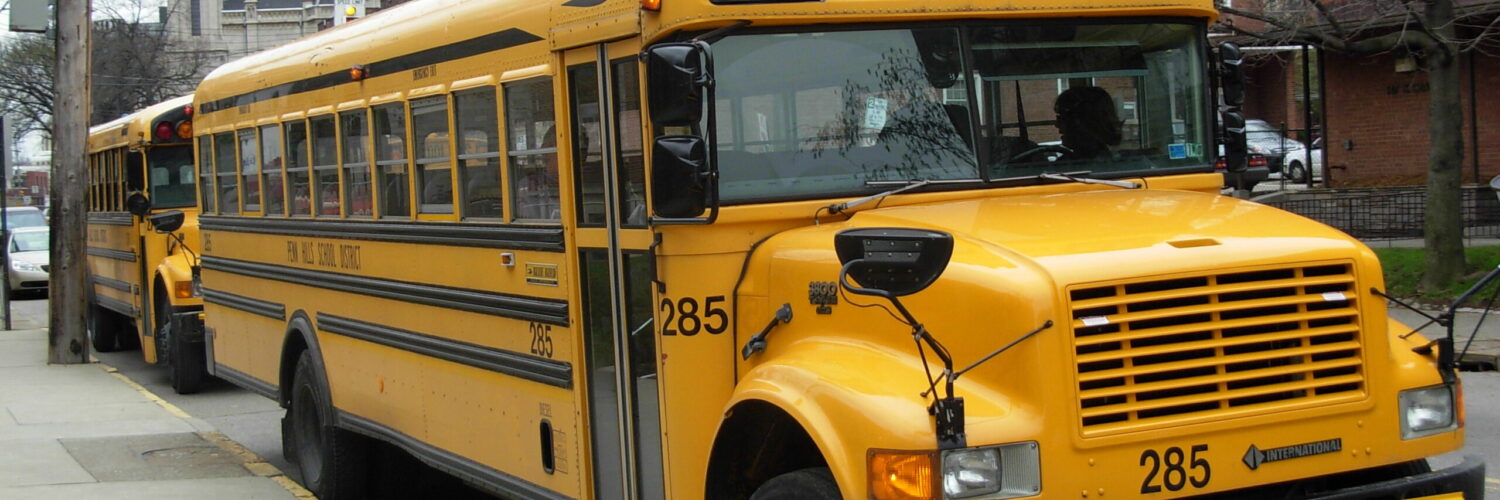
For many students, the school bus is the first vehicle they ride without buckling a seat belt. That can feel strange, especially because cars, minivans, booster seats, and airplane safety briefings all teach the same habit: sit down, buckle up, and stay secured. Large school buses follow a different safety logic. They are built less like family cars and more like protected passenger compartments, with tall padded seats, heavy vehicle structure, high visibility, and special traffic signals meant to reduce risk before a crash ever happens.
That does not mean seat belts are useless on buses, or that every bus follows the same rules. Small school buses are treated differently from large ones, and some states and districts require lap-and-shoulder belts on newer buses. The interesting question is why many large yellow buses have historically been designed around something else: a passive protection system called compartmentalization.
A bus crash is not the same as a car crash
A passenger car protects people inside a relatively small, light vehicle. When a car stops suddenly, the person inside keeps moving forward until a seat belt, air bag, or part of the vehicle stops that motion. A seat belt spreads force across stronger parts of the body, helps keep the passenger in position, and reduces the chance of hitting hard surfaces inside the car.
A full-size school bus changes the physics of the crash. It is much larger and heavier than most vehicles around it, so in many collisions it experiences a different crash pulse from a small car. A crash pulse is the pattern of deceleration during impact: how quickly the vehicle loses speed and how sharply passengers are thrown forward. The National Highway Traffic Safety Administration has long treated large school buses as a special case because their size, height, structure, and seating layout change the way crash forces reach passengers.
That difference helps explain why the inside of a school bus looks the way it does. The seats are not thin dining chairs bolted to the floor. They are close together, high-backed, padded, and strongly anchored. Instead of depending only on each rider fastening a belt correctly, the bus creates a protected space around each seating row.
How compartmentalization protects riders
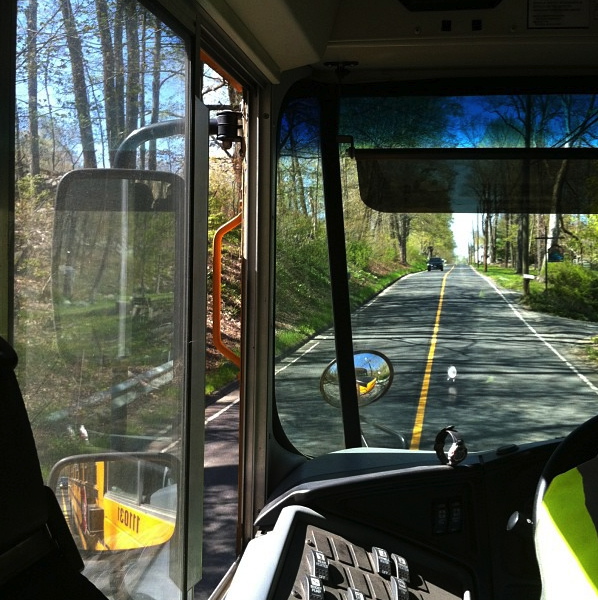
Compartmentalization is the school-bus safety idea that riders are protected by the space around them. The word sounds technical, but the concept is easy to picture. Each row of seats forms a padded compartment. If the bus stops hard or is hit from the front or rear, a seated rider is more likely to move into the back of the seat ahead rather than travel far through the bus.
The design has several parts working together. Seats are placed close enough to limit how much speed a passenger can build up before contact. The seat backs are tall, padded, and energy-absorbing, so they are meant to yield in a controlled way instead of acting like a hard wall. The seats are also anchored to the bus floor so they can stay in place under crash forces. NHTSA connects this approach to Federal Motor Vehicle Safety Standard 222, the school bus passenger seating and crash-protection standard.
This is why standing or turning around on a moving school bus weakens the protection. Compartmentalization works best when riders sit facing forward, with their bodies inside the space the seat design is meant to protect. A student leaning into the aisle, kneeling backward, or moving around has stepped partly outside that protective geometry.
The system is passive, which means it does not depend on a child remembering a step every morning. That matters in a vehicle carrying dozens of students of different ages, sizes, and habits. A passive system cannot prevent every injury, but it can give a baseline layer of protection even when passengers are distracted or young.
Why seat belts are still part of the debate
The seat-belt question is not a simple yes-or-no argument. NHTSA has said seat belts can further enhance protection already provided by compartmentalization, and the National Transportation Safety Board has supported lap-and-shoulder belts on school buses, especially because some crashes involve rollovers or side impacts where compartmentalization alone has limits. A padded seat ahead is most useful when motion is mainly forward. In a rollover or severe side crash, keeping a passenger contained in the seat can matter more.
That is why small school buses have stricter federal belt requirements. Smaller buses, often built closer to van or light-truck designs, do not have the same mass advantage as large buses. Their crash forces can resemble those of smaller passenger vehicles more closely, so belts play a clearer role. On large buses, federal rules have historically allowed states and local districts more choice, while setting standards for seat systems and for belts when they are installed.
Cost and capacity also shape the discussion. Adding lap-and-shoulder belts is not just a matter of screwing straps into old seats. The seats, floor anchors, spacing, and evacuation procedures all have to work safely together. Districts may also weigh whether expensive retrofits reduce the number of buses available, which could push more students into cars. That tradeoff matters because the trip to and from school is a system, not just one vehicle feature.
The most careful answer is this: many large school buses do not lack seat belts because safety was ignored. They were designed around another crash-protection method, and the modern debate is about whether adding belts improves that system enough to justify the cost, training, and operational changes.
The biggest danger is often outside the bus
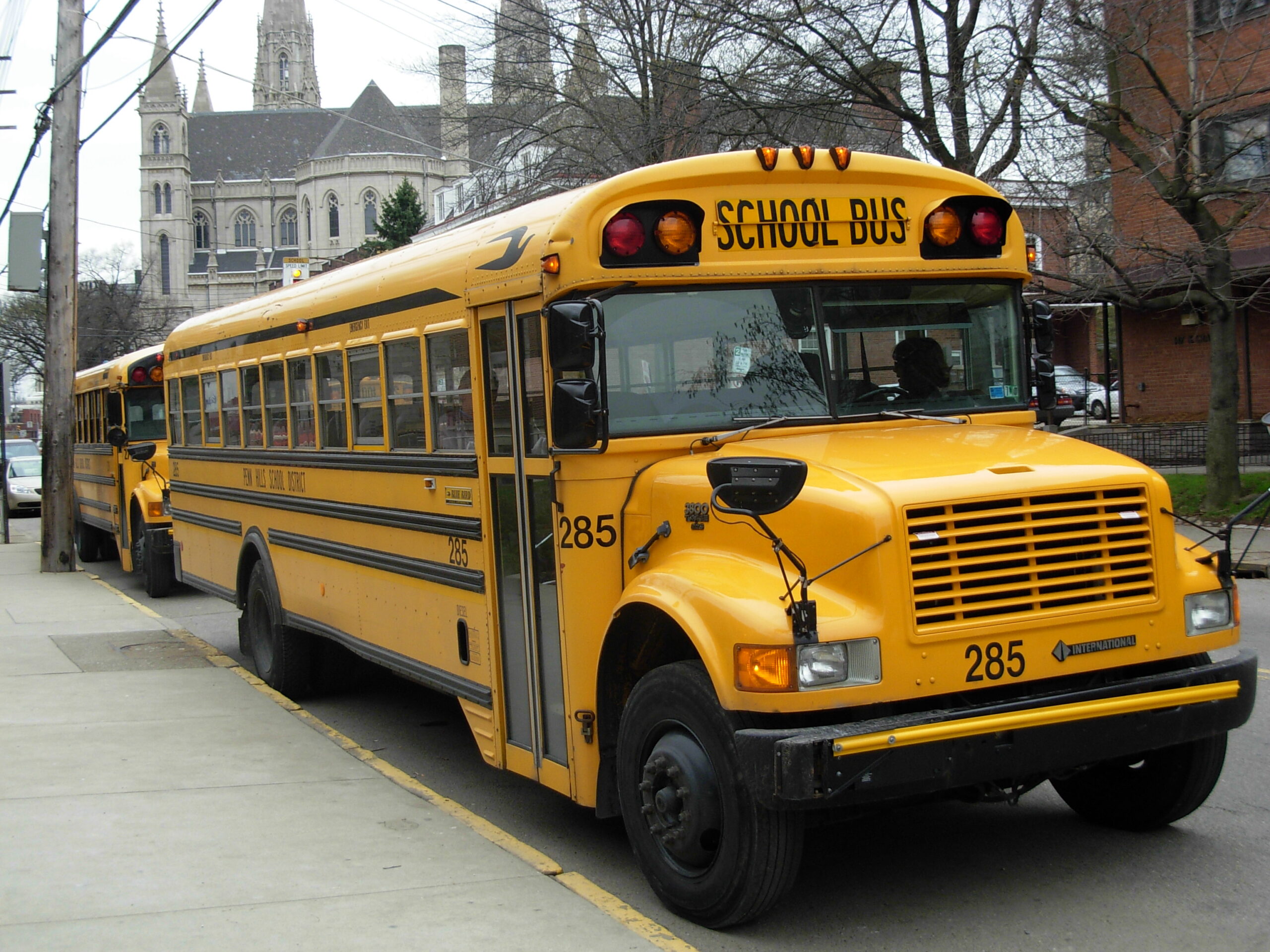
School buses are highly visible for a reason, but the most dangerous moments often happen while students are getting on or off. A child crossing near a bus is small, sometimes hard to see, and may assume every driver has stopped. NHTSA’s school-bus guidance emphasizes yellow flashing lights, red flashing lights, and the extended stop arm because those signals tell other road users exactly what is about to happen.
Yellow flashing lights mean the bus is preparing to stop. That is the warning stage, when drivers should slow down and be ready. Red flashing lights and an extended stop arm mean children are boarding or exiting, and traffic must stop according to the rules that apply on that road. NHTSA’s guide to illegal school-bus passing notes that every state prohibits passing a stopped bus from the rear when its stop arm is out and red lights are flashing, and that many dangerous violations still occur each school year.
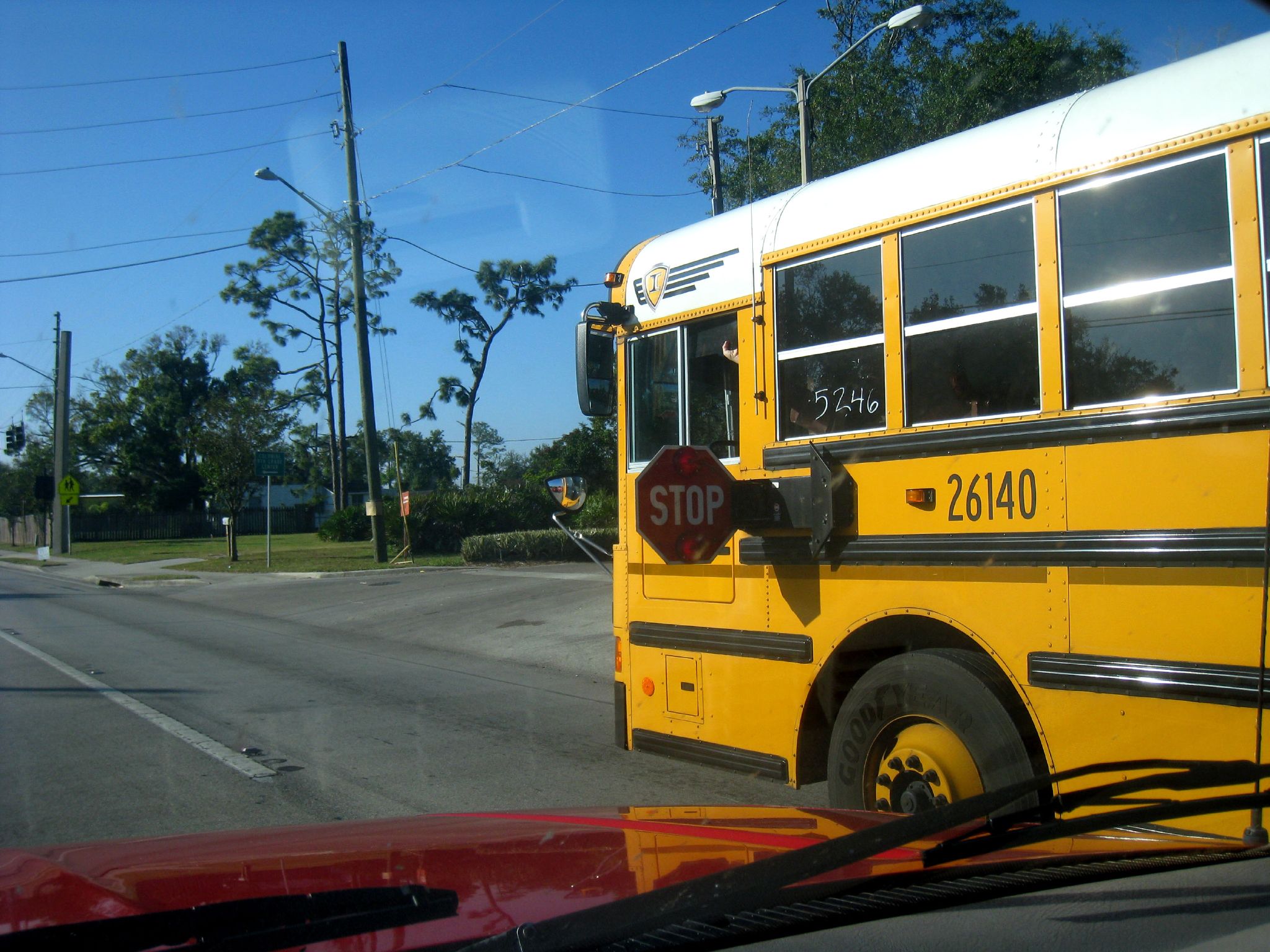
This is a different kind of safety design from a seat belt. A belt protects a passenger during a crash. A stop arm, flashing lights, yellow paint, black lettering, mirrors, route planning, and driver training try to prevent the dangerous event in the first place. In traffic safety, that kind of redundancy is valuable. If one signal is missed, another may still catch attention.
Why visibility and structure work together
The yellow bus is meant to be recognizable from a distance, but color alone is not enough. Buses also use large size, high seating, black contrast markings, mirrors, lighting systems, and a predictable shape. Drivers learn to treat a school bus differently from an ordinary delivery truck because its design announces that children may be nearby.
Inside the bus, the structure does a different job. The elevated passenger compartment keeps students above many impact zones that would affect a smaller vehicle. The heavy frame and body provide more mass between riders and other traffic. The closely spaced seats turn the interior into a sequence of protected spaces instead of one open room.
Those layers do not make buses invincible. They also do not erase the value of seat belts where they are required or properly installed. What they show is that safety can be built as a chain of decisions: make the vehicle visible, control traffic around loading, plan safer stops, keep riders seated, absorb crash energy, and use restraints where the law or local safety plan calls for them.
What riders and drivers should understand
For students, the practical lesson is simple: the bus seat is part of the safety equipment. Sitting forward, staying out of the aisle, keeping belongings under control, and waiting for the driver’s signal all help the design work as intended. The safest seat cannot protect a rider as well if the rider is standing, climbing over another student, or moving during a sudden stop.
For drivers near a bus, the lesson is even more direct. A stopped school bus is not just another vehicle slowing traffic. It is a moving school entrance, and children may be walking where a driver does not expect them. The flashing lights and stop arm are not decorations; they are commands built into the road-safety system.
The absence of seat belts on many large school buses can look like a missing feature, but the real story is more layered. These buses protect riders through mass, structure, seat design, visibility, and traffic control. Seat belts can add protection in some situations, and many communities continue to debate or adopt them. Still, the core idea behind the classic large school bus is clear: reduce the chance of a crash, and if one happens, surround each rider with a strong, padded compartment that is already waiting to do its job.