 Akshay Dinesh
Poison ivy can feel mysterious because the rash often arrives late. A person may walk through brush on Saturday, feel fine on Sunday, and then notice itching, redness, or blisters on Monday or Tuesday. That delay makes it easy to blame the wrong plant, suspect that the rash is spreading by itself, or miss the real source of exposure: a sticky plant oil that may still be on shoes, gloves, tools, or a pet’s fur.
The key substance is urushiol, an oily resin found in poison ivy, poison oak, and poison sumac. The rash is not a chemical burn in the usual sense. It is an allergic immune reaction, which is why timing, severity, and pattern can vary so much from one person to another. Once that process is easier to picture, poison ivy becomes less like a random outdoor hazard and more like a clear chain of events: plant oil touches skin, the immune system recognizes the altered skin cells, inflammation builds, and the rash appears after a delay.
The Plant Oil That Starts the Reaction
Poison ivy belongs to the genus Toxicodendron, a group of plants known for producing urushiol. The same oil is the reason poison oak and poison sumac can cause a similar rash. The Food and Drug Administration describes poison ivy, poison oak, and poison sumac as year-round hazards because urushiol can be present in leaves, stems, vines, flowers, berries, and roots. Dead-looking vines can still matter if oil remains on the plant surface.
Urushiol is troublesome because it is oily, not watery. It clings to skin, clothing, shoelaces, gardening gloves, backpacks, tools, and animal fur more easily than many people expect. The FDA notes that the oil can remain on surfaces until it is washed away, which explains why a person can react after touching a contaminated jacket or rake rather than the plant itself. The plant does not have to look dramatic, either. A low patch of three leaflets near a trail can carry enough oil to start the reaction.
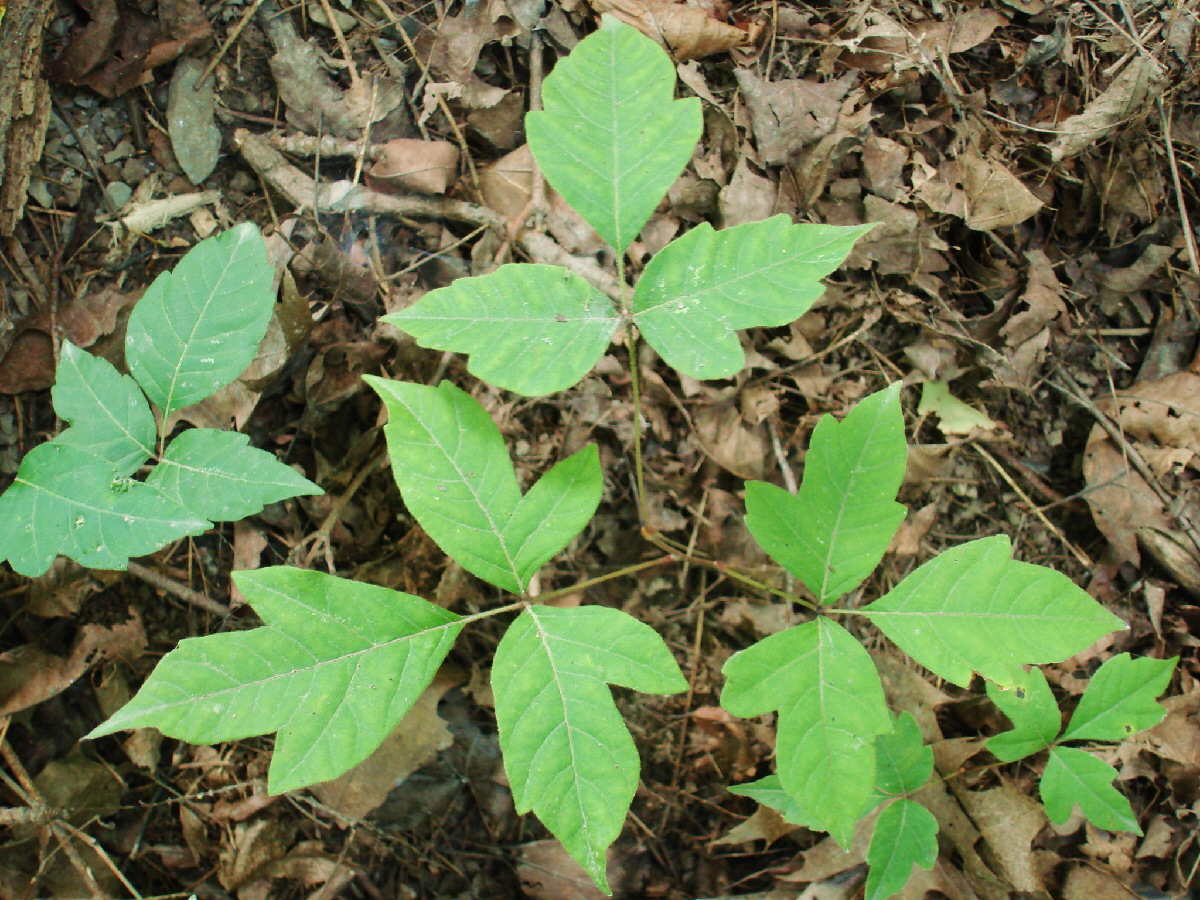
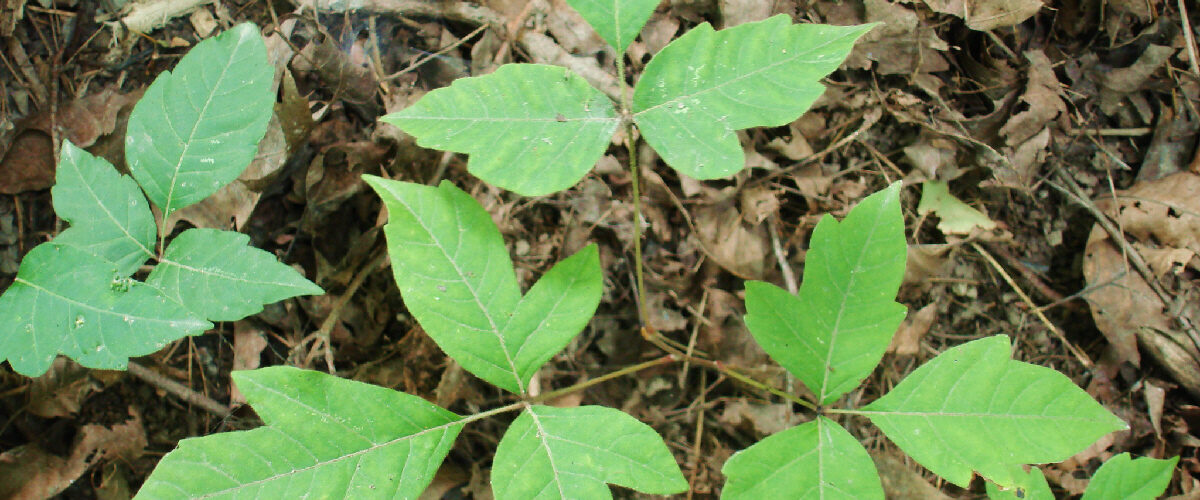
The familiar warning, leaves of three, let it be, is useful but incomplete. Poison ivy leaves can be shiny or dull, smooth-edged or toothed, reddish in spring, green in summer, and red, orange, or yellow in fall. It can grow as a low plant, a shrub, or a climbing vine with hairlike aerial roots gripping tree bark. The safest habit is not to memorize one perfect picture, but to notice the repeating clues: three leaflets, alternate leaf arrangement, no thorns, and the possibility of hairy vines on trees.
Why the Rash Does Not Show Up Right Away
A poison ivy rash is a form of allergic contact dermatitis. That phrase means the skin becomes inflamed because the immune system reacts after direct contact with a substance. Urushiol itself is small enough that the body does not simply treat it like a large invader. Instead, after it reaches the skin, it can bind to proteins in skin cells. Those altered proteins become the signal that immune cells respond to.
This is why poison ivy reactions are often delayed. The immune system has to recognize the problem, activate the right cells, and send inflammatory signals back to the skin. The American Academy of Dermatology explains that people who have reacted before may see a rash within hours to two days, while someone who has never had a poison ivy, oak, or sumac rash may not see one for two to three weeks. The delay is not a sign that the plant is still moving through the body. It is the timing of the immune response.
That timing also explains why a rash may seem to appear in waves. Skin that received more oil may react first. Skin with less oil, thicker skin, or later contact from contaminated objects may react later. This can look as if the rash is crawling across the body, but the fluid from poison ivy blisters is not what spreads it. The more likely explanation is uneven exposure, delayed reaction, or fresh contact with urushiol that has not yet been washed away.
What the Rash Pattern Can Tell You
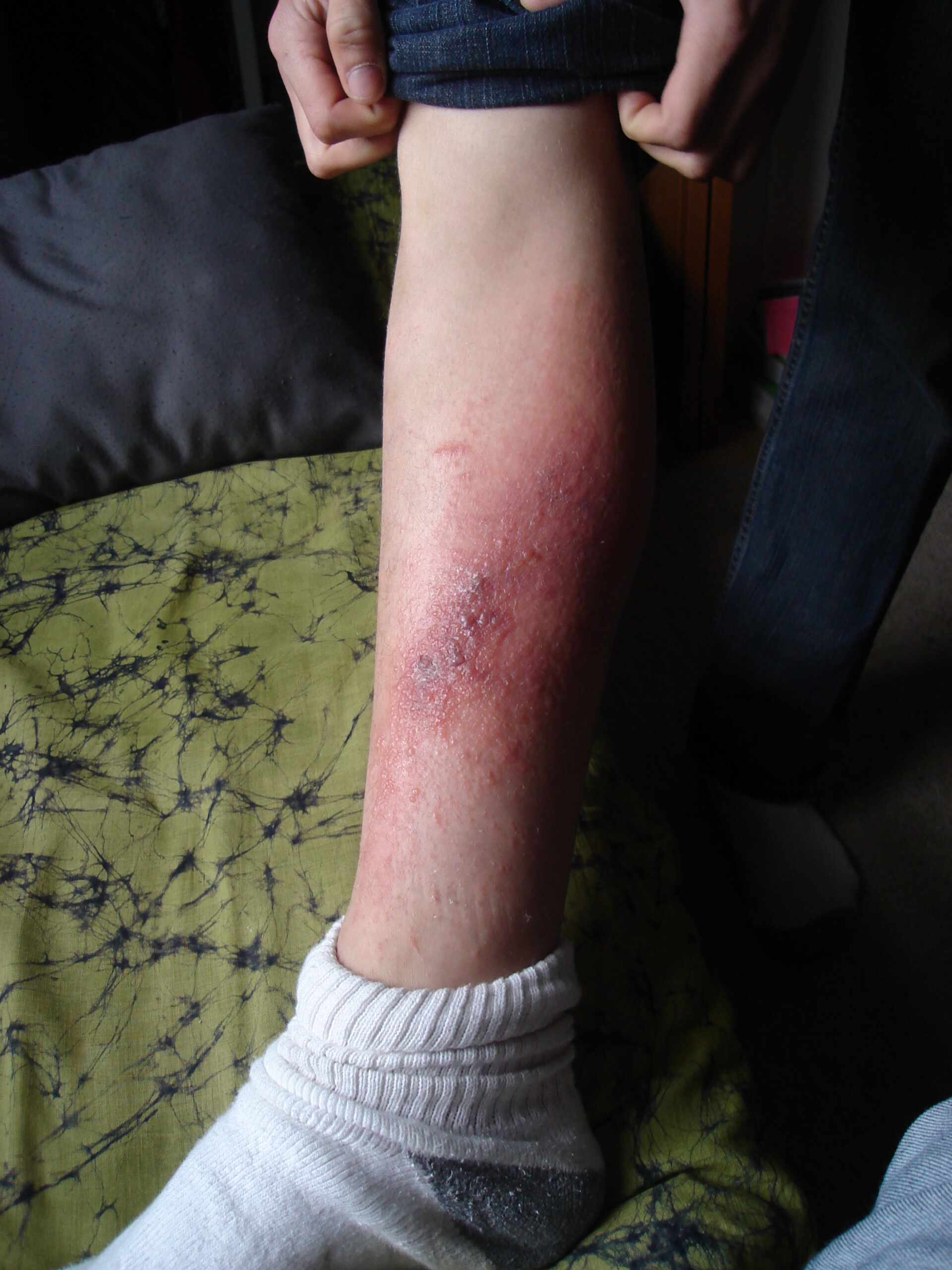
Poison ivy rashes often appear in streaks, patches, or lines because the plant brushes across skin in a particular direction. A forearm may show a narrow red band where a vine dragged across it. Ankles may show scattered bumps after a walk through low plants. A wrist or hand may react after pulling weeds, handling gloves, or touching a tool that carried the oil.
The American Academy of Dermatology describes the common pattern as intense itching followed by red bumps and, in many cases, blisters. Those blisters can leak fluid and then crust over as the skin heals. The rash can be uncomfortable and distracting, but the pattern itself tells a useful story: it usually marks the places where urushiol touched the skin or where contaminated objects delivered more oil.
Different people react differently because sensitivity varies. Some people have little or no reaction, while others become strongly inflamed after small exposures. The Centers for Disease Control and Prevention’s NIOSH guidance for outdoor workers warns that a tiny amount of urushiol can trigger a rash in many adults. Repeated exposure can also matter because allergic responses depend on whether the immune system has already been sensitized.
Why Washing and Surfaces Matter So Much
The most useful poison ivy science is practical: the oil has to be removed before it keeps causing trouble. Washing skin soon after possible exposure can reduce how much urushiol remains available to bind to skin proteins. Soap and water matter because urushiol is oily, and friction helps lift it away. Rinsing quickly and thoroughly is better than waiting until a rash begins.
Clothing and tools deserve the same attention. A pair of gloves can carry oil from one yardwork session to another. Shoes can brush against plants and later touch bare ankles. A dog can run through a patch without developing the same kind of rash, then bring oil back on its fur. The rash itself is not contagious from person to person, but unwashed oil on objects can create a new exposure.
Burning poison ivy, poison oak, or poison sumac is especially risky. The American Academy of Dermatology and CDC guidance both warn against burning these plants because particles carrying the allergen can become airborne and irritate the lungs. Cutting or mowing can also scatter plant pieces. For a learner, the bigger point is that poison ivy risk is not only about touching a leaf. It is about where the oil travels after the plant is damaged or brushed.
How to Think Like a Careful Observer Outdoors
Poison ivy is easier to avoid when identification becomes a habit rather than a last-second guess. On trails, look at edges where plants get extra sunlight. Near yards and fences, watch for vines climbing trees or shrubs. In wooded places, notice low plants with three leaflets and a longer stalk on the middle leaflet. If several clues line up, give the plant space instead of testing it by touch.
It also helps to separate plant recognition from rash recognition. A rash days later cannot always prove which plant caused it, especially if several outdoor exposures happened close together. The pattern, timing, and likely contact points can point toward poison ivy, but uncertainty is common. A severe rash, swelling on the face or genitals, signs of infection, trouble breathing after smoke exposure, or a rash that is hard to identify should be handled by a medical professional.
The biology behind poison ivy is simple enough to remember: urushiol is a sticky oil, the rash is a delayed immune reaction, and the apparent spread usually reflects where the oil touched or remained. That turns the old trail warning into something more useful than a rhyme. Learn the plant’s common forms, wash skin and gear after possible exposure, and treat suspicious vines, leaves, gloves, and tools as part of the same story.