 Akshay Dinesh
A good puzzle does not always look like mathematics at first. Imagine a city divided by a river, with islands, riverbanks, and several bridges connecting the pieces of land. The challenge sounds simple: can someone take a walk that crosses every bridge exactly once? No bridge can be skipped, no bridge can be crossed twice, and the walker does not get to jump across the water. It feels like a matter of patience, trial, and maybe a clever route. The surprising discovery behind Euler paths is that the answer can be decided without drawing every possible walk.
That is the quiet power of graph theory. It turns a messy-looking situation into a structure made of points and connections. Once the structure is clear, the puzzle stops depending on guesswork and starts depending on a simple pattern: how many connections touch each point. The same idea that explains an old bridge puzzle also helps people think about delivery routes, computer networks, floor plans, circuit boards, and any system where connections matter more than exact distances.
The Puzzle That Became a New Kind of Math
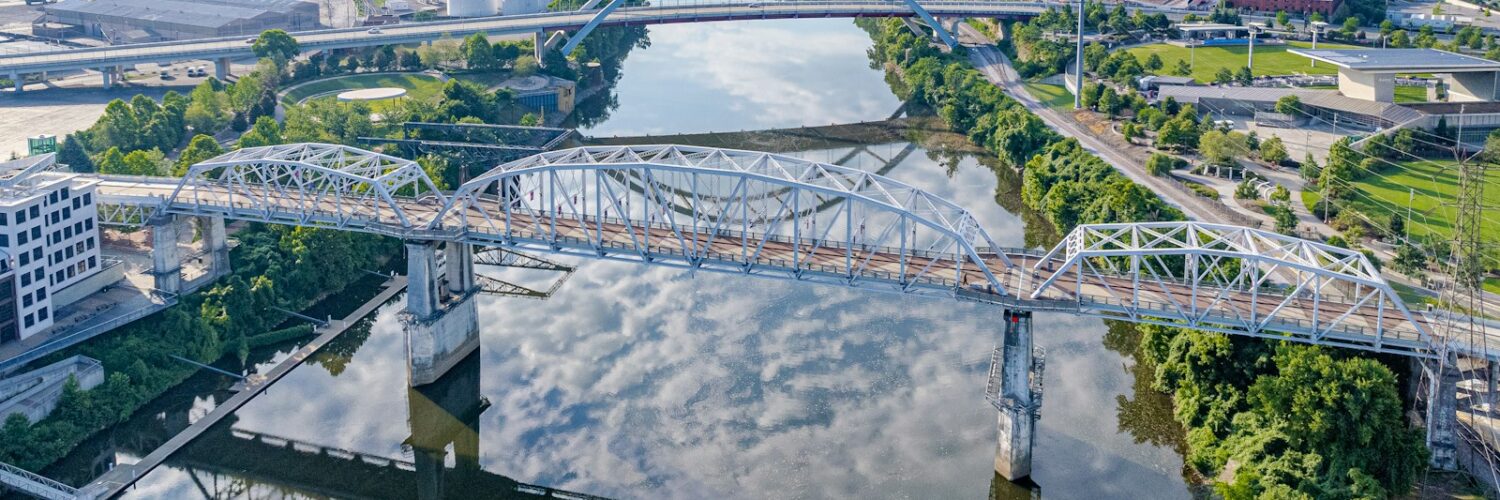
The classic story begins in Königsberg, a Prussian city now known as Kaliningrad. In the 1700s, the Pregel River divided the city into several land areas, and seven bridges connected those areas. People wondered whether it was possible to walk through the city and cross each bridge once and only once. The puzzle had the charm of something local and practical: it sounded as if a determined person could simply keep trying routes until one worked.
Leonhard Euler saw that the exact map was distracting. The size of an island did not matter. The length of a bridge did not matter. Even the shape of the riverbanks did not matter. What mattered was only which land areas were connected by bridges. That move changed the question from a city-walking challenge into a mathematical model.

In modern graph theory, each land area becomes a vertex, sometimes called a node. Each bridge becomes an edge, a connection between two vertices. The drawing no longer has to look like the city. It only has to preserve the relationships: this point connects to that point, and this bridge links those two areas. A tangled map can become a clean diagram.
This was a major shift because it ignored measurement and focused on arrangement. Most school geometry begins with lengths, angles, areas, and shapes. Euler’s bridge reasoning asked a different question: what can be known from connection alone? That question opened the door to graph theory, one of the most useful branches of discrete mathematics.
Why Odd and Even Connections Decide the Route
An Euler path is a route through a graph that uses every edge exactly once. The route may start and end at different vertices. If the route starts and ends at the same vertex, it is often called an Euler circuit. The bridge puzzle is asking for an Euler path, or sometimes the stricter Euler circuit version if the walker must return to the starting point.
The key idea is surprisingly physical. If a walker arrives at a land area by one bridge and is not finished yet, the walker must leave by another bridge. For most vertices along the route, bridges have to pair up: one bridge brings the walker in, and another takes the walker out. That pairing means the number of edges touching that vertex should be even.
There are only two possible exceptions. The starting point can have one extra bridge used to leave, and the ending point can have one extra bridge used to arrive. So a graph can have an Euler path if it is connected and has either zero or two vertices with an odd number of edges touching them. Zero odd vertices means the route can form a circuit. Two odd vertices means the route must start at one odd vertex and end at the other.
The Königsberg bridge graph had four land areas with odd numbers of bridges touching them. That is too many. A route can have at most two odd endpoints, so the promised walk was impossible. Euler did not need to list every failed route. He showed why every route had to fail.
A Small Example Makes the Rule Easier to See
Picture four places named A, B, C, and D. Suppose A is connected to B, B is connected to C, C is connected to D, and D is connected back to A. Those four edges make a loop. Each vertex has degree 2 because two edges touch it. Since all the degrees are even, an Euler circuit exists. You could start at A, travel around the loop, cross every edge once, and return to A.
Now add one extra edge from A to C. The graph has five edges. Vertex A now has degree 3, and vertex C has degree 3. Vertices B and D still have degree 2. There are exactly two odd vertices, so an Euler path exists, but it cannot start anywhere. It has to start at A or C and end at the other odd vertex. The odd vertices act like the loose ends of the route.
Add one more extra edge from B to D. Now A, B, C, and D all have degree 3. The graph has four odd vertices, so an Euler path is impossible. Someone may still trace several edges in a row, but eventually the route gets trapped or is forced to reuse an edge. The problem is not lack of cleverness. The structure itself does not allow the walk.
This is why the degree of a vertex matters so much. The degree is simply the number of edges touching that point. Counting degrees is faster and more reliable than trying route after route. It also gives a reason, not just an answer. When too many vertices have odd degree, there are too many places where the walk would need to begin or end.
How Graph Theory Simplifies Real Networks
The bridge puzzle feels old, but the thinking behind it is very current. Many modern systems are networks: roads connect intersections, flights connect airports, links connect web pages, wires connect devices, and friendships connect people. Graph theory gives a language for describing these systems without getting lost in every detail at once.
That does not mean every real routing problem is an Euler path problem. A delivery driver usually cares about distance, traffic, time windows, fuel, and repeated streets. A computer network cares about speed, congestion, failures, and security. Euler paths answer a narrower question: can every connection be used exactly once in a single continuous route? Even so, learning the idea builds a habit that transfers well. Before solving a problem, ask what information actually matters.
In a graph model, a vertex might stand for an intersection, a room, a person, a server, or a task. An edge might stand for a road, hallway, relationship, cable, or dependency. Once the model is built, patterns become easier to spot. Some vertices are hubs. Some paths are bottlenecks. Some networks stay connected even when one edge is removed, while others break apart quickly.

Euler’s insight is especially valuable because it shows how abstraction can make a problem more concrete, not less. The graph is simpler than the city map, but it keeps the information needed to answer the question. Removing extra detail makes the core pattern visible.
What to Check When You Meet an Euler Path Problem
Euler path problems often appear as drawing puzzles: trace this shape without lifting your pencil and without retracing a line. They also appear as route puzzles: cross every bridge, inspect every hallway, or travel every street segment exactly once. The wording changes, but the structure is the same. Edges must be used once, and the route must stay continuous.
A careful approach starts by turning the situation into a graph. Mark each meeting point as a vertex. Draw each required connection as an edge. Then count the degree of every vertex. If the graph is not connected, one continuous route cannot cover all its edges. If it is connected, the odd-degree count tells the story.
- If there are no odd-degree vertices, an Euler circuit is possible.
- If there are exactly two odd-degree vertices, an Euler path is possible and must start and end at those odd vertices.
- If there are more than two odd-degree vertices, no Euler path can use every edge exactly once.
This rule is satisfying because it is small enough to use by hand but deep enough to explain a real impossibility. It does not say, “No one has found the route yet.” It says the route cannot exist under the rules of the puzzle. That is a stronger kind of answer.
The Seven Bridges puzzle still matters because it shows mathematics doing something elegant: taking an everyday question, stripping away the noise, and finding the hidden structure. Euler paths are not only about bridges. They are about recognizing when a problem is really asking how connections fit together. Once that pattern comes into view, a confusing route can become a countable, testable, and surprisingly beautiful piece of mathematics.