 Akshay Dinesh
Reading in a moving car seems harmless until the page starts to wobble, your stomach tightens, and the road suddenly feels much longer than it did a few minutes ago. The strange part is that nothing is “wrong” with the book or the car. The queasy feeling usually comes from a disagreement inside the body’s motion-sensing system.
Motion sickness is not a sign of weak willpower or poor travel habits. It is a physical response that can happen when the brain receives motion information that does not fit together. The eyes may be locked onto a steady page or phone screen, while the inner ear senses acceleration, turns, stops, and bumps. The brain has to make sense of those mixed reports quickly, and for some people the result is nausea, dizziness, cold sweating, headache, or a strong need to stop looking down.

The brain depends on several motion reports at once
The body does not use just one sense to know whether it is moving. Vision gives clues from the outside world: passing trees, a changing horizon, the edge of the road, or the stable shape of a room. Muscles and joints add information about body position. The inner ear contributes a more hidden but powerful signal through the vestibular system, the balance apparatus that helps detect head movement and orientation.
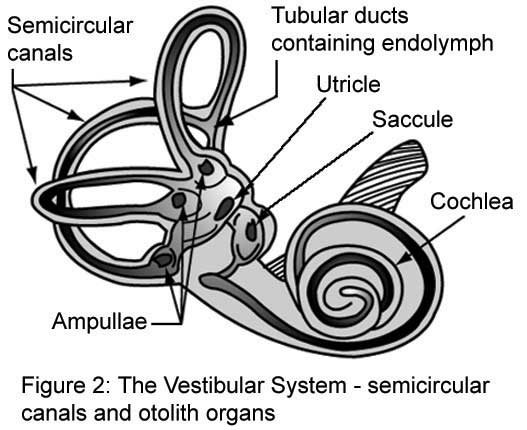
The vestibular system sits deep inside the inner ear, near the cochlea used for hearing. Its semicircular canals respond mainly to head rotation, such as turning left, nodding, or tilting. Nearby otolith organs help detect linear acceleration and the pull of gravity, such as speeding forward, braking, or moving up and down. Cleveland Clinic’s anatomy overview describes these structures as part of the body’s balance system, while MedlinePlus explains that the brain compares signals from the inner ears, eyes, muscles, and joints to understand motion.
Most of the time, these systems agree well enough that the brain does not draw attention to them. Walking across a room, climbing stairs, or riding a bike all require constant coordination between what the eyes see and what the balance organs feel. A vehicle can make that coordination harder because the passenger’s body is being moved by the car, bus, train, boat, or airplane rather than by the passenger’s own muscles.
Reading creates a mismatch between the page and the ride
When you read in a car, your eyes are doing something very different from your inner ear. Your eyes focus on a page that appears mostly still. The words do not rush past like trees outside the window. The book or phone may bounce a little, but the visual task tells the brain, “pay attention to this small stable object.”
At the same time, the vestibular system is reporting the real motion of the vehicle. The car accelerates from a stop, slows before a light, leans through a curve, dips over uneven pavement, and vibrates with the road. Even if those movements are gentle, they are not imaginary. The inner ear is detecting them and sending that information toward the brainstem and other parts of the nervous system involved in balance, eye movement, and nausea responses.
The CDC Yellow Book describes motion sickness as a sensory conflict, or mismatch, between vestibular, visual, and body-position signals and what the brain expects from previous experience. Reading in the car is a classic example. The inner ear says the body is moving. The eyes, aimed at the page, give much weaker evidence of that motion. The conflict can become stronger on winding roads, in stop-and-go traffic, in the back seat, or when a passenger looks down for a long time.
Why looking outside can help
Looking out the window often helps because it gives the eyes motion information that better matches what the inner ear is reporting. The passing landscape, road curve, or distant horizon lets vision confirm that the body is actually moving through space. The brain still has to process acceleration and turns, but the disagreement is smaller.
This is one reason passengers often feel better in the front seat or when facing forward. A forward view gives clearer cues about upcoming motion: the curve in the road appears before the body feels the turn, and the horizon stays available as a stable reference. On a boat, looking toward the horizon can serve a similar purpose because it gives the visual system a steady line while the vestibular system senses rocking and rolling.
Drivers are usually less likely to get carsick than passengers, partly because they can anticipate motion. The driver sees the road ahead, controls the steering, expects the braking, and knows when the vehicle is about to turn. The passenger reading in the back seat has the opposite setup: less outside view, less control, and more attention on a small still target.
Different people have different thresholds
Not everyone gets motion sick from the same situation. One person may read for hours on a highway and feel fine, while another feels queasy after five minutes on a winding road. That difference does not mean one person is imagining it. It means the nervous system’s threshold for sensory conflict varies from person to person and from day to day.
Age, sleep, migraine tendency, anxiety about travel, recent illness, vehicle type, and the strength of the motion can all affect how easily symptoms begin. Boats, amusement rides, turbulent flights, virtual-reality experiences, shaky videos, and back-seat car rides can create different versions of the same basic problem. In each case, the brain is trying to decide which sensory information best explains the body’s position and movement.
Adaptation matters too. People often become less sensitive to a repeated motion after enough exposure, which is why a long boat trip may feel worst at the beginning or why a familiar commute may become easier over time. The brain learns patterns. It gets better at predicting how certain movements should feel and which signals deserve attention.
Small changes reduce the sensory conflict
The most useful non-medical strategies usually make sense once the sensory conflict is clear. Looking up from the page gives the eyes more real motion information. Sitting where the view is wider can help. Facing forward, keeping the head steadier, looking toward the horizon, getting fresh air when possible, and taking breaks from reading or scrolling can all reduce the mismatch for some travelers.
It can also help to choose the right moment for reading. A straight, smooth highway is usually easier than a winding mountain road or a route with constant braking. Large-print material may be easier than tiny text because the eyes do not have to work as hard on a bouncing target. Audiobooks or music can be a practical substitute when the goal is to pass the time without forcing the eyes to lock onto a page.
Medication is a separate question because it depends on age, health conditions, timing, side effects, and the type of travel. The science of motion sickness explains why prevention often works better before symptoms build, but choosing medicine is something to handle with a clinician or pharmacist, especially for children, pregnancy, chronic conditions, or other medications.
The queasy feeling has a real signal behind it
The unpleasantness of carsickness can make it feel mysterious, but the basic idea is straightforward: the brain expects the senses to tell a consistent story about motion. Reading in a moving car gives the eyes one story and the inner ear another. For some people, that conflict is enough to trigger nausea and dizziness.
The solution is not always to avoid travel or give up reading forever. It is to recognize what the body is trying to reconcile. Looking outside, choosing a steadier seat, taking breaks from screens or books, and matching visual cues to the motion of the ride can make the trip easier. The body is not overreacting for no reason; it is responding to a confusing set of signals from systems that usually keep balance working quietly in the background.