 Akshay Dinesh
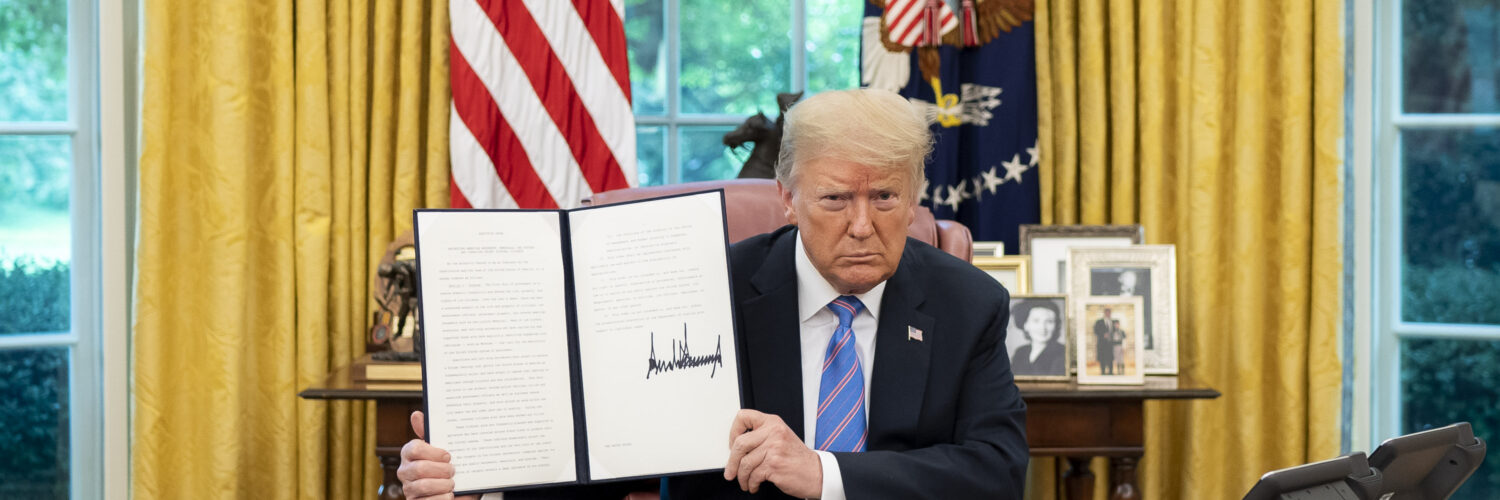
Executive orders can look simple from the outside: a president signs a document, cameras flash, and the federal government is told to move in a new direction. The real story is more careful. An executive order is one tool presidents use to manage the executive branch, but it does not let a president write any rule they want or replace Congress as the lawmaking branch.
That distinction matters because executive orders often appear during moments of urgency. Presidents use them to organize agencies, set enforcement priorities, respond to emergencies, reverse earlier presidential policies, or explain how existing laws should be carried out. Some orders are routine and technical. Others become national arguments about power, rights, money, immigration, war, public health, or the limits of government itself.
The best way to understand an executive order is to ask two questions at once: what is the president trying to direct, and where does the legal authority come from? If the answer is clear, the order may shape federal action quickly. If the answer is weak or contested, courts, Congress, agencies, states, and the public may all become part of the fight over what the order can actually do.
What an Executive Order Is Supposed to Do
The National Archives describes executive orders as official documents, numbered in sequence, that presidents use to manage the operations of the federal government. That wording is important. Executive orders are aimed mainly at the executive branch: departments, agencies, officers, and federal programs that carry out laws already on the books.
A president may use an executive order to tell agencies how to coordinate, how to interpret a law they administer, or how to set priorities within authority Congress has already given them. For example, an order might direct agencies to review regulations, change procurement practices, create an interagency task force, or adjust federal workplace policies. The order can feel powerful because the executive branch is enormous, but its reach still depends on the powers available to the president and the agencies involved.
An executive order is not the same as a statute. A statute is a law passed by Congress and signed by the president, or passed over a veto. An executive order cannot create a new tax, spend money Congress has not appropriated, rewrite a criminal law, or give an agency power that Congress never granted. It can move quickly inside the space the law already leaves open, but it cannot make that space unlimited.
How an Order Becomes Official
After a president signs an executive order, the document moves through a formal publication system. The Office of the Federal Register reviews presidential documents for publication, numbers executive orders, and makes them available in the daily Federal Register. The White House may announce an order the day it is signed, but the Federal Register is where the public can read the official published version and track the order as part of the government record.
That publication step is more than clerical. It lets lawyers, agencies, journalists, courts, state officials, businesses, and ordinary readers see the exact language rather than relying on a speech or summary. Small wording choices can matter. A sentence saying an agency “shall” do something is different from one saying an agency “should consider” it. A reference to a specific statute can reveal the legal foundation the administration thinks it is using.
The Federal Register also helps people see how presidential documents differ. Executive orders are only one category. Presidents also issue proclamations, memoranda, notices, determinations, and other documents. Some are symbolic, such as proclamations for commemorative days. Others direct policy or delegate authority. Reading the document type is one of the first clues to how much practical legal force it may have.
Why Executive Orders Can Be Powerful
Executive orders can matter because modern government depends on administration. Congress writes laws, but federal agencies often decide how those laws are implemented in daily life. When an executive order changes agency priorities, review standards, reporting requirements, grant conditions, enforcement focus, or internal procedures, the effect can be felt across schools, workplaces, markets, courts, state governments, and federal programs.
Speed is another reason presidents use them. Passing a law through Congress can take months or years, and sometimes it does not happen at all. A president can sign an order much faster, especially when the order deals with executive-branch management or a power Congress has already delegated. That speed can be useful during a crisis, but it can also make executive orders tempting when presidents are frustrated by Congress.
There is a tradeoff. Because executive orders do not go through the full legislative process, they can be easier for later presidents to revise or revoke. One administration may build a policy through executive action, and the next may undo it with another executive action. That back-and-forth is one reason executive orders can feel dramatic while still being less stable than statutes.
Durability usually depends on the legal foundation. An order rooted in a clear statute, a settled agency power, or a widely accepted constitutional responsibility is harder to attack. An order that stretches vague authority, conflicts with a statute, or tries to reach beyond the executive branch is more vulnerable.
The Legal Limits: Congress, Courts, and the Constitution
The Constitution gives the president executive power and the duty to see that laws are faithfully executed. It also gives Congress the power to make laws, appropriate money, regulate many areas of national life, and set the structure of federal agencies. Executive orders sit inside that separation of powers. They are strongest when the president is carrying out a law Congress has passed, and weakest when the president acts against Congress’s expressed or implied choices.
The classic case is Youngstown Sheet & Tube Co. v. Sawyer, decided by the Supreme Court in 1952. During the Korean War, President Harry Truman issued an executive order directing the government to seize and operate steel mills to avoid a strike that he believed would threaten national defense. The Court ruled against him because neither the Constitution nor an act of Congress gave him that power.
Justice Robert Jackson’s concurring opinion in Youngstown became especially influential. He described presidential power in three broad situations: strongest when the president acts with congressional authorization, uncertain when Congress has been silent, and weakest when the president acts against Congress’s will. Students still learn that framework because it turns a vague argument about “power” into a practical question about the relationship between the branches.
Courts do not review every executive order automatically. Someone usually has to sue, show they are harmed or legally affected, and raise a claim the court can decide. Even then, courts may focus on a narrow issue: whether the president had statutory authority, whether an agency followed required procedures, whether the order violates constitutional rights, or whether the challengers are asking for the right kind of remedy.
Congress can also respond. It may pass a law supporting, limiting, replacing, or blocking an executive policy. It may control funding. It may hold oversight hearings, request records, confirm or reject nominees, or revise the statutes an order relies on. A president’s signature can start a policy shift, but the other branches decide how much of that shift survives.
How to Read an Executive Order Carefully
Executive orders are easier to understand when read in layers. The title and introductory paragraphs usually show the policy goal, but the authority section is often more important. Look for phrases such as “by the authority vested in me by the Constitution and the laws of the United States,” followed by specific statutes. Those citations are the administration’s map of where it thinks the power comes from.
Next, check who is being directed. If the order tells cabinet secretaries or federal agencies to study, report, coordinate, or propose rules, it may be starting a process rather than making an immediate rule for everyone. If it directs agencies to change enforcement or funding conditions, its effects may be more direct. If it claims authority over private parties, state governments, or spending, the legal questions become sharper.
Dates and definitions matter too. Some orders take effect immediately. Others set deadlines for agencies to write guidance, review regulations, or report back to the president. Definitions can decide who is covered, what counts as compliance, and which agencies have responsibility. The most important sentence is not always the one that sounds most dramatic.
It also helps to compare the order with the law it cites. If Congress clearly told an agency to do something, an order cannot simply command the opposite. If Congress gave the agency broad discretion, the president may have more room to guide how that discretion is used. That is why the same executive order can be described very differently by supporters, critics, agencies, and courts.
Why the Distinction Matters
Executive orders are neither magic wands nor meaningless paperwork. They are serious governing tools that can redirect federal attention quickly, especially inside the executive branch. They can also expose hard constitutional questions about emergencies, rights, spending, agency power, and the boundary between enforcing law and making law.
A healthy way to read any executive order is to resist both extremes. It is not enough to say, “The president signed it, so it is law.” It is also not enough to say, “Only Congress matters, so the order is irrelevant.” The real question is how the order fits into the Constitution’s design: Congress writes laws, the president carries them out, and courts can decide whether either branch has crossed a legal line.
That is why executive orders are such useful civics documents. Each one shows government in motion. A signature may launch the action, but the lasting answer comes from law, publication, implementation, public response, congressional power, and judicial review working together.