 Akshay Dinesh
A drop of acid can make plain water much more acidic. A small amount of base can push it the other way just as quickly. Yet many real chemical systems cannot afford that kind of swing. Cells, swimming pools, medicines, soil, lakes, and laboratory reactions often need pH to stay within a narrow range, even when small amounts of acid or base enter the mixture.
That is the job of a buffer solution. A buffer does not make pH impossible to change, and it is not a magic shield against every chemical disturbance. Instead, it gives the solution a reserve system. When extra acid appears, one part of the buffer reacts with it. When extra base appears, another part reacts with that. The result is a solution whose pH changes slowly instead of lurching suddenly.
Why Ordinary Water Changes pH So Easily
Pure water has very little chemical material available to resist added acid or base. Its pH comes from a tiny balance between hydronium ions, written as H3O+, and hydroxide ions, written as OH-. Because the amounts are so small, adding even a modest amount of strong acid or strong base can overwhelm that balance. The pH scale is logarithmic, so a one-unit pH change means a tenfold change in hydronium ion concentration.
That helps explain why pH can feel surprisingly sensitive. If a solution has no backup chemistry, a few added ions can matter a lot. In a classroom beaker, that might simply change the color of an indicator. In a living cell or a carefully controlled reaction, the same kind of shift can change protein shape, enzyme activity, solubility, reaction speed, or the form a dissolved substance takes.
A buffer solution gives the system something more useful than plain water: a weak acid-base pair. That pair acts like a chemical cushion. It does not stop every change, but it can absorb small disturbances before they turn into large pH jumps.
The Pair That Makes a Buffer Work
Most introductory chemistry buffers are built from a weak acid and its conjugate base. A common example is acetic acid and acetate, the acid-base pair related to vinegar. Acetic acid can donate a proton, while acetate can accept one. Because both forms are present at the same time, the solution has a way to respond whether acid or base is added.
If acid is added, it brings extra H3O+ into the solution. The conjugate base part of the buffer reacts with that added acid, turning some acetate into acetic acid. Instead of leaving all those hydronium ions free to lower the pH sharply, the buffer converts much of the disturbance into a weak acid form that was already part of the mixture.
If base is added, the weak acid part of the buffer responds. Hydroxide ions tend to remove protons. Acetic acid can donate protons to the added base, forming water and more acetate. Again, the pH can still move, but the movement is much smaller than it would be in an unbuffered solution.
A buffer can also be made from a weak base and its conjugate acid, such as ammonia and ammonium. The logic is the same. One member of the pair handles added acid, and the other handles added base. The exact substances change, but the principle stays steady: a buffer needs two related forms that can trade protons back and forth.
Why Weak Acids and Weak Bases Are Special
Strong acids and strong bases are powerful because they react almost completely in water. That makes them useful in many settings, but it also makes them poor partners for a buffer. A strong acid does not leave much of its conjugate base available in a meaningful acid-base balance. A strong base behaves in a similarly one-sided way.
Weak acids and weak bases are different because they only partly react with water. At any moment, a weak acid solution contains some molecules still in acid form and some particles in conjugate base form. That partial reaction creates an equilibrium, a balance that can shift when conditions change. Buffers depend on that ability to shift.
Picture a buffer as a crowded room with people able to move between two sides. If too many people enter one side, some can shift to restore balance. The chemistry version is not about people, of course, but the image captures the idea: buffers work because the acid-base pair can adjust instead of being locked into one form.
This also explains why a buffer has limits. If enough acid is added, it can use up most of the conjugate base. If enough base is added, it can use up most of the weak acid. Once one side of the pair is nearly gone, the buffer loses much of its ability to resist further pH change. Chemists call this limit buffer capacity.
The Henderson-Hasselbalch Equation Shows the Balance
For many buffer problems, the key relationship is the Henderson-Hasselbalch equation:
pH = pKa + log([A-]/[HA])
In that expression, HA represents the weak acid and A- represents its conjugate base. The pKa tells how strongly the weak acid tends to give up a proton. The ratio [A-]/[HA] compares the amount of conjugate base with the amount of weak acid. The equation shows why buffer pH is not controlled by one ingredient alone. It depends on the identity of the acid-base pair and the balance between the two forms.
The simplest case happens when the weak acid and conjugate base are present in equal amounts. Then [A-]/[HA] equals 1, and log(1) equals 0. The equation becomes pH = pKa. This is why buffers usually work best near the pKa of the weak acid. At that point, both parts of the pair are available in useful amounts, so the buffer can respond well to either added acid or added base.
Suppose a solution contains acetic acid and acetate in equal concentrations. Acetic acid has a pKa of about 4.76, so the buffer pH is close to 4.76. If the solution has ten times as much acetate as acetic acid, the log term becomes 1, and the pH rises by about one unit. If it has ten times as much acetic acid as acetate, the log term becomes -1, and the pH falls by about one unit.
That one-unit range on either side of pKa is often where a buffer is most useful. It is not a strict wall, but it is a practical guide. A buffer chosen far from the needed pH may still contain the right-looking chemicals, yet it will not protect the solution very well.
Where Buffers Show Up Outside the Beaker
Buffers matter in living systems because biological chemistry is highly sensitive to pH. Human blood, for example, is normally kept in a narrow range around pH 7.35 to 7.45. One important system involved in that control is the carbonic acid-bicarbonate buffer pair, which connects chemistry in the blood with carbon dioxide movement through the lungs. The details belong to physiology, but the basic chemical idea is familiar: related acid-base forms help resist sudden pH movement.
Natural waters also have buffering behavior. Lakes and streams that contain dissolved carbonate and bicarbonate can resist acidification better than waters with little buffering capacity. That is one reason geology matters for water quality. Water flowing through limestone-rich regions often picks up carbonate materials that help neutralize added acidity. Water in areas with less natural alkalinity may be more vulnerable when acidic inputs arrive.
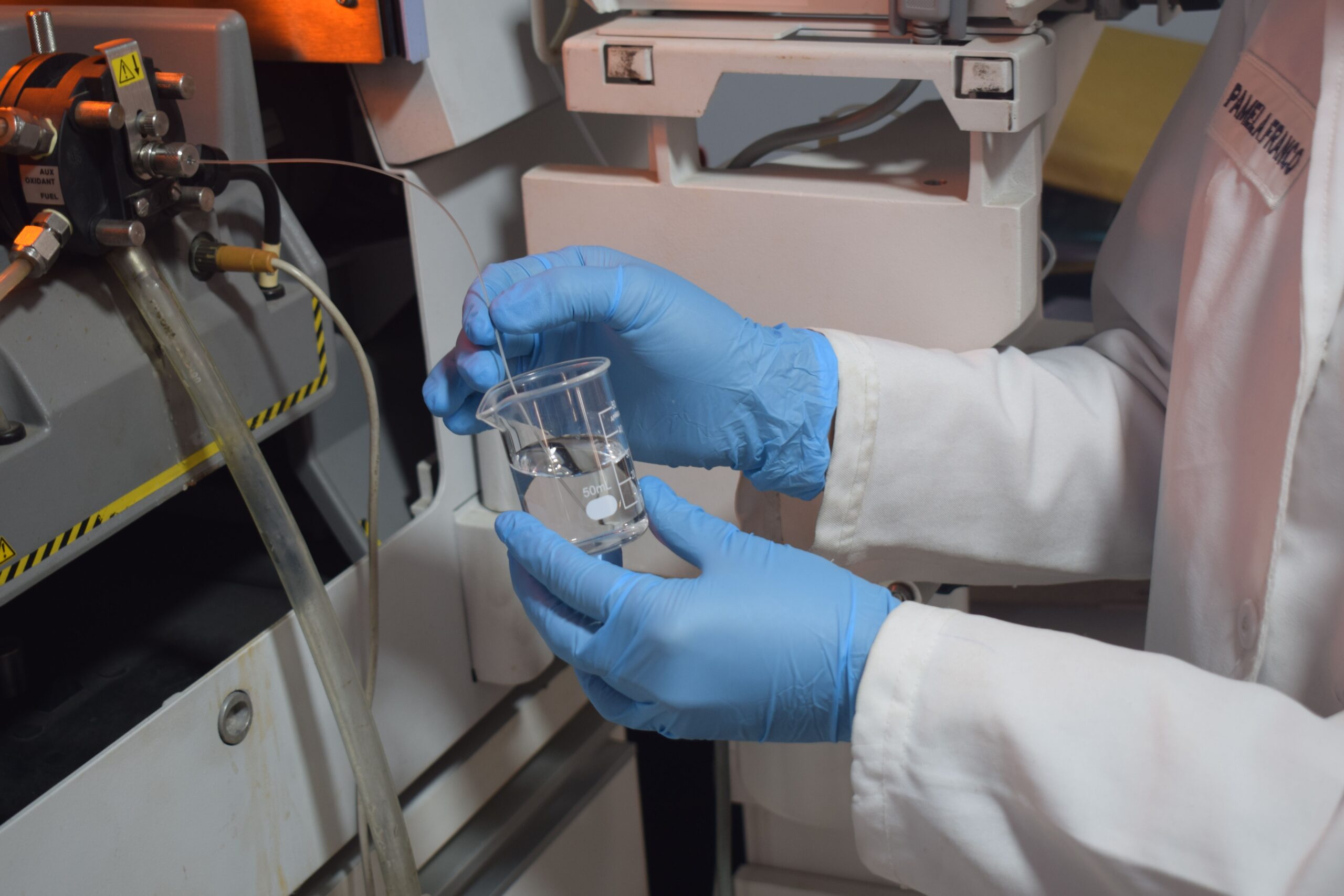
Buffers are also common in laboratories. A biologist may need a solution that keeps proteins stable. A chemist may need a reaction to happen at a controlled pH so the intended product forms. A medical test may rely on reagents that behave predictably only within a specific pH range. In each case, the buffer is part of the experimental design, not just background liquid.
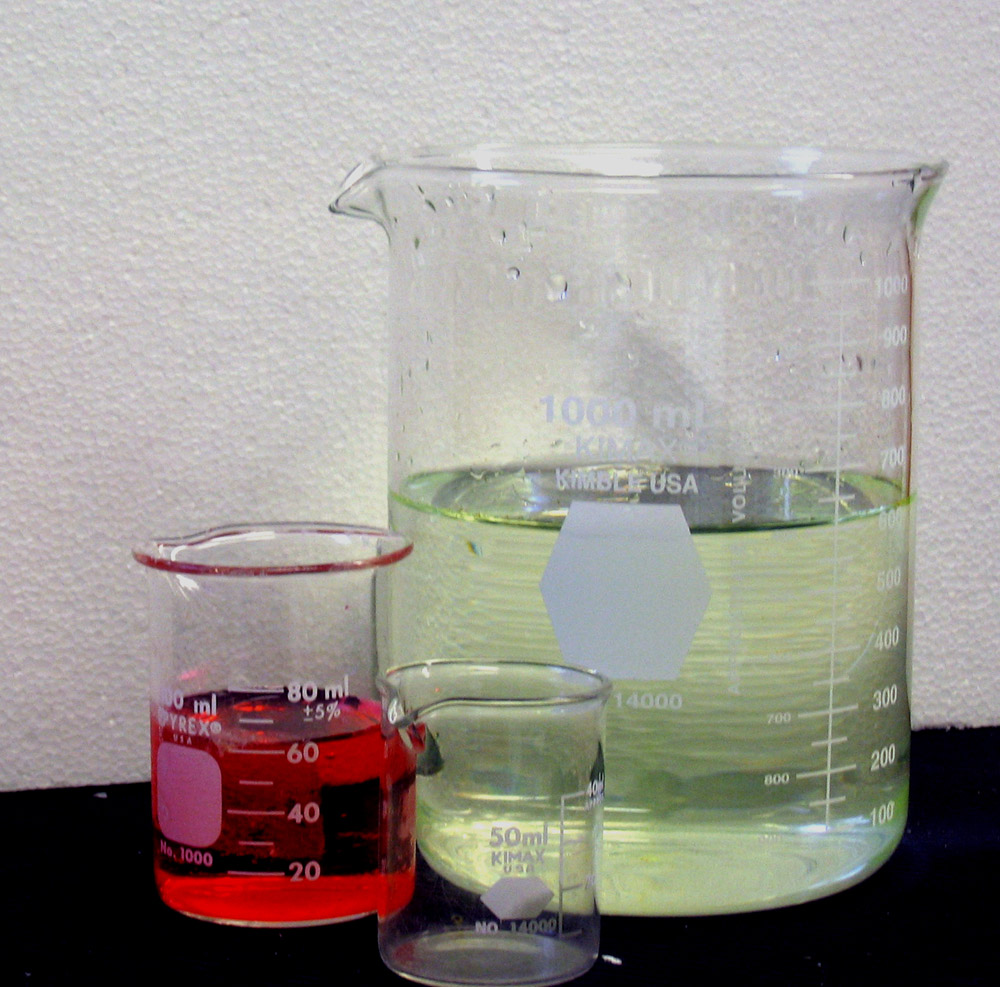
Everyday products use the same idea. Shampoos, contact lens solutions, some medicines, pool treatments, and food products may need pH control for comfort, safety, taste, texture, shelf life, or chemical stability. The label may not announce a full chemistry lesson, but the formulation often depends on keeping acidity from drifting too far.
Common Mistakes About Buffers
One common mistake is thinking that a buffer always has a neutral pH. It does not. A buffer can be acidic, basic, or close to neutral depending on the acid-base pair and the ratio of its two forms. An acetate buffer is usually acidic. An ammonia-ammonium buffer is usually basic. The purpose of a buffer is not to force pH to 7. The purpose is to hold pH near a chosen value.
Another mistake is treating every mixture of an acid and base as a buffer. A useful buffer needs a weak acid with its conjugate base, or a weak base with its conjugate acid, in meaningful amounts. If a strong acid and strong base neutralize each other completely, the result may be mostly salt and water, not a buffer. If one member of the pair is missing or nearly used up, the buffer has little capacity left.
A third mistake is ignoring dilution and concentration. The Henderson-Hasselbalch equation emphasizes the ratio between acid and conjugate base, but the total amount still matters for capacity. A very dilute buffer may have the right pH on paper and still fail quickly when acid or base is added. A more concentrated buffer with the same ratio can usually absorb more disturbance before its pH changes noticeably.
Buffer solutions are a careful compromise. They are not rigid, but that is exactly what makes them useful. By letting weak acid-base pairs shift in response to small disturbances, buffers keep chemical systems stable enough for reactions, cells, measurements, and products to work as intended. In a world where pH can change by powers of ten, that quiet resistance is a powerful piece of chemistry.