 Akshay Dinesh
A calm beach or bay can look ordinary one day and seem full of jellyfish the next. The change can feel sudden because the floating animals people notice are only the visible stage of a longer story. A jellyfish bloom is not simply a swarm that appears from nowhere. It usually reflects timing, currents, food, temperature, oxygen, and the hidden parts of a jellyfish life cycle all lining up at once.
That makes blooms easy to misunderstand. They are sometimes described as if jellyfish are taking over the ocean, but the reality is more uneven and more interesting. Some coastal areas do see larger or more frequent blooms, and NOAA’s National Centers for Coastal Ocean Science has pointed to several possible human-related drivers, including artificial coastal structures that give jellyfish polyps more places to live. At the same time, Scripps Institution of Oceanography researchers caution that warming water does not help every jellyfish population everywhere. A bloom needs the right local conditions, not just one simple cause.
A bloom is a crowd, not a single creature
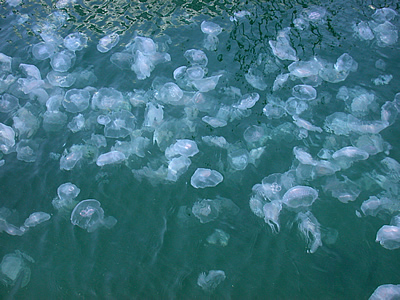
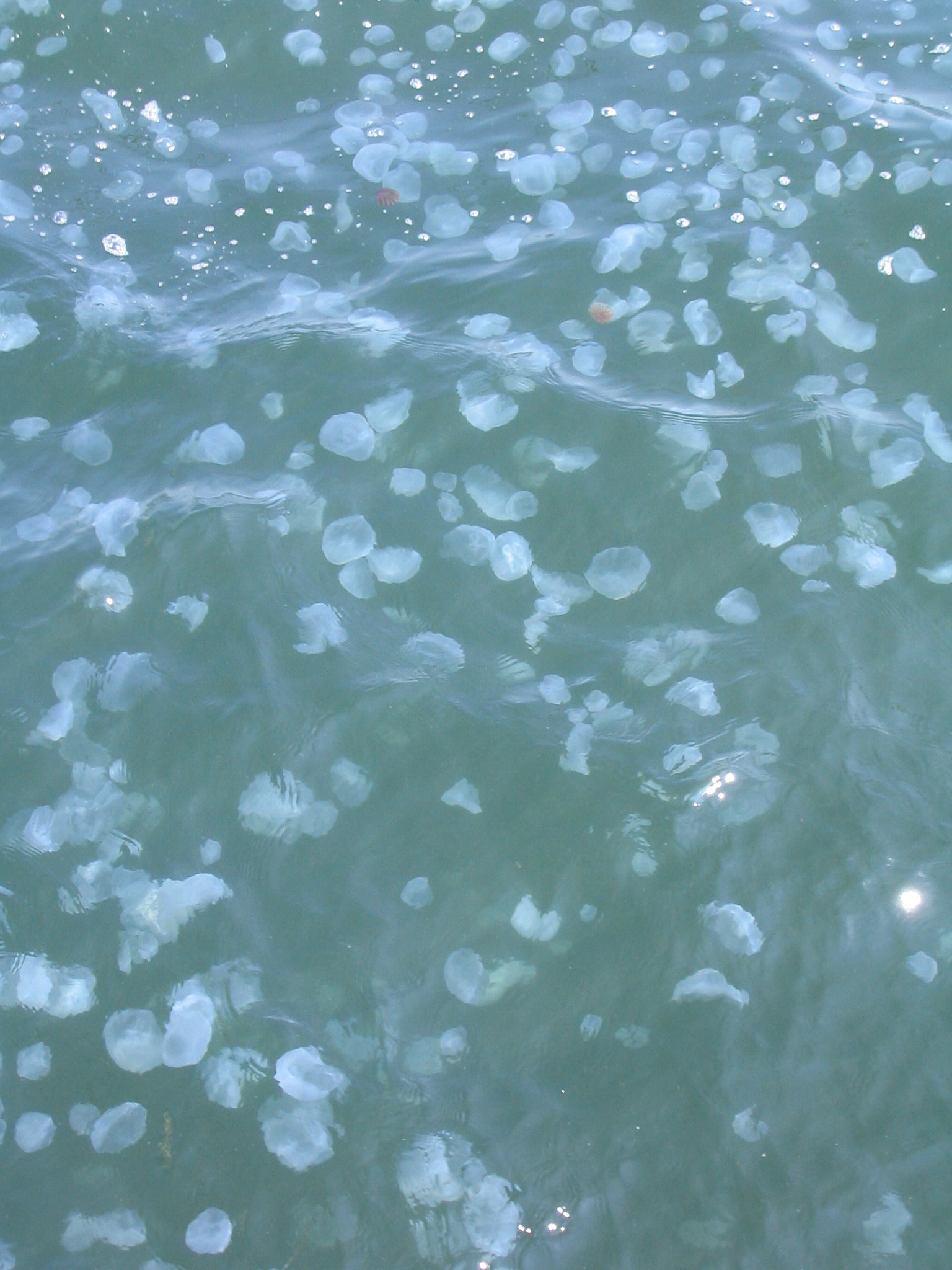
The word bloom is used for jellyfish in much the same way it is used for algae: it means a large increase in numbers over a limited area and time. In the water, that can look like dozens, hundreds, or even thousands of jellyfish drifting together. Sometimes the animals are truly abundant because many survived and grew at once. Sometimes currents, tides, winds, or shoreline shapes concentrate jellyfish that were already spread through nearby water.
This distinction matters because a dense patch does not always mean the whole ecosystem has changed. Jellyfish are weak swimmers compared with fish, so they often go where moving water carries them. A bay, harbor, cove, or beach can briefly collect them the way wind can collect leaves along a fence. Then a tide shift or storm can scatter the bloom again.
Still, jellyfish blooms are not just visual oddities. Large numbers can clog fishing nets, damage aquaculture pens, block cooling-water intakes, sting swimmers, and compete with fish larvae or other plankton feeders. They can also become part of the food web for sea turtles, certain fish, and other animals. The same bloom can be a nuisance to people and a normal feeding opportunity for another species.
The hidden life cycle sets the stage
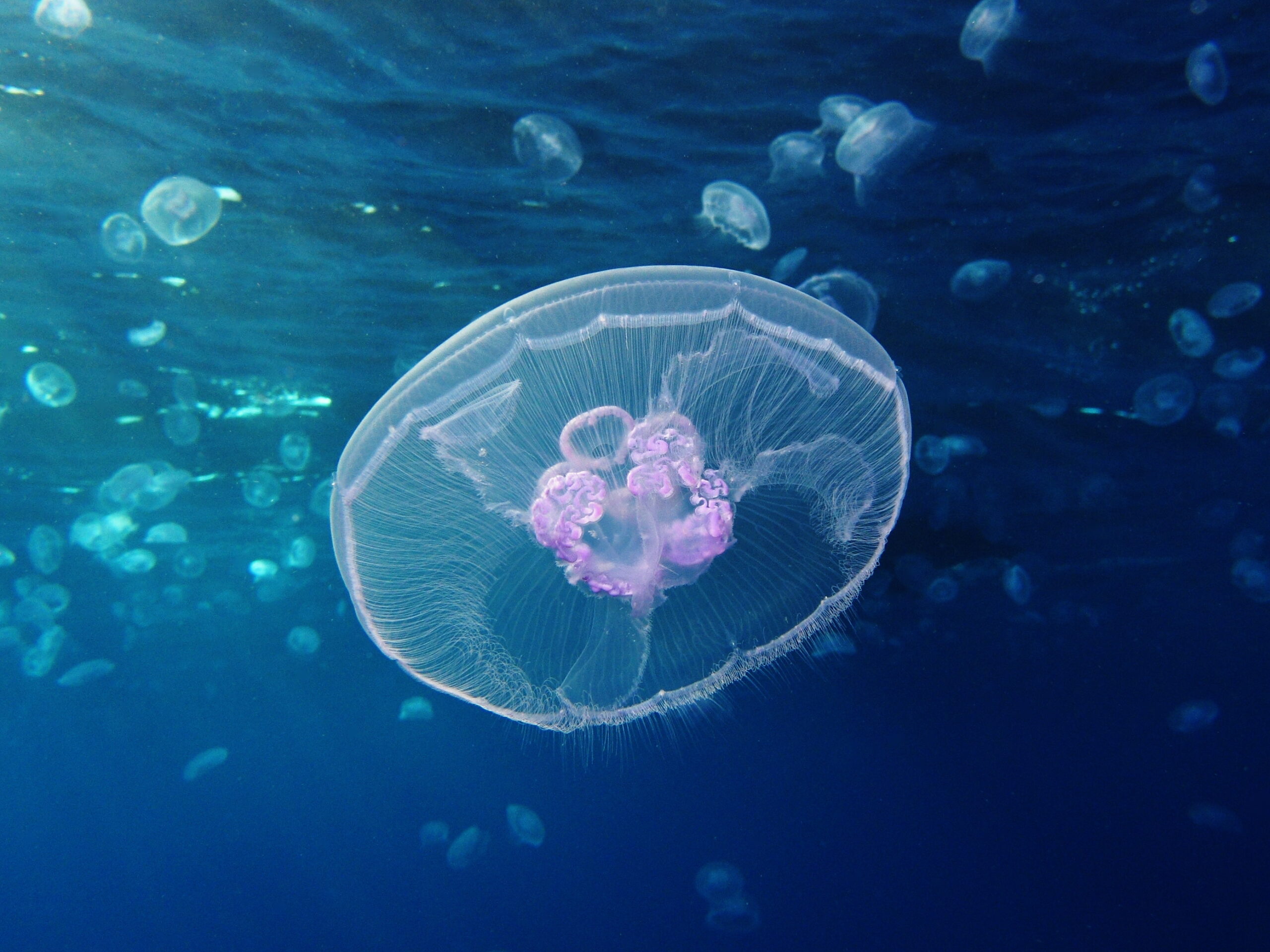
Many familiar jellyfish have a life cycle with two very different forms. The floating bell-shaped animal is called a medusa. That is the stage most people picture when they hear the word jellyfish. Before that, however, many species spend time as tiny polyps attached to a surface, often out of sight on rocks, shells, docks, pilings, or other hard structures.
A polyp can produce young jellyfish when conditions favor it. If many polyps release young medusae around the same time, and those young medusae find enough food, a bloom can build quickly. This is one reason blooms can seem sudden from the surface. The population was not necessarily absent before; part of it may have been small, attached, and easy to miss.
Moon jellyfish are a useful example because they are common in many temperate coastal waters and often form visible groups. Their medusae feed on small drifting animals and other plankton. Their polyps can persist in suitable habitats and later produce new jellyfish. A bloom, then, is not only a matter of adult jellyfish arriving. It can begin earlier, when the polyp stage finds enough space and the young stage enters water rich enough to support rapid growth.
Food, warmth, and oxygen can tilt the odds
Jellyfish blooms often begin with food. Many jellyfish eat zooplankton, fish eggs, larvae, and other small drifting organisms. If plankton is abundant, young jellyfish can grow quickly. If food is scarce, warmer water alone may not produce a larger bloom. That is why careful scientists avoid saying that climate change automatically means more jellyfish everywhere.
Temperature still matters. Warmer water can speed up metabolism, development, and seasonal timing for some species, allowing them to mature faster or reproduce during a longer window. In other places, warming may reduce the food jellyfish need or push conditions beyond what a local species can tolerate. The result is not one global rule, but a patchwork of winners, losers, and shifting ranges.
Nutrient pollution can also change the picture. NOAA’s National Ocean Service explains eutrophication as the enrichment of estuaries and coastal waters with nutrients that fuel excess plant and algae growth. When that extra organic matter decomposes, oxygen can drop. Low-oxygen water is stressful or deadly for many fish, but some jellyfish tolerate those conditions better than many of their competitors or predators. In a nutrient-rich, low-oxygen system, jellyfish may gain an opening that fish do not.
This does not mean jellyfish cause every low-oxygen problem or that every bloom begins with pollution. Natural upwelling, seasonal mixing, rainfall, river flow, and currents can all shape plankton and oxygen levels. But in heavily used coastal waters, nutrient runoff from farms, lawns, wastewater, and urban stormwater can add pressure to an already sensitive system.
Coastal structures can create polyp habitat
One of the less obvious bloom drivers is hard coastal habitat. Many shorelines now contain docks, seawalls, marina floats, aquaculture equipment, bridge pilings, and other artificial structures. These surfaces can create sheltered places where jellyfish larvae settle and become polyps. NOAA’s coastal science work has highlighted this idea under the phrase ocean sprawl: the spread of built structures into coastal waters.
For species whose blooms depend on attached polyps, more hard surfaces can mean more nursery space. A smooth seawall or floating dock may not look like much from above, but underneath it can provide shaded, protected surfaces where polyps avoid some disturbance and predation. If those polyps later release many young jellyfish, the built shoreline becomes part of the bloom story.
This is one reason blooms can be especially noticeable around harbors, marinas, and sheltered bays. Those places may combine several bloom-friendly conditions at once: calm water that keeps jellyfish from being swept away, artificial surfaces for polyps, nutrient inputs from nearby land, and currents that collect floating animals. The setting can act less like open ocean and more like a basin where many pieces of the life cycle are concentrated.
Blooms matter because they reveal changing coastal systems
Jellyfish are not invaders in every place they bloom. They are ancient animals with real ecological roles. They eat, reproduce, decompose, feed predators, and move energy through the water. A bloom becomes especially important when it signals that the balance among nutrients, oxygen, predators, competitors, habitat, and temperature has shifted.
Fisheries scientists watch blooms partly because jellyfish can compete with young fish for plankton or eat fish eggs and larvae. Aquaculture operators care because dense blooms can stress farmed fish or clog equipment. Beach communities care because stinging species can affect swimming, tourism, and public safety. Ecologists care because blooms can change where energy goes in a food web, especially if many jellyfish die and decompose at once.
The strongest explanation is usually local. A summer bloom near a beach may be tied to seasonal reproduction and currents. A persistent bloom in a modified bay may point toward nutrient enrichment, low oxygen, built surfaces, reduced predators, or several of those together. A changing pattern over many years may require temperature records, plankton data, shoreline history, and careful species identification before anyone can say what is really happening.
That is the useful lesson hidden inside a crowded patch of jellyfish. A bloom is not a single mystery with one answer. It is a visible clue that conditions in the water have lined up for a particular animal at a particular time. To understand it, look below the surface: at the polyps on hard structures, the plankton in the water, the oxygen near the bottom, the nutrients flowing from land, and the currents carrying everything into place.