 Akshay Dinesh
Antibiotics changed medicine because they gave doctors a way to fight bacterial infections that once killed many people. A cut that became infected, pneumonia after an illness, or bacteria spreading after surgery could become far more survivable when the right drug stopped the germs from growing. That power is still real. Antibiotics remain essential in hospitals, clinics, farms, dental care, cancer treatment, transplant care, and everyday infections that need bacterial treatment.
Antibiotic resistance is what happens when bacteria can keep growing even when a drug is meant to stop them. The bacteria are not stronger in a dramatic sense; they have simply gained or already carried a biological trick that lets them survive a specific medicine. When that happens, the same treatment may work poorly, take longer, or fail altogether. The CDC calls antimicrobial resistance one of the world’s urgent public health threats, and the scale is not theoretical: resistant infections cause more than 2.8 million infections and more than 35,000 deaths each year in the United States, while a 2022 study in The Lancet estimated that bacterial antimicrobial resistance was directly responsible for about 1.27 million deaths worldwide in 2019.
Resistance Starts With Variation
A population of bacteria is not made of identical copies. Bacteria reproduce quickly, and small changes in their DNA can appear as they multiply. Most changes do little or nothing. Some are harmful to the bacterium. A few, under the right conditions, help it survive a threat.
An antibiotic creates exactly that kind of pressure. If a medicine kills the most vulnerable bacteria, any bacteria with a protective trait have a better chance to remain. Those survivors can multiply, and soon the resistant trait may become common in that bacterial population. The antibiotic did not teach each bacterium how to resist. It changed the odds by removing competitors that did not already have a useful defense.
This is natural selection at microscopic speed. The same principle explains why weeds can become resistant to herbicides or insects can become resistant to pesticides. A treatment that works very well at first can become less effective when the organisms facing it contain enough variation and reproduce over many generations.
How Bacteria Block or Evade Antibiotics
Antibiotics do not all work the same way. Some attack the bacterial cell wall, which many bacteria need to keep their shape and survive. Others interfere with protein-making machinery, DNA copying, or chemical pathways that bacterial cells depend on. A resistant bacterium survives by changing the relationship between the drug and one of those targets.
One common strategy is to break the drug apart before it can do its job. Some bacteria make enzymes that disable certain antibiotics, such as beta-lactamase enzymes that can attack drugs in the penicillin family. Another strategy is to change the target. If an antibiotic normally fits onto a bacterial protein like a key in a lock, a small change in that protein can make the drug fit poorly.
Bacteria can also pump antibiotics out of the cell before the medicine reaches a strong enough concentration. These efflux pumps act like tiny exit systems. Other bacteria reduce the number of entry points in their outer surface, making it harder for the drug to get inside. None of these defenses makes bacteria invincible against every treatment. Resistance is usually specific, which is why laboratory testing matters so much.
Genes Can Spread Faster Than Bacteria Divide
Resistance does not spread only from parent bacteria to offspring. Bacteria can also pass useful genes sideways to other bacteria, even across different strains or species. That process, called horizontal gene transfer, is one reason resistance can move through communities, hospitals, farms, and water systems more quickly than people expect.
Some resistance genes travel on plasmids, which are small rings of DNA separate from the main bacterial chromosome. A bacterium can copy a plasmid and transfer it to another bacterium through a narrow bridge-like connection. Bacteria can also pick up loose DNA from their surroundings or receive genetic material carried by viruses that infect bacteria.
This gene sharing matters because a resistance trait that first appears in one place may not stay there. If bacteria carrying resistance genes spread on hands, surfaces, medical devices, food, animals, soil, or water, those genes can find new opportunities. The World Health Organization uses the broader term antimicrobial resistance because bacteria are not the only microbes that can become harder to treat; fungi, parasites, and viruses can also resist medicines designed to control them. Still, antibiotic resistance in bacteria is one of the clearest examples for seeing the biology at work.
Misuse Gives Resistance More Chances
Antibiotic resistance can arise even when medicines are used correctly, but overuse and misuse increase the pressure that selects for resistant bacteria. Antibiotics do not work against viral infections such as colds or flu. Taking them when they are not needed exposes bacteria in and around the body to the drug without helping the viral illness. That exposure can still reward resistant bacteria.
Stopping a prescribed antibiotic too early can also create problems, depending on the infection and the treatment plan. If the most vulnerable bacteria are reduced but not enough of the infection is cleared, surviving bacteria may continue growing. The right length of treatment is not always the longest possible course; medical guidance has become more careful because unnecessary days of antibiotics can also add pressure. The important point is to use antibiotics as directed for the specific infection, not as a general shortcut for feeling sick.
Resistance is also shaped outside the individual patient. Hospitals use antibiotics heavily because many patients are seriously ill, recovering from surgery, or vulnerable to infection. Farms and veterinary medicine also use antimicrobial drugs to protect animal health, though many countries have tightened rules around routine growth-promotion uses. Wastewater, poor sanitation, crowded health facilities, and limited access to accurate testing can all make resistant bacteria easier to spread.
Testing Turns Guesswork Into Evidence
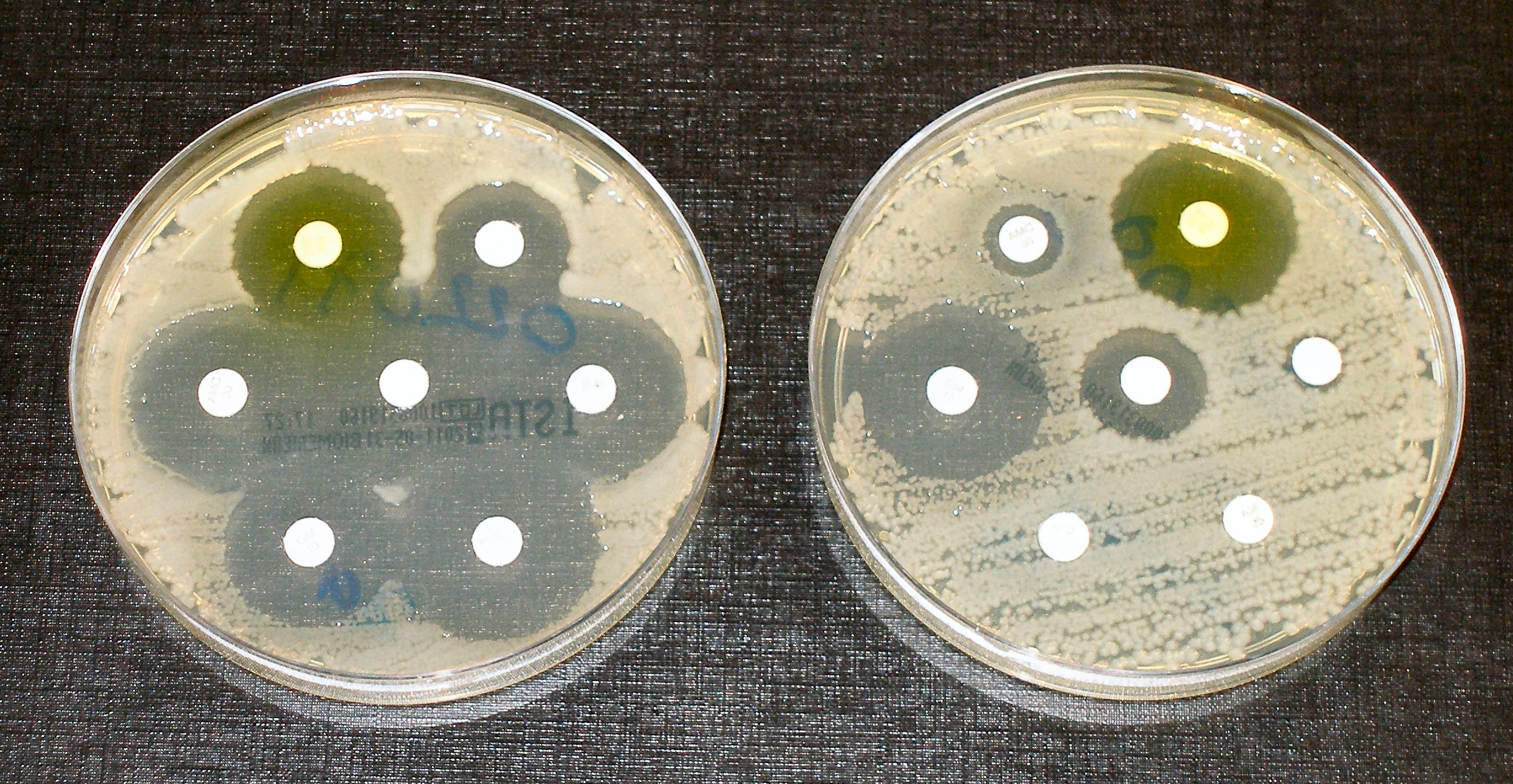
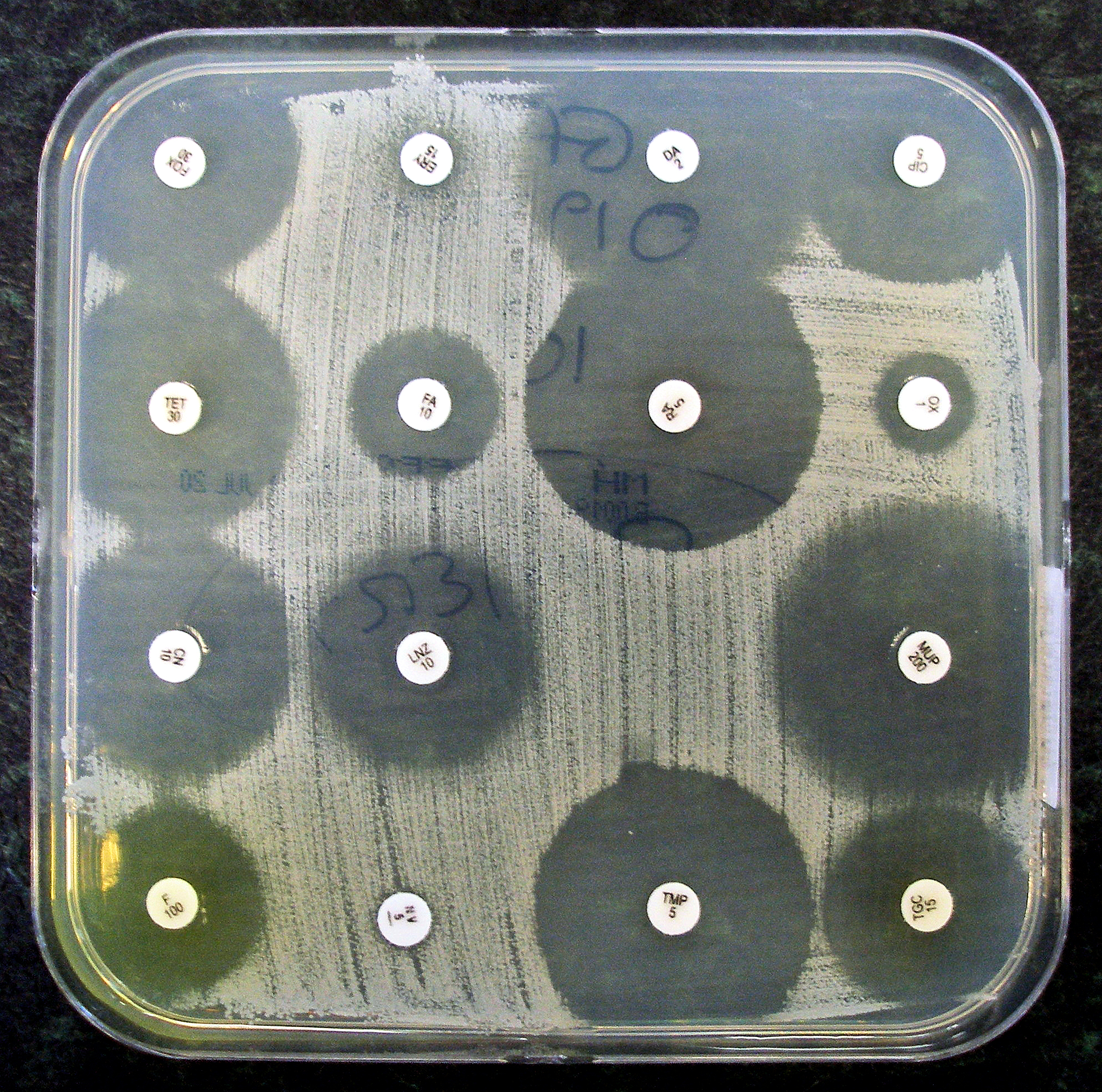
When a bacterial infection is serious, doctors may need to know which antibiotics are likely to work. A lab can grow bacteria from a patient sample and expose them to different medicines. In a disk diffusion test, small antibiotic discs are placed on a plate where bacteria are growing. If a clear ring forms around a disc, the bacteria near that antibiotic did not grow well. If bacteria grow close to the disc, the drug may not be effective against that strain.
These tests are not just classroom demonstrations. They help clinicians choose narrower, better-targeted drugs when results are available. A broad-spectrum antibiotic can attack many kinds of bacteria, which is useful when doctors must treat a dangerous infection before the exact cause is known. Once lab results identify the bacterium and its susceptibilities, switching to a more targeted drug can help the patient while reducing unnecessary pressure on other bacteria.
Public health surveillance works at a larger scale. Hospitals, labs, and agencies track which resistant strains are appearing, where outbreaks may be spreading, and which medicines are losing effectiveness. WHO’s 2025 global antibiotic resistance surveillance report warned that roughly one in six laboratory-confirmed bacterial infections in 2023 showed resistance to antibiotic treatment. Numbers like that are not meant to make antibiotics seem useless. They show why careful testing, prevention, and stewardship are part of keeping antibiotics useful.
Keeping Antibiotics Useful Is a Shared Job
Antibiotic resistance can sound like a distant hospital problem, but ordinary choices still matter. Preventing infections reduces the need for antibiotics in the first place. Handwashing, vaccination, safe food handling, clean water, wound care, and staying home when contagious all reduce opportunities for bacteria to spread. In hospitals, the same idea becomes more technical: sterile procedures, careful catheter use, isolation precautions, cleaning protocols, and infection-control teams.
Antibiotic stewardship means using these medicines only when they are likely to help, choosing the right drug, and using the right dose and duration. For patients, that usually means not pressuring a clinician for antibiotics when an illness is likely viral, not using leftover antibiotics, and not sharing prescription medicines. For health systems, it means diagnostic testing, prescribing review, resistance tracking, and making sure effective antibiotics are available when they are truly needed.
The problem is serious because bacteria keep evolving, but the lesson is not despair. Resistance is biology responding to pressure. The more clearly people understand that pressure, the easier it is to see why antibiotics deserve careful use. They are not ordinary consumer products. They are shared tools, and every careful use helps preserve their value for the next infection that truly needs them.