 Akshay Dinesh
An airplane accident investigation begins with fragments: radar tracks, weather reports, maintenance records, witness accounts, damaged parts, and the last known actions of the crew. Flight recorders help turn those fragments into a timeline. They do not explain everything by themselves, and they do not replace careful investigation, but they often give investigators the clearest record of what the aircraft was doing and what was happening inside the cockpit before an accident or serious incident.
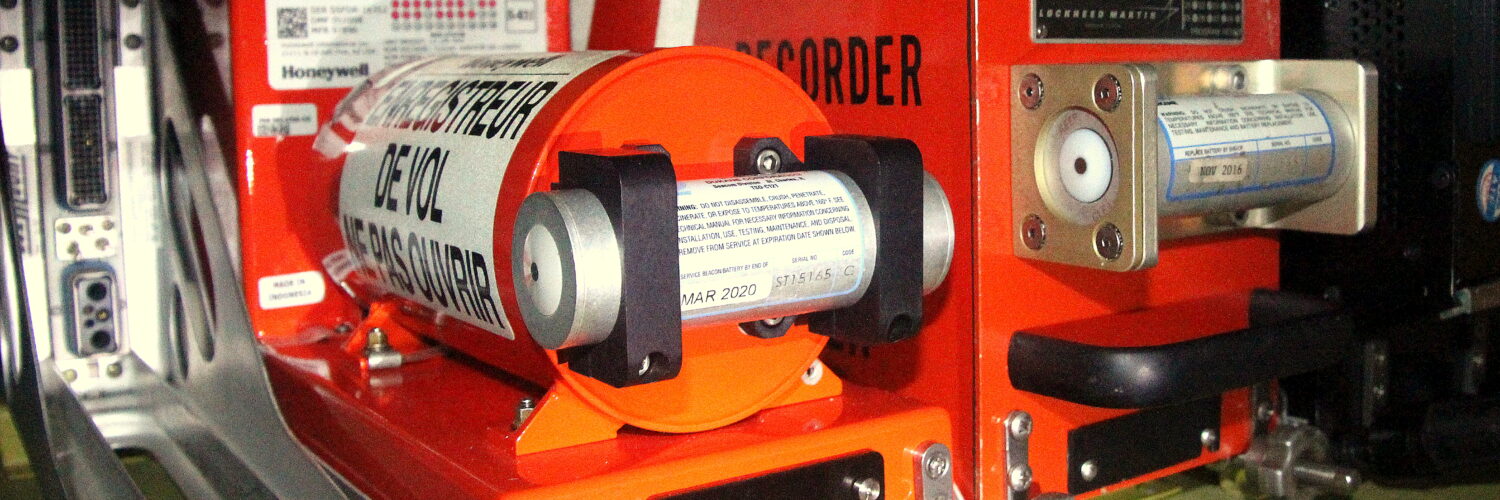
The nickname black box is misleading. Modern flight recorders are usually bright orange so recovery teams can spot them more easily in wreckage, snow, mud, or water. The important part is not the color but the design: a protected memory system built to survive impacts, fire, water pressure, and rough recovery conditions long enough for investigators to extract usable information. When that information is combined with physical evidence and operational records, it can reveal not only what went wrong, but what should change so the same chain of events is less likely to happen again.
Two Recorders Tell Different Parts of the Story
Most large commercial aircraft carry two main recording systems: a flight data recorder and a cockpit voice recorder. They are often discussed together, but they collect different kinds of evidence. The flight data recorder, or FDR, stores measured information from the aircraft. The cockpit voice recorder, or CVR, stores audio from the flight deck, including crew voices, radio transmissions, warnings, switch clicks, engine sounds, and other cockpit noise.
The FDR is the numerical record. According to the National Transportation Safety Board, newly manufactured aircraft must monitor at least 88 important parameters, including time, altitude, airspeed, heading, and aircraft attitude. Many modern systems can record far more. Airbus notes that older aircraft such as the A300B2 recorded around 100 parameters, while A350 recorders can manage roughly 3,500 parameters for 25 hours. Those parameters can include flight controls, autopilot activity, engine data, hydraulic and electrical systems, fuel systems, display information, and pilot command inputs.
The CVR gives investigators a different kind of evidence: timing, coordination, workload, warnings, confusion, and communication. A voice recorder may capture a checklist being read, an alert sounding, a pilot calling out an instrument reading, or a radio instruction from air traffic control. Sometimes the sound itself matters. The NTSB explains that engine rpm, system failures, speed clues, and the timing of events can sometimes be inferred from cockpit audio, not only from spoken words.
Why the Data Must Survive the Accident
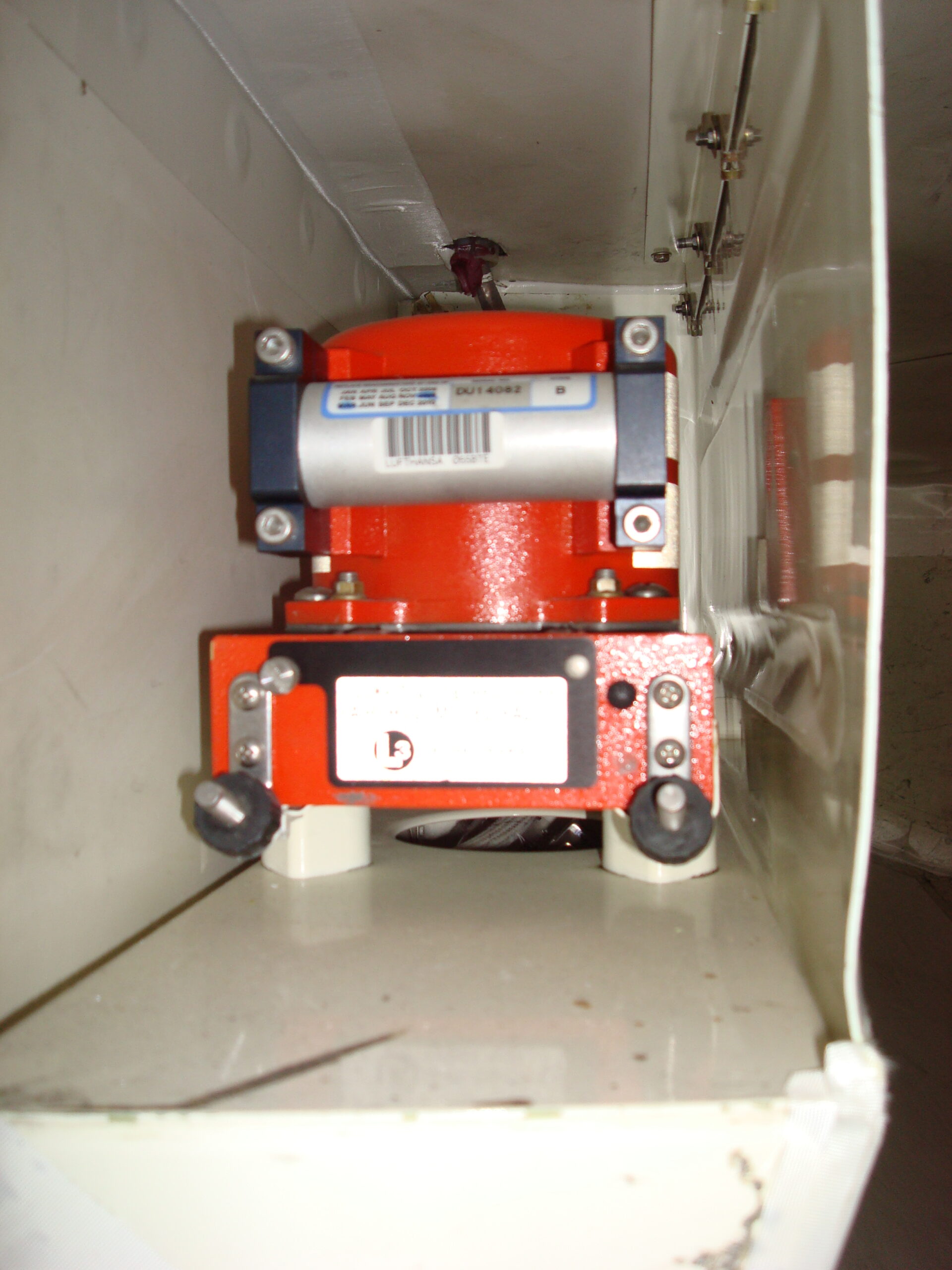
A recorder is useful only if its memory survives. That is why flight recorders are not ordinary storage drives placed casually inside an aircraft. They are hardened systems with crash-protected memory, protective casing, and location aids. The NTSB says both the FDR and CVR are usually installed in the most crash-survivable part of the aircraft, often the tail section, because that area is more likely to remain recoverable after severe impact.
Recorders are tested against extreme conditions. NTSB specification summaries list impact tolerance of 3,400 Gs for 6.5 milliseconds and fire resistance at 1,100 degrees Celsius for 30 minutes. They are also designed to withstand deep water pressure. These numbers can sound unreal, but they make practical sense: accident investigators may need information from a recorder that has passed through fire, high-speed impact, breakup forces, or long immersion.
Water recovery adds another challenge. Each recorder is equipped with an underwater locator beacon. When submerged, the beacon sends an acoustic signal at 37.5 kilohertz that specialized equipment can detect. The NTSB notes that these beacons can transmit from depths down to 14,000 feet, with a battery designed for at least 30 days of operation after activation. In deep-water accidents, those pings can become the difference between recovering the recorder and losing the most detailed evidence of the flight.
Modern recorders usually use solid-state memory rather than moving tape. That matters because moving parts are easier to damage. Solid-state memory chips can be stacked, protected, and read after conditions that would destroy an ordinary device. Even then, recovery is not simple. A damaged recorder may have to be opened, cleaned, electrically tested, and read by specialists who know how to preserve fragile memory without destroying the remaining data.
How Investigators Turn Recordings Into a Timeline
After a serious accident, recorders are removed from the site and taken to a specialized laboratory. In the United States, the NTSB processes the devices at its headquarters in Washington, D.C. The goal is not simply to press play. Investigators must download the data, validate it, synchronize it with other evidence, and translate it into a form that can be studied by engineers, human-factors specialists, operations experts, and accident investigators.
FDR data can be used to create a time-based reconstruction of the aircraft’s motion. Investigators may compare airspeed, altitude, pitch, roll, heading, engine settings, flap position, autopilot mode, control inputs, and warning activations. A single number rarely explains an accident. The value comes from the sequence. Did the aircraft begin losing airspeed before or after a warning? Did the crew change thrust before or after the aircraft started descending? Did a control input match the aircraft’s response?
CVR work is more delicate. A committee may include representatives from the NTSB, FAA, aircraft operator, aircraft manufacturer, engine manufacturer, and pilots union. The group listens carefully, creates a written transcript of relevant portions, and uses timing from air traffic control recordings to place cockpit events in order. Sound spectrum tools can help refine exact timing for critical noises, alarms, or mechanical sounds.
Because cockpit recordings contain sensitive conversations, they are protected differently from many other kinds of accident evidence. Federal law prevents the NTSB from releasing the actual CVR audio. Written transcripts of relevant portions may be released under strict rules, usually during a public hearing or when most factual reports are made public. That balance reflects two needs at once: investigators need the evidence, while crews also need protection from unnecessary public exposure of private cockpit conversations.

Why Recording Time Has Become a Safety Issue
For years, a major weakness of cockpit voice recorders was time. Older requirements allowed much shorter recordings. Many solid-state digital CVRs stored the most recent two hours, then continuously overwrote older audio. That rolling design works when an accident occurs at the end of the recorded window. It fails when the most important conversation happened earlier, or when a serious incident ends safely and the aircraft keeps operating long enough for the relevant audio to disappear.
The problem is not theoretical. In February 2024, the NTSB again called for 25-hour cockpit voice recorders after investigators could not use CVR audio from the January 2024 Alaska Airlines door plug accident because the data had been overwritten. The agency said that since 2018, at least 14 investigations had been hampered by overwritten CVR data. Earlier NTSB work had also documented events in which the two-hour limit erased evidence that could have helped investigators understand crew decision-making, workload, fatigue, and coordination.
The FAA responded with a final rule published in the Federal Register on February 2, 2026. The rule increases the minimum required CVR recording duration from two hours to 25 hours for affected newly manufactured aircraft. The FAA explained that longer recordings give accident investigators, aircraft operators, and civil aviation authorities more information for determining probable causes and preventing future incidents. The rule also brings U.S. requirements closer to international standards already adopted by the International Civil Aviation Organization and the European Union Aviation Safety Agency for certain aircraft.
The shift to 25 hours does not mean cockpit recordings become public or casually searchable. The FAA’s final rule directly addressed privacy concerns and noted that FAA regulations prohibit using CVR information for civil penalties or certificate action. The safety argument is more specific: when an incident unfolds over several flight segments, a longer recorder is more likely to preserve the evidence needed to understand it.
What Black Boxes Can and Cannot Prove
Flight recorders are powerful, but they are not magic truth machines. The FDR records selected parameters, not every physical detail of the aircraft. The CVR records sounds, not thoughts. A cockpit voice transcript may show that a warning sounded, but investigators still need to understand why the warning occurred, how the crew interpreted it, what the aircraft systems were doing, and whether training, design, maintenance, weather, or procedures contributed to the event.
Recorders also depend on recovery. If an aircraft is lost in deep ocean, rough terrain, or fire-damaged wreckage, finding and reading the devices can be difficult. That is why aviation safety organizations continue to study deployable recorders, distress tracking, and data streaming. Airbus describes deployable flight recorders that combine voice, data, and an emergency locator transmitter in a crash-protected unit designed to separate, float, and transmit position after certain accidents. Data streaming is another idea, but it raises questions about bandwidth, cost, confidentiality, and security.
Even with those limits, flight recorders have changed aviation safety because they make learning less dependent on guesswork. A crash investigation is not only about assigning blame. It is about finding weak links in systems: training that did not prepare crews for a rare situation, a checklist that was hard to use under stress, a sensor that gave misleading information, a maintenance pattern that seemed harmless until it combined with other factors, or a design assumption that did not match real operations.
The Real Purpose Is Prevention
The most important thing a black box records is not a single dramatic moment. It records a chain of small changes: a speed trend, a warning, a control input, a callout, a delay, a system response, a decision. Investigators study those chains because accidents usually grow from several connected factors rather than one simple cause.
When recorders do their job, the result can be safer aircraft designs, better training, clearer procedures, improved maintenance practices, stronger emergency response, and more realistic rules. The data may come from one flight, but the lesson can affect thousands of future flights. That is why the orange boxes hidden inside aircraft matter so much: they turn a terrible event into evidence that can make the next flight safer.