
 Akshay Dinesh
Across the Atlantic Ocean, water is constantly moving in loops that are much larger than any wave, tide, or storm. One of the most important of these systems is the Atlantic Meridional Overturning Circulation, usually shortened to AMOC. It carries warm, salty surface water northward, helps release heat into the atmosphere, and returns colder deep water southward through the Atlantic basin.
The AMOC matters because it connects ocean physics to weather, sea level, ecosystems, and long-term climate. It is not a single river in the sea, and it is not the same thing as the Gulf Stream, though the Gulf Stream is part of its upper flow. Scientists watch it closely because a weaker AMOC would not simply mean slower water. It could shift where heat, salt, rainfall, and nutrients move across much of the planet.
A Giant Loop Driven by Heat and Salt
The AMOC begins with a simple physical idea: cold water is denser than warm water, and salty water is denser than fresher water. In the subtropical Atlantic, evaporation leaves surface water relatively salty. Winds and currents help move that warm, salty water northward toward the higher-latitude North Atlantic, including regions near Greenland, Iceland, and the Labrador Sea.
As the water travels north, it loses heat to the colder air above it. If it stays salty enough while cooling, it becomes dense and can sink into the deep ocean. That sinking helps pull more surface water northward, while deep water flows back south below the surface. The full circulation is sometimes described as a conveyor, but the real system is uneven, three-dimensional, and affected by winds, seafloor shape, mixing, and weather patterns.
NOAA describes the AMOC as a system of Atlantic currents that brings warm water north and cold water south. That short description is useful, but the key detail is the overturning part. Surface water does not just slide sideways across the ocean. In the high-latitude North Atlantic, some of it changes density, sinks, and joins a deep return flow that can influence the ocean for centuries.
Why the AMOC Is Not Just the Gulf Stream
The Gulf Stream is a powerful western boundary current that moves warm water north along the eastern coast of North America before bending across the Atlantic. It is familiar because it appears on maps, affects marine travel, and helps explain why the North Atlantic carries so much heat. But the Gulf Stream is only one piece of the larger Atlantic circulation.
A helpful comparison is a busy highway connected to a much larger transportation network. The Gulf Stream is one fast, important route near the surface. The AMOC includes broader northward surface transport, sinking in the subpolar North Atlantic, and deep southward return flow. Confusing the two can make the science sound simpler than it is.
This distinction matters when people hear dramatic claims about the Gulf Stream stopping. Winds, Earth’s rotation, and the shape of the ocean basin help maintain the Gulf Stream as a surface current. The AMOC, by contrast, is especially sensitive to how density changes in northern waters. A weakening AMOC would not mean the entire Gulf Stream disappears, but it could change the heat carried north and the deep-ocean return flow that helps balance the system.
Freshwater Can Make Sinking Harder
The AMOC depends partly on northern Atlantic water becoming dense enough to sink. Freshwater works against that process because it lowers salinity and makes surface water less dense. Rain, river discharge, melting sea ice, and meltwater from the Greenland Ice Sheet can all freshen parts of the North Atlantic, though their effects vary by place and season.
Warming also changes the balance. Warmer surface water is less dense, so it has to lose more heat before it can sink as readily. If the upper ocean becomes warmer and fresher at the same time, deep-water formation can weaken. That does not automatically shut down the circulation, but it can reduce one of the engines that helps keep the overturning flow strong.
This is why AMOC discussions often include the phrase thermohaline circulation. Thermo refers to temperature, and haline refers to salt. The AMOC is not driven by temperature and salinity alone, but those two properties are central to the density differences that make overturning possible. When climate change alters heat and freshwater patterns, scientists have good reason to ask how the circulation will respond.
How Scientists Measure a System This Large
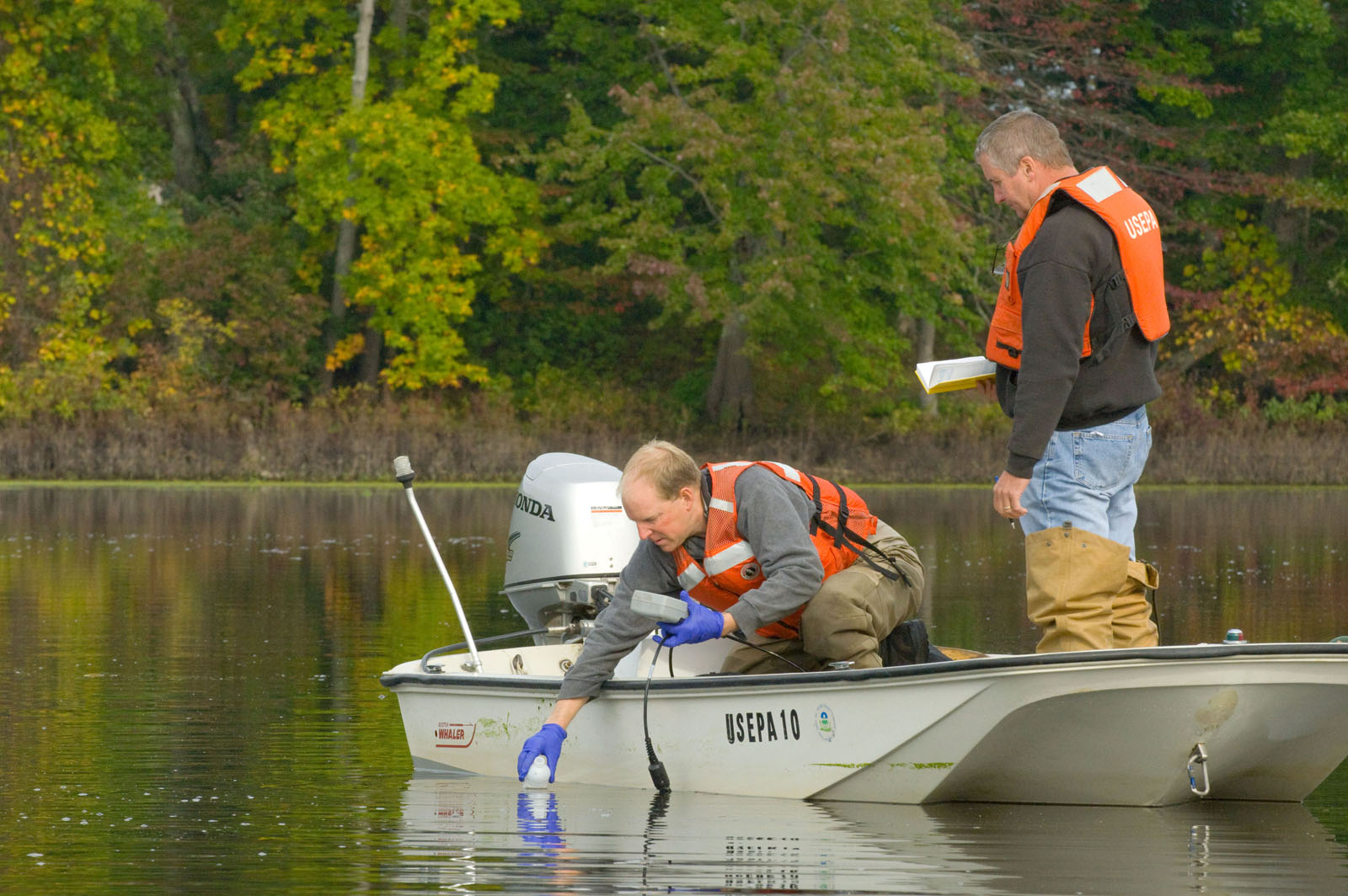
No one can stand at the edge of the Atlantic and watch the AMOC the way someone might watch a river. The system stretches across ocean basins and down through thousands of meters of water. Scientists measure it with moored instruments, ship surveys, floats, satellites, and ocean models that connect many kinds of observations.
One major observing effort is the RAPID array near 26.5 degrees north in the Atlantic. It has sustained measurements for more than 20 years, giving researchers a rare direct look at changes in overturning strength at that latitude. The OSNAP array, farther north in the subpolar North Atlantic, adds another important window into where deep water forms and how northern branches vary.
These records are valuable, but they are still short compared with the slow rhythms of the ocean. A few decades of data can show seasonal swings, year-to-year variability, and some longer changes, but it is harder to separate a permanent trend from natural ups and downs. That is why careful scientists avoid treating every short-term rise or fall as proof of a dramatic shift. The measurement challenge is part of the story, not a footnote.
What a Weaker AMOC Could Change
A weaker AMOC would change heat transport first. The North Atlantic receives less ocean heat when the overturning circulation slows, which can affect temperature patterns around the Atlantic even while the planet as a whole continues warming. Northern Europe is often mentioned because the region sits downwind of the North Atlantic, but the consequences would not stop there.
Rainfall patterns could shift as tropical heat is redistributed. The position of rain belts, including parts of the Atlantic tropics and nearby land regions, depends partly on temperature contrasts between hemispheres. If the North Atlantic warms differently from surrounding regions, atmospheric circulation can respond. That can influence drought and rainfall risk in places far from the deep-water formation zones.
Sea level is another concern. When ocean currents change, water can pile up differently along coastlines. A weaker AMOC can raise relative sea level along parts of the North American Atlantic coast because the usual balance of currents and pressure changes. That effect would add to global sea-level rise rather than replace it.
Marine ecosystems would feel the changes too. The overturning circulation helps move heat, salt, oxygen, carbon, and nutrients through the ocean. Changes in mixing and deep-water formation can affect where nutrients become available and where oxygen-rich water reaches the deep sea. Fisheries, plankton communities, and carbon storage all depend on circulation patterns that may look invisible from shore.
Why the Scientific Debate Is Careful, Not Casual
The Intergovernmental Panel on Climate Change has assessed that the AMOC is very likely to weaken during the 21st century under continued warming. That is a serious finding, but it is not the same as saying an abrupt collapse is certain or already happening. The timing, size, and likelihood of extreme weakening remain active research questions.
Recent studies have explored whether observations point toward stronger future weakening than many models once projected. Other work emphasizes that models, measurements, and past-climate evidence still carry uncertainty. This disagreement is not a weakness in the science. It is what careful climate research looks like when the system is difficult to measure, the stakes are high, and the available records are still developing.
The sensible takeaway is neither panic nor dismissal. The AMOC is a major part of Earth’s climate machinery, and its possible weakening deserves attention because the effects would be broad and long-lasting. At the same time, readers should be wary of headlines that turn a complex risk into a guaranteed date for collapse. The most useful question is not whether the ocean will behave exactly like a disaster movie. It is how a changing climate is altering the heat, salt, and freshwater balance that helps keep the Atlantic overturning circulation moving.




Add comment