
 Akshay Dinesh
A download does not feel like a math problem when you are waiting for it to finish. It feels like a progress bar, a spinning circle, or a file that is taking longer than expected. Behind that everyday delay is a simple question: how much information has to move from one place to another?
File compression answers that question by making digital information take up fewer bits. Sometimes it does this by finding repeated patterns and storing them more efficiently. Other times it makes a careful tradeoff, throwing away detail that people usually will not notice. That is why a zipped folder, a compressed image, a streaming video, and a fast-loading web page can all use compression, even though they do not all use it in the same way.
Compression starts with patterns
Computers store files as bits, long strings of ones and zeros. Some files contain many repeated patterns. A plain text file might use the same words, spaces, tags, or punctuation again and again. A spreadsheet might repeat labels down a column. A folder might contain many related files with similar names or structures. Compression looks for those kinds of repetition and replaces them with shorter instructions.
A simple example is a sentence that repeats the phrase “summer reading list” many times. Instead of storing the whole phrase every time, a compression method can store the phrase once and then use a shorter reference when it appears again. Real compression is more complex than that, but the idea is similar: do not spend full space on a pattern that can be described more compactly.
One well-known family of methods uses a sliding window, which means the compressor looks back at recent data and says, in effect, “this next part is the same as something we just saw.” The DEFLATE format, described in RFC 1951, combines a version of this pattern matching with Huffman coding, a method that gives shorter codes to common pieces and longer codes to rare ones. That combination appears in familiar tools such as ZIP archives, gzip, and PNG image compression.
This is why compression works especially well on text-based files. HTML, CSS, JavaScript, logs, and many document formats often contain repeated words and structures. When a server sends compressed text to a browser, the file can shrink before it crosses the network, then expand again on the receiving device. The reader sees the same page, but fewer bytes had to travel.
Lossless compression keeps every bit recoverable
Lossless compression means the original file can be restored exactly. Nothing is supposed to be missing after decompression. That matters for files where even a tiny change could cause trouble: spreadsheets, code, legal documents, archives, medical records, or any file that must remain precise.
ZIP files are a familiar lossless example. When several files are packed into a ZIP archive, the archive may be smaller and easier to move as one package. When it is opened later, the files come back with the same contents they had before. If a homework document, a program file, or a set of data tables changed during that process, the compression would not be acceptable.
PNG images also use lossless compression. A PNG can store sharp graphics, screenshots, diagrams, and images with text without blurring the edges. The World Wide Web Consortium’s PNG specification describes PNG compression as using DEFLATE with a sliding window, which helps explain why PNG is useful for images where exact pixels matter. A logo, chart, or interface screenshot often benefits from that precision.
Lossless does not mean “always small.” A photo saved as PNG can be much larger than the same photo saved as JPEG because photographs contain rich, irregular detail that is hard to describe with repeated exact patterns. Compression depends on the structure of the data. A file full of predictable repetition may shrink dramatically, while a file that already looks patternless may barely shrink at all.
Lossy compression trades detail for size
Lossy compression takes a different path. Instead of preserving every bit, it removes some information to make the file much smaller. The goal is not exact recovery. The goal is to keep the result useful, clear, or pleasant enough for its purpose.
JPEG images are a common example. A JPEG photo can discard fine visual detail, especially detail that is less noticeable to the human eye, and still look good at normal viewing size. The JPEG standard, published as ITU-T T.81 and ISO/IEC 10918-1, was designed for continuous-tone still images such as photographs. That is why JPEG often works well for vacation photos, product photos, and news images, but can make text, icons, and crisp diagrams look fuzzy if the compression is too strong.
Audio and video compression make similar tradeoffs. A compressed song or video may remove details that are hard to hear or see, then use mathematical shortcuts to store what remains. At moderate settings, the result can seem nearly identical to the original for everyday listening or viewing. At aggressive settings, the tradeoff becomes obvious: blocky video, smeared motion, rough sound, or strange ringing around edges.
The important point is that lossy compression is not “bad compression.” It is a choice. If a family photo needs to upload quickly, a smaller JPEG may be perfect. If an archive needs to preserve a historical scan exactly, lossy compression may be the wrong tool. Good digital work often means choosing the kind of compression that matches the job.
Smaller files can move faster
Download time depends on several things: file size, connection speed, network congestion, server response, device performance, and distance through the network. Compression cannot fix every slow connection, but it can reduce the amount of data that has to travel. A smaller file usually has an easier trip.
Web compression shows this clearly. When a browser requests a page, it can tell the server which compression formats it understands. The server may then send compressed text using gzip or Brotli, and it marks the response with a header such as Content-Encoding. The browser expands the data before displaying it. Mozilla’s MDN Web Docs notes that compression is a major performance tool for HTTP, especially for text documents that can shrink substantially.
Brotli and gzip are both widely used for web text. Brotli often compresses text more tightly, while gzip remains a reliable fallback supported across major browsers. Chrome’s Lighthouse performance guidance recommends text compression because sending fewer bytes can improve load times, especially on slower connections. The benefit is not magic. It is the practical result of moving less data.
There is a cost, though. Compressing and decompressing takes processing time. A server may save bandwidth by compressing a file, but it has to spend effort creating the compressed version. A phone or laptop must spend effort expanding it. For many text files, the tradeoff is worth it. For a file that is already compressed, such as a JPEG photo or MP4 video, compressing it again may waste time and achieve very little.
Compressed files are not always better
Compression has limits because not all data contains helpful patterns. A file that is already compressed may look almost random to another compressor. That is why putting a group of JPEG photos into a ZIP archive may make the package easier to share, but it may not reduce the total size much. The ZIP file is useful as a container even when it is not a dramatic space saver.
Compression can also create quality problems when the settings are too aggressive. A heavily compressed image may show blocky patches or blurry text. A low-bitrate video may lose detail during fast motion. A heavily compressed audio file may sound thin or metallic. These problems are not mysterious failures; they are signs that too much information was removed for the file’s purpose.
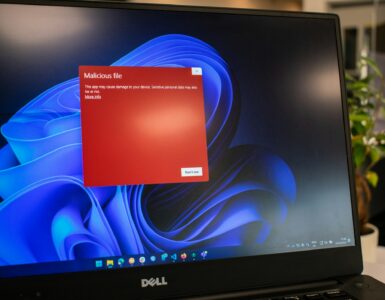
Security is another reason to think carefully. Compressed archives can hide many files inside one package, and some attackers use that convenience to disguise harmful downloads. Compression itself is not the danger, but opening files from untrusted sources is risky. A ZIP file should be treated like any other download: check where it came from, know what it contains, and avoid running unknown programs.
There is also the problem of time. Higher compression settings can squeeze out a smaller file, but the process may take longer. For a file that will be downloaded thousands of times, spending more time once to make a smaller version can make sense. For a file created on demand, a moderate setting may be better because users should not wait too long for the server to prepare it.
Choosing the right compression depends on the file
The best compression choice begins with the file’s purpose. If the file must be restored exactly, use a lossless format. ZIP is useful for grouping files, PNG is useful for sharp images and screenshots, and gzip or Brotli are useful for compressing text sent across the web. Exactness is the priority.
If the file is meant for human viewing or listening and some detail can be sacrificed, lossy compression may be more practical. JPEG can keep photos small enough to upload and display quickly. Audio and video formats can make long recordings stream smoothly. The question is not whether detail is lost; the question is whether the remaining quality fits the task.
Students can remember the difference with a simple test. If changing one bit would change the meaning or break the file, lossless compression is the safer idea. If the file is a picture, sound, or video where people care more about perception than perfect reconstruction, lossy compression may be acceptable. The same project can use both: a page might use compressed text, JPEG photos, PNG diagrams, and a ZIP download for extra materials.
Compression is one of the quiet tools that makes digital life feel faster. It reduces storage pressure, shortens transfers, and helps networks carry more useful information with less waste. The next time a file downloads quickly or a page appears before the progress bar becomes annoying, compression may be one of the hidden reasons it worked.




Add comment