

 Akshay Dinesh
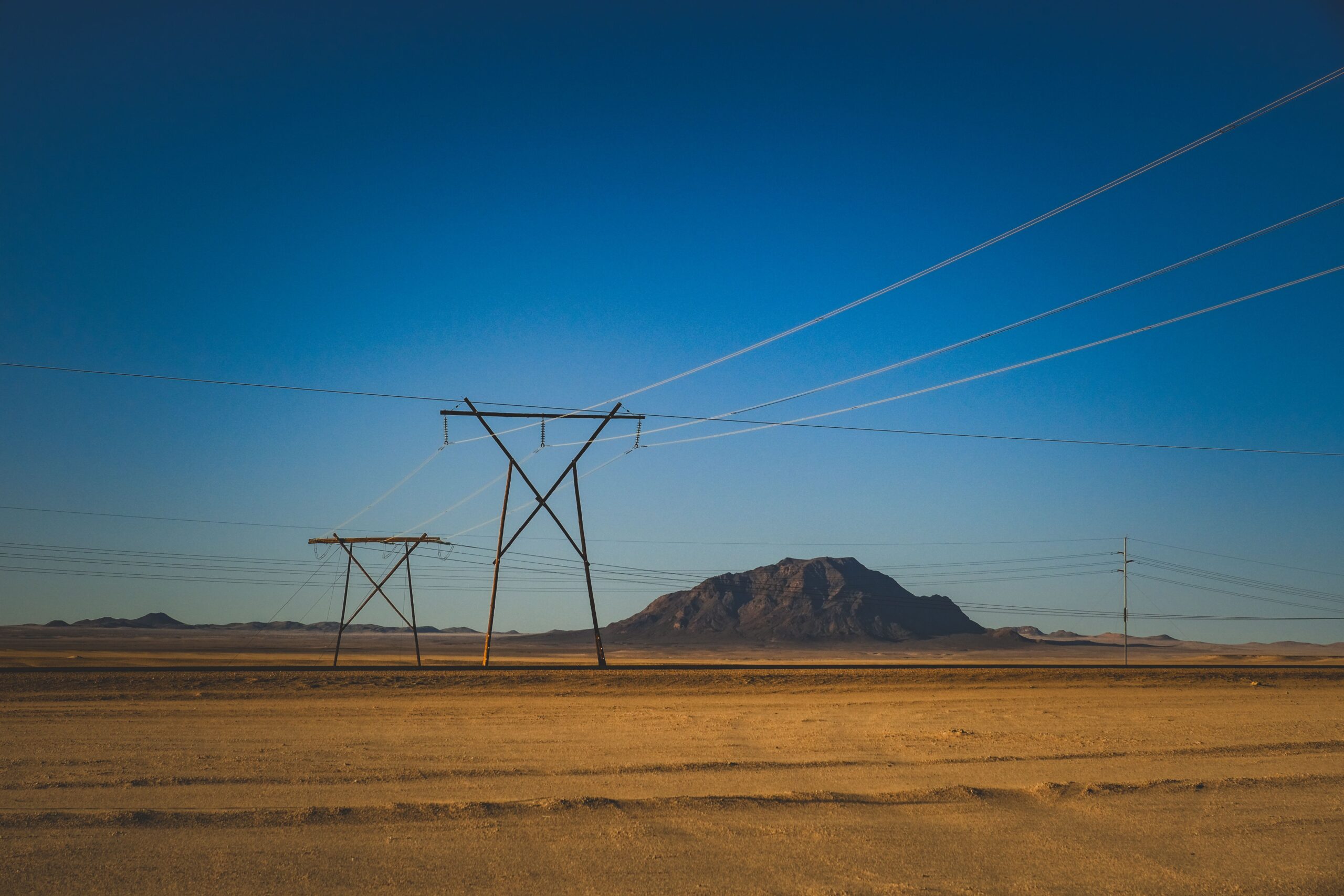
On a cold day, overhead power lines can look surprisingly tight between towers. On a hot afternoon, the same lines may hang lower, forming a deeper curve across the span. That change is not an optical trick. It is a visible sign that metal responds to heat, and it matters more than most people realize.
Power lines are not perfectly rigid rods. They are long conductors, often made with aluminum strands around a stronger core, suspended between structures that may be hundreds of feet apart. When the conductor warms, it lengthens. Because the towers or poles stay roughly the same distance apart, that extra length has to go somewhere. The result is sag: the line hangs lower in the middle of the span.
The physics is simple enough to notice from the ground, but the engineering behind it is serious. Utilities design lines with safe clearances from trees, roads, buildings, railways, other wires, and the ground. During summer heat, those clearances shrink. That is one reason grid operators pay close attention to temperature, current, wind, and line ratings during the hottest hours of the year.
Heat Makes Metal Expand
Most solids expand when they get warmer because their atoms vibrate more vigorously. The atoms do not usually fly apart or change the material into something new; they simply take up a little more space on average. Over a short metal ruler, the change may be too small to notice. Over a long power-line span, tiny expansion adds up.
This is called thermal expansion. The same idea explains why bridge decks need expansion joints, why railroad tracks must be laid with temperature changes in mind, and why a tight metal lid can loosen when warmed. A power line is an especially clear example because it is long, exposed to the weather, and suspended in a curve where small length changes are easy to see.
Temperature comes from two main sources. The surrounding air warms the conductor on a hot day, especially when sunlight is strong and wind is weak. Current flowing through the line also produces heat because the conductor has electrical resistance. The heavier the electrical load, the more heating can occur. A line on a very hot afternoon may therefore be warmed by the weather and by the electricity it is carrying.
The Tennessee Valley Authority has described this operational problem plainly: high-voltage lines must account for thermal expansion, and on hot summer days operators may reduce the load on some lines to help keep enough clearance. That is not because the wire is about to melt under ordinary conditions. It is because length, sag, clearance, and safety margins are all connected.
Why a Longer Wire Hangs Lower
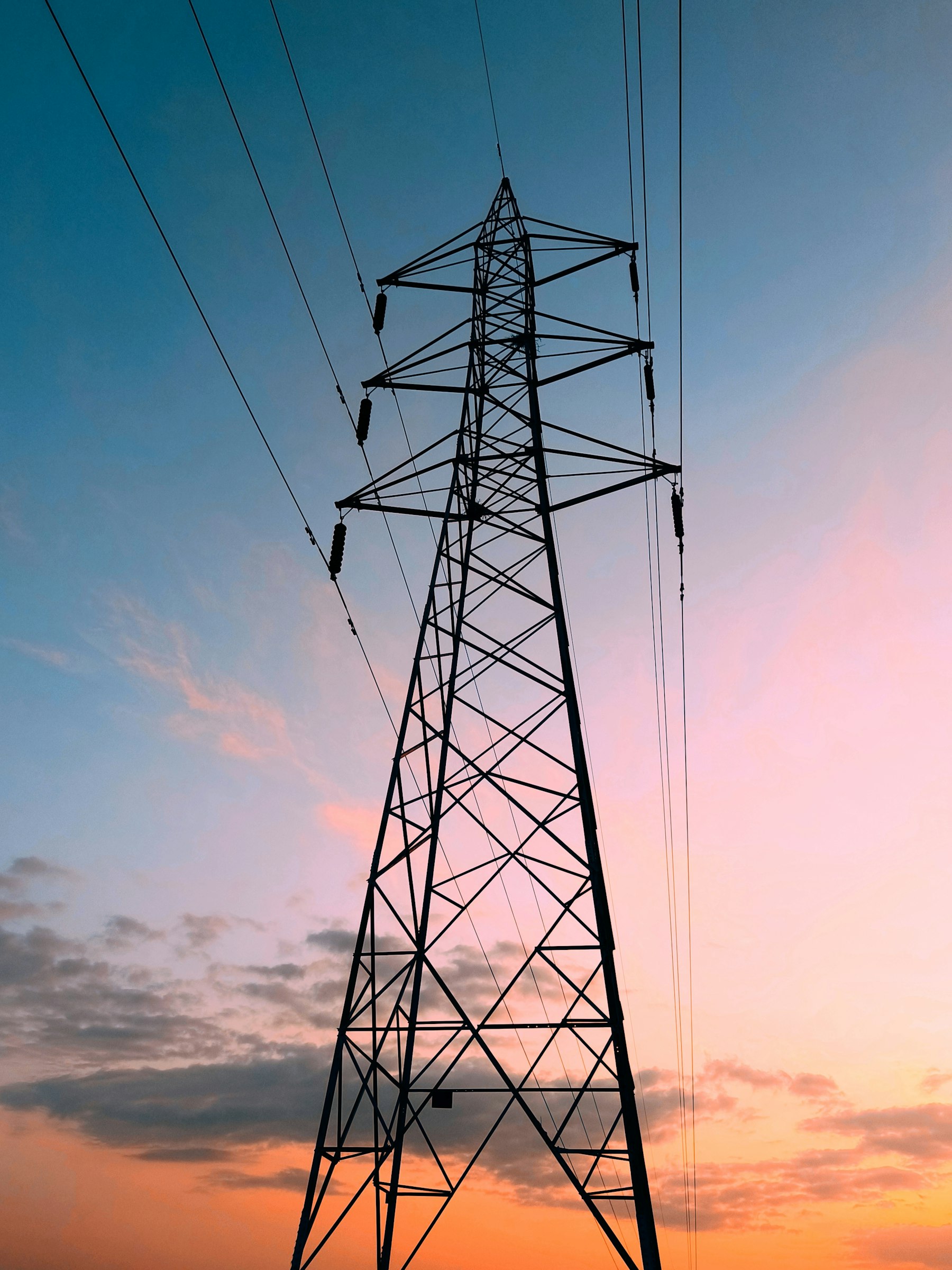
A power line between two towers does not hang as a straight line. Gravity pulls it downward, while tension in the conductor pulls it toward the supports. The result is a smooth hanging curve. Engineers often describe this shape with a catenary, the same type of curve formed by a hanging chain.
When the conductor gets longer, the curve deepens. Imagine holding a piece of string between two hands. If the string is short and pulled tight, it makes a shallow curve. If you let out more string while keeping your hands the same distance apart, the middle drops. A power line behaves in a much more carefully engineered way, but the basic geometry is similar.
Sag is not automatically dangerous. Lines are designed to sag under expected conditions, and utilities choose pole heights, tower spacing, conductor type, and tension with that movement in mind. The key issue is how much room remains at the lowest point. A line that is safe under cool, breezy conditions may have less margin when the air is hot, the line is heavily loaded, and nearby vegetation is too close.
Wind can complicate the picture. A breeze can cool a conductor, reducing its temperature and sag. Strong wind can also push lines sideways or make vegetation move. Sunlight, cloud cover, rain, ice, and night cooling all change the thermal balance. That is why line behavior is not based on air temperature alone. Operators care about conductor temperature, which depends on several conditions at once.
Current Heats the Line Too
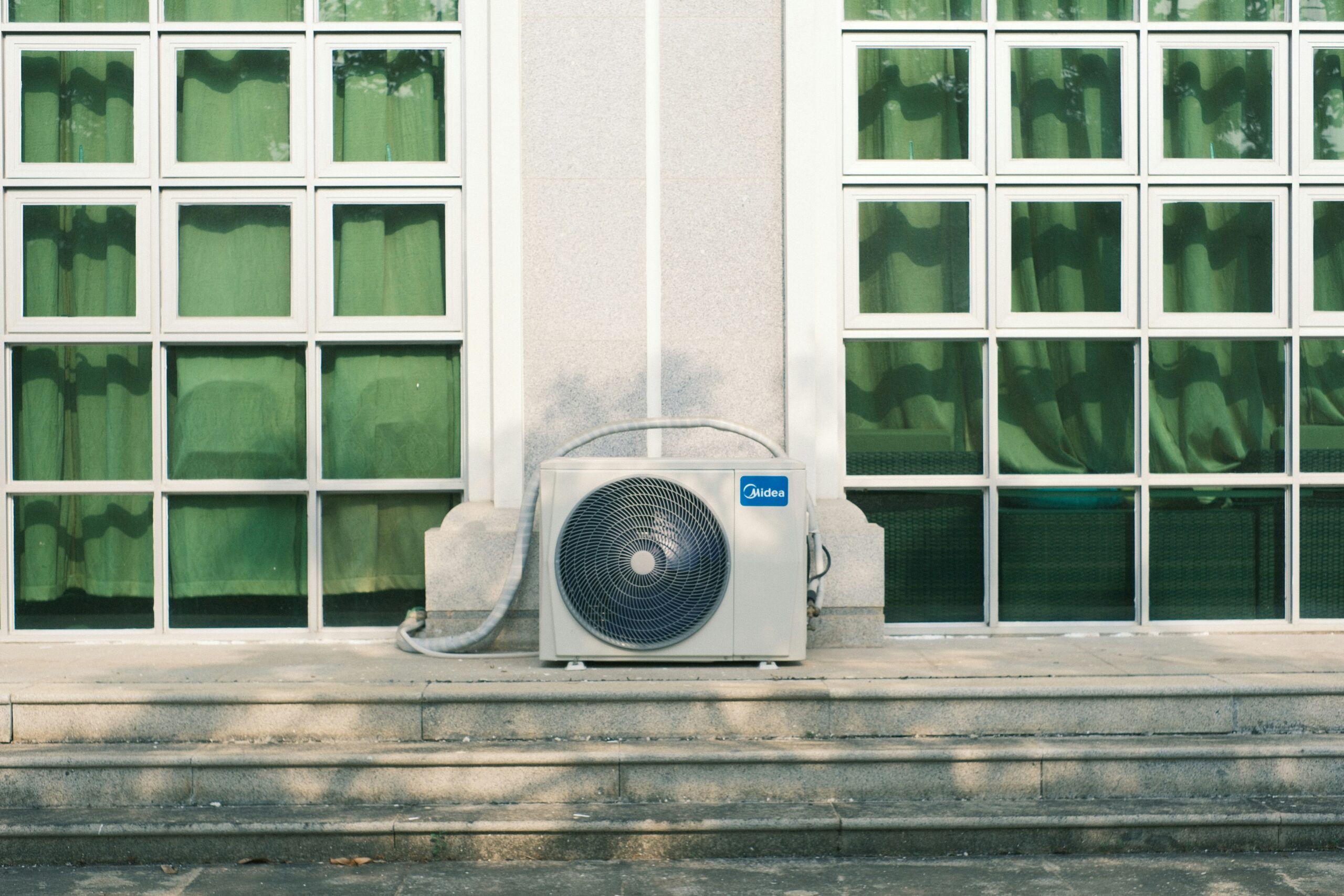
Electricity moving through a conductor meets resistance. That resistance turns some electrical energy into heat, a process often called resistive heating. The effect is modest when a line carries a light load, but it grows as current rises. During summer peaks, millions of air conditioners can push demand higher at the same time outdoor temperatures are already raising conductor temperatures.
This creates a practical limit known as ampacity: the amount of current a conductor can safely carry under specified conditions. The limit is not only about avoiding damage to the wire. It is also about keeping the conductor from getting so hot that it sags below required clearance or ages faster than expected.
Line ratings express those operating limits. Traditional ratings are often conservative because they assume certain weather conditions. If the actual day is windy and cool, a line may be able to carry more power safely than a fixed rating suggests. If the day is hot and still, the same line may reach its thermal limit sooner. Some utilities use dynamic line ratings, which estimate safe capacity from real-time or forecast weather and line conditions.
The Federal Energy Regulatory Commission’s 2026 summer assessment highlighted why this matters during extreme heat. The report noted that high temperatures can increase transmission line losses and cause conductors to reach operating limits sooner when high load and high heat arrive together. In plain language, hot weather can make it harder for the grid to move electricity just when people need more of it.
Clearance Is the Safety Issue
The danger of a sagging line is not simply that it looks lower. The danger is that electricity needs distance from people, objects, and anything that might become a path to ground. High-voltage lines do not need to be touched directly to be dangerous in every situation; electricity can arc across air if voltage, distance, and conditions allow it.
Utilities therefore maintain required clearances. Those clearances are built into design standards, vegetation management, inspections, and operating decisions. A line must stay safely away from the ground, roads, rooftops, equipment, and trees even under difficult weather and load conditions. If a line gets too close to a tree or another object, protective equipment can trip the line offline to stop a fault, which protects people and equipment but can also interrupt service.
Clearance also explains why trimming trees near power lines is not just cosmetic. Branches that seem comfortably far from a line in mild weather may become a greater concern when heat, sag, wind, and growth combine. This is especially important in areas with wildfire risk, where contact between electrical infrastructure and vegetation can have severe consequences.
Not every low-looking line is unsafe. Distribution lines, transmission lines, communication cables, and service drops have different roles and different clearances. The important rule for ordinary observers is simple: never approach, touch, or try to move any downed or unusually low wire. The safe response is to stay far away and report it to the utility or emergency services.
Why Hot Days Can Reduce Grid Flexibility
Line sag is one part of a larger summer grid challenge. Heat raises electricity demand because cooling becomes essential. At the same time, heat can reduce the efficiency of power plants, solar panels, transformers, and transmission equipment. Pacific Northwest National Laboratory has described this as a system-wide pressure: summer heat can slow power from generation through transmission and distribution.
NERC’s 2026 Summer Reliability Assessment made the timing problem clear. Heat drives peak electricity demand as homes and businesses use more power for cooling, but the riskiest hours may not always match the hottest hour of the day. Evening can be difficult because buildings are still warm, people are home using electricity, and solar generation is falling. If transmission lines are also closer to their operating limits, operators have less room to move power from one area to another.
That does not mean every hot day threatens a blackout. The grid is planned with reserves, forecasts, maintenance schedules, emergency procedures, and backup options. But hot weather can narrow the operating cushion. A line that could carry more power on a cool day may have to carry less on a hot one. A neighboring region that might normally export electricity may be using most of its own supply for cooling. Small limits can begin to stack up.
This is why utilities invest in stronger conductors, taller structures, better sensors, vegetation management, batteries, demand response, and more transmission capacity. Some newer high-temperature, low-sag conductors are designed to carry more current while stretching less than older designs. Better monitoring can also help operators use existing lines more intelligently instead of relying only on broad assumptions.
The Everyday Lesson in a Hanging Curve
A sagging power line is a small public demonstration of physics. Heat changes the size of materials. Current produces heat. Gravity turns extra length into a deeper curve. Engineering turns those facts into design limits, safety clearances, and operating decisions. What looks like a simple wire in the air is part of a carefully managed system.
The lesson also helps explain why the electric grid is sensitive to weather in more than one way. Summer heat does not only make people turn on air conditioners. It changes the physical behavior of the equipment that carries the electricity to those air conditioners. The same afternoon that raises demand can also make the wires warmer, longer, and closer to their limits.
That connection is easy to miss because power lines seem static from a distance. They are not. They stretch, cool, sway, heat, and settle within limits that engineers plan for constantly. The next time overhead lines look lower on a hot day, the curve is telling a quiet story: temperature has become structure, and physics is shaping the path electricity takes home.






Add comment