
 Akshay Dinesh
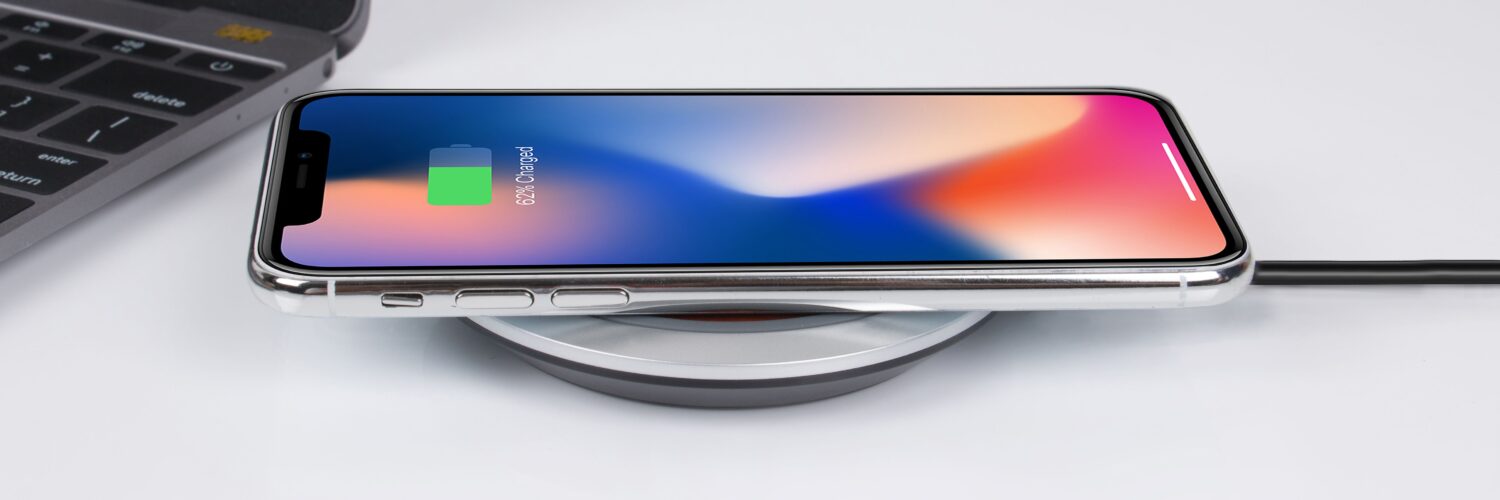
Wireless charging feels almost too simple: set a phone on a pad, wait for the battery icon, and walk away. Nothing clicks into the charging port, and no metal contacts have to touch the phone. Yet power is still moving from the wall outlet into the battery, just through a different physical path. The trick is not that electricity is floating through the room. It is that the charger and the phone briefly become two parts of the same electromagnetic system.
The idea is old, but the everyday version is modern. Electric toothbrushes have used sealed inductive chargers for years because a waterproof device should not need an exposed charging socket. Smartphones made the same physics more visible. The Wireless Power Consortium’s Qi standard, first introduced for consumer devices in the early 2010s and now expanded through Qi2, gave manufacturers a shared way to make pads, stands, phones, earbuds, and accessories work together safely. That standardization matters because wireless charging is not just a coil under a phone. It is a negotiation between two devices about alignment, power, heat, and when to stop.
The charger and the phone each hide a coil
A wireless charger contains a flat coil of wire under its top surface. When the charger is powered, electronics inside send alternating current through that coil. Alternating current changes direction many times per second, and a changing electric current creates a changing magnetic field around the coil. That field is strongest very close to the charger, which is why phones need to sit directly on the pad or rest against a charging stand.
A compatible phone has another coil inside its back. When that receiver coil is placed close to the charger coil, the changing magnetic field passes through it and induces a voltage. This is electromagnetic induction, the same broad principle behind transformers and many electric generators. In a wired charger, electrical energy travels through metal conductors into the phone. In an inductive charger, energy crosses the small air gap through the magnetic field before being converted back into usable electrical current inside the device.
The phone cannot use that induced current raw. The receiver circuit rectifies it, manages the voltage, checks battery conditions, and sends charging power to the battery system. A phone battery needs controlled direct current, not a loose burst of alternating energy. That is one reason wireless charging hardware includes more electronics than the visible pad suggests.
Alignment matters because the magnetic field is local
Wireless charging works best when the two coils line up. If the receiver coil in the phone is centered over the transmitter coil in the pad, more of the magnetic field passes through the phone’s coil. If the phone is shifted too far to one side, less energy couples across the gap. The charger may slow down, heat up, or stop because the system cannot transfer power efficiently enough.
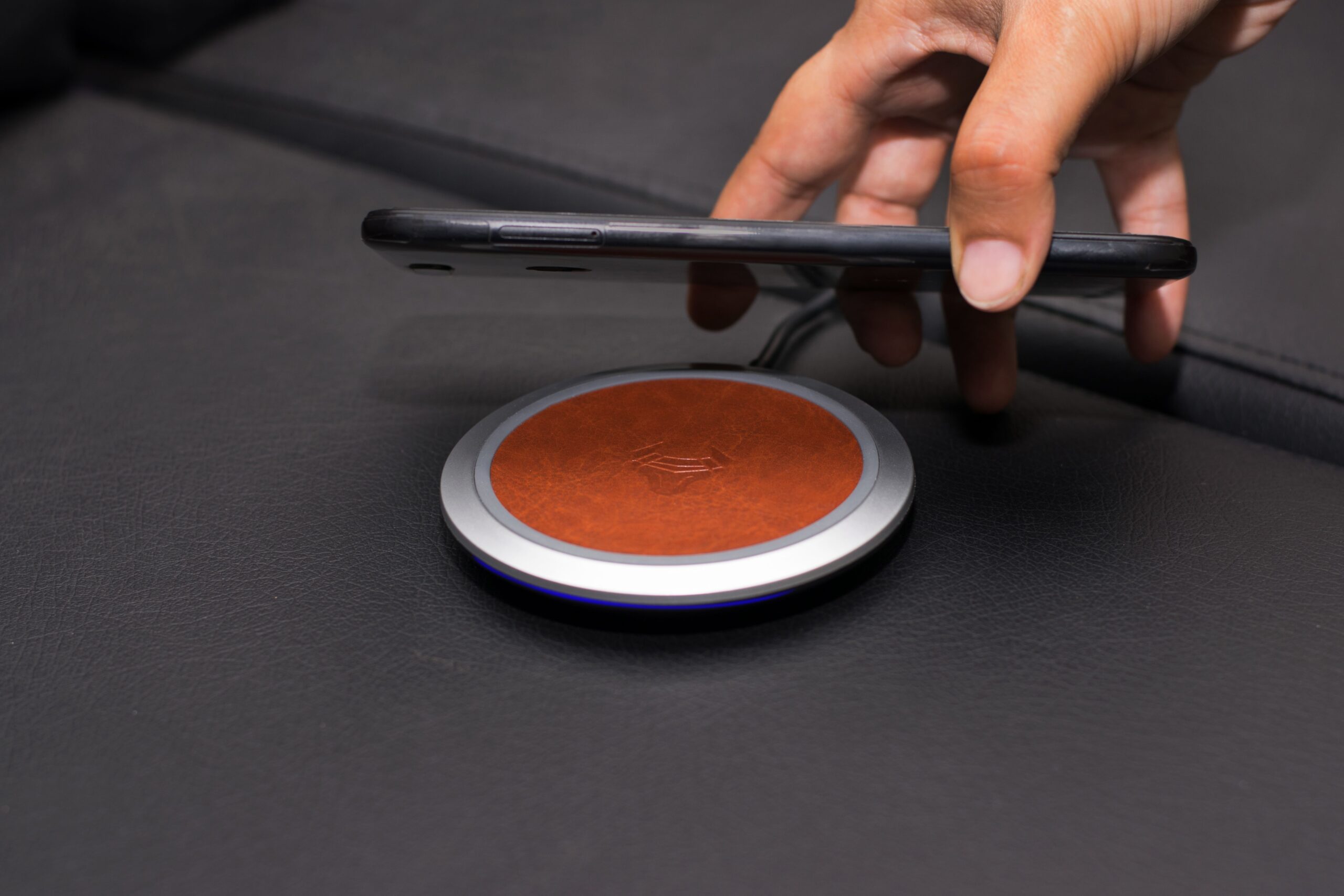
This explains a common frustration: a phone can look as if it is on the charger but still fail to charge well. A thick case, a metal plate, a wallet attachment, or a slightly off-center position can increase the distance between the coils or block the best alignment. The phone and charger are still nearby, but the magnetic connection is weaker.
Qi2 addresses some of that problem by adding magnetic attachment for better positioning. The magnets do not charge the phone by themselves. They help the coils land in the right place so the inductive system can work more predictably. That is why magnetic alignment can improve usability and efficiency even though the actual power transfer still depends on changing magnetic fields.
The charger and phone communicate while power moves
A safe wireless charger does not simply blast energy upward whenever it is plugged in. It checks whether a compatible receiver is present and adjusts power as the device requests it. The Wireless Power Consortium describes Qi charging as a controlled system in which the receiver can send information back to the transmitter. That communication helps the charger know when to deliver more power, when to reduce it, and when the battery is full.
This matters because different devices need different amounts of power. A phone, earbud case, and smartwatch may all sit on similar-looking chargers, but their batteries, coils, and heat limits are not identical. A certified charger must manage those differences rather than treating every object on the pad the same way. If a metal object such as a coin or key is placed on a charger, a well-designed system should detect trouble and avoid heating it dangerously.
The control loop also helps explain why charging speed changes over time. A battery usually charges faster when it is low and slows as it approaches full capacity. Wireless charging adds another layer: the charger may reduce power if the phone is warm, if the coils are not aligned well, or if the device asks for less current to protect the battery. The battery percentage on the screen is the visible part of a much busier conversation.
Why wireless charging can be slower or warmer
Wireless charging is convenient, but it is not magic, and it is not always the most efficient way to move energy. A cable creates a direct electrical path. Inductive charging has to convert wall power into an alternating magnetic field, couple that field into the phone’s coil, convert the induced current back into a form the battery can use, and manage losses along the way. Each step can waste some energy as heat.
That extra heat is why alignment, charger quality, case thickness, and surface temperature matter. When coils are poorly aligned, the system may work harder to deliver the same useful power. When a phone is already warm from gaming, video recording, navigation, or direct sunlight, wireless charging may slow down to protect the battery. The charger may feel warm too because its transmitter coil and electronics are doing real work.
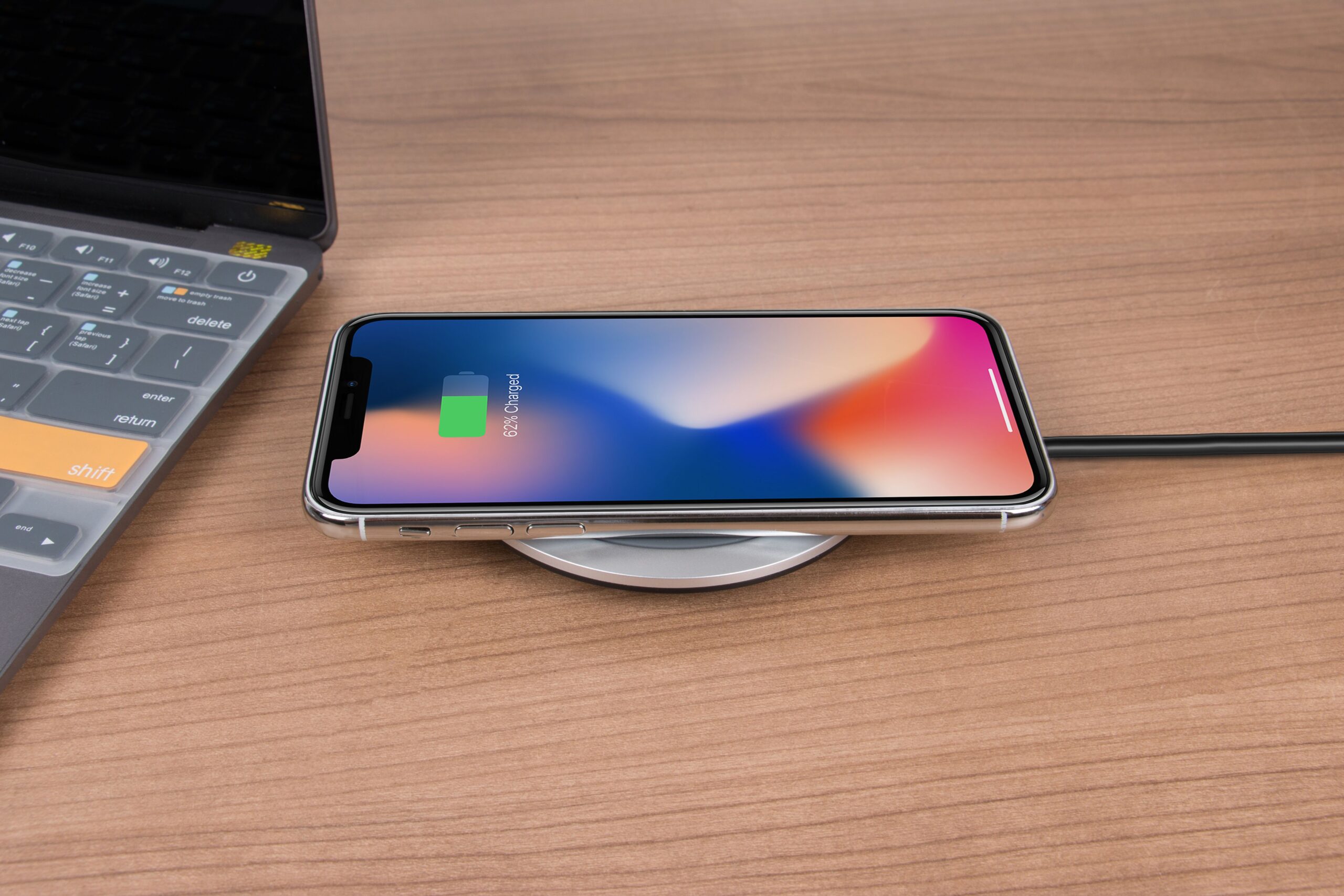
This is also why wireless charging is usually best for steady, low-effort charging rather than every high-speed need. A pad on a desk or nightstand is convenient because the phone can be placed down and picked up without wearing out a port or finding a cable. For the fastest possible charge, especially when a battery is very low and time is short, a compatible wired fast charger may still be more direct.
What the Qi and Qi2 standards add
The physics of induction explains how energy crosses the gap, but a standard explains how products cooperate. Qi gives chargers and receivers a common set of expectations for detection, power control, communication, and safety. Without that shared rulebook, a phone might only work reliably with one manufacturer’s charger, or a charger might not know how much power a device can safely accept.
Qi2 builds on that framework with magnetic alignment and higher certified power options. The Wireless Power Consortium has promoted Qi2 and later Qi2 25W as ways to improve alignment, efficiency, interoperability, and charging speed across compatible products. The exact charging speed still depends on the phone, charger, power adapter, temperature, case, and certification details. A label or product page matters because a pad that looks modern is not automatically the fastest or safest option for every phone.
Standards also make the technology easier to understand as a user. When a device is Qi-certified, it should follow the standard’s rules rather than relying only on a brand promise. That does not make every charger identical, but it gives shoppers a better signal than shape, color, or marketing language alone.
The real lesson is controlled energy transfer
Wireless charging is a small everyday example of a larger physics idea: energy can move from one system to another when fields connect them. The charger creates a changing magnetic field. The phone’s coil responds to that changing field. Electronics on both sides shape the transfer so the battery receives useful power instead of uncontrolled current.
Seeing the charger this way makes its limits less mysterious. The phone has to be close because the magnetic field is strongest nearby. It has to be aligned because the coils couple best when their geometry matches. It may warm up because every real energy transfer has losses. It may slow down because battery health and safety matter more than racing to a higher percentage.
The cable has not disappeared from the whole system. It has simply moved to the charging pad, while the final short jump into the phone happens through magnetic induction. That is why wireless charging feels effortless on the surface but still depends on careful engineering underneath: two coils, a changing field, a shared standard, and a battery system that knows when enough power is enough.





Add comment