
 Akshay Dinesh
When an air conditioner drips water on a hot day, it can look as if something inside the machine is leaking. In many cases, though, the water is not coming from a broken pipe or from the refrigerant system. It is water that was already floating invisibly in the indoor air as vapor. The air conditioner cools that air, pushes it past a cold coil, and turns some of the vapor into liquid droplets.
That small stream of water is a useful clue about how cooling really works. An air conditioner does not simply add coldness to a room. It moves heat from one place to another, and while doing that it often removes moisture too. On a humid day, that second job can be surprisingly visible: a window unit may drip outdoors, a central system may send water through a drain line, and a poorly draining unit may leave a puddle where no one wants one.
The Water Starts in the Air
Air can hold water vapor even when it looks completely clear. Warm air can usually hold more water vapor than cooler air, which is one reason a summer room can feel heavy or sticky before the thermostat shows an extreme temperature. Relative humidity tells how close the air is to being full of water vapor at its current temperature. The dew point tells a slightly different story: it is the temperature at which the air would become saturated and start giving up some of that water as liquid.
A cold drink on a summer afternoon shows the same process in miniature. The cup does not leak, but water beads on the outside because nearby air cools against the cold surface. Once that thin layer of air falls below its dew point, some of its water vapor condenses into droplets. The surface has not created water. It has made hidden moisture visible.
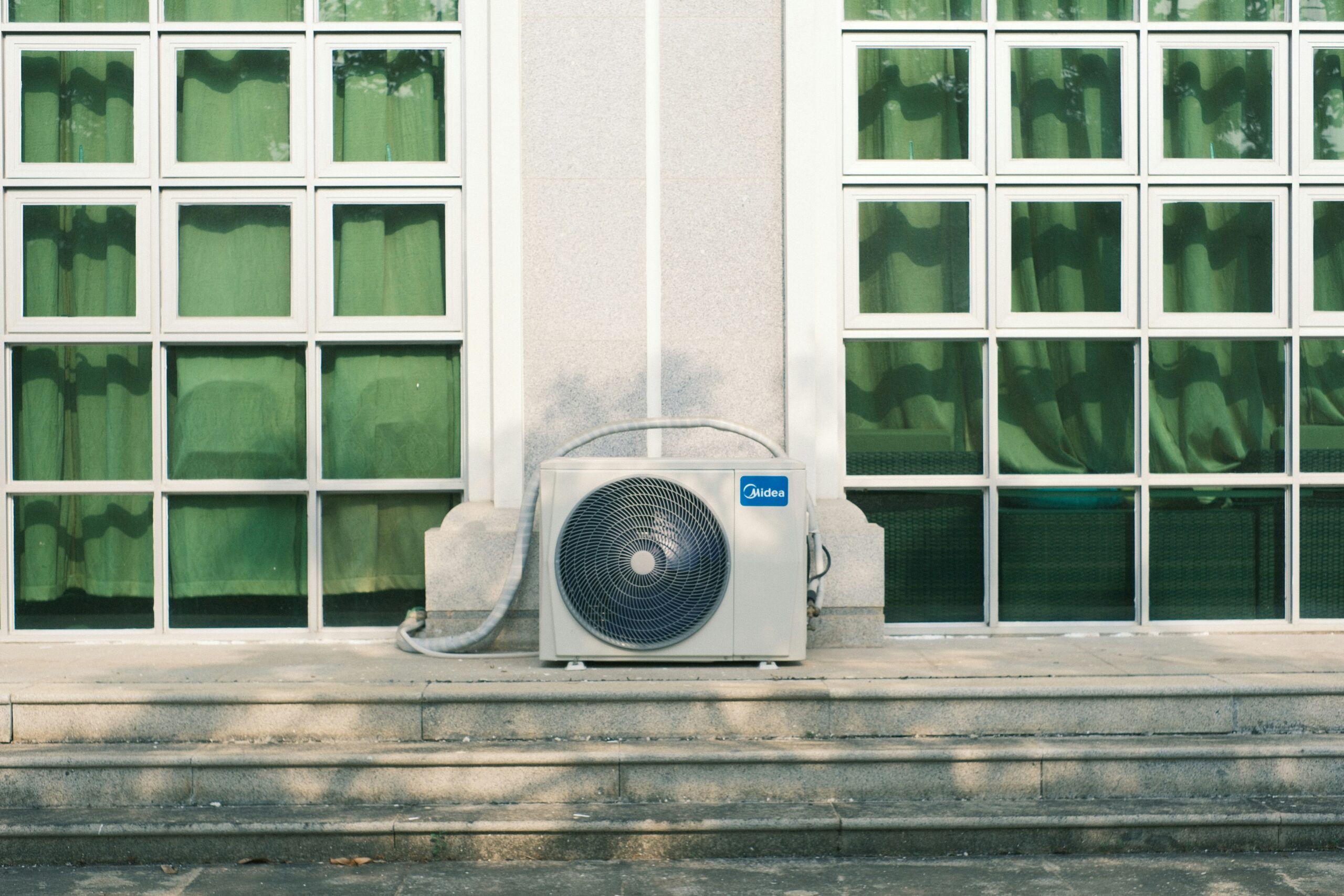
The cold indoor coil of an air conditioner is a much larger version of that chilled cup. As a fan pulls warm indoor air across the coil, the air cools quickly. If the coil surface is below the air’s dew point, vapor condenses on the metal fins. Droplets gather, run downward, and collect in a drain pan. From there, the water should leave through a condensate drain line or, in some installations, a small pump.
What the Evaporator Coil Does
The U.S. Department of Energy describes an air conditioner as working much like a refrigerator: refrigerant circulates through indoor and outdoor coils, absorbing heat inside and releasing it outside. The indoor coil is called the evaporator coil because the refrigerant evaporates there. During that evaporation, the refrigerant absorbs heat from the room air passing over the coil.
That heat transfer is the cooling part people notice first. Warm room air enters the return side of the system, crosses the cold coil, and comes back cooler through the supply vents. But temperature is only half of the comfort story. If the air is humid enough, cooling it also lowers the amount of water vapor it can keep as vapor. The extra moisture has to go somewhere, so it becomes liquid on the coil.
This is why air conditioning can make a room feel better even when the thermostat setting has not dropped dramatically. Drier air lets sweat evaporate more easily from skin, which helps the body cool itself. A room at 76 degrees with lower humidity can feel more comfortable than a slightly cooler room that still feels damp. The machine is changing both sensible heat, the temperature you can read on a thermometer, and latent heat, the energy tied up in water changing phase.
The word latent matters because condensation is not just a wet side effect. When water vapor becomes liquid, it releases energy. The air conditioner has to handle that energy too. On a muggy day, part of the system’s work goes into wringing moisture out of the air, not only lowering the number on the thermostat.
Why Humid Days Produce More Dripping
The amount of water an air conditioner removes depends on how much moisture is in the air and how long the system runs. On a dry day, the evaporator coil may still be cold, but there is less vapor available to condense. On a humid day, the same coil can collect much more water because each batch of indoor air carries more moisture across the metal fins.
This is also why water dripping from an outdoor window unit can be normal during humid weather. The unit is acting like a dehumidifier while it cools. ENERGY STAR notes that on humid days, a lower fan speed can help a room air conditioner remove more moisture because slower airflow gives air more time against the cold coil. That does not mean every system should be adjusted casually, but it does show the basic tradeoff: moisture removal depends on contact time, coil temperature, and airflow.
Homes with open doors, leaky windows, damp basements, crowded rooms, cooking, showers, or outdoor humid air entering through gaps may give an air conditioner more moisture to remove. A system can feel as if it is working hard without making the room feel crisp because it is spending so much effort on latent heat. In very humid conditions, a separate dehumidifier or better air sealing may help more than simply lowering the thermostat.
The Environmental Protection Agency recommends keeping indoor humidity between 30 and 50 percent when possible because high humidity makes mold more likely. That range is not just a comfort preference. It helps explain why a dripping condensate line can be a good sign when everything is draining correctly: moisture that leaves through the drain is moisture that is no longer lingering in the room.
When Dripping Is Normal and When It Is a Warning
Normal condensation should have a clear path out of the system. In a central air conditioner, water usually falls into a drain pan and travels through a condensate line. In a window unit, water may collect and drain outdoors, depending on the design. A small amount of water outside the home during humid weather is often expected.
The warning sign is water in the wrong place. Dripping indoors, water stains near vents, a musty smell, a full secondary drain pan, or a shutoff switch that keeps stopping the system can point to a drainage problem. A clogged condensate line is one common cause. Algae, dust, and debris can build up in the wet pipe until water backs up and overflows.
Airflow problems can create a different kind of water trouble. If a filter is extremely dirty or a return vent is blocked, not enough warm air crosses the evaporator coil. The coil can get too cold and start freezing moisture into ice. When that ice later melts, the drain pan may receive more water than usual all at once. The symptom may look like an ordinary leak, but the cause is tied to restricted airflow and temperature balance.
A cracked drain pan, poorly sloped line, failed condensate pump, or disconnected pipe can also send water where it should not go. Refrigerant leaks are separate from water condensation and need professional attention, but a watery puddle around an indoor unit should still be taken seriously. Water can damage ceilings, flooring, insulation, and walls long before the cooling system itself completely fails.
What the Physics Teaches About Comfort
The dripping water reveals a simple but powerful idea: comfort is not only about air temperature. It is about heat, moisture, airflow, and surfaces interacting at the same time. A thermostat can show one number while the room feels very different depending on humidity. That is why two summer days at the same temperature can feel nothing alike.
It also explains why short bursts of cooling may not always dry a room well. If an oversized air conditioner cools the room very quickly and shuts off, it may not run long enough to remove much moisture. The room can reach the thermostat setting while still feeling clammy. A well-matched system runs long enough to cool the air and remove a reasonable amount of humidity.
The same principle shows up in everyday observations. Bathroom mirrors fog when warm, moist air meets cooler glass. Grass gets dew when surfaces cool enough overnight for vapor to condense. A cold basement pipe may sweat in summer when humid air touches it. In each case, water appears because air met a surface below its dew point.
An air conditioner dripping water outdoors is part of that same pattern. The machine is pulling heat from indoor air, moving it outside, and letting water vapor change into liquid along the way. When the water drains where it should, the drip is not a mystery or a defect. It is a visible trace of invisible humidity leaving the air.
A Useful Drip, as Long as It Drains
The next time an air conditioner leaves water outside on a humid day, the best first question is not always whether the unit is broken. The better question is where the water is coming from and whether it is draining properly. Clear water leaving through the correct drain path usually means the system is removing moisture as it cools.
Water inside the living space, however, deserves attention. A clean filter, clear drain line, sound drain pan, and properly working condensate pump all help keep normal condensation from becoming water damage. The physics is ordinary, but the consequences can be practical. Air conditioners drip because humid air carries hidden water, and cooling turns that hidden water into droplets. The goal is not to stop condensation altogether. The goal is to make sure it leaves the building in the right direction.





Add comment