
 Akshay Dinesh
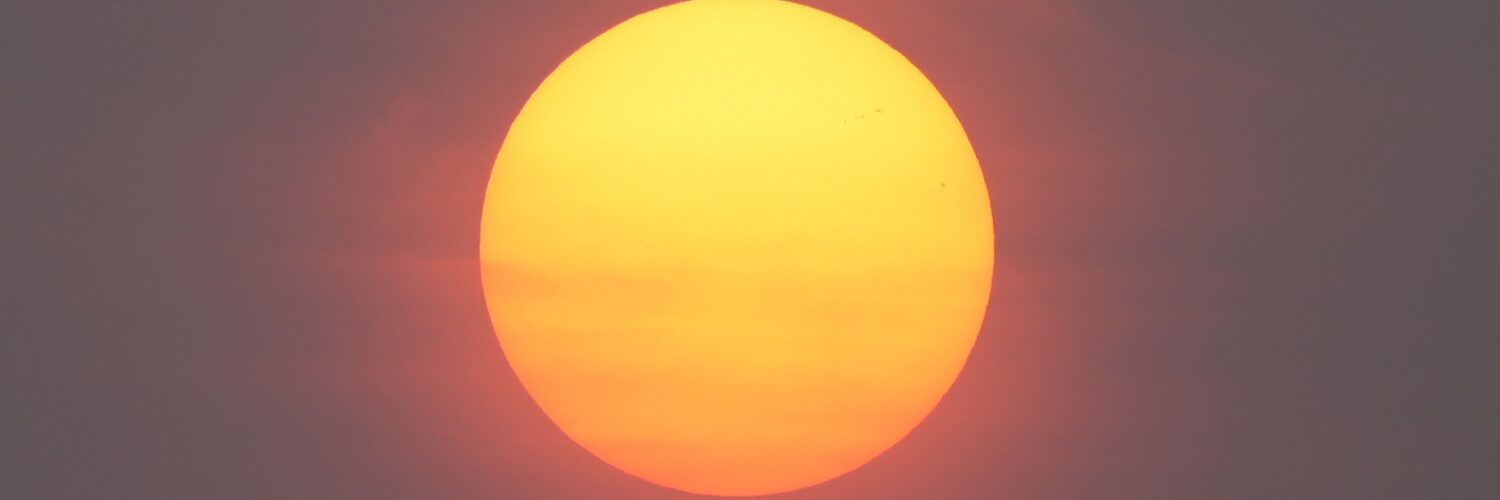
A smoky red Sun can look almost unreal, as if the Sun itself has changed color. The real change is happening between the Sun and your eyes. When wildfire smoke drifts overhead, it fills the air with tiny particles that bend, scatter, and partly block sunlight. The effect is strongest when the Sun is near the horizon, because the light must travel through a much longer slice of atmosphere before it reaches the ground.
That is why a smoke-filled sunrise or sunset can turn deep orange, copper, or red while the same Sun would look white-yellow on a clearer afternoon. The colors are not decoration added to the sky. They are evidence of how light, air, and suspended particles interact. The same physics helps explain blue skies, red sunsets, dusty horizons, and the dim, strange daylight that sometimes appears when wildfire smoke spreads far from the flames.
Sunlight Starts as a Mixture of Colors
Sunlight looks white because it contains many wavelengths of visible light at once. Shorter visible wavelengths appear violet and blue, while longer visible wavelengths appear orange and red. When sunlight travels through empty space, those colors move together. Once the light enters the atmosphere, it begins meeting gas molecules, water droplets, dust, smoke, and other particles.
Those encounters do not treat every wavelength the same way. The National Weather Service and NASA both explain the blue sky through scattering: molecules in the atmosphere scatter shorter blue wavelengths more strongly than longer red wavelengths. When the Sun is high, blue light is scattered across the sky in many directions, so the sky overhead appears blue even though the direct sunlight still contains many colors.
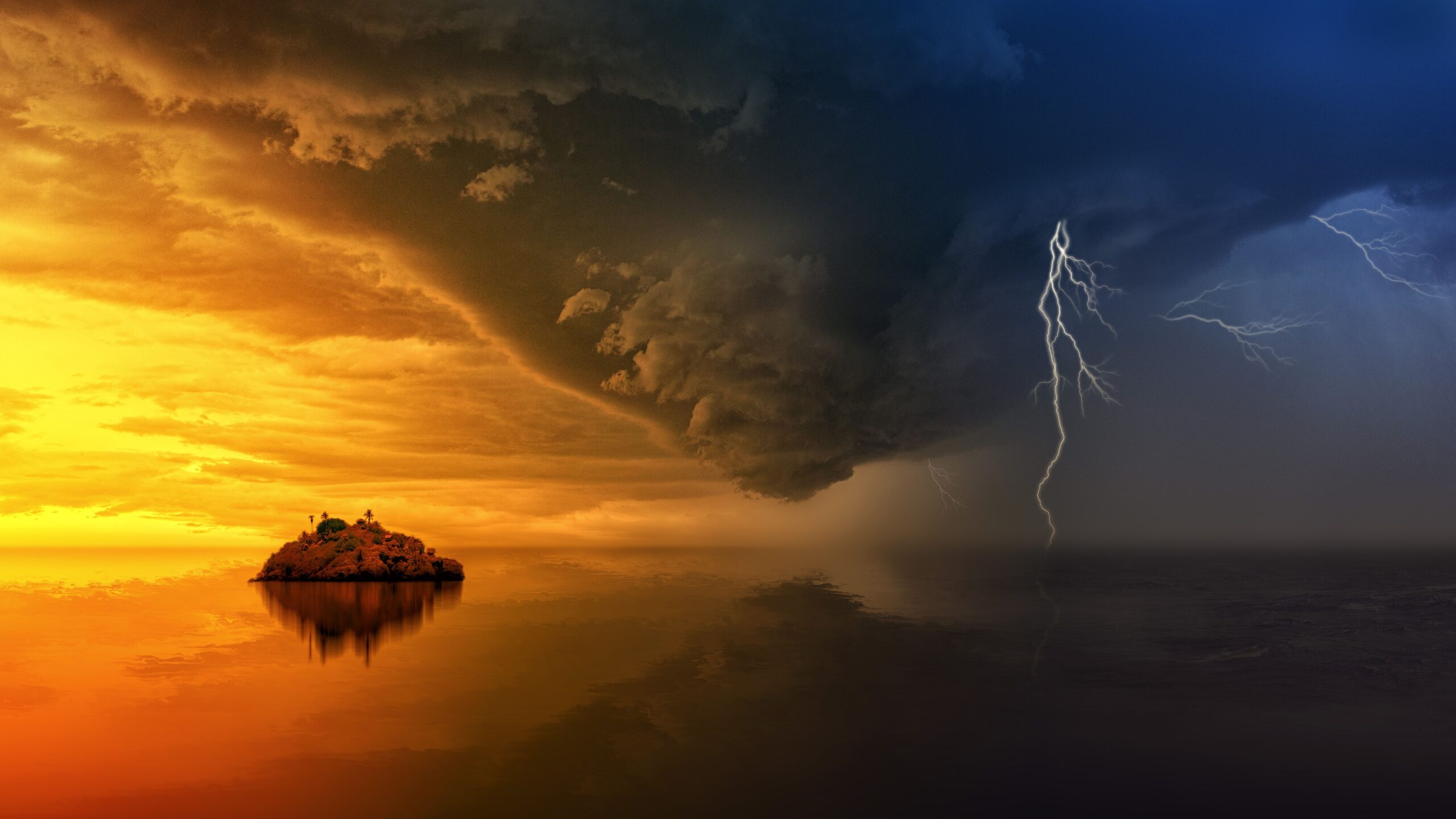
At sunrise and sunset, the geometry changes. Sunlight comes in at a low angle and travels through much more air before it reaches an observer. Over that longer path, a large amount of blue and green light has already been scattered out of the direct beam. More of the light that survives straight through to your eyes is orange and red, so the low Sun and nearby clouds often look warmer in color.
Smoke Adds More Particles to the Path
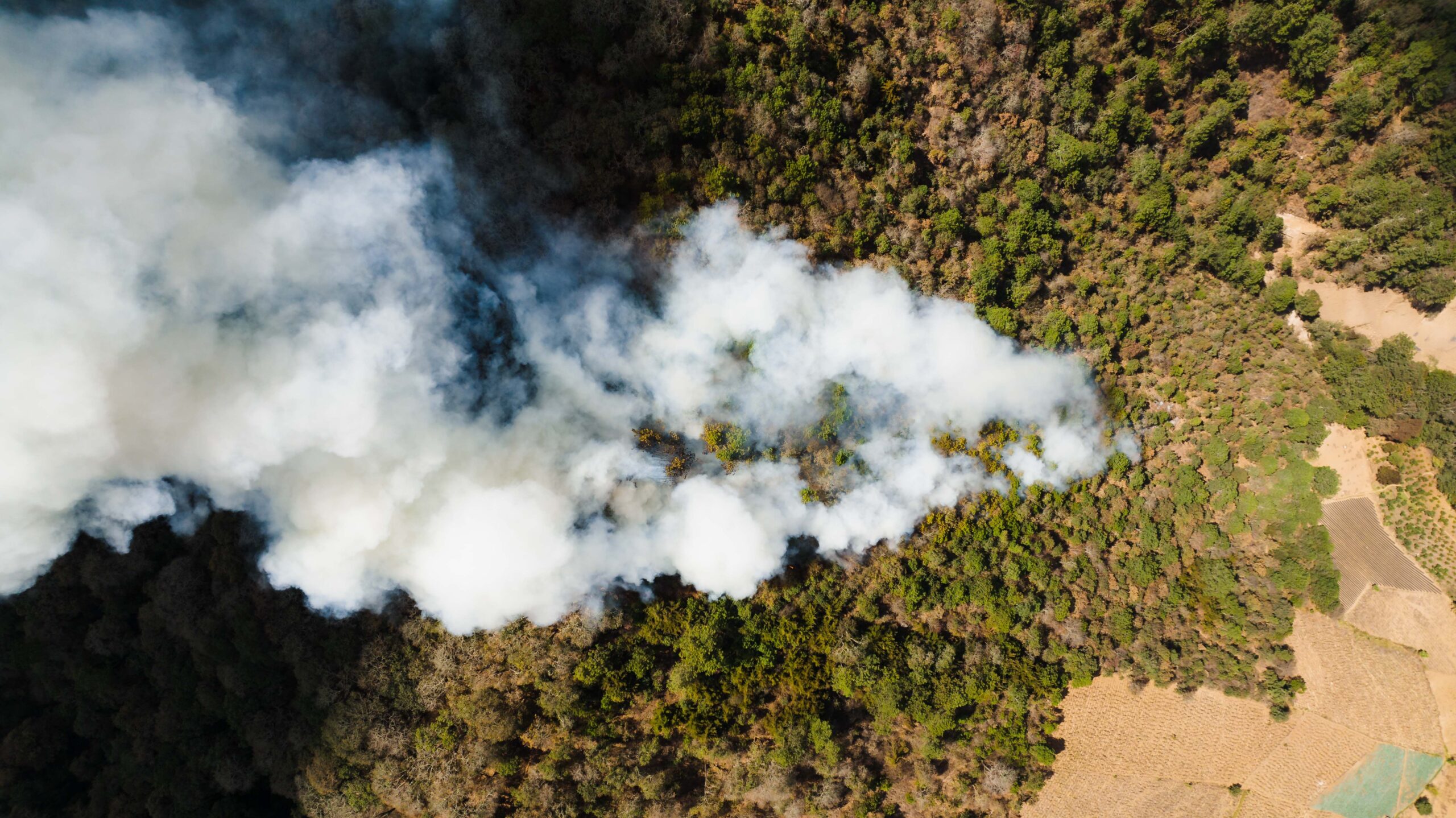
Wildfire smoke is not just a dark cloud. It is a moving mixture of gases and tiny particles, including bits of burned plant material and other aerosols. Some particles are small enough to remain suspended in the air for long periods and travel far downwind. That is why a fire in one region can change the sky color hundreds or even thousands of miles away, depending on winds and weather patterns.
Smoke changes the color of sunlight because it adds many more particles for light to interact with. UCAR’s Center for Science Education notes that intense red sunsets are often visible when forest fires are burning nearby, and that aerosols from smoke, dust, pollution, or volcanic eruptions can make sunsets more orange or red. NASA Earth Observatory has described a similar effect from airborne aerosols: small particles can scatter shorter wavelengths more efficiently, leaving the transmitted light enriched in oranges and reds.
In clear air, gas molecules are the main scatterers. In smoky air, larger particles become important too. These particles can scatter light in a more forward direction, meaning they affect the light that continues toward your eyes from the Sun itself. As the shorter wavelengths are weakened along the path, the Sun can look like a dull red disk instead of a bright white-yellow one.
Why the Sun Can Look Dim as Well as Red
A smoky Sun is often dimmer than a normal sunset Sun because smoke does more than shift color. Some particles scatter light away from the direct path. Some absorb light. Thick smoke reduces the total amount of sunlight reaching the ground, which is why the day can feel strangely muted even when clouds are not blocking the sky.
The color depends on particle size, particle concentration, humidity, the Sun’s angle, and the thickness of the smoke layer. A thin smoke layer may simply make the sunset richer, with stronger orange and pink tones. A thicker layer may make the Sun appear as a sharply colored red circle. Very dense smoke can hide the Sun almost completely or turn daylight a flat gray-brown because so much light is being scattered and absorbed before it reaches the surface.
This is also why the effect can change quickly. A small shift in wind direction, a higher smoke layer, or a gap in the haze can change the brightness and color within minutes. The sky is not acting like a painted backdrop. It is a moving optical system, and the amount of smoke in the line of sight matters as much as the amount of smoke overhead.
The Difference Between a Beautiful Sunset and a Healthy Sky
Smoky sunsets can be visually striking, but the color is not a sign that the air is harmless. The same particles that change the light can also affect air quality. Fine particle pollution, often discussed as PM2.5, is small enough to stay airborne and be inhaled deeply. Air-quality agencies track those particles because they can affect breathing, especially for children, older adults, people with asthma, and people with heart or lung conditions.
That creates an easy misunderstanding. A red smoky Sun may look calm, especially if the wind is light and the sky is otherwise clear. But the color is often a clue that particles are present between you and the Sun. It is better to check a local air-quality source than to judge the air by appearance alone, because smoke can be elevated above the ground in one situation and closer to breathing level in another.
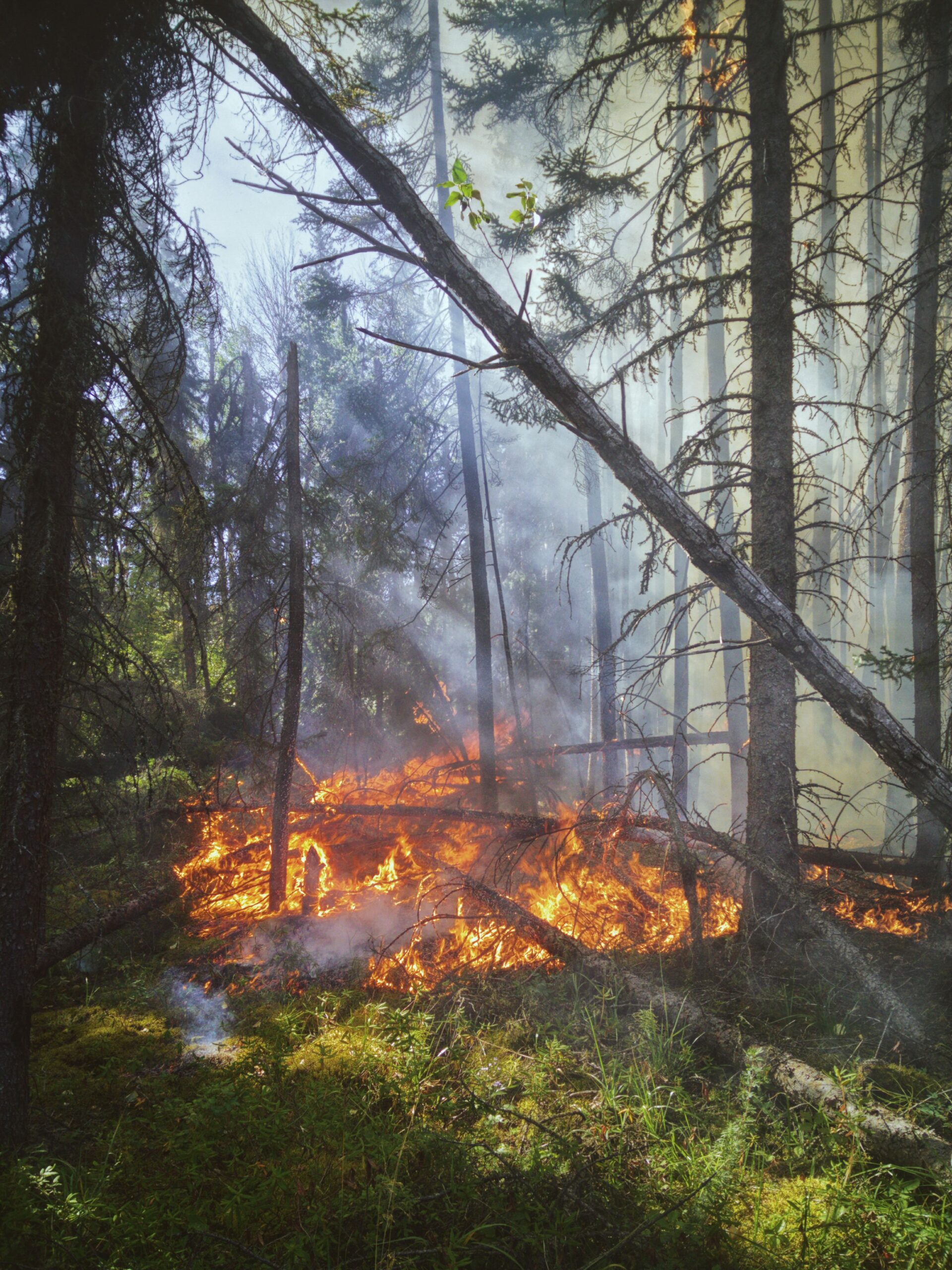
The visual lesson is still useful. A red Sun during wildfire season is a reminder that the atmosphere is not invisible in a practical sense. It filters light, moves particles, carries pollution, and connects distant places. The sky over one town can carry evidence of a fire far away, written not in words but in the color of the sunlight.
How to Read the Color More Carefully
The key is to separate the ordinary sunset effect from the smoke effect. Even clean air can make the Sun look orange or red near the horizon because the light travels through a longer atmospheric path. Smoke intensifies the effect by adding particles that scatter and weaken shorter wavelengths along that path. The result can be a deeper red Sun, a copper-colored moon, or a yellow-orange tint across the whole sky.
Clouds can make the scene more dramatic by reflecting the reddened light, but they are not required. A cloudless smoky sky can still produce a red Sun because the color change happens in the air between the Sun and the observer. The lower the Sun is, the longer that path becomes, which is why smoky color is often most obvious in the morning and evening.
Once you know what to look for, a smoky red Sun becomes more than a strange view. It shows that sunlight is being filtered through particles suspended in the atmosphere. The same Sun is still shining, but the air has changed the route its light takes to reach you. That is the quiet power of scattering: it can turn invisible particles into visible evidence, coloring the sky while revealing what is moving through it.






Add comment