
 Akshay Dinesh
The American Revolution can look inevitable when it is viewed backward from the Declaration of Independence. By July 1776, Congress had declared the colonies free and independent states, and the break with Britain seems to follow a clear path. A year earlier, though, the situation was far less settled. Many colonists were angry at Parliament, alarmed by British troops, and already living through armed conflict, but they were not all ready to abandon the king.
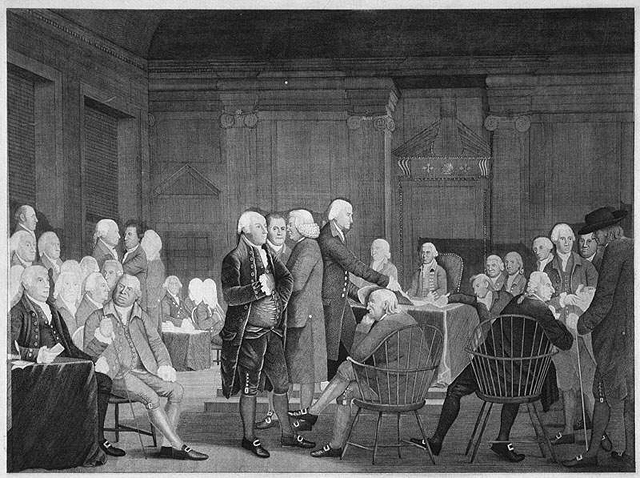
The Olive Branch Petition captures that uncertain moment. Adopted by the Second Continental Congress in July 1775, it asked King George III to help restore peace between Britain and the colonies. At nearly the same time, Congress was organizing military resistance, naming George Washington commander of the Continental Army, and explaining why colonial troops had taken up arms. The petition failed because it tried to keep two positions alive at once: loyalty to the king and resistance to the king’s government. In 1775, that middle ground was rapidly disappearing.
A peace appeal in the middle of a war
The Olive Branch Petition was not written in a calm political season. Fighting had already broken out at Lexington and Concord in April 1775. British forces still held Boston. In June, colonial and British troops fought the Battle of Bunker Hill, a costly clash that showed both sides how serious the conflict had become. The colonies were no longer just sending complaints across the Atlantic; they were raising soldiers and preparing for more fighting.
That is what makes the petition so revealing. Congress approved it on July 5, 1775, and the engrossed copy was signed on July 8. The National Archives describes it as a final appeal for a “happy and permanent reconciliation,” principally authored by Pennsylvania delegate John Dickinson. Dickinson and other moderates hoped the colonies could still remain inside the British Empire if the king intervened against the policies they blamed on Parliament and royal ministers.
The petition’s language was respectful and loyal. It did not call for independence. It addressed George III as the monarch whose authority might still calm the crisis. The colonists asked for relief from measures they considered oppressive and for a return to harmony. To readers today, that can seem strangely hopeful, but it made sense for people who had long thought of themselves as British subjects defending inherited rights.
Why Congress was divided
The Second Continental Congress had to hold together colonies with different levels of anger, fear, and commitment. New England had seen the earliest fighting and contained many people ready for stronger resistance. Other colonies still had large numbers of moderates who wanted rights restored without a complete break from Britain. Some delegates believed independence was likely; others considered it dangerous, premature, or unnecessary.
John Dickinson represented the cautious side of that debate. He had already become famous for defending colonial rights, but he feared that independence would bring a hard war, foreign uncertainty, and possible disunity among the colonies. His position was not simple weakness. It reflected a real political problem: a revolution could not succeed if too many colonists believed Congress had rushed beyond what the public would accept.
The petition helped Congress speak to those uncertain colonists. It showed that colonial leaders had not leapt straight from protest to separation. They had appealed to the king, stated their loyalty, and asked for a peaceful settlement. If reconciliation failed, the argument for stronger action would be easier to make because Congress could say it had tried a loyal solution first.
The problem with appealing to the king
The petition depended on a distinction that was becoming harder to sustain. Many colonists wanted to blame Parliament and ministers while still imagining the king as a possible protector. That idea had deep roots in British political culture. Subjects could petition the monarch against unjust policies and hope the crown would correct abuses carried out in its name.
But George III did not see the crisis that way. From the British government’s perspective, armed resistance in Massachusetts was not ordinary protest. It was rebellion. Colonial forces had fought royal troops, Congress was coordinating resistance across colonies, and British authority was being challenged in practice, not only in pamphlets and petitions.
This gap in interpretation made the Olive Branch Petition almost impossible to accept. Congress framed the crisis as a plea from loyal subjects asking their monarch to restore constitutional harmony. The king and his ministers increasingly framed it as organized defiance that had to be suppressed. Once each side understood the same events in such different terms, polite language could not do much work.

How rejection changed the political argument
King George III did not answer the petition with the kind of negotiation its supporters wanted. In August 1775, he issued a proclamation declaring that the colonies had moved into open rebellion. The House of Representatives history office notes that the king’s response described the colonists as having proceeded to an “open and avowed Rebellion.” That wording mattered because it treated colonial resistance as a threat to royal authority, not as a dispute that could be repaired through petitioning.
The failure of the Olive Branch Petition did not instantly create unanimous support for independence. Many people still hesitated. Families, merchants, farmers, enslaved people, free Black communities, Native nations, and recent immigrants all had different stakes in the conflict. Still, the rejection narrowed the choices available to Congress. If the king would not separate himself from Parliament’s coercive policies, then appeals to him could no longer serve as a practical strategy.
The political meaning of loyalty also began to change. Before the petition failed, some colonists could argue that they were resisting bad policies while remaining faithful to the crown. Afterward, loyalty to the king increasingly meant accepting the military effort to restore British control. For colonists who believed their rights were being violated, that made independence easier to imagine, even if it still felt risky.
Why the petition still mattered
Because the Olive Branch Petition failed, it is sometimes treated as a historical dead end. That misses its importance. The petition shows that independence was not the colonies’ first unified demand. It also shows how revolutions often move through uncertainty before they become clear in memory. People do not always know, while events are happening, which door has closed for good.
The petition also helped Congress build legitimacy. A political movement that asks for peace before declaring separation can present itself as reluctant rather than reckless. By 1776, supporters of independence could point to the failed appeal and argue that the colonies had exhausted reasonable options. That did not make the Declaration inevitable, but it strengthened the case for it.
There was another lesson inside the failure. The colonies had been arguing about rights, representation, taxation, troops, trade, and local self-government for years. The petition tried to resolve those arguments by asking the king to restore trust. When he treated resistance as rebellion instead, the conflict shifted from a dispute over policies to a struggle over sovereignty. The central question became who had final authority over the colonies.
The road from reconciliation to independence
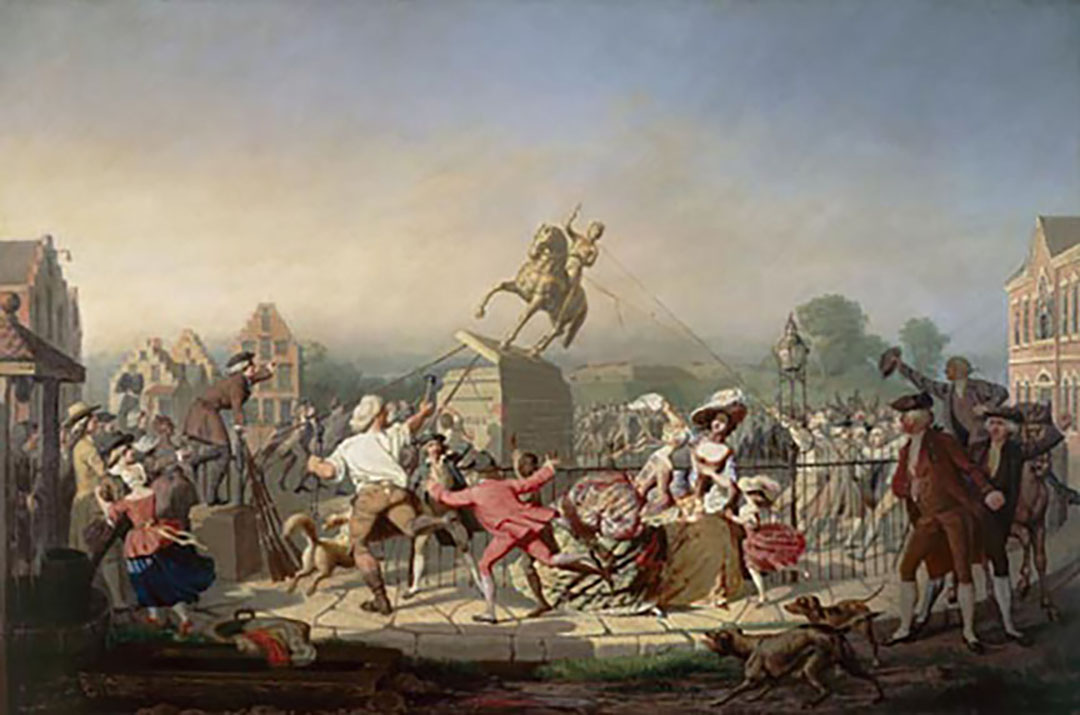
The year between July 1775 and July 1776 was a year of political acceleration. Fighting continued. British policy hardened. Pamphlets, local meetings, newspaper essays, and colonial assemblies pushed more people to think beyond reconciliation. Thomas Paine’s Common Sense, published in January 1776, helped turn independence from a radical possibility into a public argument many ordinary readers could understand.
Seen from that longer path, the Olive Branch Petition was not simply naive. It belonged to a moment when Congress still needed to test whether the empire could be repaired. Its failure taught a hard lesson: the king was not going to act as a neutral guardian of colonial rights. Once that hope faded, independence became not only a dream of radicals but a practical answer to a political deadlock.
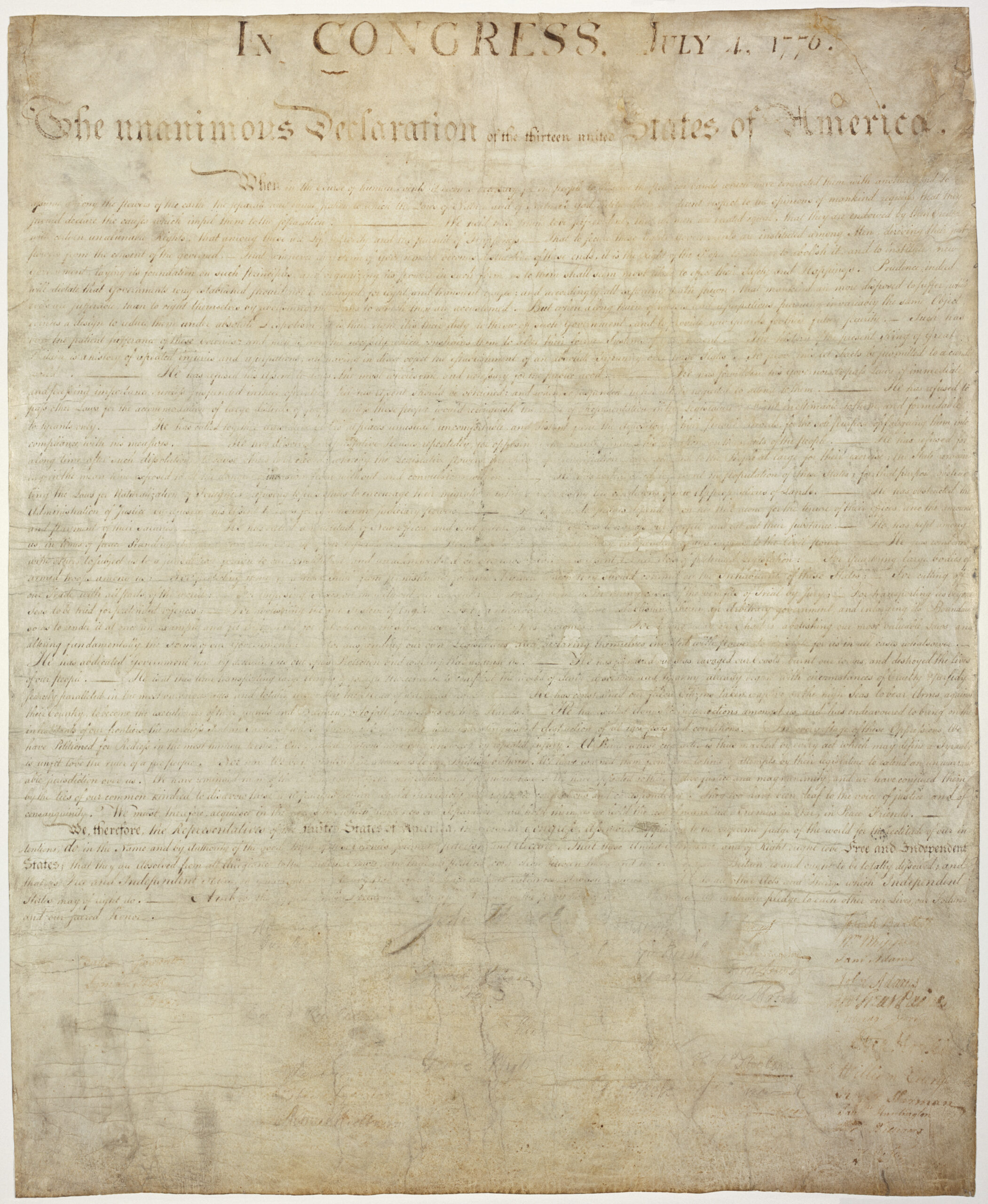
The petition’s failure makes the Declaration of Independence more understandable. The Declaration did not appear out of nowhere, and it did not replace a world of easy compromise. It followed a failed attempt to stay connected, a deepening war, and a growing belief that British authority could no longer be trusted to protect colonial rights. That is why the Olive Branch Petition remains worth remembering. It marks the moment when reconciliation was still spoken aloud, just before history moved in another direction.






Add comment