
 Akshay Dinesh
In January 1776, independence was not yet the settled answer for the thirteen colonies. Fighting had already broken out at Lexington and Concord, the Battle of Bunker Hill had shown that the war would be costly, and British authority was becoming harder to defend. Still, many colonists hoped the conflict could somehow end with reconciliation. They objected to taxes, troops, trade restrictions, and royal policy, but breaking permanently from the British Empire still felt dangerous, radical, and uncertain.
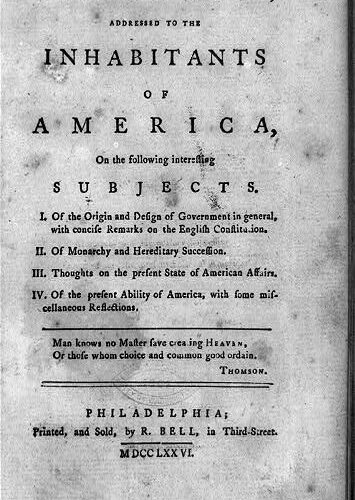
Thomas Paine’s Common Sense entered that moment with unusual force. It did not read like a cautious legal petition or an elite political essay. It spoke directly to ordinary colonists, using plain language to argue that independence was not only possible but necessary. The pamphlet helped turn a private uneasiness into a public argument. By making separation easier to discuss, repeat, and defend, it helped prepare Americans for the Declaration of Independence later that year.
A pamphlet written for a tense moment
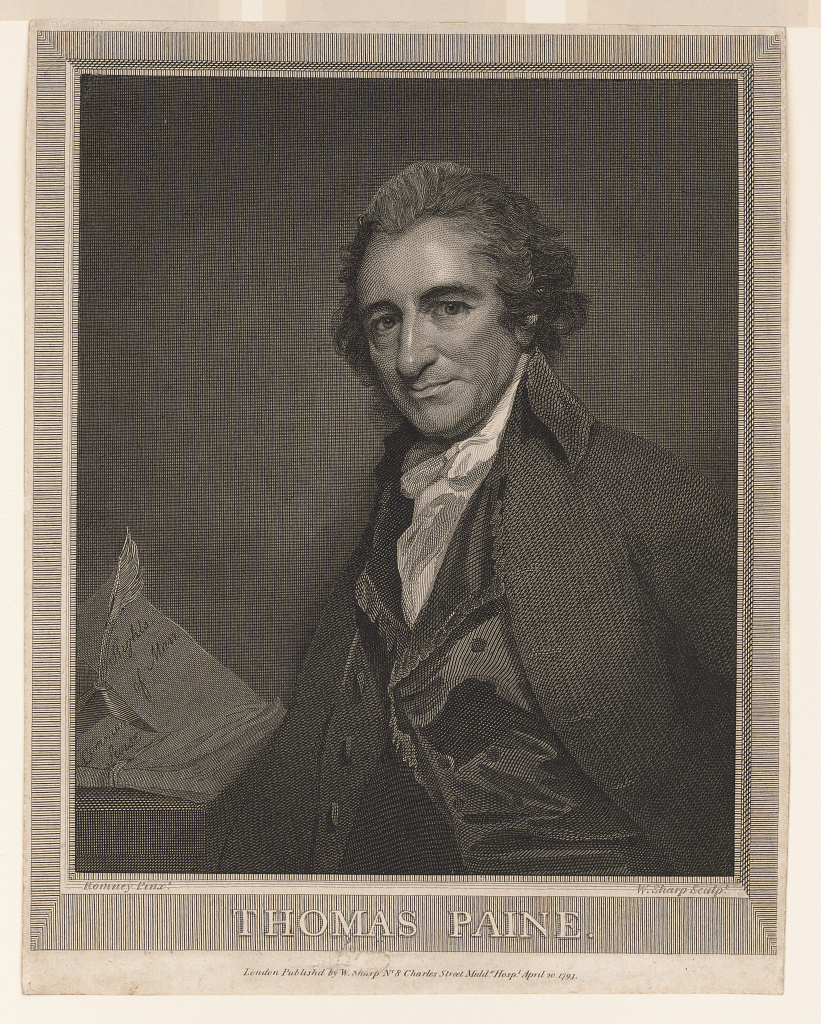
Paine was a recent immigrant from England when he arrived in Philadelphia in 1774. His timing mattered. The colonies were moving from protest toward war, but political language had not fully caught up with events. Many public documents still described the conflict as a defense of colonial rights within the empire. Even some people who distrusted Parliament or royal officials hesitated to say that monarchy itself was the problem.
Common Sense was first published anonymously on January 10, 1776. The U.S. House History office describes it as a 47-page pamphlet that spread quickly through the colonies, and the Library of Congress notes that it was reprinted in pamphlet form and in newspapers. That speed mattered in an age before radio, television, or digital communication. A pamphlet could be bought, borrowed, read aloud, argued over in taverns, and passed from hand to hand.
The timing gave Paine’s argument urgency. In early 1776, the Continental Congress was paying for troops, appointing military officers, and trying to manage a conflict that increasingly looked like civil war. British actions, including the king’s hard line against colonial resistance and the burning of Norfolk, Virginia, made reconciliation feel less realistic. Paine did not create the crisis, but he gave many colonists a language for interpreting it.
Why plain language made the argument powerful
One reason Common Sense mattered was that it did not sound like a document written only for lawyers, legislators, or wealthy readers. The Museum of the American Revolution emphasizes that Paine presented his case in plain language, making political discussion accessible to colonists from many walks of life. That was more than a stylistic choice. It was part of the pamphlet’s democratic force.
Paine wrote as if the question of independence belonged to the public, not just to officials in Congress. He used sharp comparisons, moral claims, and everyday reasoning. His famous argument that it was absurd for a continent to be governed by an island turned an imperial relationship into an image anyone could understand. The point did not require deep knowledge of constitutional law. It invited readers to ask whether the old arrangement still made sense.
The pamphlet also challenged the emotional habits that held loyalty to Britain in place. Many colonists had grown up thinking of themselves as British subjects. Paine pushed them to see hereditary monarchy as unreasonable and degrading, not merely inconvenient. He argued that no family had a natural right to rule generation after generation. By attacking monarchy itself, he widened the dispute from specific complaints about British policy to a larger question about legitimate government.
That made Common Sense different from a list of grievances. A grievance says that something has gone wrong. Paine argued that the whole structure was wrong. He did not simply ask readers to oppose a tax or a ministry. He asked them to imagine a republic built on the authority of the people.
How it moved independence from elite debate to public conversation
The reach of Common Sense is difficult to measure with modern precision, but contemporary evidence shows that it was widely read and discussed. The House History office notes that Paine estimated sales of 120,000 copies by the spring of 1776, an extraordinary figure for the colonial population. Copies circulated beyond buyers, too. People heard passages read aloud in public places, saw arguments repeated in newspapers, and carried the language into local debates.
That circulation changed the political atmosphere. The question of independence could no longer remain only a cautious conversation among delegates. It became something people could debate in town meetings, private letters, colonial assemblies, and public prints. John Adams later wrote that time had allowed people across the colonies to weigh the question through newspapers, pamphlets, assemblies, committees, and private conversation. Common Sense was one of the clearest accelerators of that discussion.
The pamphlet was not accepted without criticism. John Adams, who supported independence, thought Paine’s writing had flaws and called out some of its emotional and religious appeals. Loyalists rejected Paine’s conclusions. Moderates feared that independence would bring disorder, foreign danger, or economic ruin. The importance of Common Sense was not that it ended disagreement. Its importance was that it made the pro-independence case harder to ignore.
In politics, a powerful argument does not always persuade everyone at once. Sometimes it changes what people feel allowed to say. Before January 1776, independence could seem reckless or premature. After Paine’s pamphlet spread, it became a position ordinary people could discuss openly and defend with confidence.
The argument beneath the title
The title Common Sense was itself a strategy. Paine wanted independence to seem not like an abstract theory but like the reasonable conclusion of ordinary judgment. He invited readers to trust their own ability to evaluate government. That mattered in a world where political authority often rested on hierarchy, inherited status, and deference to elites.
Paine’s argument had several connected parts. First, he separated society from government. People naturally form communities, he suggested, but government exists because human behavior needs rules and protection. That distinction helped readers ask whether a particular government was serving its purpose. If government was meant to secure people’s welfare, then a distant monarchy that answered colonial petitions with force had failed the test.
Second, he attacked hereditary succession. Paine treated the idea of rule by birth as irrational and unfair. A wise ruler could be followed by a foolish heir; a peaceful transfer of inherited power could still leave people governed without their consent. This criticism gave the independence movement a broader moral frame. The problem was not only George III. The problem was a system that treated political authority as family property.
Third, Paine argued that America had the capacity to stand apart. He pointed to the colonies’ size, resources, and distance from Britain. He also suggested that the colonies’ future was not limited to English identity. People from across Europe had settled in America, making the old claim of Britain as a single parent country less convincing. This helped readers picture independence as a practical future, not just an angry reaction.
From persuasion to independence
Common Sense did not single-handedly cause the Declaration of Independence. The movement toward separation had many causes: years of imperial conflict, colonial resistance, military clashes, British political decisions, local organizing, and changing attitudes inside the Continental Congress. Reducing independence to one pamphlet would make the history too simple.
Still, Paine’s pamphlet helped connect those forces. It translated political frustration into a clear public case for separation. It made monarchy itself a target of criticism. It treated ordinary readers as capable judges of political legitimacy. And it gave the independence movement a memorable vocabulary at the moment when hesitation was beginning to break.
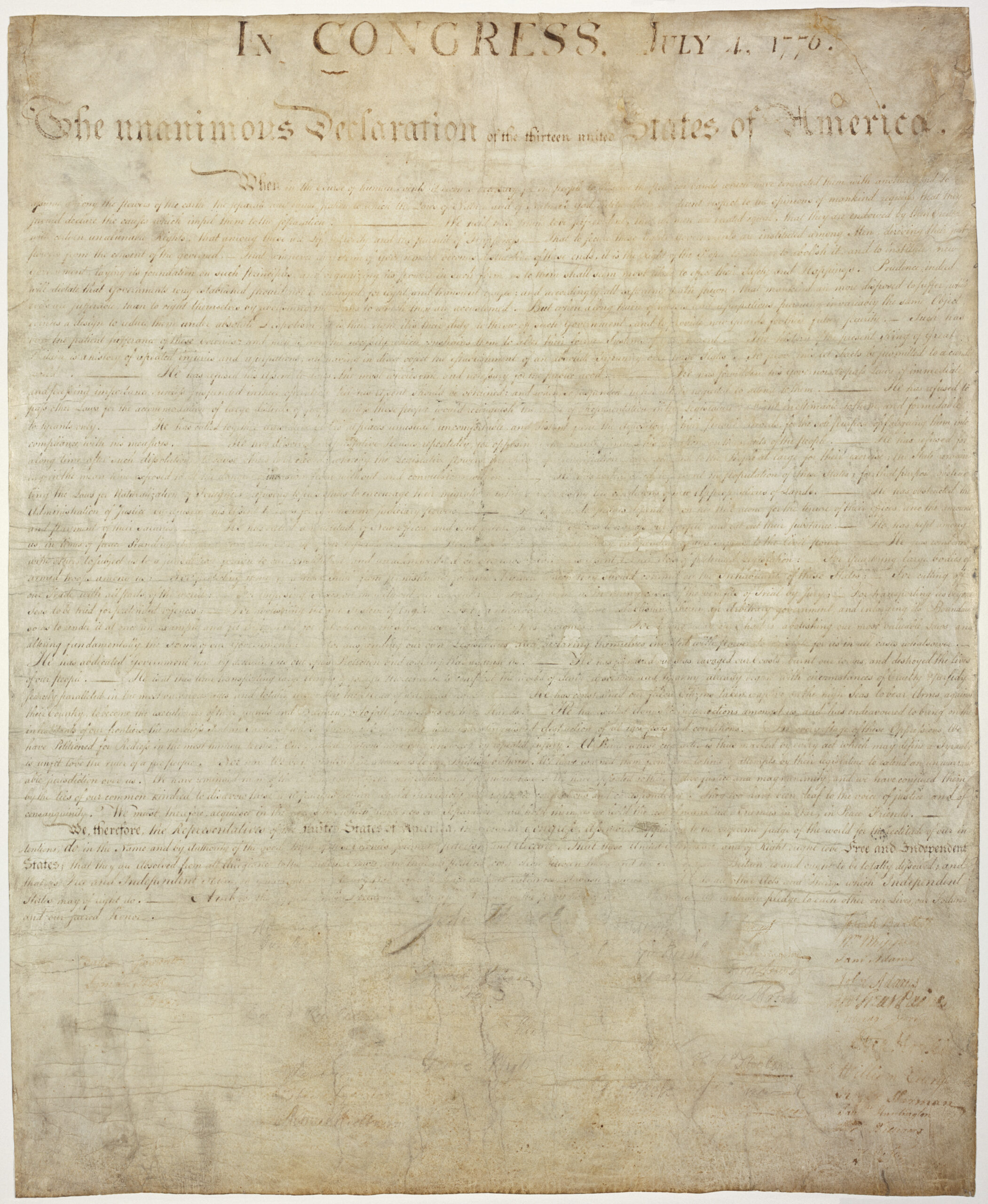
By July 1776, Congress declared that the colonies were free and independent states. The Declaration gave the break legal and diplomatic form, but the public had already spent months arguing over whether independence was necessary. Paine helped make that argument widely available. His pamphlet did not replace political action; it helped prepare the ground on which political action could stand.
Why the pamphlet still matters
The lasting value of Common Sense is not only that it supported American independence. It also shows how ideas move when they are written for real people in a moment of decision. Paine understood that public opinion is shaped by more than facts alone. It is shaped by language, timing, examples, emotional clarity, and the feeling that a difficult choice can be understood.
That is why the pamphlet remains useful for studying the American Revolution. It reveals a society in transition, caught between loyalty and separation, fear and possibility, inherited authority and republican self-government. It also shows that revolutions are argued into being as well as fought. Before independence could be declared, many people had to become willing to imagine it.
Common Sense gave that imagination a printed form. In a few dozen pages, Paine helped colonists see independence not as an unthinkable leap but as a public choice that could be reasoned through, defended, and shared. That shift did not settle every question about the new nation. It did something more immediate: it helped make the decision to become a new nation feel possible.




Add comment