 Akshay Dinesh
A meteor shower can feel like a surprise because the streaks appear suddenly, flare for a moment, and vanish before the eye can settle on them. Yet the best-known showers are not random events. They return on a schedule because Earth is moving through the solar system on a schedule too. Each year, our planet comes back to nearly the same places in its orbit, and some of those places contain streams of dust and small rocky particles left behind by comets or, in a few cases, asteroids.
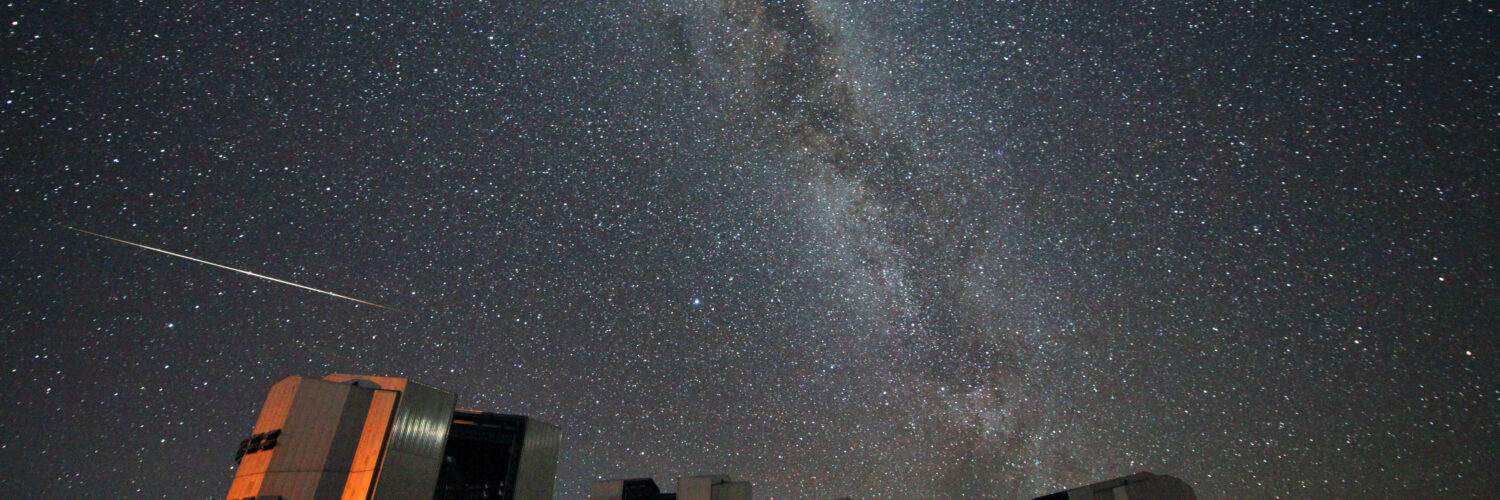
That is why skywatchers can put the Perseids, Geminids, Lyrids, Orionids, and other showers on calendars months in advance. The individual meteors are unpredictable, but the broad encounter is not. A meteor shower is the visible result of Earth running into a trail of old debris at high speed, turning tiny bits of space material into brief flashes of light high in the atmosphere.
A Meteor Shower Is Earth Meeting Old Debris
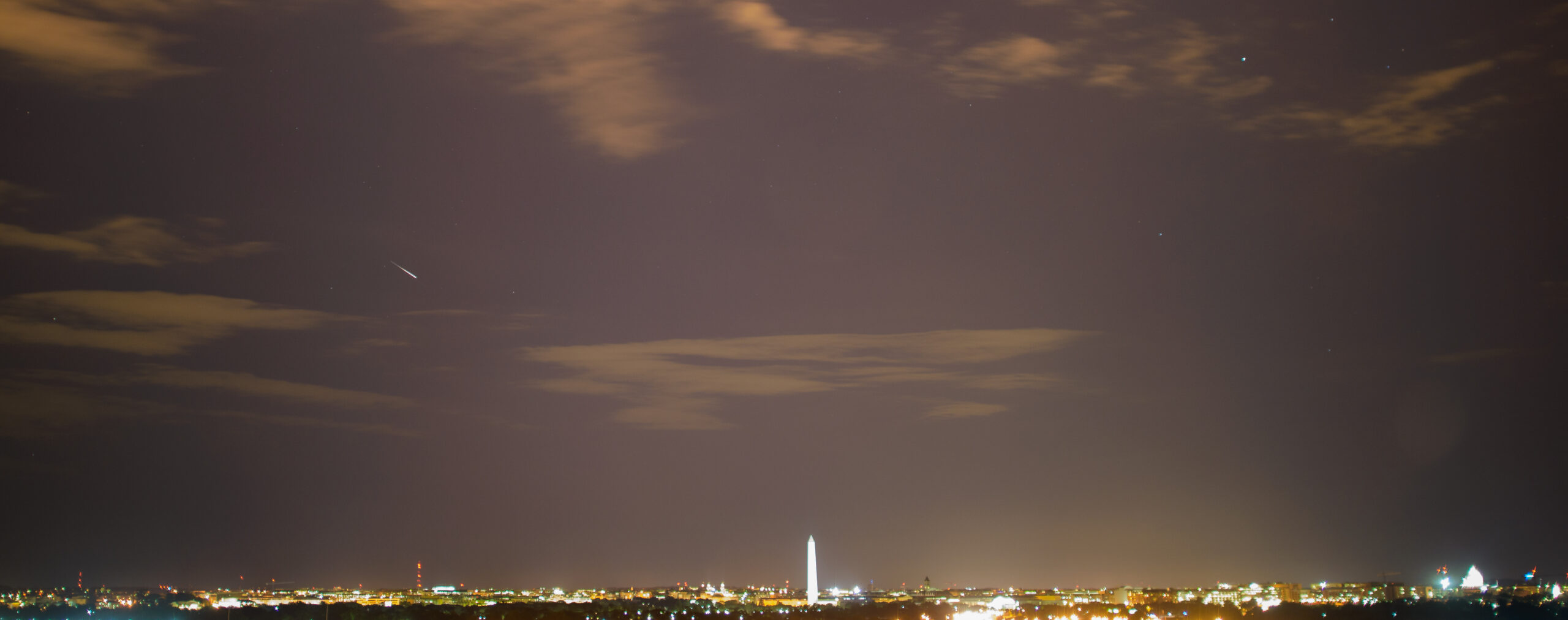
NASA describes meteors as streaks of light made when small pieces of space debris enter Earth’s atmosphere at high speed. The object in space is called a meteoroid. Once it burns brightly in the atmosphere, observers call the streak a meteor. If a piece survives the trip and lands on the ground, it becomes a meteorite, but most shower particles are far too small to reach the surface.
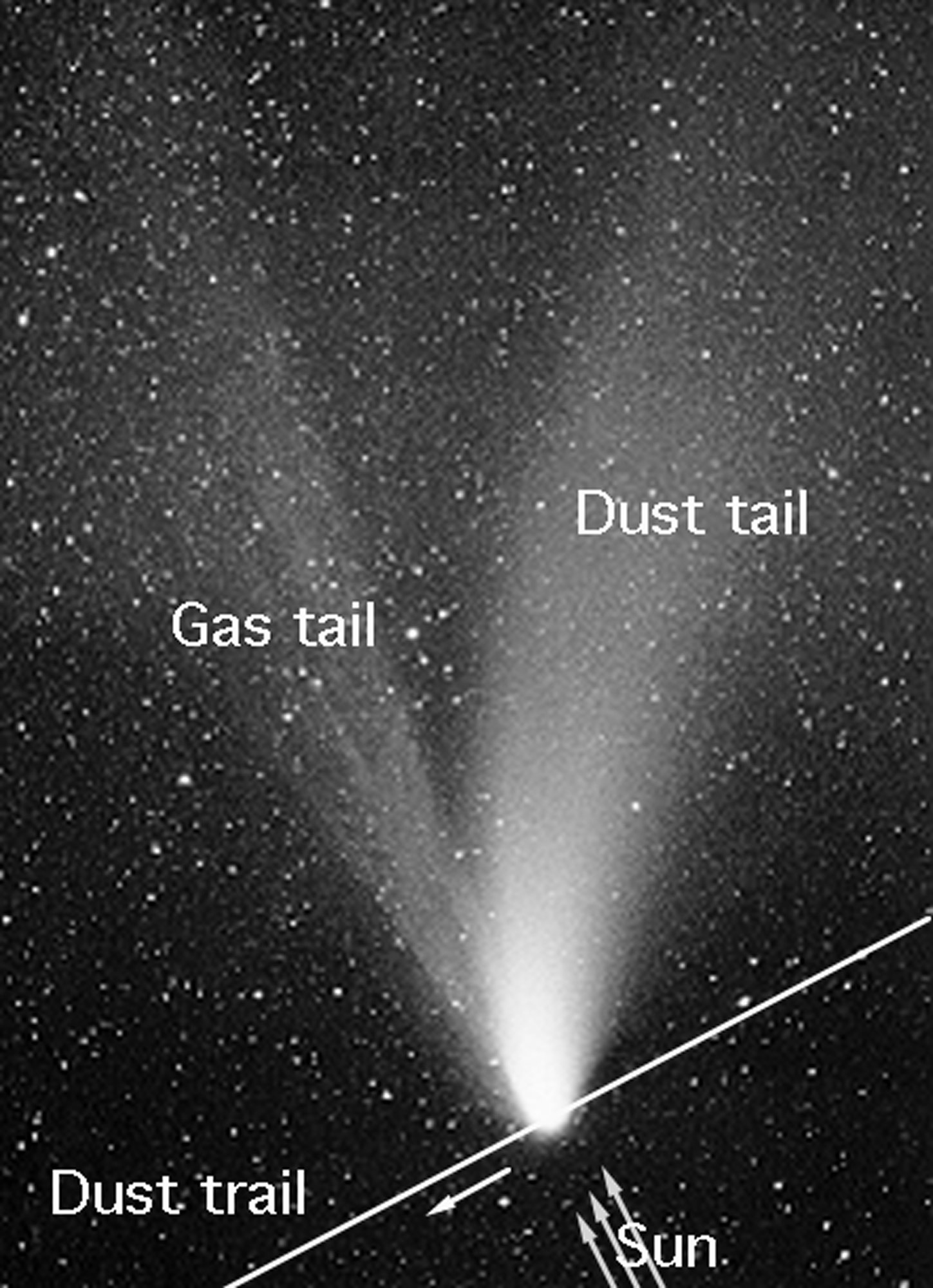
Meteor showers happen when many meteoroids arrive from the same debris stream over a limited period of time. Most of those streams come from comets. A comet is a mixture of ice, dust, and rocky material that heats up when it travels closer to the Sun. As the ice changes and gas escapes, dust and grains are released from the comet and gradually spread along its orbit.
The important detail is that the debris does not simply disappear. It keeps orbiting the Sun, stretched out into a broad stream. Earth does not need to meet the comet itself to see a meteor shower. It only needs to cross part of the path where the comet left material behind. The Perseids are a classic example: their parent body is Comet 109P/Swift-Tuttle, even though Swift-Tuttle itself last passed closest to the Sun in 1992 and will not return for more than a century.
Why the Same Showers Come Back
Earth takes about one year to orbit the Sun, so it returns to the same regions of space at about the same time each year. If one of those regions contains a debris stream, Earth passes through it again and again. The calendar date is not magic. It is a marker of where Earth is along its orbit.
This explains why annual meteor showers have active windows rather than single exact moments. A debris stream has width and structure, so Earth may begin crossing its outer edges days or weeks before it reaches the densest part. The American Meteor Society lists the Perseids as active from mid-July into late August, with the strongest activity usually around August 12 or 13. That peak happens when Earth passes through a richer part of the Swift-Tuttle debris stream.
Different showers come from different parent bodies and different orbital paths. The Orionids and Eta Aquariids are linked to Halley’s Comet. The Geminids are unusual because they are associated with 3200 Phaethon, an asteroid-like object rather than a typical icy comet. The pattern still works the same way for a viewer on Earth: our planet intersects a stream of material, and small particles burn as they slam into the upper atmosphere.
Why Meteors Seem to Come From One Point
During a shower, meteors can appear in many parts of the sky, but if their paths are traced backward, they seem to spread from a common point. That point is called the radiant. The Perseids appear to radiate from the direction of the constellation Perseus, which is why the shower has its name. The Lyrids point back toward Lyra, the Geminids toward Gemini, and so on.
The radiant is not a place where meteors are being launched. It is a perspective effect. The particles in a shower are traveling along roughly parallel paths, and Earth is moving into the stream. To an observer on the ground, those parallel paths appear to converge in the distance, much like railroad tracks seem to meet near the horizon even though the rails stay apart.
This is also why looking directly at the radiant is not always the best way to watch. Meteors near the radiant often have shorter visible paths because they are heading more directly toward the viewer’s line of sight. Meteors farther from the radiant can leave longer streaks across the sky. A wide, relaxed view usually works better than staring at one precise point.
Why Some Showers Are Stronger Than Others
Not every meteor shower produces the same show. Some debris streams are dense and reliable. Others are thin, scattered, or difficult to see from certain parts of the world. The strength of a shower depends on how much material is in the stream, how Earth cuts through it, how fast the particles enter the atmosphere, and how favorable the viewing conditions are on the ground.
Particle size matters too. Many meteoroids are no larger than grains of sand, but a somewhat larger piece can create a bright fireball. Speed changes the impression as well. Perseid meteors are known for being swift and bright, often leaving short glowing trails called persistent trains. A shower with fast particles can look dramatic even when the number of meteors is not extreme.
The sky itself can hide or reveal the event. Moonlight can wash out faint meteors. City lights do the same from below. Clouds, haze, wildfire smoke, humidity, and nearby streetlights can reduce what observers see. That is why a forecast of many meteors per hour usually assumes dark rural skies, an unobstructed view, and patient watching near the best time of night. In a bright suburb, the same shower may feel much quieter.
How to Watch With Better Expectations
The best meteor watching is simple, but it rewards patience. A dark open location matters more than a telescope. Meteors move too quickly and appear across too much sky for magnification to help. The better plan is to let the eyes adjust, face a broad area of dark sky, and give the shower time to unfold. It can take 20 to 30 minutes for night vision to improve after looking at bright screens or car headlights.
Timing helps. Many showers are stronger after midnight because that is when the observer’s side of Earth is turning more directly into the stream, like the front windshield of a moving car collecting more raindrops than the rear window. The exact best time depends on the shower, the radiant’s height, the Moon, weather, and local darkness. A current meteor-shower calendar can tell observers when the peak is expected, but real skies still require flexibility.
It also helps to know what not to expect. A meteor shower is usually not a constant fireworks display. Even a strong shower may come in uneven bursts, with quiet minutes between bright streaks. The reward is partly in recognizing the scale of the event: particles released long ago by a comet are meeting Earth at just the right place in its orbit, lighting the atmosphere for less than a second at a time.
A Yearly Reminder of Motion
Meteor showers return because nothing in the solar system is standing still. Comets shed material as they travel, debris streams keep circling the Sun, and Earth crosses some of those paths during its own yearly journey. The streaks look sudden from the ground, but they come from a long chain of motion: a comet’s orbit, a dust trail’s spread, Earth’s path, and a tiny particle’s final plunge into the atmosphere.
That is what makes meteor showers so satisfying to understand. They are beautiful without needing much equipment, but they are also precise enough to predict. Each annual shower is a visible crossing point between Earth and older material still moving through space. For a few nights, the planet’s ordinary trip around the Sun becomes something people can see overhead, one quick flash at a time.