

 Akshay Dinesh
On a warm evening, crickets can make the dark feel busy. Their steady chirps rise from lawns, gardens, fields, sidewalk cracks, and brushy edges until the whole neighborhood seems to pulse. The sound is familiar enough to fade into the background, but it is not random noise. A cricket’s rhythm changes with the air around it, and that rhythm can tell a surprisingly clear story about temperature, insect muscles, and animal communication.
The simple version is that crickets chirp faster when the air is warm and slower when it cools. That pattern is strong enough that the National Oceanic and Atmospheric Administration describes a quick temperature estimate: count the chirps in 15 seconds, then add 40 to get an approximate temperature in degrees Fahrenheit. The rule is not perfect, and it works better for some species than others, but it gives a memorable window into a larger biological idea. Small animals do not experience temperature as background scenery. Their bodies run on it.
The Sound Comes From Wings, Not a Voice
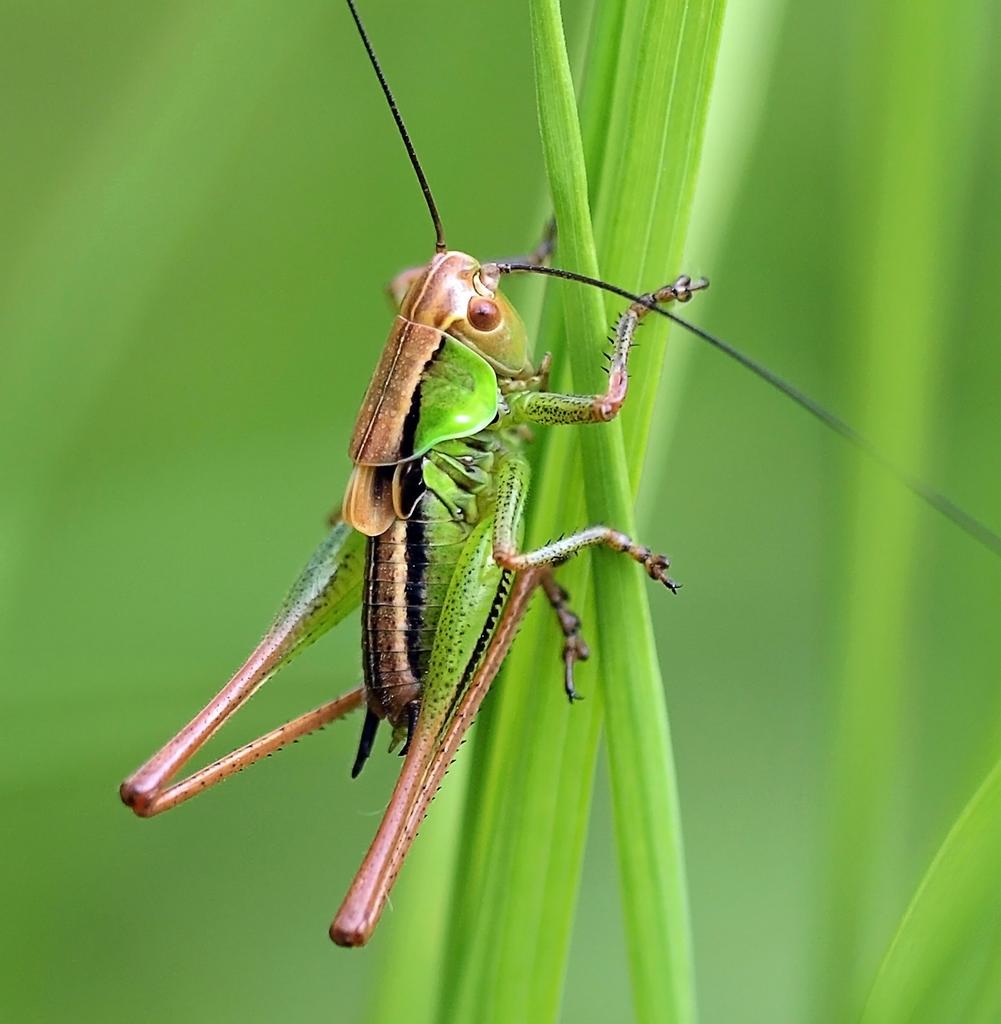
Crickets do not chirp with vocal cords. They make sound by rubbing one wing against the other in a process called stridulation. One wing has a hardened edge that works like a scraper, while the other has a row of tiny ridges often compared to a file. When a cricket moves the scraper across the file, the ridges create a series of pulses. To human ears, those pulses blend into the crisp chirp associated with summer nights.
In most familiar chirping crickets, the loud caller is male. The sound can help attract females, warn rival males, or mark a small patch of territory. A cricket hidden under leaves may be difficult to see, but sound lets it communicate across grass and low plants. The call is not just a habit. It is a signal shaped by anatomy, timing, and the need to be heard by the right listener.
Different cricket species have different songs. Some chirp in clean, separate bursts. Others make trills or faster runs of sound. That matters because a female cricket is usually listening for the pattern of her own species. A summer night may contain many insect sounds at once, but to another cricket, the rhythm, pitch, and spacing can carry useful information.
Why Warm Air Speeds the Rhythm
Crickets are ectotherms, which means their body temperature is strongly influenced by the temperature around them. Humans can keep internal temperature within a narrow range, but a cricket on a cool evening becomes cooler too. That affects the chemical reactions and muscle movements that let the insect move its wings. When the air warms, those processes generally happen faster. When the air cools, they slow down.
Science Buddies explains the pattern by connecting cricket chirps to the temperature-sensitive reactions inside the body, including the reactions that allow muscles to contract. A warm cricket can move the wing structures more rapidly, so the chirps come closer together. A cold cricket is sluggish, and the gaps between chirps widen. The sound is not a deliberate weather report. It is a side effect of how insect bodies work.
This is why the same yard may sound different at sunset, midnight, and just before dawn. Early in the evening, warm soil, pavement, and plant surfaces may keep the lower air mild, and the calling can be brisk. Later, as heat escapes and the air cools near the ground, the rhythm may slow. After a chilly night, there may be little calling at all. The silence is also biological information.
Dolbear’s Law Turns Chirps Into a Rough Thermometer
The famous cricket-temperature shortcut is usually connected to Amos Dolbear, a Tufts physicist who published “The Cricket as a Thermometer” in 1897. The version most often taught is easy enough to try without a calculator: count the number of chirps in 15 seconds and add 40. If a cricket chirps 32 times in 15 seconds, the estimate is about 72 degrees Fahrenheit. If it chirps 20 times, the estimate is about 60 degrees.
That rule is known as Dolbear’s law, though natural history is a little messier than the name suggests. Earlier observations also connected cricket chirps with temperature, and later work showed that species matters. The snowy tree cricket has often been associated with the best-known shortcut. Field crickets and other insects may follow the same general pattern but not the exact same formula. A loud chorus with several insects calling at once can also make counting difficult.
Still, the rule is useful because it teaches what a scientific model is. It takes a real pattern and turns it into a simple relationship. The model works within limits, then breaks down when conditions change. It is not meant for freezing nights, silent insects, multiple overlapping calls, or every cricket species on Earth. That limitation is not a weakness; it is part of the lesson. Good models are helpful because they are clear about what they do and do not describe.

The Chirp Has a Social Purpose
The temperature connection is fascinating, but crickets are not chirping for people with stopwatches. The call is mainly part of reproduction and competition. A male calling from a sheltered spot is trying to make himself detectable. The sound tells nearby crickets that he is present, and the pattern can help females locate him.
Calling also has costs. A chirping male may attract predators or parasitic insects that use sound to find hosts. The energy spent calling is energy that cannot be used elsewhere. A cricket must balance the benefits of being heard against the risks of becoming too noticeable. Temperature changes that balance. A warm night may make calling easier, but it may also make many other animals more active.
There is another reason the pattern matters: sound travels through a living environment. Grass, leaves, soil, fences, and buildings all shape what can be heard. A cricket under dense plants may sound softer than one calling from a more open spot. A listener may hear one clear caller nearby and a blur of others farther away. The call carries information, but the landscape filters it.
What Counts as a Good Observation
Trying the cricket-temperature method is a small exercise in field observation. It works best when one cricket is calling clearly and steadily. Count several 15-second intervals, then compare the results with a thermometer. The estimate may be close, or it may drift. Either outcome is useful if the observer asks why.
A mismatch can come from species, background noise, uneven counting, or changing temperature near the ground. It can also come from the cricket’s behavior. A cricket may pause, shift its position, respond to another male, or change its call as conditions change. Real organisms rarely behave like laboratory instruments. That is what makes the observation interesting.
The exercise also shows why science often begins with noticing. A repeated sound becomes a question. A question becomes a count. A count becomes a pattern. The pattern becomes a model, and the model invites testing. A summer night can hold a small version of the scientific process, hidden in plain hearing.
Why the Sound Feels So Seasonal
Cricket chirps feel tied to summer because warm weather supports the insect activity that makes calling possible. Many crickets are most noticeable in late summer or early fall, depending on the species and region. Warm evenings bring enough energy for repeated calling, while darkness gives the sound a quieter stage. People often remember the rhythm because it marks a particular part of the year: porch lights, open windows, late sunsets, and warm air after dark.
That seasonal feeling can make the sound seem simple, but the biology behind it is rich. Wing structures turn motion into sound. Temperature changes muscle speed. Males use calls to reach mates and compete with rivals. A century-old rule turns chirps into a rough measurement. None of those pieces alone explains the whole experience, but together they make a familiar sound more meaningful.
The next time a cricket calls from somewhere just out of sight, the rhythm may be worth hearing differently. It is not only background noise. It is a small animal responding to the temperature around it, sending a signal through grass and darkness, and leaving a pattern that people learned to count. Summer nights have many clocks, and one of the oldest is the chirp of a cricket.






Add comment