 Akshay Dinesh
The Northwest Ordinance of 1787 answered a hard question the new United States could not avoid for long: what should happen to western land once it was no longer claimed by the original states? The answer was not simply to sell land or send settlers west. Congress needed a way to govern territory, protect some basic rights, encourage schools, handle slavery, and eventually create new states that would stand beside the old ones. That made the ordinance one of the most important laws passed under the Articles of Confederation, even though it is often overshadowed by the Declaration of Independence and the Constitution.
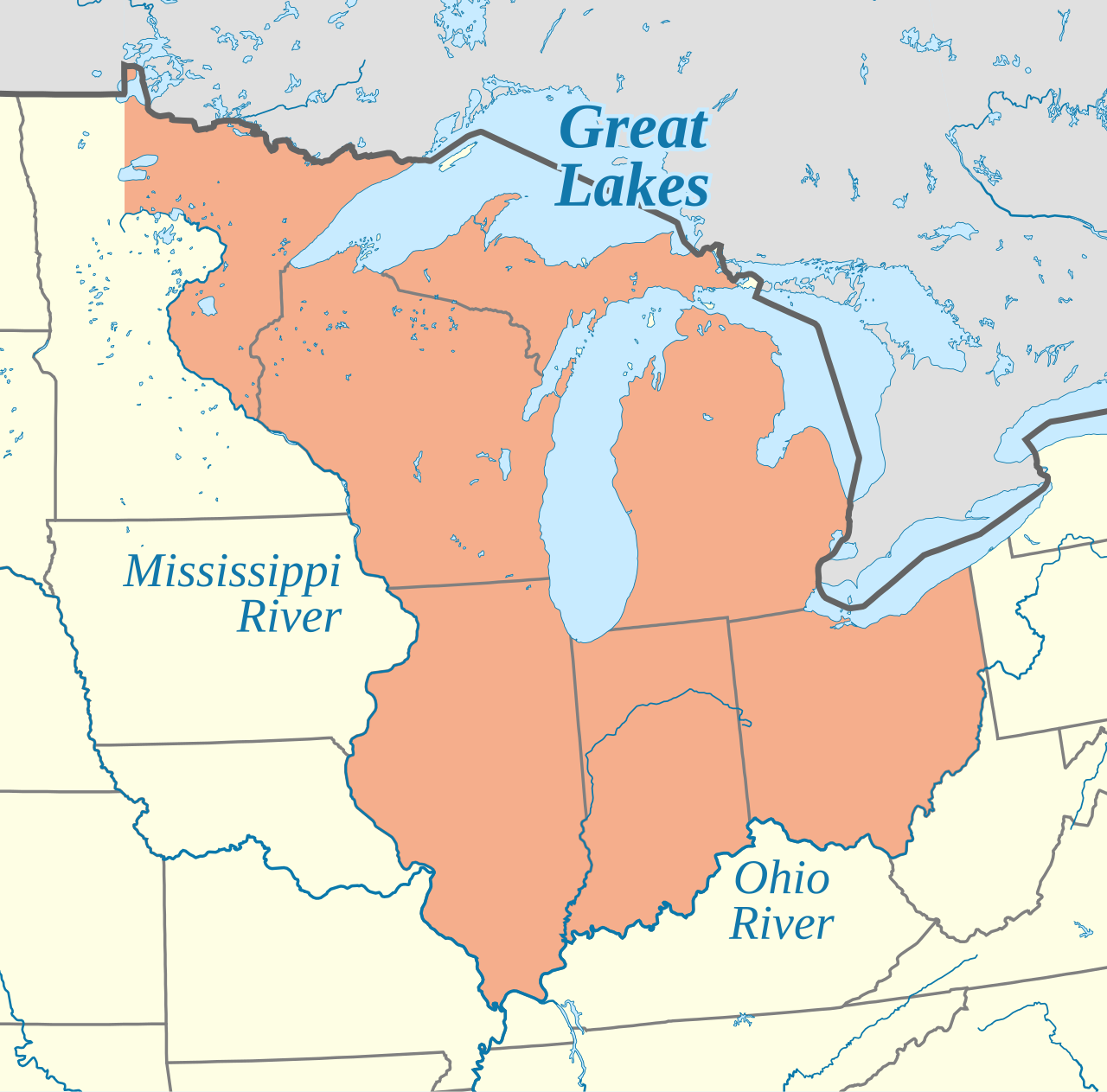
The law applied to the Northwest Territory, a huge region north of the Ohio River and east of the Mississippi River. It included land that would later become Ohio, Indiana, Illinois, Michigan, Wisconsin, and part of Minnesota. In a few pages, Congress tried to turn that space from a distant possession into a political future. The National Archives describes the ordinance as creating a government for the territory, a method for admitting new states, and a bill of rights for people living there. Those three ideas made it more than a land policy. It became a blueprint for expansion.
The Problem Was Bigger Than a Map
After the American Revolution, the United States had independence but not yet a settled plan for its western lands. Several states had once claimed large western areas based on old colonial charters. Other states had no such claims and worried that land-rich states would become too powerful. Congress also faced a basic money problem: western land could be sold to raise revenue, but sales alone could not build stable government.
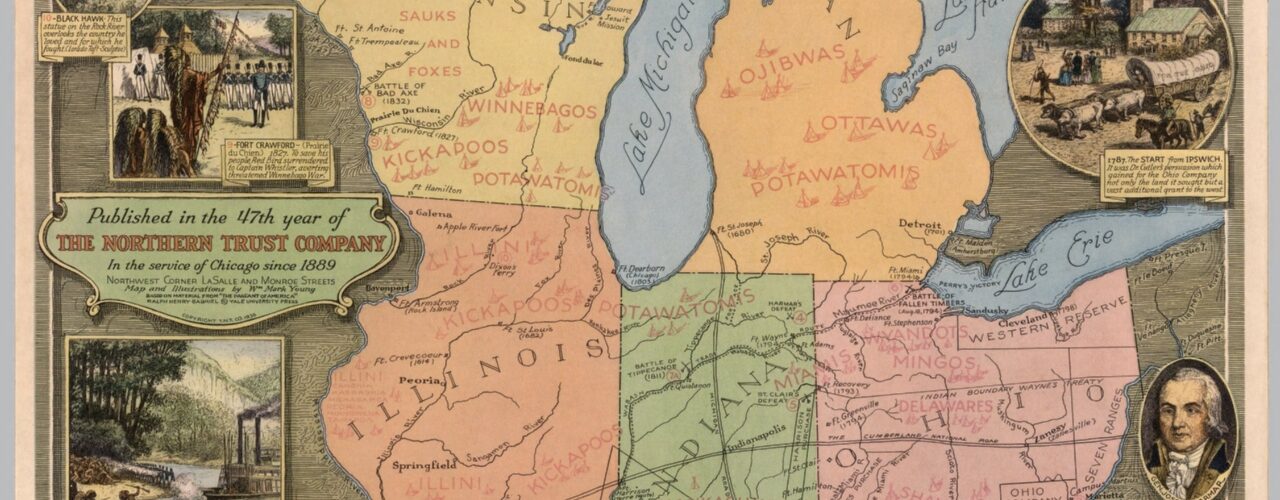
The territory itself was not empty, even when federal documents treated it as land to be organized. Native nations had long histories, communities, diplomacy, and military power across the Great Lakes and Ohio Valley. British forts and traders remained influential after the Revolution, and settlers moved west faster than Congress could control. Any plan for the Northwest Territory therefore carried conflict from the start. It promised orderly government while also opening the door to dispossession and pressure on Indigenous lands.
That is why the Northwest Ordinance is best understood as both practical and ambitious. It tried to solve immediate problems of land, settlement, and authority. At the same time, it set rules for what kind of political relationship western communities would have with the Union. The new country could have treated territories as permanent colonies. Instead, the ordinance said territories could grow into states.
A Path From Territory to Equal Statehood
The ordinance laid out a staged process. At first, Congress would appoint a governor, secretary, and judges to administer the district. Once the territory reached 5,000 free adult male inhabitants, it could have an elected assembly and send a nonvoting delegate to Congress. When a district reached 60,000 free inhabitants, it could write a state constitution and ask to join the Union.
Those numbers matter because they changed the meaning of expansion. Western settlers were not promised instant self-government, but they were also not told they would remain permanently subordinate. The U.S. House historian notes that the ordinance covered the future states of Illinois, Indiana, Michigan, Ohio, Wisconsin, and part of Minnesota. Its model would influence later territorial organization as the United States expanded beyond the Old Northwest.
The ordinance also limited the number of states that could be carved from the region. The National Archives summary highlights the phrase that the territory would be divided into “not less than three” and “not more than five” states. That rule helped prevent one giant western state from dominating the region. It also gave Congress a way to imagine expansion as a series of political units, not one uncontrolled frontier.
The most important idea was equality of statehood. A territory that completed the process would not become a second-class member of the Union. It would join on the same constitutional footing as the older states. That principle became one of the lasting features of American federalism: new states could be young, but they were not supposed to be inferior.
Rights Before the Bill of Rights
The Northwest Ordinance also promised several protections to people living in the territory. It recognized religious liberty, trial by jury, habeas corpus, and limits on cruel punishment. These guarantees appeared before the federal Bill of Rights was ratified, which makes the ordinance an important bridge between revolutionary ideas and constitutional practice.
The rights language did not make the territory fully democratic. Voting and officeholding were still limited, and the law did not treat every person equally. Women, enslaved people, many free Black people, and Native nations were excluded from the political community Congress imagined. Still, the ordinance showed that Congress understood territorial government as something that needed legal limits. Rule from a distant capital was not supposed to be arbitrary.
That point is easy to miss because territorial government can sound technical. A governor, judges, population thresholds, and legislative procedures may seem dry. But those structures shaped daily life. Courts decided property disputes. Local laws shaped roads, taxes, and records. Assemblies gave settlers a voice, even if that voice was limited. The ordinance treated the growth of government as part of the growth of community.
Why Schools Were Built Into the Plan
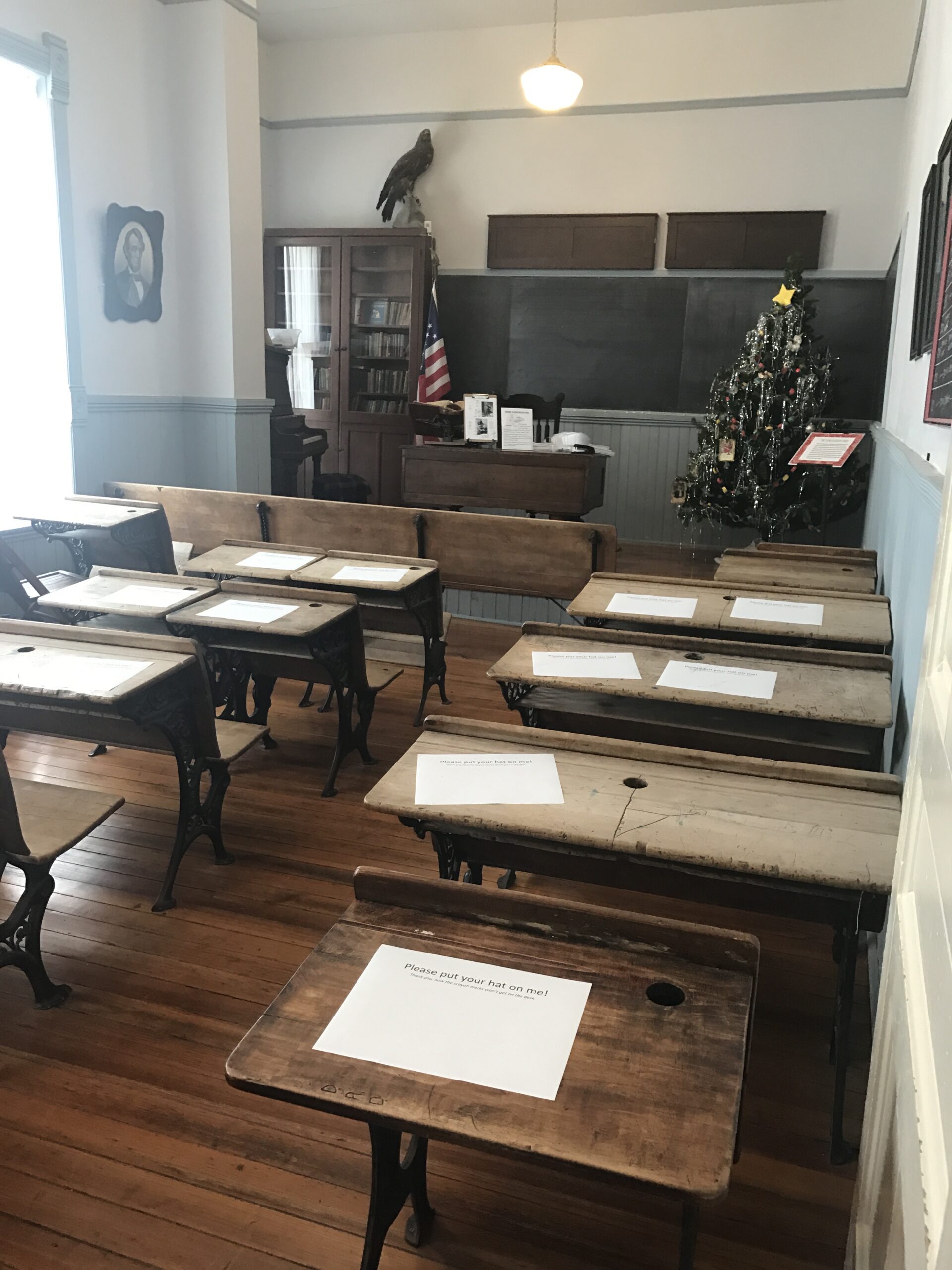
One of the ordinance’s most famous lines connects education with self-government. It says that “schools and the means of education” should be encouraged. That sentence did not create a modern public school system by itself, but it gave education a civic purpose. The law suggested that a republic needed learning, not just land and elections.
This idea fit a wider belief among many founders that citizens needed enough knowledge to read laws, judge leaders, serve on juries, and understand public questions. Education was not only private advancement. It was part of public life. In the Northwest Territory, later land policies often reserved land for schools, helping tie settlement patterns to local education funding.
The results were uneven. Schools depended on local resources, geography, politics, and who was considered worth educating. Many children, especially girls, Black children, Native children, and poor rural children, faced barriers. Still, the ordinance helped make education a recurring expectation in western settlement. A new community was not imagined as complete with only farms, courts, and roads. It also needed places to learn.
The Slavery Ban and Its Limits
The ordinance’s slavery clause became one of its most consequential provisions. Article 6 declared that there would be no slavery or involuntary servitude in the territory, except as punishment for crime. That line mattered because it drew a legal boundary north of the Ohio River before the Constitution was even in place.
The ban helped shape the future politics of the Midwest. Ohio, Indiana, Illinois, Michigan, and Wisconsin entered the Union from territory where slavery had been formally barred. That did not mean racial equality followed. Black residents in several states faced discriminatory laws, voting restrictions, school exclusion, and violence. Some forms of bound labor and indenture also continued in practice. A legal ban on slavery could stop one institution from expanding openly, but it did not erase racism or guarantee freedom in a full civic sense.
The clause also included a fugitive labor provision, allowing people claimed as escaped laborers to be returned. That contradiction shows the ordinance’s uneasy place in early American history. It limited slavery’s spread in one region while still protecting slaveholders’ claims across state and territorial lines. Later conflicts over slavery in new territories would become much sharper, especially as the country expanded west and south.
For students of history, this is where the ordinance becomes especially useful. It shows how the early republic mixed ideals with compromises. Congress could speak about rights, education, and future equality of states while also ignoring Indigenous sovereignty and accepting the recovery of people claimed as property. The document was not a simple triumph. It was a framework that reveals both the nation’s hopes and its failures.
Why the Ordinance Still Matters
The Northwest Ordinance mattered because it gave expansion a political form. Land would not remain under loose military control or become a private rush without rules. It would pass through stages of government, representation, constitution-making, and statehood. That model helped the United States grow from a coastal union into a continental republic.
Its influence also reaches beyond maps. The ordinance linked new communities with civil rights language, public education, and the idea that new states should enter the Union as equals. It showed that the question of western land was never only about acres. It was about who would govern, who would be represented, who would be excluded, and what kind of society would be built.
The law’s legacy is strongest when read with both attention and honesty. It helped create a pathway to statehood that shaped much of the Midwest. It also helped push settlement into homelands where Native nations already lived, and it contained compromises over slavery that later generations would struggle over more violently. The Northwest Ordinance did not solve the country’s deepest conflicts. It organized them into a system that would shape American history for decades.